
News
Gandhi family loyalist Ashok Gehlot to run for Congress President


With Rahul opting out
BY S VENKAT NARAYAN
Our Special Correspondent
NEW DELHI, September 24: Gandhi family loyalist and Rajasthan Chief Minister Ashok Gehlot is likely to be the next President of the Congress Party. But he will have to step down as chief minister on Rahul Gandhi’s insistence on one-man-one-post policy. Gehlot, seen as the nominee of Gandhis, announced his decision to enter the fray while acquiescing to the insistence to quit his position in Jaipu
Gehlot had on Wednesday declared his intent to continue as Rajasthan CM even if he was elected as Congress chief. But he gave up his insistence after Rahul Gandhi declared that the new party chief will have to adhere to the “one man one post” principle.
“What we decided in Udaipur is a commitment of the Congress. So, I expect that the commitment will be maintained,” said Rahul Gandhi. Immediately afterwards, Gehlot termed Rahul’s position “correct,” and said that no Congress president has ever been a chief minister.
The development on the sensitive issue came hours after Congress election authority chairman Madhusudan Mistry on Thursday morning issued the much-awaited notification to announce the start of the election process, which is likely to witness a contest after 22 years.
The Congress is India’s oldest political party, founded in 1885. The Gandhi family had dominated the party since 1921, when Jawaharlal Nehru’s father Motilal Nehru became its President. Since then, six members of the country’s most famous political dynasty had been Congress Presidents for a total of 45 years: Motilal Nehru, Jawaharlal Nehru, Indira Gandhi, Rajiv Gandhi, Sonia Gandhi and Rahul Gandhi. Three of them ruled India as Prime Ministers since the country became independent in 1947: Nehru, Indira and Rajiv.
Rajiv Gandhi was the last member of the family whose prime ministership ended 33 years ago in 1989. But the Gandhi family and the Congress became synonymous in Indian politics. Though the family has been out of power for over three decades, Sonia Gandhi controlled the party and the governments of Congress Party’s PV Narasimha Rao and Dr Manmohan Singh. The party suffered humiliating defeats in parliamentary and state assembly polls since the Narendra Modi-led Bharatiya Janata Party (BJP) rode to power at the centre in 2014.
However, every fifth voter voted for the Congress in the 2019 general election. And the Gandhis continue to enjoy a pan-Indian recognition. Seen as the leadership’s choice and a frontrunner in the clash that may pit him against Kerala MP Shashi Tharoor, Gehlot joined Rahul for a few hours in the “Bharat Jodo Yatra” (Unify India Foot March) at Kochi in Kerala state like his political rival Sachin Pilot did on Wednesday.
Gehlot had earlier announced that he will meet Rahul as part of his last-ditch attempt to convince him to take over the reins of the party.Gehlot said on Friday that Rahul Gandhi has made it clear that no one from the Gandhi family should become the party chief. He met with Rahul Gandhi in Kerala, where he joined his “Bharat Jodo Yatra” on Thursday evening.
“I requested him multiple times to accept everyone’s wish that he returns as Congress President. He told me he had decided that no one from the Gandhi family should become the next chief,” Gehlot told reporters.
“Rahul ji told me: ‘I know they want me to be chief and I respect their wish. But I have decided, for a reason, that a non-Gandhi should be the Congress president’,” he added.
Gehlot is believed to be the Gandhis’ leading choice for the role as the Congress prepares for its first non-Gandhi chief since 2000. The 71-year-old Congress veteran has been holding out, apparently because he is reluctant to give up the role of Chief Minister of Rajasthan. He had suggested that he could handle both responsibilities, but Rahul Gandhi shot it down.
“We have made a commitment in Udaipur, I expect that the commitment will be maintained,” Rahul Gandhi told reporters in Kochi on Thursday on the “one person, one post” rule adopted by the Congress earlier this year. The Gandhis, distancing themselves from the top post amid massive churning within and questions on their leadership following serial election defeats, have also refused to endorse any candidate.
While the outcome of a Gehlot vs Tharoor clash would be a foregone conclusion, the real drama lies in who will replace Gehlot in Jaipur. Gehlot told reporters: “Let us see what situation unfolds in Rajasthan, what decision the Congress leadership takes, what the MLAs think.”
Gehlot has an overwhelming support in the Rajasthan Congress legislature party. He may not be averse to quitting the CM’s post, and his claim about holding both the posts was likely a maximalist position to enable him to have a decisive say in picking his successor, who he wants should be his trusted individual over bete noire Sachin Pilot.
The names of assembly speaker C P Joshi, a multiple-term minister and a Brahmin minister are high on Gehlot’s list. A senior office-bearer said Pilot is a serious option in the list of probables. “The leadership will decide,” he said.
Sources said a discussion on Gehlot’s replacement is part of the presidential election, and is going on simultaneously — implying it may be finalized by the end of the election.Gehlot’s two-hour-long meeting with Congress Party’s Interim Chief Sonia Gandhi on Wednesday appears to have touched upon the ticklish issue, especially because of the presence of Pilot as an aspirant.



Chairman of the Committee on Public Finance (CoPF), MP Dr. Harsha de Silva, told Parliament yesterday that President Anura Kumara Dissanayake had personally telephoned him in response to a letter highlighting the prolonged delay in appointing an Auditor General, a vacancy that has remained unfilled since 07 December.
Addressing the House, Dr. de Silva said the President had contacted him following the letter he sent, in his capacity as CoPF Chairman, regarding the urgent need to appoint the constitutionally mandated head of the National Audit Office. During the conversation, the President had sought his intervention to inform the Constitutional Council (CC) about approving the names already forwarded by the President for consideration.
Dr. de Silva said the President had inquired whether he could convey the matter to the Constitutional Council after their discussion. He stressed that both the President and the CC must act in cooperation and in strict accordance with the Constitution, warning that institutional deadlock should not undermine constitutional governance.
He also raised concerns over the Speaker’s decision to prevent the letter he sent to the President from being shared with members of the Constitutional Council, stating that this had been done without any valid basis. Dr. de Silva subsequently tabled the letter in Parliament.
Last week, Dr. de Silva formally urged President Dissanayake to immediately fill the Auditor General’s post, warning that the continued vacancy was disrupting key constitutional functions. In his letter, dated 22 December, he pointed out that the absence of an Auditor General undermines Articles 148 and 154 of the Constitution, which vest Parliament with control over public finance.
He said that the vacancy has severely hampered the work of oversight bodies such as the Committee on Public Accounts (COPA) and the Committee on Public Enterprises (COPE), particularly at a time when the country is grappling with a major flood disaster.
As Chair of the Committee responsible for overseeing the National Audit Office, Dr. de Silva stressed that a swift appointment was essential to safeguard transparency, accountability and financial oversight.
In a separate public statement, he warned that Sri Lanka was operating without its constitutionally mandated Chief Auditor at a critical juncture. In a six-point appeal to the President, Dr. de Silva emphasised that an Auditor General must be appointed urgently in the context of ongoing disaster response and reconstruction efforts.
“Given the large number of transactions taking place now with Cyclone Ditwah reconstruction and the yet-to-be-legally-established Rebuilding Sri Lanka Fund, an Auditor General must be appointed urgently,” he said in a post on X.
By Saman Indrajith

The NPP government was exploring the feasibility of introducing a regular pension, or annuity scheme, for Employees’ Provident Fund (EPF) contributors, Deputy Minister of Labour Mahinda Jayasinghe told Parliament yesterday.
Responding to a question raised by NPP Kalutara District MP Oshani Umanga in the House, Jayasinghe said the government was examining whether EPF benefits, which are currently paid as a lump sum at retirement, could instead be converted into a system that provides regular payments throughout a retiree’s lifetime.
“We are looking at whether it is possible to provide a pension,” Jayasinghe said, stressing that there was no immediate plan to abolish the existing lump-sum payment. “But we are paying greater attention to whether a regular payment can be provided throughout their retired life.”
Jayasinghe noted that the EPF was established as a social security mechanism for private sector employees after retirement and warned that receiving the entire fund in a single installment could place retirees at financial risk, particularly as life expectancy increases.
He also cautioned that interim withdrawals from the EPF undermined its long-term sustainability. “Even the interim payments that are given from time to time undermine the ability to give security at the time of retirement,” he said, distinguishing the EPF from the Employees’ Trust Fund, which provides more frequent interim benefits.
Addressing concerns over early withdrawals, the Deputy Minister explained that contributors have been allowed to withdraw up to 30 percent of their EPF balance since 2015, with a further 20 percent permitted after 10 years, subject to specific conditions and documentary proof.
Of 744 applications received for such withdrawals, 702 had been approved, he said.
The proposed shift towards an annuity-based system comes amid broader concerns over Sri Lanka’s ageing population and pressures on retirement financing. While state sector employees receive pensions funded by taxpayers, including EPF contributors, the EPF itself has been facing growing strain as it is also used to finance budget deficits.
Jayasinghe said the government’s focus was to formulate a mechanism that would ensure long-term income security for private sector employees, placing them on a footing closer to a pension scheme rather than a one-time retirement payout.
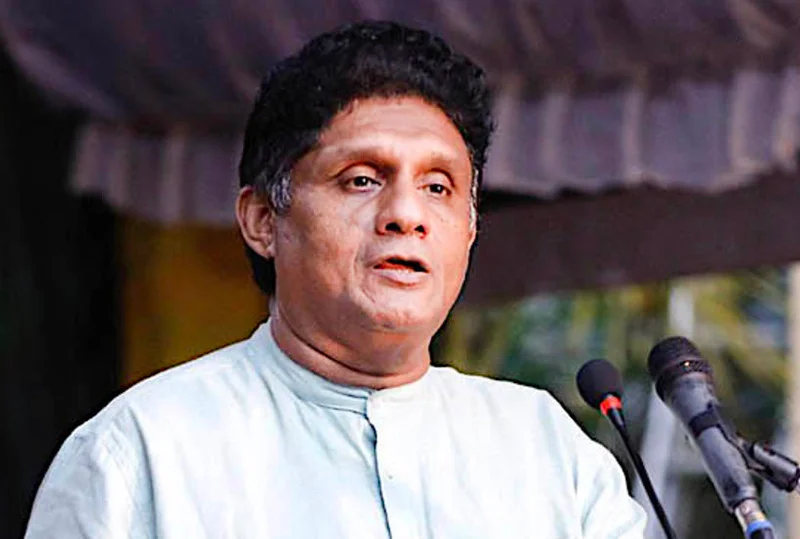
Opposition Leader Sajith Premadasa yesterday strongly criticised proposals to increase electricity tariffs, warning that the move would deepen the hardships faced by the public already reeling from disasters and rising fuel costs.
Premadasa, who is also the leader of the SJB, told Parliament that the government was considering an electricity price hike at a time when people were struggling to recover from recent crises, while coping with higher fuel prices. He accused the administration of acting contrary to its own election pledges and the expectations of suffering people.
Making a special statement, the Opposition Leader recalled that the government had come to power promising to reduce electricity bills by 30 percent, within three years, by shifting from fuel-based power generation to cheaper renewable sources, such as solar, wind and hydropower. Instead, he said, those commitments had been abandoned.
Premadasa pointed out that the CEB has sought approval from the Public Utilities Commission of Sri Lanka (PUCSL) for an 11.57 per cent tariff increase for the first quarter of 2026 to cover its losses. He questioned whether the government had assessed the impact of such an increase on low- and middle-income households, as well as state institutions.
He also asked why the government had failed to honour its promise to cut electricity tariffs by one-third through a transparent pricing mechanism.
The Opposition Leader further criticised the limited time allocated for public consultations on the proposed new energy policy, saying it was unfair and should be extended, particularly given the prevailing national crises.
Premadasa warned that the removal of competitive tariff structures for industries would be unjust to large-scale consumers using more than five million units of electricity, and called for comparative reports before any subsidies are withdrawn.
He added that despite earlier assurances to reduce electricity bills by 33 percent, the government has once again increased fuel prices, even as global fuel prices decline, continuing, what he described as, a pattern of broken election promises.
Accusing the government of being constrained by International Monetary Fund (IMF) conditions, Premadasa said the simultaneous increases in fuel and electricity prices were exacerbating the economic burden on the public.
By Saman Indrajith

Record prize money on offer at Australian Open

ICC to Bangladesh: play in India or forfeit points

Showers will occur at times in the Uva province and in Batticaloa, Ampara, Polonnaruwa, Matale and Hambantota districts

UK and France to send troops to Ukraine if peace deal agreed

Six dead and hundreds of flights cancelled as snow causes chaos across Europe

Prez seeks Harsha’s help to address CC’s concerns over appointment of AG

‘Dates have the highest sugar content to fight Coronavirus’

Sunday Island 27 December – Headlines

#SundayIsland 17th December – Headlines

Sunday Island – 28th March

Sunday Island Headlines – 21 March

Sunday Island – 21st February – Headlines
-
 News1 day ago
Broad support emerges for Faiszer’s sweeping proposals on long- delayed divorce and personal law reforms
-

 News2 days ago
Private airline crew member nabbed with contraband gold
-

 News1 day ago
Interception of SL fishing craft by Seychelles: Trawler owners demand international investigation
-

 News4 days ago
Health Minister sends letter of demand for one billion rupees in damages
-

 Opinion6 days ago
Remembering Douglas Devananda on New Year’s Day 2026
-

 Features2 days ago
Pharmaceuticals, deaths, and work ethics
-
 News1 day ago
US raid on Venezuela violation of UN Charter and intl. law: Govt.
-

 Features1 day ago
Educational reforms under the NPP government