
Business
Gal Oya Plantations seen as role model for profitable public-private partnerships

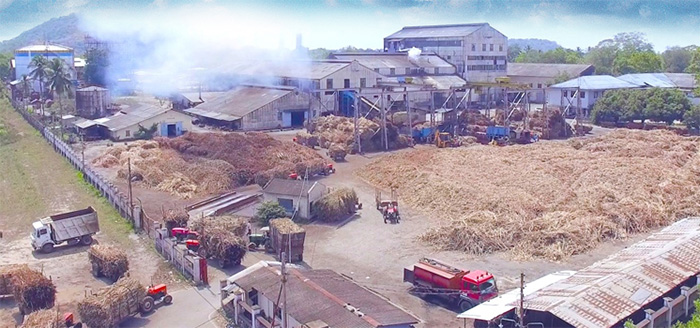
At a time when enhancing profitability of public enterprises is an urgent need to boost the national economy of Sri Lanka, the revival and turnaround of Gal Oya Plantations (formerly known as Hingurana Sugar factory) by LOLC is an embodiment of how the nation’s assets can be enhanced through professionalism and expertise by the private sector. Underperforming state enterprises are a drain on state coffers as has been seen only once too often, an LOLC press release said.
The release adds: ‘However a profit making state enterprise on the other hand can be a vibrant source of revenue, employment and a critical pillar of food security. Public-Private Partnerships (PPPs) of this nature demonstrate how having professionals from the private sector turning state enterprises profitable, can generate valuable income for the government while allowing the government to retain its majority stake. As Sri Lanka’s first PPP initiated to revive non-operational government entities in 2007, the revolution brought about by the Gal Oya plantations today is empowering the local sugarcane farmers and bringing prosperity to their lives and leading to social upliftment, all the while generating massive profits for state coffers.
‘The Hingurana Sugar Factory was Sri Lanka’s first set up in 1959 as a fully-owned subsidiary under the Sri Lankan Government till 1991, when it was fully privatized. However, by 1994 the project was abandoned and the government closed down the factory in 1997. The lack of required funding and technical expertise in the sugar industry led to the unfortunate shutdown of a fully functional plant. Even though the factory had been abandoned for over a decade, the Browns Group evinced an interest in reviving the project. Thus, Gal Oya Plantations was formed 15 years ago in 2007 as a joint venture between the Government and a consortium of private sector investors comprising Brown and Company PLC and LOLC Holdings PLC. Even today, 51 per cent of the ownership is with the Government and 49 per cent of the shares are owned by the consortium that was formed to revive the sugar factory.
‘Resuscitating an abandoned factory that has lain idle for 15 years and reviving a degraded plantation was no mean task, but LOLC was fully prepared. In addition to refurbishing the plant, supporting infrastructure was urgently required, including converting irrigation, roads, drainage and restarting sugarcane plantations. The company had to earn the trust of the local farmers who had been left high and dry the last time around when the government closed down the factory, forcing them to turn to paddy cultivation and odd jobs to make a living. Today, the thriving sugar plantation employs about 1,300 direct employees across 8,500 Ha of agri lands. About 8000 farmers are engaged in sugarcane cultivation and over 20,000 people gain indirect employment from this project. Gal Oya Plantations not only revived the plantation and generated employment for thousands but it also made it a profitable entity.
‘It was only LOLC’s passion to revive a national asset that kept them committed to this mammoth task. Since the factory is over 60 years old, its equipment needed improvement to drive higher efficiency and productivity and for extending the life of the plant. Moreover, skilled labour was a scarce commodity and had to be sourced from across the country. Overcoming all these seemingly insurmountable obstacles, Gal Oya has gained the reputation of being a giant in sugar production in the country, and a role-model of a successful PPP and professionally managed entity.
‘Sourcing the funding for the project itself was an epic undertaking as the government did not channel any investment in the factory revival project, except for its equity asset of LKR 516 million, which could not be given as security. Hence, funds could not be borrowed against it. Notwithstanding this road block, LOLC invested Private Equity amounting to LKR 495 million into the project, along with taking commercial loans.’
‘Productivity has skyrocketed as a result of improved machinery and agricultural practices. Some 374,000 metric tons of sugarcane was used for production last year and the quantity of sugar produced was 24,000 metric tons. The target for 2022/23 was to produce 30,000 metric tons. Besides sugar, the Gal Oya factory also produces 6.7 million litres of ENA (Extra Neutral Alcohol) from molasses, a byproduct of sugar production. This is the highest in the history of Hingurana since 1960. The distillery complex at Hingurana is designed to produce 21,500 litres of ENA/day.
‘Committed to making this project a role-model for PPPs in Sri Lanka, Gal Oya embedded sustainable systems and processes. The factory is currently in the process of expanding its power generation capacity up to 10 MW by investing in a modernized power plant with improvements to the existing sugar factory. Moreover, the required organic fertilizer for sugar cane cultivation is manufactured by utilizing 100% of factory waste of the Company. Achieving an annual production of 7500 MT organic fertilizer, the company is now engaged in producing liquid organic fertilizer and bio fertilizer.
‘The significance of a professionally managed, high returns project such as Gal Oya is boosting the grassroots and firing up the engine of the economy. In fact, in the next five-year plan for Gal Oya, the development of an area of 10,500 Ha is earmarked for sugarcane cultivation, which should result in a 1 Mn MT worth of cane supply. A further investment in factory expansion to 4000TCD is scheduled with an investment of US$25 to US$30 million.
‘It is pertinent to note that the economic benefits that emanate from the profit making status of Gal Oya. Producing 75,000 MT of sugar results in import substitution of US$ 35 million per annum and contributes 12% -15% of country’s requirement ONLY from Gal Oya. This foreign exchange saving in turn helps to enhance foreign exchange reserves in the country during the current economic crisis. In addition, production of 14 million liters of ENA results in import substitution of US$ 14 million per annum and further assists self-sufficiency in ENA.
‘The benefits flowing to the people in the community from Gal Oya are undeniable and it is imperative that the sugar factory continue smooth operations to enhance food security whilst also providing direct and indirect employment to keep home fires burning. At a time when the government is being asked to reverse the years of losses made by state enterprises in order to meet the requirements to be eligible for global funding, a profitable project like Gal Oya should be a shining example for more such PPPs – bringing the best of Sri Lanka together to serve the nation.’



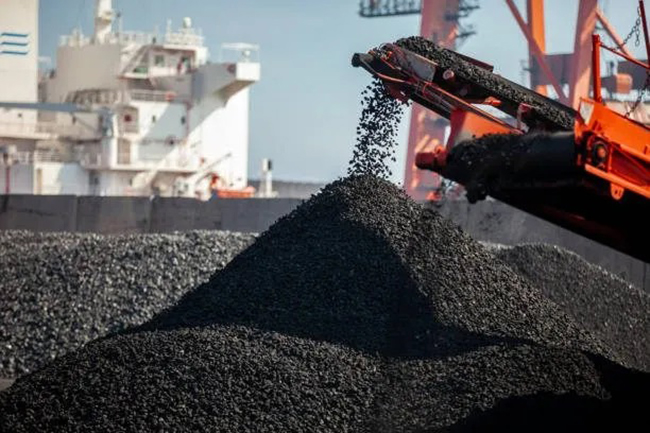
Operations at Sri Lanka’s main coal-fired power facility, the Lakvijaya coal power plant, suffered a significant disruption soon after a new shipment of coal was introduced, raising concerns over generation stability and environmental emissions.
Energy analyst Dr. Vidura Ralapanawa said in a social media post that the plant began using coal from “Ship 11” on Wednesday, following confirmation from officials of the Ceylon Electricity Board (CEB).
However, almost immediately after the new batch of coal was fed into the system, the plant’s generation capacity began to decline due to the poor quality of the fuel.
According to Dr. Ralapanawa, the plant’s output dropped by about 82 megawatts overall. Unit 1 recorded a drop of 45 MW, Unit 2 fell by 15 MW, and Unit 3 declined by 22 MW shortly after the coal was introduced.
The situation worsened later in the night when two coal mills in Unit 3 reportedly became clogged around 11 p.m., causing a rapid fall in generation capacity. Unit 3, which normally operates at a higher output level, was said to be running at around 170 MW following the malfunction.
Coal mills are a crucial component in coal-fired power generation. They grind raw coal into a fine powder before it is fed into the boiler for combustion. Each generating unit at the Norochcholai facility is equipped with five coal mills, and any obstruction in these systems can severely affect plant operations.
When mills become clogged, plant operators often have to rely on diesel-fired burner guns to stabilise the flame inside the boiler. While this helps maintain combustion, it significantly increases operating costs because of the high price of diesel.
The heavy use of diesel has another consequence. According to Dr. Ralapanawa’s post, when diesel firing increases, the plant’s Electro-Static Precipitators (ESPs) must be shut down. ESPs are designed to capture and remove particulate matter such as fly ash before emissions are released through the chimney.
With the ESPs switched off, large amounts of fly ash may be released into the atmosphere, potentially affecting surrounding communities.
Dr. Ralapanawa further noted that the coal shipment appears to have low calorific value, low volatile matter, and high ash content, all of which reduce combustion efficiency. In addition, the coal reportedly has a low grindability index, making it harder to pulverise and increasing the likelihood of mill blockages.
He added that while the immediate clogging of the mills may be cleared within a day, the underlying quality issues with the coal could make the problem persistent.
The development comes amid earlier assurances from officials of the Ceylon Electricity Board that the Norochcholai plant could be operated effectively even with lower-quality coal supplies.
The Norochcholai facility, with an installed capacity of 900 MW, is the largest power station in Sri Lanka and a critical component of the national grid. Any disruption to its operations can have wider implications for the country’s electricity supply, potentially forcing the system to rely on more expensive oil-based power generation.
Engineers are currently working to address the clogged mills and stabilise generation, but energy analysts warn that unless the fuel quality improves, similar operational issues could recur.
By Ifham Nizam

CSE trading yesterday was positive overall on account of local economic growth prospects but concerns deriving from West Asian tensions lingered.
The market is still recovering from previous days’ uncertainties, market analysts said.
The All Share Price Index went up by 256 points, while the S and P SL20 rose by 63.8 points. Turnover stood at Rs 5.68 billion with nine crossings.
Seven crossings were reported in HNB Finance where 130 million shares crossed to the tune of Rs 1.1 billion; its shares traded at Rs 8.50, LMF four million shares crossed for Rs 348 million; its shares traded at Rs 87, Commercial Bank 661,000 shares crossed for Rs 142 million; its shares traded at Rs 215, Seylan Bank (Non-Voting) 750,000 shares crossed for Rs 49 million; its shares sold at Rs 75.50, ACL Cables 500,000 shares crossed for Rs 49 million; its shares traded at Rs 98, HNB 100,000 shares crossed for Rs 43.2 million; its shares sold at Rs 432 and Access Engineering 500,000 shares crossed for Rs 38.5 million and its shares fetched at Rs 77.
In the retail market companies that mainly contributed to the turnover were; HNB Finance Rs 331 million (34.8 million shares traded), Lanka Credit and Business Finance Rs 184 million (21.6 million shares traded), LOLC Holdings Rs 180 million (320,000 shares traded), Commercial Bank Rs 167 million (774,000 shares traded), Softlogic Capital Rs 138 million (twelve million shares traded), Sampath Bank Rs 124 million (789,000 shares traded) and ACL Cables Rs 123 million (1.26 million shares traded). During the day 330 million share volumes changed hands in 36639 transactions.
It is said that the banking and financial sectors performed well. HNB Finance was active in the financial sector, while Commercial Bank and HNB were active in the banking counters.
Further, National Development Bank has received Colombo Stock Exchange approval in principle to list Rs 16 billion of 11.50, 11.04 and 11.85 percent debentures, it said in a CSE filing.
NDB will issue 120 million Tier 2, listed, rated, unsecured, subordinated, redeemable Basel III compliant GSS+ bonds with a non-viability conversion, at Rs 100 each.
Yesterday the rupee was quoted at Rs 310.70/85 to the US dollar in the spot market, weaker from Rs 310.30/60 the previous day, dealers said, while bond yields were broadly steady.
By Hiran H Senewiratne

A new crisis looms with a second Iranian vessel at the doorstep
Sri Lanka’s parliament became a secondary battleground yesterday as the sinking of the Iranian frigate IRIS Dena ignited a fierce debate over national sovereignty, regional maritime priciples, and the government’s perceived ‘strategic paralysis.’
While the Navy’s rescue of 32 sailors was initially painted in shades of heroism, Opposition MPs have now unfurled a narrative of missed warnings and geopolitical betrayal.
In a scathing address, Opposition firebrand Chamara Sampath Dissanayake challenged the circumstances of the vessel’s arrival in Sri Lankan waters. The IRIS Dena had been a guest of the Indian Navy during the MILAN-2026 exercises just days prior. Dissanayake alleged that at the conclusion of the fleet review, the vessel was effectively ‘put out’ of India, leaving the crew with no choice but to steer toward Sri Lanka.
“This was a deliberate attempt by the host to put a guest in harm’s way,” Dissanayake charged, stopping just short of naming India directly while making the implication undeniable. He argued that Sri Lanka had been ‘set up’ to deal with the fallout of a targeted strike that occurred only 11 nautical miles from Galle.
The debate took a darker turn when SJB MP Mujibur Rahman dropped a bombshell regarding the timing of the attack. Rahman alleged that the IRIS Dena had signalled for permission to enter Sri Lankan waters 11 hours before it was struck by U.S. torpedoes.
“Why did the authorities keep silent?” Rahman demanded. He blasted the government for failing to act on humanitarian grounds, suggesting that Colombo’s hesitation provided the necessary window for what U.S. Defense Secretary Pete Hegseth termed a ‘Quiet Death.’ Rahman’s critique painted a picture of a government ensnared in superpower machinations, unable to uphold the principles of the Indian Ocean as a ‘Zone of Peace.’
Responding to the barrage of questions, Cabinet Spokesman Dr. Nalinda Jayatissa confirmed a chilling new development: a second Iranian vessel is currently positioned in the Exclusive Economic Zone (EEZ) off Colombo.
While Jayatissa assured the House that the President and the Security Council are ‘fully aware’ and making ‘necessary interventions’ to protect those on board, the lack of specific details fueled further anxiety. Political analysts suggest that the government’s failure to announce a clear, proactive neutral policy has left it in a state of ‘vacillation,’ unable to decide whether to grant refuge to the second ship or risk another tragedy on its doorstep.
The parliamentary clash was punctuated by the visit of former president Ranil Wickremesinghe to the Iranian Embassy yesterday to offer condolences for the passing of Supreme Leader Ayatollah Ali Khamenei. Wickremesinghe had warned on March 2 – just 48 hours before the sinking – that the current ‘leadership eviction’ methodology in the Middle East could destabilise the Indian Ocean.
As the death toll from the IRIS Dena stands at 87 with 60 still missing, the ‘can of worms’ opened in parliament reveals a nation at a crossroads. The government’s silence during the Dena’s final hours and its current ‘intervention’ with the second vessel will likely define Sri Lanka’s standing in a rapidly fragmenting global order.
As the House adjourned, one question remained hanging in the air: In the face of a superpower conflict, does Sri Lanka have the ‘backbone’ to be truly neutral, or is it merely a spectator to its own maritime destiny?
by Sanath Nanayakkare

Showers or thundershowers are likely at a few places in the Southern province and in Rathnapura, and Kaluthara districts during evening or night.

‘IRIS Dena was Indian Navy guest, hit without warning’, Iran warns US of bitter regret

Risk of power cuts due to use of low-quality coal,PUCSL warns

Sajith demands clear statement from govt. about Iranian vessel sunk close to Galle and another located near Colombo port

Sri Lanka evacuates crew of second Iranian vessel after US sunk IRIS Dena

University of Wolverhampton confirms Ranil was officially invited

‘Dates have the highest sugar content to fight Coronavirus’

Sunday Island 27 December – Headlines

#SundayIsland 17th December – Headlines

Sunday Island – 28th March

Sunday Island Headlines – 21 March

Sunday Island – 21st February – Headlines
-

 Features4 days ago
Brilliant Navy officer no more
-

 Opinion4 days ago
Sri Lanka – world’s worst facilities for cricket fans
-

 Business1 day ago
Cabinet nod for the removal of Cess tax imposed on imported good
-

 Features4 days ago
A life in colour and song: Rajika Gamage’s new bird guide captures Sri Lanka’s avian soul
-
 Features5 days ago
Overseas visits to drum up foreign assistance for Sri Lanka
-
 Features5 days ago
Sri Lanka to Host First-Ever World Congress on Snakes in Landmark Scientific Milestone
-
 Latest News1 day ago
Around 140 people missing after Iranian navy ship sinks off coast of Sri Lanka
-

 Latest News7 days ago
Can resourceful New Zealand lock in semi-final spot against already-qualified England?