Emergency receives some lawyers’ backing:
By Shamindra Ferdinando
In spite of the Bar Association of Sri Lanka (BASL) being quite clearly opposed to the declaration of Emergency, to deal with the continuing challenge posed by the ‘protest movement’, an increasingly vociferous section of the lawyers overwhelmingly support measures taken by President Ranil Wickremesinghe, who is also the Commander-in-Chief of the armed forces.
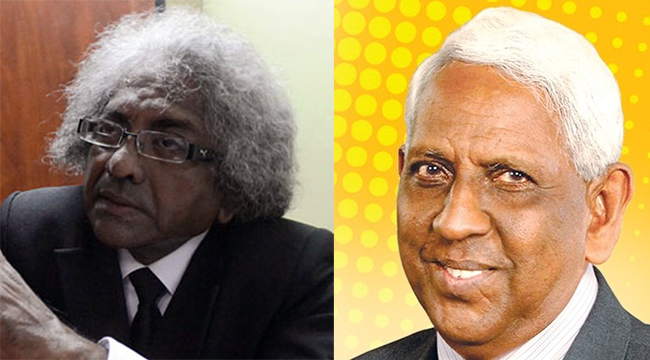
Appearing on ‘Rathu Ira,’ anchored by Nimesh Wijesuriya, on Swarnavahini on Thursday (04) night, a former top hand in the Attorney General’s Department Srinath Perera, PC, and several senior lawyers, including Tirantha Walaiyadde, PC, and Attorney-at-Law Ravindra Manoj Gamage, strongly backed the declaration of Emergency, though they expressed concerns over previous accusations directed at the UNP leader.
The panel included Attorney-at-Law Nuwan Bopage, a key member of the Frontline Socialist Party (FSP), one of the groups that spearheaded the ‘operation’ leading to the forced resignation of Gotabaya Rajapaksa, on July 14. On behalf the breakaway JVP faction, lawyer Bopage vowed to resist Wickremesinghe’s onslaught whatever the consequences.
Issuing a dire warning to junior colleague Bopage that he would end up in jail for working against the State, Walaiyadde emphasised whatever the allegations directed at President Ranil Wickremesinghe in the past, he should be given the time and space to address the unprecedented issues at hand. “If the new President is denied at least six months to take tangible measures to overcome the challenges, the country should be prepared for a civil war,” the senior attorney warned.
Walaiyadde endorsed security measures against the threat posed by those hell-bent on overthrowing the government outside constitutional means, but declined to comment on current judicial proceedings pertaining to cases involving the protest movement and related actions. The outspoken lawyer said that no one had emerged as the leader/leaders of the increasingly militant protest movement, though it initially claimed that it was non-partisan and peaceful. The protest grouping tried to cover up its failure claiming all of them represented the leadership,
Nimesh Wijesuriya dealt with issues related to the ‘protest movement’ in the wake of the continuing debate over the role played by the Bar Association of Sri Lanka (BASL) in the overall project. Attorney-at-Law Manoli Jinadsa recently raised a very pertinent question about the failure on the part of the BASL to censure the ‘protest movement’ over such illegal acts like the seizure of the President’s House, Presidential Secretariat, the Prime Minister’s Office and torching of the then PM’s private residence. Since then BASL President Saliya Pieris, PC has essentially responded to such accusations by stating those matters are now sub judice as they are before courts.
Walaiyadde called those who had been engaged in protest outside the Geneva-based United Nations Human Rights Council (UNHRC) demanding external interventions traitors. Alleging interested parties propagated lies to undermine the government of the day, Walaiyadde said that they should be dealt with.
At the beginning of the programme, Bopage slammed the Wickremesinghe administration over the ongoing attempts to suppress the ‘protest movement.’ Alleging Wickremesinghe exploited the public protest to his advantage, Bopage demanded to know the rationale in the President changing his stand on many matters as soon as he received the presidency.
Bopage declared that the ‘protest movement’ would continue as long as the government fails to address burning issues.Strongly endorsing the right to dissent, lawyer Gamage alleged that those who had engaged in what he called murderous politics of the 80s, took advantage of the public struggling to make ends meet.
Condemning the attack carried out at Galle Face allegedly at the behest of Temple Trees on May 09, lawyer Gamage accused far greater conspirators’ engineered meticulous countrywide violence.Attorney-at-Law Gamage questioned the ‘protest movement’s demand for the resignation of President Gotabaya Rajapaksa’s successor. Declaring that the UNP leader should be given an opportunity to address the issues at hand, lawyer Gamage demanded to know who the FSP’s choice was for presidency.
Former Additional Solicitor General Srinath Perera censured President Wickremesinghe over his past conduct with reference to Treasury bond scams perpetrated in 2015 and 2916 during his tenure as the Prime Minister while challenging the new President to investigate high profile corruption cases involving the Rajapaksa family.
Declaring the Rajapaksas would never be punished by an administration led by Wickremesinghe, lawyer Perera PC said that the President’s intention was to somehow protect the corrupt lot.Therefore, justice shouldn’t be expected from President Wickremesinghe, the former UNPer said, while throwing his weight behind the emergency declared by the new leader.
Walaiyadde lambasted the JVP and its offshoot FSP over violence directed at the State. The lawyer dismissed efforts to portray the ‘protest movement’ as peaceful. The lawyer called for harshest possible action against those who had engaged in violence. Colleagues Perera and Gamage accepted that stance.
All of them said that while the right to dissent should be respected, efforts to subvert the country couldn’t be tolerated under any circumstances.Walaiyadde said that those in and outside the Parliament responsible for encouraging violence should be dealt with.
Nuwan Bopage said that the State/Government had failed to address the grievances of the masses. The FSP spokesperson queried the absurdity in lawyers representing the interests of the State/Government while the public were deprived of the basic needs and two proper meals a day. Bopage maintained that those who benefited from the utterly corrupt system shamelessly threw their weight behind deceitful leaders.Gamage countered declaring ‘rule of law’ is not ‘rule of lawyers’
Gamage reminded how Bopage threatened the IGP and other senior police officers, including Senior DIG Deshabandu Tennakoon outside the police headquarters. Bopage had no qualms in declaring they knew where the IGP and other senior officers lived, Bopage said. What the lawyer meant was their residences, too, could be destroyed at any time. How such actions could be termed peaceful?.
Gamage alleged that those who inspired violence wouldn’t be there for those who end up in jail. The lawyer pointed out that hundreds of persons taken in by law enforcement authorities over violent incidents would have bear the legal costs while those who inspired them turned a blind eye to their plight.