
Business
Food Security in the BIMSTEC Region: Lessons from Sri Lanka’s Smart Farmingax


By Dr Manoj Thibbotuwawa
Sri Lanka is hosted the fifth Bay of Bengal Initiative for Multi-Sectoral Technical and Economic Cooperation (BIMSTEC) summit on 30 March 2022. Established in 1997, BIMSTEC is a seven-member regional organisation comprising Bangladesh, Bhutan, India, Nepal, Myanmar, Sri Lanka, and Thailand. BIMSTEC pays significant attention to agriculture and food security, with agriculture included as a stand-alone sector in 2005 in recognition of its importance. Sri Lanka, the lead country for the coordination of activities in the Science, Technology and Innovation Sector, is in the midst of a food crisis even as it plays host. Against this backdrop, this blog discusses food security challenges in the BIMSTEC region, Sri Lanka’s experiences in smart farming, and its expectations from the summit.
Food Security Challenges in
the BIMSTEC Region
BIMSTEC’s growing population is exerting tremendous pressure on the agriculture sector and food security. The need is to find ways to enhance agricultural growth to meet the present and future demand for food, but achieving this goal is complicated due to the region’s numerous inherited challenges. These include the inefficient use of inputs such as water and fertiliser, poor technologies, lack of market integration leading to stagnating crop yields, declining profitability, and the deteriorating value of food production in these countries.
The BIMSTEC region remains among the poorest in the world, with lower per capita GDPs and higher Poverty Headcount Ratios. Nepal, Myanmar, India, and Bangladesh have a per capita GDP of less than USD 2,000 and a poverty headcount ratio of over 21%. Climate change, inconsistent domestic and trade policies, and weakened agricultural institutions are further aggravating the aforesaid challenges on food availability and access to food mainly for vulnerable populations including smallholder farmers and poor households.
Food utilisation is also not optimal, as shown in the FAO nutrition indicators for the region. For example, the stunting rate is the highest in India (30.9%), followed by Bangladesh (30.4%) and Nepal (30.2%). Even Myanmar (25.2%) and Bhutan (22.4%) have higher stunting rates than the world average of 22%. Another indicator of malnutrition, wasting, is highest in India (17.3%), followed by Sri Lanka (15%) and Bangladesh (10%), and these figures have not improved much over the years.
Moreover, a significant share of the population suffers from other malnutrition indicators like low birth weight and undernourishment. In addition, the COVID-19 pandemic is likely to cause a reversal of whatever achievements have been made so far by BIMSTEC countries in terms of food security. Crucially though, the continued implementation of smart farming in agriculture can help mitigate some of these food security problems experienced in the region.
Sri Lanka began its gradual push towards smart farming with its E-agriculture Strategy in 2016 which was the first in the Asia Pacific. This was motivated primarily by the belief that several opportunities exist through innovative Information Communication Technology (ICT) solutions to address numerous challenges to food security. In particular, access to the right information at the right time enables farmers to make informed decisions and improve their livelihoods, thereby playing a major role in ensuring food security. The country also has a vibrant ICT sector with wide adoption and awareness of ICTs in other critical areas such as telecom and banking which provided the transformative potential for agriculture stakeholders. The rapid growth of mobile voice and the internet in Sri Lanka also provided new avenues to share and access information.
A Public-Private-Producer partnership has been identified as one of the key strategic development areas to achieve the E-agriculture Strategy in Sri Lanka. With the content support from the Ministry of Agriculture and the Ministry of Health, private telecommunications service provider Dialog’s Govi Mithuru offers customised and timely advice to farmers on land preparation, cultivation, crop protection, harvest and improved family nutrition. Dialog is now looking at digitising the leaf colour index, helping farmers check the nutrition status and deficiencies of plants and developing Internet of Things (IoT) enabled automation tools for the agricultural sector.
Govipola is a trilingual mobile phone app and web-based programme which allows farmers, buyers and sellers to access prices. The European Union’s Technical Assistance to the Modernization of Agriculture Programme (TAMAP) assisted the Mahaweli Authority of Sri Lanka (MASL) to launch a pilot ‘Smart Farming Village’ programme while training MASL staff, vendors and farmers in the use of digital apps with an extensive outreach and communication plan by partnering private sector Digital Service Providers and transport services such as PickMe.
Sri Lanka’s large agribusiness companies such as Chemical Industries Colombo (CIC) and Hayleys are increasingly using the latest innovation to provide crop application requirements to suit the local conditions from the Department of Agriculture and relevant research institutions. These include drones for scanning fields and distributing agrochemicals and fertiliser with minimum human involvement and wastage and cutting-edge greenhouse technology, such as automated climate control and fertigation as well as hydroponics to enable “climate smart,” year-round production. Building upon Sri Lanka’s unique experience, the BIMSTEC region can strengthen science, innovation, and technological cooperation in agriculture to mitigate food security challenges.
Way Forward
Given that the agricultural sector research and development (R&D) is very low, and the agriculture and food processing sectors continue to use outdated technologies and inefficient manufacturing techniques, the region needs more innovation to boost its global competitiveness, harness its knowledge base, enhance its economic position, and tackle the food security challenges. However, rising protectionism in technology and intellectual property rights (IPR) markets has made the acquisition of advanced technologies a severe challenge to developing countries in the region.
Therefore, South-South Cooperation (SSC), like BIMSTEC, provides a good platform to govern technology transfer among BIMSTEC economies. Similar factor endowments such as land, labour, capital, entrepreneurship in the region can mutually contribute to addressing regional developmental needs, including rural income generation, poverty alleviation and food security. Moreover, technologies and knowledge pools available in these countries are more cost-effective and easily and swiftly adaptable to the prevailing conditions in these countries.
As decided during the 17th BIMSTEC Ministerial Meeting in 2021, Sri Lanka must take the necessary steps to establish an Expert Group on Technology to coordinate cooperation in the technology sub-sector and to develop a Plan of Action to strengthen cooperation in technology, including in agriculture and food processing sectors. Further, establishing a regional network of Technology Transfer Offices of major research organisations like the European Technology Transfer Offices Circle will ensure efficient and effective scientific and technological exchanges, sharing technological know-how, joint R&D, and industrial application of higher technology. Finally, local industries could increasingly harness more benefits through participation in regional value chains (RVCs) and global value chains (GVCs).
Link to the full Talking Economics blog: https://www.ips.lk/talkingeconomics/2022/03/29/food-security-in-the-bimstec-region-lessons-from-sri-lankas-smart-farming/
Manoj Thibbotuwawa is a Research Fellow at IPS with research interests in agriculture, agribusiness value chains, food security, and environmental and natural resource economics. He holds a BSc (Agriculture) with Honours from the University of Peradeniya, an MSc (Agricultural Economics) from the Post-Graduate Institute of Agriculture at the University of Peradeniya, and a PhD from the University of Western Australia. (Talk with Manoj – manoj@ips.lk)



National Airport Exit Survey tells quite a story
Australia’s role here is strategic, not charitable
In a quiet but significant shift, Sri Lanka’s tourism sector is moving beyond traditional destination marketing and instinct-based planning. The recent launch of the “From Data to Decisions” initiative jointly backed by Australia’s Market Development Facility and the Sri Lanka Tourism Development Authority, sent an unambiguous message: sentiment is out, statistics are in.
The initiative is anchored by a 12-month National Airport Exit Survey, a trove of data covering 16,000 travellers. The findings sketch a new traveller profile: nearly half are young (20–35), independent, and book online. Galle, Ella, and Sigiriya are the hotspots; women travellers outnumber men; and a promising 45% plan to return. This isn’t just trivia. It’s a strategic blueprint. If Sri Lanka Tourism listens, it can tailor everything from infrastructure to marketing, moving from guesswork to precision.

Tourists have a real sense of achievement after hiking the trail to Ella Rock
The keynote speaker, Deputy Minister Prof. Ruwan Ranasinghe called data “a vital pillar of tourism transformation.” Yet the unspoken truth is that Sri Lanka has long relied on generic appeals -beaches, heritage, smiles. In today’s crowded market, that’s no longer enough. As SLTDA Chairman Buddhika Hewawasam noted, this partnership is about “elevating how we collect, analyse, and use data.”
Australia’s role here is strategic, not charitable. By funding research and advocating for a Tourism Satellite Account, it is helping Sri Lanka build a tourism sector that is both sustainable and measurable. Australian High Commissioner Matthew Duckworth linked this support to “global standards of environmental protection” – a clear nod to the growing demand for green travel. This isn’t just aid; it’s influence through insight.
“The real test lies ahead,” a tourism expert told The Island. “Data is only as good as the decisions it drives. Will these insights overcome bureaucratic inertia? Will marketing budgets actually follow the evidence toward younger, independent, female travellers?,” he asked.
“The comprehensive report promised for early 2026 must move swiftly from recommendation to action. In an era where destinations are discovered on Instagram and planned with algorithms, intuition alone is a high-stakes gamble. This forum made one thing clear: Sri Lanka is finally building its future on what visitors actually do – not just what we hope they’ll do. The numbers are in. Now, the industry must dare to follow them,” he said.
By Sanath Nanayakkare

In his inaugural address as the new Chairman of the Asia Tea Alliance (ATA), Nimal Udugampola placed the region’s millions of smallholders at the core of the global tea industry’s future, asserting they are the “indispensable engine” of a sector that produces over 90% of the world’s tea.
Udugampola, who is also Chairman of Sri Lanka’s Tea Smallholdings Development Authority, used his speech at the 6th ATA Summit held in Colombo on Nov. 27 to declare that the prosperity of Asian tea is “entirely contingent” on the resilience of its small-scale farmers, who have historically been overlooked by premium global markets.
“In Sri Lanka, smallholders account for over 75% of our national production. Across Asia, millions of families maintain the quality and character of our regional teas,” he stated, accepting the chairmanship for the 2025-2027 term.
To empower this vital community, Udugampola unveiled a vision focused on Sustainability, Equity, and Digital Transformation. The strategic agenda includes:
Climate Resilience: Promoting climate-smart agriculture and regenerative farming to protect smallholdings from environmental disruption.
Digital Equity: Leveraging technology like blockchain to create farm-to-cup traceability, connecting smallholders directly with premium consumers and ensuring fair value.
Market Expansion: Driving innovation in tea products and marketing to attract younger consumers and enter non-traditional markets.
Standard Harmonization: Establishing common regional quality and sustainability standards to protect the “Asian Tea” brand and push for stable, fair pricing.
Linking the alliance’s goals to national ambition, Udugampola highlighted Sri Lanka’s target of producing 400 million kilograms of tea by 2030. He presented the country’s “Pivithuru Tea Initiative” as a model for other ATA nations, designed to achieve this through smallholder empowerment, digitalization, and aligned policy objectives.
By Sanath Nanayakkare
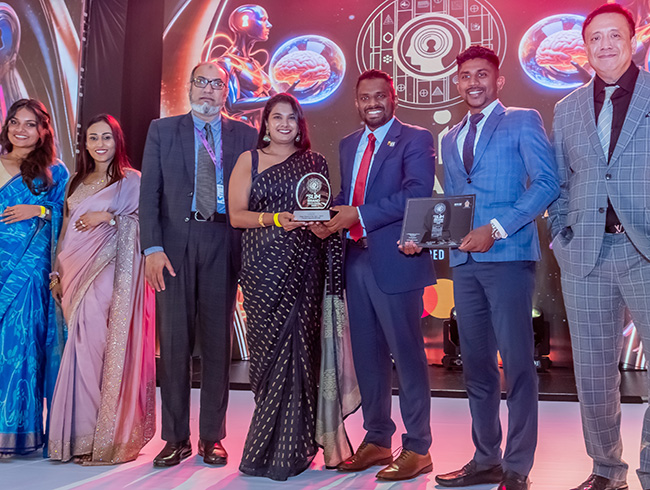
Brandix Apparel Solutions was recognised as the Green Brand of the Year at the Sri Lanka Institute of Marketing (SLIM) Brand Excellence Awards 2025, taking home Silver, the highest award presented in the category this year.
The ‘Green Brand of the Year’ recognises the brand that drives measurable environmental impact through sustainable practices, climate-aligned goals and long-term commitment to protecting natural resources.
A pioneer in responsible apparel manufacturing for over two decades, Brandix has championed best practices in the sphere of sustainable manufacturing covering environmental, social, and governance aspects. The company built the world’s first Net Zero Carbon-certified apparel manufacturing facility (across Scope 1 and Scope 2) and meets over 60% of its energy requirement in Sri Lanka via renewable sources.
Head of ESG at Brandix, Nirmal Perera, said: “Being recognised as Green Brand of the Year is an encouraging milestone for our teams working across sustainability.”

Laws to curb unauthorised constructions to be strengthened

Van Niekerk cameo, Tunnicliffe fifty give South Africa series win

627 confirmed dead, 190 persons missing as at 6:00 a.m. today [08]

Showers expected in the Northern, North-Central, Eastern and Uva provinces and Batticaloa and Ampara districts

New landslide alerts as Ditwah aftermath worsens

Over 35,000 drug offenders nabbed in 36 days

‘Dates have the highest sugar content to fight Coronavirus’

Sunday Island 27 December – Headlines

#SundayIsland 17th December – Headlines

Sunday Island – 28th March

Sunday Island Headlines – 21 March

Sunday Island – 21st February – Headlines
-
News5 days ago
Lunuwila tragedy not caused by those videoing Bell 212: SLAF
-
 News4 days ago
Level III landslide early warning continue to be in force in the districts of Kandy, Kegalle, Kurunegala and Matale
-
 Latest News6 days ago
Level III landslide early warnings issued to the districts of Badulla, Kandy, Kegalle, Kurunegala, Matale and Nuwara-Eliya
-

 Features6 days ago
Ditwah: An unusual cyclone
-

 Business2 days ago
LOLC Finance Factoring powers business growth
-

 News2 days ago
CPC delegation meets JVP for talks on disaster response
-

 News2 days ago
A 6th Year Accolade: The Eternal Opulence of My Fair Lady
-

 Midweek Review5 days ago
House erupts over Met Chief’s 12 Nov unheeded warning about cyclone Ditwah