
Latest News
Flying Finn launches New Zealand into the final with record ton


On Saturday, New Zealand had nervously tuned into Sri Lanka vs Pakistan, wondering if they could sneak into the semi-final. Matt Henry was on the way back home from Colombo for the birth of his second child. New Zealand’s build-up to the semi-final was just as uncertain as they waited anxiously for their bowling spearhead to return. On Wednesday, their performance in the semi-final was anything but uncertain as they KO’d South Africa, who were unbeaten until this game, and launched New Zealand into their second men’s T20 World Cup final.
After their attack welcomed Henry back and limited South Africa to 169 for 8 on a slower-than-usual Eden Gardens track, Finn Allen took centerstage and crashed a 33-ball century, the fastest ever in a men’s T20 World Cup, to make a mockery of the chase. Just as Allen was soaking in his sensational century in the middle, Tim Seifert, the other half of New Zealand’s Bash Brothers, pumped his fist in the dugout. New Zealand completed the demolition job with nine wickets and just more than seven overs to spare.
Mitchell Santner handed the new ball to offspin-bowling allrounder Cole McConchie in the second over, and he aced his match-up, taking out the left-handed pair of Quinton de Kock and Ryan Rickelton in the only over he bowled.
De Kock threw the first punch at McConchie when he swiped him over mid-on for four. McConchie then punched back next ball by darting one into the pitch and having de Kock pop a catch to mid-on for 10 off eight balls. It was the third time in five innings that de Kock was dismissed by an offspinner in this competition.
Rickelton, at No.3, had a crack at an offbreak next ball and ended up slicing a cut to short third for a golden duck. Brevis then avoided the hat-trick, but McConchie, the 18th player included in New Zealand’s T20 World Cup squad, had done his job.
With the two left-handers gone and the powerplay done, Santner introduced himself into the attack and conceded just three runs off the seventh over. The New Zealand captain helped offset the damage caused by a 17-run powerplay over from Jimmy Neesham, who had replaced legspinner Ish Sodhi.
Rachin Ravindra then struck in his first over, tossing up one at Aiden Markram’s stumps and having him caught at long-on for 18 off 20 balls. Daryl Mitchell charged in from long-on, dived forward and plucked it inches from the ground. Replays suggested it was touch-and-go, but Nitin Menon, the TV umpire, eventually ruled it as a clean catch.
After dropping Markram on 3 at midwicket, Ravindra enjoyed redemption with the ball.
Against the left-handed David Miller, Ravindra hiked his pace and aimed to hide the ball away from his swinging arc. Ravindra could have had Miller on 3 but Glenn Phillips, believe it or not, dropped a catch in the outfield. Miller added three to his tally before chipping Ravindra to Mitchell at long-off for a regulation catch. Ravindra finished with 2 for 29 in his four overs, extending his own tournament tally to 11. Among spinners, only Varun Chakravarthy, the No.1-ranked T20I bowler, has more wickets than him in this T20 World Cup.
Dewald Brevis flickered briefly for 34 off 27 balls before he was undone by the slowness of the Eden pitch. He jabbed at a drive early and ended up spooning Neesham to Santner at cover. South Africa were 77 for 5 at that point.
Marco Jansen then combined with Tristan Stubbs for a 73-run partnership for the sixth wicket – a new record for South Africa in men’s T20Is. Despite the clatter of wickets, Jansen showed his power and composure. After charging at Ravindra, his former team-mate at Washington Freedom in the MLC, and lofting him for six, Jansen lined Henry up for a no-look six over wide long-on.
He reached his half-century off 27 balls, with a six off Neesham, and finished with his T20I career best of 55 off 30 balls, including two fours and five sixes. Lockie Ferguson snapped the stand in the 19th over when he castled Stubbs for 29 off 24 balls with a nifty legcutter from around the wicket. Henry then closed out the innings with a six-run over, which also included the wickets of Corbin Bosch and Kagiso Rabada. Jansen’s half-century, though, gave South Africa’s attack something to bowl at.
That something soon turned into next to nothing once Allen took off in the chase as the dew set in at Eden Gardens. Allen faced 33 balls and sent 18 of those to or over the boundary. Rabada tried his legcutter, Lungi Ngidi dipped into his slower dipper, Jansen tried to bang it away on a hard length and Bosch offered pace, but nothing worked against Allen.
After reaching his fifty off 19 balls, Allen stormed to his ton off 33 balls. Allen shattered Chris Gayle’s previous T20 World Cup record of a 47-ball hundred against England in 2016.
It was Seifert who had made the early running, contributing 41 of the 62 New Zealand had scored in the first five overs of their chase. In the final over of the powerplay, Allen carted Bosch for a sequence of 6,4,4,4,4 as New Zealand finished with 84 for 0. It was the second-highest powerplay score in this T20 World Cup and the highest powerplay score across all knockout games in the T20 World Cup.
From thereon, it was all about Allen and his brute power. If this was a bat-off for an IPL opening spot at Kolkata Knight Riders (KKR), Allen won it emphatically. South Africa found some respite when Rabada removed Seifert for 58, but Allen finished it off in grand style at Eden Gardens, in the company of Ravindra, another Knight Rider.
Brief scores:
New Zealand 173 for 1 in 12.5 overs (Finn Allen 100*, Tim Seifert 58, Rachin Ravindra 13*; Kagiso Rabada 1-28) beat South Africa 169 for 8 in 20 overs (Aiden Markram 18, Quinton de Kock 10, Marco Jansen 55*, Dewald Brevis 34, Tristan Stubbs 29; Matt Henry 2-34, Cole McConchie 2-09, Lockie Ferguson 1-29, James Neesham 1-42, Rachin Ravindra 2-29) by nine wickets
[Cricinfo]


United States President Donald Trump says there will be a three-day ceasefire in the war between Russia and Ukraine.
Posting on Truth Social on Friday, the US leader said the truce would last from Saturday to Monday.
“I am pleased to announce that there will be a THREE DAY CEASEFIRE (May 9th, 10th, and 11th) in the War between Russia and Ukraine,” Trump posted.
Soon after, Ukrainian President Volodymyr Zelenskyy confirmed on X that a three-day truce had been arranged as part of US efforts to negotiate an end to the more than four-year-old war.
Russian presidential aide Yuri Ushakov later said “an agreement on this matter was reached during our telephone contacts with the US administration. In turn, US representatives were in contact with Kyiv.” He said the agreement followed a recent telephone conversation between President Vladimir Putin and Trump, in which the two presidents “emphasised that our countries were allies during World War II and also discussed the possibility of a ceasefire during the Victory Day celebrations.”
Russia had previously announced a two-day unilateral ceasefire to mark its May 9 World War II Victory Day on Saturday. Ukraine previously stated that it too had offered a truce but that this had been ignored by Moscow.
“This request was made directly by me,” Trump said on Friday, thanking his Russian and Ukrainian counterparts for agreeing to it.
“The Celebration in Russia is for Victory Day but, likewise, in Ukraine, because they were also a big part and factor of World War II. This Ceasefire will include a suspension of all kinetic activity, and also a prison swap of 1,000 prisoners from each Country,” Trump said. Zelenskyy also confirmed the prisoner swap would take place.
[Aljazeera]
Latest News
Heat Index is likely to increase up to ‘Caution level’ at some places in the North-central and Eastern provinces and in Mannar, Vavuniya and Monaragala districts during the daytime

Warm Weather Advisory
Issued by the Natural Hazards Early Warning Centre
Issued at 3.30 p.m. on 08 May 2026, valid for 09 May 2026
The Heat index, the temperature felt on human body is likely to increase up to ‘Caution level’ at some places in the North-central and Eastern provinces and in Mannar, Vavuniya and Monaragala districts during the daytime
The Heat Index Forecast is calculated by using relative humidity and maximum temperature and this is the condition that is felt on your body. This is not the forecast of maximum temperature. It is generated by the Department of Meteorology for the next day period and prepared by using global numerical weather prediction model data.

Effect of the heat index on the human body is mentioned in the above table and it is prepared on the advice of the Ministry of Health and Indigenous Medical Services.
ACTION REQUIRED
Job sites: Stay hydrated and takes breaks in the shade as often as possible.
Indoors: Check up on the elderly and the sick.
Vehicles: Never leave children unattended.
Outdoors: Limit strenuous outdoor activities, find shade and stay hydrated.
Dress: Wear lightweight and white or light-colored clothing.
Note:
In addition, please refer to advisories issued by the Disaster Preparedness & Response Division, Ministry of Health in this regard as well. For further clarifications please contact 011-7446491.

Kolkata Knight Riders picked up their fourth win on the trot, their spin bowlers (12-0-76-3) capturing Delhi Capitals in a vice-like grip and never letting go Finn Allen made sure that wouldn’t repeat in the second innings. He pulverised DC’s spinners (9-0-102-1) to score his first IPL century even though he only had 143 to chase.
Pathum Nissanka scored a good half-century. He made 50 of DC’s first 85 runs at a strike rate of 172. The other end could only contribute 33 at a strike rate of 103. It was symbolic of how hard it was for a new batter to settle in and how much pressure comes on the set batter on a pitch like this. Even though he was going at a good clip, and had hit the previous ball for four, he still left his crease looking for more and was stumped off Anukul Roy. The left-arm spinner took another wicket, four balls later.
DC were 74 for 2 after eight overs. But only four of those overs were from spin bowlers and three of them were inside the powerplay. Given the comfort of five fielders on the boundary, and a pitch that was slow and turning, Roy, Sunil Narine and Varun Chakravarthy started to dictate proceedings. At one point, DC scored just 11 runs in 30 balls. This was between overs 12 to 16. No IPL team in nearly two decades has ever been this sluggish in this period of play.
Roy set this choke up, stumping Nissanka out with a slower and wider delivery and bowling Tristan Stubbs out with the exact opposite of that. That was solid range for a bowler with no mystery about him.
With DC at 89 for 5, Axar Patel in wretched form (his 44 runs, with only three boundaries, are the fewest by any batter this season having faced at least 50 balls) and the conditions not helping run-scoring, all Narine and Varun had to do was what they do so well. Amp up the mystery. Aim at the stumps. Narine finished with 4-0-17-1. Varun, badly limping when he bowled his final over which cost 16 runs, finished with 4-0-28-0.
Ashutosh Sharma broke a boundary drought that last 38 balls in the 17th over. He reverse swept Vaibhav Arora, coming around the wicket, for six in the 19th over. His cameo – 39 off 28 balls – carried KKR to 142 for 8.
For the first time in his IPL career, Allen played through the powerplay. This was his eighth innings. He might have felt bad for running out his captain Ajinkya Rahane when his straight drive flicked Mitchell Starc’s outstretched finger and deflected onto the stumps but he quickly got over it. DC played a part in that a well with Kuldeep Yadav and Vipraj Nigam bowling balls right in the slot. Allen is superb down the ground and needed no second invitation. From 20 off 17, he launched 10 sixes, the last of them when KKR needed two to win and he needed six to bring up 100.
Allen had a strike rate of 235 against spin (73 off 31). The next best, from both teams, was Rahane with 167, benefiting from playing just three balls and scoring five runs.
In a match where his former team’s spinners held so much sway (economy rate 6.33), Kuldeep suffered, going at 13.66 an over even though he was spared the trouble of bowling in the powerplay. Axar bowled three with the field up and still finished with figures of 4-0-27-1.
Brief scores:
Kolkata Knight Riders 147 for 2 in 14.2 overs (Ajinkya Rahane 13, Finn Allen 100*, Cameron Green 33*; Axar Patel 1-27 ) beat Delhi Capitals 142 for 8 in 20 overs (Pathum Nissanka 50, KL Rahul 23, Axar Patel 11, Ashutosh Sharma 39; Kartik Tyagi 2-25, Anukul Roy 2-31, Vaibhav Arora 1–29, Sunil Narine 1-17, Cameron Green 1-12) by eight wickets
[Cricinfo]

Trade, Investment and Tourism Cooperation Forum strengthens economic ties between Sri Lanka and Vietnam

Accelerate projects related to resolving the public’s drinking water issues – President Instructs Officials

President of Vietnam and delegation departs Sri Lanka

Trump announces three-day ceasefire in Russia-Ukraine war

Heat Index is likely to increase up to ‘Caution level’ at some places in the North-central and Eastern provinces and in Mannar, Vavuniya and Monaragala districts during the daytime

Finn Allen’s 47-ball ton powers Kolkata Knight Riders to huge win over Delhi Capitals

‘Dates have the highest sugar content to fight Coronavirus’

Sunday Island 27 December – Headlines

#SundayIsland 17th December – Headlines

Sunday Island – 28th March

Sunday Island Headlines – 21 March

Sunday Island – 21st February – Headlines
-

 News3 days ago
MIT expert warns of catastrophic consequences of USD 2.5 mn Treasury heist
-
 News5 days ago
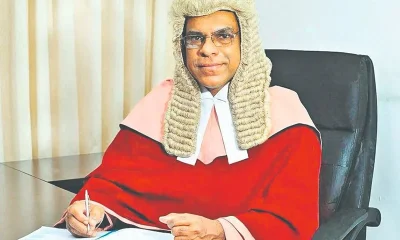
CJ urged to inquire into AKD’s remarks on May 25 court verdict
-

 News6 days ago
USD 3.7 bn H’tota refinery: China won’t launch project without bigger local market share
-

 News7 days ago
Easter Sunday Case: Ex-SIS Chief concealed intel, former Defence Secy tells court
-

 Business7 days ago
Dialog Surpasses 1,000 5G Sites, Strengthening Nationwide 5G Coverage
-

 Editorial3 days ago
Clean Sri Lanka and dirty politics
-

 Editorial6 days ago
Deliver or perish
-

 Opinion5 days ago
Security, perception, and trust: Sri Lanka’s delicate balancing act