
News
Five-year income tax exemptions for agriculture, livestock, and fisheries sectors

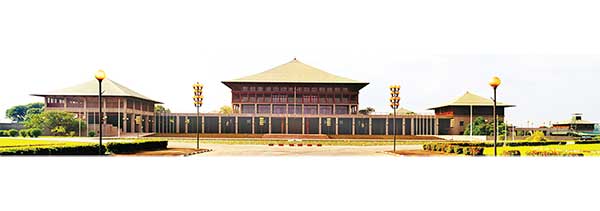
Budget for next year presented under COVID siege
* Special Tax Appeals Court to resolve tax issues expeditiously
* Rs 500,000 start-up capital loan with 5-year grace period for entrepreneurs
* A sports economy worth USD 1,000 Mn from 2021-2024
* New city universities in each district
* Rs 8 Bn for technology enhancement
* Rs. 250 mn to develop temples in villages
* Extra Rs. 2 per dollar sent by Lankans employed overseas
* Two LNG plants, one coal plant to produce 1,000MW
* Sustainable and renewable energy supply by 2023
* Rs.15 billion for expanding mobile, fixed broadband
* An additional provision of Rs. 20,000 mn for the tri-forces
* Allocation of Rs 750 mn for activities of Rana Viru Seva Authority
* 5.5% economic growth rate for 2021 expected
* 4% budget deficit goal to be achieved by 2025
By Saman Indrajith
Prime Minister Mahinda Rajapaksa in his capacity as the Minister of Finance presented the 75th budget of the country, spelling out measures and proposals to achieve poverty alleviation and economic revival.
The budget proposals aimed to support the two year medium term programme of poverty alleviation and economic revival outlined for 2021-2023 in the “Vistas of Prosperity and Splendour’, the Prime Minister said.
“The expected economic growth rate for 2021 is 5.5 percent. I emphasise that it is our medium term vision to reduce the budget gap through increasing the economic growth up to 6% and increasing the government revenue from its current level of 9.7% to 14.1%. By 2025, the budget deficit is expected to be 4% of the GDP due to growth in tax revenue through the expansion of the economy and the trust placed on the management of public expenditure and public enterprises.”
Prime MinisterRajapaksa commenced delivering the budget speech around 1.44 pm. It continued till 4.54 pm including a half-an-hour tea break between 2.43 to 3.24.
Income tax exemptions have been proposed for agriculture, livestock, and fisheries sectors for five years. In addition, a 50% income tax exemption has been proposed for local companies if get listed in the Stock Market before December 31, 2021.
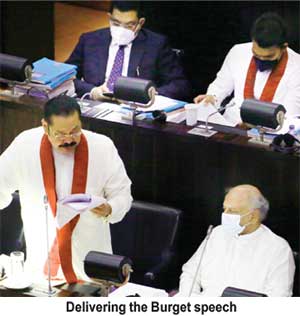 He proposed to establish a special Tax Appeals Court to facilitate the resolution of tax appeals without delays, Prime Minister Rajapaksa said.
“I propose to simplify the Taxes on Capital Gains, where such taxes will be calculated based on the sale price of a property or the assessed value of a property whichever is higher. I propose to exempt the tax on dividends of foreign companies for three years if such dividends are reinvested on expansion of their businesses or in the money or stock market or in Sri Lanka International sovereign bonds.”
The PM also noted that the government intended to bring necessary changes to the Inland Revenue Department (IRD) in order to increase the self-compliance of taxpayers and to strengthen tax audits as well as to increase tax revenues.
The Premier went to propose enforcing necessary legal provisions that enabled the cancellation of private tax consulting services that aid and abet issuance of forged tax reports.
A loan of Rs 500,000 as start-up capital with a grace period of five years would be introduced for entrepreneurs. A commitment fee of 0.25 per cent proposed to be levied from loan applicants to ensure that the funds are managed and utilized accordingly.
Prime Minister Rajapaksa proposed to allocate additional funds of Rs. 3,000 million to initiate a scholarship programme to provide Rs. 4,000 monthly allowance each to students receiving vocational education based on their active participation.
Technical colleges of which the annual intake is presently at 100,000 would be increased to 200,000 students per year, he said. A five-year-grace period for tax levied from Vocational Training Centres, which were able to double their annual intake of students, was proposed. Rs. 10,000 million would be allocated from the budget next year for new technical colleges to be established in Colombo, Kalutara, Kandy, Anuradhapura and Batticaloa. New city universities would be established in each district to cater to students pursuing popular subjects.
The PM proposed to create a sports economy worth USD 1,000 million during the period 2021-2024. For that purpose Rs 1000 million was proposed to be allocated from the budget. He proposed measures to increase female participation in national sports.
It was proposed to increase production of milk to meet local demand and a Rs. 500,000 loan will be provided for purchasing cows and meeting other dairy farm requirements. The Premier said that $300 million in foreign exchange was annually needed for milk imports and proposed to reduce that by $55 million by encouraging local milk production.
Prime Minister Rajapaksa proposed to allocate Rs. 750 million for the welfare of disabled armed forces personnel.
He proposed to allocate additional funds of Rs. 250 million to develop basic infrastructure of temples in rural areas.
The Budget proposes to allocate Rs. 8 billion for technology enhancement next year. In addition, allocation of Rs.15 billion for expanding mobile, fixed broadband under the “Gamata Saniwedanaya’ scheme was proposed. State land would be given to the Telecommunications Regulatory Commission for the proposal, the PM said.
The Prime Minister said that low-income women migrated for work and their remittances had strengthened the national economy. In a bid to increase annual remittances from migrant workers to over US$ 7 billion, he proposed to pay extra two rupees for every dollar sent by Lankans employed overseas. That was in addition to prevailing exchange rates; he said, assuring to implement a contributory pension scheme for Lankan foreign employees.
It was proposed to expedite the construction of the national expressway network and extend the Marine Drive to Moratuwa. Prime Minister Rajapaksa said a three-year programme to develop road infrastructure in the 25 districts would be introduced. Rs 1,300 million proposed to be allocated to improve the railway network including the extending of Colombo and Kelani Valley track.
Electricity consumers were assured of a sustainable and renewable energy supply by 2023.
The PM said that 70 per cent of the country’s energy supply would be obtained from renewable energy sources by 2023. The Lakvijaya and Kerawalapitiya Power Plants would be strengthened to guarantee interruption-free power supply through years 2021-2022. One coal-fired power plant of 300 MW and two LNG plants would set up. The Kerawalapitiya plant would be transformed into an LNG plant, the PM said, proposing to provide solar panels of 5 kilo watts each to 100,000 houses of low income families under an Asian Development Bank and Indian loan scheme. Loan of 4% interest rate would be provided to low income families for this purpose, he said.
Reforms were proposed for the Foreign Service and under the new reforms bilateral agreements would be reviewed to ensure national security and Sri Lanka’s non-aligned stance, the Prime Minister said, adding that under those reforms a new mechanism would be introduced to assess the efficiency and effectiveness of diplomats and foreign service officers.
“With the aim of ensuring national security, a medium term plan to enhance the professional skills of the heroes of our tri-forces, providing them with modern technological facilities is currently being prepared. In the context of resource constraints and identified priorities in the country, further strengthening of the Sri Lanka Navy has been given priority. We must combat the drug menace and must eliminate it to prevent our country becoming a hub for international illicit drug trade. The government expects to ensure that the investments will facilitate to control smuggling of goods, providing the required protection for the fishery resources and fishery communities and establishing a safe environment for carrying out tasks in the Indian Ocean.”
The PM proposed to allocate Rs. 20,000 million as an additional provision for the tri-forces to fulfill the basic requirements identified in the medium-term and long-term planning frameworks in accordance with their basic requirements.
He also proposed to allocate Rs.750 million for the activities implemented by the RanaViru Seva Authority, including the provision of medical aid, support for development enterprises, conducting of educational and vocational development programmes, housing loans and provision of supporting equipment for the disabled war heroes targeting, the retired and disabled war heroes of the tri forces, police and the civil defense force and the dependents of the families of those heroes have laid down their lives.
The Premier proposed an additional allocation of Rs. 2,500 million, to address special programmes aimed at strengthening public security. “The government has given special attention to strengthening the police so as to assure public security. We must consolidate the environment for all citizens to live freely without any fear. Resources will be allocated to support the control of the drug menace, to regulate vehicles and traffic rules, strengthening Tourist police, special training and provide the necessary facilities to prevent crimes and robberies. It is also proposed to expand the police patrols to ensure public safety by deploying special police vehicles.”
Prime Minister Rajapaksa proposed the implementation of a special loan scheme for public servants to obtain solar powered electricity. “When appointing or transferring public servants, it is proposed to ensure that such postings are made giving preference to the districts of residence. Permission will be granted for non-executive office employees of the public service to engage in other jobs or employment after office hours and those who seek foreign employment will be granted leave for two years. I propose to reduce the maximum interest charged on housing and property loans of public servants granted by banks under housing loans and advances up to a maximum of 7 per cent.”
The PM said: “The estimated Government Revenue for 2021 is Rs. 1,961 billion. The total Government expenditure is Rs. 3,525 billion and as such the difference between the revenue and the expenditure is Rs. 1,564 billion. It is planned to maintain the budget gap at 9 percent of the GDP since the private investments which amounted to 32.3 percent of the GDP in 2014 has decreased up to 27.6 percent in 2019 and since it is required to provide a robust start by the government to revive the economic growth which had stagnated recently.”
The second reading debate of the budget is scheduled to commence today (18) and continue till Nov 21. The vote on the second reading will take place at 5 pm on Nov 21. Parliament sittings will be held from the 18th to the 20th from 9.30 am to 5.30 pm. The debate of the Committee Stage will commence on Nov 23 and is scheduled to conclude on Dec 10. The final vote on the budget is scheduled to be taken at 5.00 pm on Dec 10.




Latest News
58,454 International aircraft movements in Sri Lanka in first 11months of 2025 – Ministry of Ports and Civil Aviation

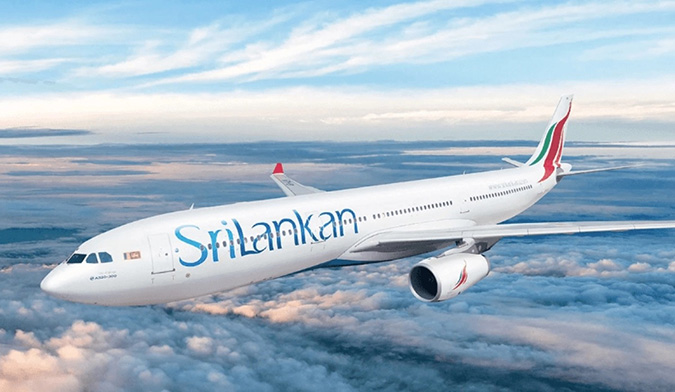
According to figures released by the Ministry of Ports and Civil Aviation there have been 58,454 international aircraft movements in the first 11 months of 2025 in Sri Lanka. [An aircraft movement refers to the count of take offs and landings at an airport]
The figures also confirm that tourist arrivals via air stands at 2.1 million.

The Inland Revenue Department has succeeded in collecting Rs. 2,203 billion in revenue in 2025, the highest amount recorded in its 93-year history. This represents a surplus of Rs. 33 billion over the revenue target for the year and a 15 per cent increase compared with the revenue collected in the previous year, stated Commissioner-General of Inland Revenue Ms Rukdevi Fernando.
She made these remarks at a discussion held on Tuesday (30) morning at the Department’s auditorium under the patronage of President Anura Kumara Dissanayake.
Marking the first occasion in the 93-year history of the Inland Revenue Department that a President has visited the Department, the President attended a meeting with the staff to review the progress achieved in 2025 and the new plans for 2026.
The President expressed his appreciation to all officers and staff of the Inland Revenue Department for surpassing the revenue expected by the Government and urged everyone to continue working towards a common objective in order to realise the economic transformation required for the country.
Emphasising that no individual is entitled to the privilege of evading taxes, the President stated that the era in which a tax culture prevailed based on personal or political affiliations has come to an end. He further stressed that the law will be enforced without hesitation, irrespective of status, against those who attempt to evade taxes.
The President also pointed out that tax collection is neither repression nor coercion but a legitimate right of the State, adding that necessary changes will be made to laws, regulations, designations and staffing in order to secure this contribution.
He further emphasised that the Government’s objective is to ensure that the benefits of these economic achievements flow to the people of the country. The Government is focusing on improving essential public services to enhance the quality of life, undertaking a new transformation of the transport system and providing adequate allocations for the development of the education and health sectors.
The President also highlighted the need for a targeted programme to properly collect the taxes due to the Government by addressing issues such as improving tax literacy, simplifying the tax system and filling staff shortages.
Ms Rukdevi Fernando stated that the professional competence and dedication of the Department’s officers were the key factors behind this success.
She further noted that a revenue target of Rs. 2,401 billion has been set for 2026 and that the Department expects to achieve this through programmes aimed at enhancing tax compliance and broadening the tax base.
In addition, she said that the Department plans to expand third-party data sharing, strengthen investigations into domestic and overseas assets, take over the RAMIS system, reinforce risk-based auditing, introduce e-invoicing, adopt modern technology for tax administration and enhance tax ethics in 2026.
Minister of Labour and Deputy Minister of Finance and Planning Dr Anil Jayantha Fernando, Deputy Minister of Economic Development Nishantha Jayaweera, Secretary to the President Dr Nandika Sanath Kumanayake, Commissioner-General of Inland Revenue Ms Rukdevi Fernando and senior officials and staff of the Department were present at the occasion.
Business
Sri Lanka Customs exceeds revenue targets to enters 2026 with a surplus of Rs. 300 billion – Director General

The year 2025 has been recorded as the highest revenue-earning year in the history of Sri Lanka Customs, stated Director General of Sri Lanka Customs, Mr. S.P. Arukgoda, noting that the Department had surpassed its expected revenue target of Rs. 2,115 billion, enabling it to enter 2026 with an additional surplus of approximately Rs. 300 billion.
The Director General made these remarks at a discussion held on Tuesday (30) morning at the Sri Lanka Customs Auditorium, chaired by President Anura Kumara Dissanayake.
The President visited the Sri Lanka Customs Department this to review the performance achieved in 2025 and to scrutinize the new plans proposed for 2026. During the visit, the President engaged in extensive discussions with the Director General, Directors and senior officials of the Department.
Commending the vital role played by Sri Lanka Customs in generating much-needed state revenue and contributing to economic and social stability, the President expressed his appreciation to the entire Customs employees for their commitment and service.
Emphasizing that Sri Lanka Customs is one of the country’s key revenue-generating institutions, the President highlighted the importance of maintaining operations in an efficient, transparent and accountable manner. The President also called upon all officers to work collectively, with renewed plans and strategies, to lead the country towards economic success in 2026.
The President further stressed that the economic collapse in 2022 was largely due to the government’s inability at the time to generate sufficient rupee revenue and secure adequate foreign exchange. He pointed out that the government has successfully restored economic stability by achieving revenue targets, a capability that has also been vital in addressing recent disaster situations.
A comprehensive discussion was also held on the overall performance and progress of Sri Lanka Customs in 2025, as well as the new strategic plans for 2026, with several new ideas and proposals being presented.
Sri Lanka Customs currently operates under four main pillars, revenue collection, trade facilitation, social protection and institutional development. The President inquired into the progress achieved under each of these areas.
It was revealed that the Internal Affairs Unit, established to prevent corruption and promote an ethical institutional culture, is functioning effectively.
The President also sought updates on measures taken to address long-standing allegations related to congestion, delays and corruption in Customs operations, as well as on plans to modernize cargo inspection systems.
The discussion further covered Sri Lanka Customs’ digitalization programme planned for 2026, along with issues related to recruitment, promotions, training and salaries and allowances of the staff.
Highlighting the strategic importance of airports in preventing attempts to create instability within the country, the President underscored the necessity for Sri Lanka Customs to operate with a comprehensive awareness of its duty to uphold the stability of the State, while also being ready to face upcoming challenges.
The discussion was attended by Minister of Labour and Deputy Minister of Finance and Planning, Dr. Anil Jayanta Fernando, Deputy Minister of Economic Development, Nishantha Jayaweera, Secretary to the President, Dr. Nandika Sanath Kumanayake, Deputy Secretary to the Treasury, A.N.Hapugala, Director General of Sri Lanka Customs, S.P.Arukgoda, members of the Board of Directors and senior officials of the Department.

58,454 International aircraft movements in Sri Lanka in first 11months of 2025 – Ministry of Ports and Civil Aviation

Lasith Malinga to work with the Sri Lanka Team in lead up to T20 World Cup

Highest revenue in 93-year history of Inland Revenue Department collected in 2025

Showers or thundershowers will occur at times in the Northern, Eastern, Central, North-central, North-western and Uva provinces

Israel to bar 37 aid groups from Gaza

Protests spread across Iran for third day after currency hits record low

‘Dates have the highest sugar content to fight Coronavirus’

Sunday Island 27 December – Headlines

#SundayIsland 17th December – Headlines

Sunday Island – 28th March

Sunday Island Headlines – 21 March

Sunday Island – 21st February – Headlines
-

 News7 days ago
British MP calls on Foreign Secretary to expand sanction package against ‘Sri Lankan war criminals’
-
 News6 days ago
Street vendors banned from Kandy City
-
 Sports7 days ago
Chief selector’s remarks disappointing says Mickey Arthur
-

 Opinion7 days ago
Disasters do not destroy nations; the refusal to change does
-

 Sports3 days ago
Gurusinha’s Boxing Day hundred celebrated in Melbourne
-

 News6 days ago
Lankan aircrew fly daring UN Medevac in hostile conditions in Africa
-

 Sports4 days ago
Time to close the Dickwella chapter
-
 Sports7 days ago
Royal record crushing innings win against Nalanda