
Features
‘Fertilizer Saga’ in Sri Lanka: A Considered Opinion

by Professor W. A. J. M. De Costa
Senior Professor and Chair of Crop Science Department of Crop Science, Faculty of Agriculture University of Peradeniya
Why use fertiliser on crops?
Fertilisers are used for two purposes.
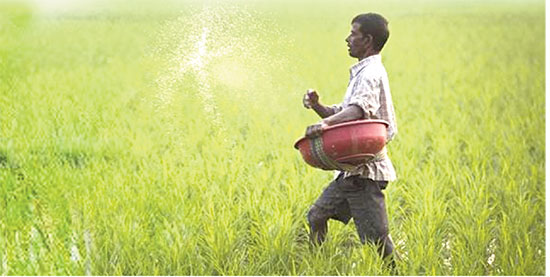
One purpose is to provide essential plant nutrients that are required for crops to produce an economically-important product (i. e. food for humans, feed for animals, a variety of industrial products, etc.). Just as people require food, crops require nutrients for producing what is expected from them.
When a crop is harvested and its yield taken away, a large amount of nutrients is taken out of the system (i. e. the soil). Therefore, continuous cropping of a land leads to the depletion of nutrients in the soil. Application of fertilisers to such a soil replenishes its nutrient pool and makes continuous cropping possible. This is the second purpose of using fertilisers.
A natural ecosystem like a forest does not require an external input such as fertiliser because nutrients are not taken out of the system. Nutrients in dead leaves, branches, trunks and roots are recycled back to the soil. It is a ‘closed’ nutrient cycle, as opposed to the ‘open’ system in an agricultural crop.
Inorganic vs organic fertilzers
Inorganic fertilisers (normally called chemical fertilisers) contain nutrients in a concentrated form (i.e. fraction of the nutrient in a unit weight of the fertiliser is high). They are produced via industrial processes or by refining mined minerals containing the nutrient. Three major plant nutrients, viz. nitrogen, phosphorus and potassium are supplied as inorganic fertilisers, either individually (‘straight fertilisers’) or in a mixture (‘compound fertilisers’).
Organic fertilisers (organic manures) are raw materials of plant, animal or human origin. When applied to the soil, they decompose and release their nutrients. In comparison to inorganic fertilisers, the fraction of nutrients in a unit weight of organic manure is much lower. Therefore, to give a crop/soil the same amount of a nutrient, a much greater quantity of organic manure than inorganic fertiliser has to be applied. All organic fertilizers are ‘compound fertilisers’ in the sense that they contain a mixture of nutrients though in a diluted form.
When applied to the soil, the inorganic fertilizers release their nutrients quickly. In recent times, nano-scale materials have been used to slow down the release of nutrients from inorganic fertilisers (i.e. called ‘nano-coated slow-release fertilisers’). When applied to the soil, organic fertilisers release their nutrients slowly, because the organic raw material has to decompose to release its nutrients. Natural decomposition is done by naturally-occurring soil microorganisms. Formulations of microorganisms are used to accelerate decomposition and nutrient release from organic fertilisers.
Why ‘modern’ agriculture uses large quantities of inorganic fertiliser?
Global population currently stands at ca. 7.7 billion and is projected to reach 8.5 billion by 2030 and 9.7 billion in 20501. Land area suitable for growing crops is shrinking continuously because of a variety of reasons. Some of the productive lands are lost for urbanisation (i.e. population pressure) while some are converted to alternative non-agricultural uses (e.g. industrial purposes). On the other hand, a portion of lands available for crop production is gradually, but continuously, lost because they become unproductive and economically non-viable due to climate change (e.g. temperatures becoming too warm, rainfall becoming insufficient, etc.) and soil degradation (e.g. loss of fertile top soil due to erosion, loss of soil fertility due to continuous cropping and removal of nutrients without adequate replenishment, development soil problems such as salinity, acidity and accumulation of toxic material).
Increasing population and decreasing arable land area means that we are continuously challenged to increase crop yields per unit land area (usually called ‘crop productivity’) to fulfil the increasing demand for food, feed and the variety of products from agricultural crops. To produce a greater amount of yield from the same unit of land, a crop requires a greater quantity of essential nutrients—there is no such thing as a free lunch in nature— in particular nitrogen (N), phosphorus (P) and potassium (K). A crop has to obtain this increased nutrient requirement either from the soil (which may contain some amount of nutrients naturally) or via fertiliser applied to the soil. Except the soils in virgin lands, soils in the large majority of agricultural lands do not contain naturally the amounts of essential nutrients in quantities required by crops to achieve the productivity levels to meet the continuously increasing demand. Hence, the need to add large quantities of nutrients to the soil. This has to be done every season as most nutrients added during the previous season are removed as crop yield. Because inorganic fertilizer contains nutrients in a concentrated form, the required quantities of the three major nutrients can be supplied with a manageable quantity of inorganic fertiliser. Supplying of the same requirement with organic fertiliser would require substantially larger quantities, which are either not possible to find due to insufficient raw material or difficult to manage. Hence, the widespread use of inorganic fertiliser in commercial agriculture. Organic agriculture where crops are grown exclusively with organic fertilisers represents a small fraction of global agriculture (a very optimistic estimation would put it at < 5%).
Why the drive towards reduction of inorganic fertiliser use in agriculture?
While providing the required amounts of the three major plant nutrients to sustain crop yields to ensure food security and maintain soil nutrients at levels required for continuous cropping, application of inorganic fertilisers has caused adverse environmental and human health impacts.
Because nutrients are released readily from inorganic fertilisers, a considerable fraction of those added to the soil gets leached into groundwater and water bodies (i.e. rivers, lakes, reservoirs etc..). The consumption of water from such polluted sources has been linked to a variety of human health issues.
Inorganic fertilizers have been shown to contain toxic substances (e.g. heavy metals such as lead, arsenic, mercury, etc.) as impurities remaining in them after their mining and industrial manufacturing process. The accumulation of these toxic substances in the soil and water sources has been linked to certain human health issues. However, it should be noted that organic fertilizers, especially those of plant and animal origin, are not entirely free from toxic substances.
Alteration of the soil environment by adding concentrated nutrients alters the naturally-occurring community of soil microorganisms who perform many important functions in the soil to ensure its fertility.
In economic terms, inorganic fertilisers, most of which are produced in industrialised developed countries by multi-national companies, are prohibitively expensive to farmers in the developing countries.
Because of the above reasons, there has been a drive towards reduction of the use of inorganic fertilisers and a part-replacement of them by organic fertilisers. Such movements have begun in developed countries (as well as in some developing countries) since the1980s and gathered momentum during the last two decades. During certain periods, some countries and regions of countries have been forced to produce their crops largely on organic fertiliser because of circumstances (mainly political) (e.g. Cuba, Northern Province of Sri Lanka during the ethnic conflict).
Current situation in Sri Lanka
The present situation in Sri Lanka has arisen following a gazette notification by the government to ban the import of inorganic fertilizer and synthetic agrochemicals (i.e. insecticides, fungicides, herbicides, etc.) with immediate effect. The pollution of the water bodies and perceived links to human health issues, such as the Chronic Kidney Disease of Unknown Aetiology (CKDU) are cited as the reasons for the ban. While there have been a longstanding discussion at many levels of the Sri Lankan society on the role of inorganic fertilizers (and agrochemicals) in causing the above issues and calls for ‘toxin-free food’, the total and immediate ban came ‘out of the blue’ without any consultation (to my knowledge) with any of the relevant stakeholders (e.g. the Department of Agriculture, academia, the plantation sector research institutes, farmer organizations, growers of a wide range of crops or their organizations, private sector organizations in the supply and marketing chain etc.). Apparently, the President/government was acting on the advice of a few university academics (who are either advisors or political appointees as heads of public-sector institutions) and longstanding activists (e.g. Ven. Athuraliya Rathana, Dr. Anuruddha Padeniya et al).
Currently, all relevant public sector institutions have been directed to seek how alternatives to inorganic fertilizer (i.e. organic fertilizer) could be produced and supplied to farmers and growers in adequate quantities required during the Yala season which is already started and beyond. It has been stated in the media that any shortfall for the current season (and probably beyond until adequate quantities can be produced locally) will be provided through imported organic fertiliser. A similar strategy has been proposed for synthetic agrochemicals for which the principal alternative is pesticides of biological origin (i.e. Biopesticides).
Possible impacts of an absence of inorganic fertiliser in Sri Lanka
It is highly likely that in the absence of inorganic fertilisers, the productivity (i. e. economic harvest per unit land area) of some of the major crops in Sri Lanka (e. g. rice and tea), which are crucial to national food security and economy, will decline significantly leading to a decline in the total production (i.e. productivity × cultivated area). At present, Sri Lanka does not have sufficient sources of readily-available organic fertiliser nor does it not have the infrastructure in place to produce organic fertilizers in adequate quantities to fulfil even the minimum nutrient requirement of these two major crops considering the scale on which they are grown.
The prognosis would be the same for a majority of the other annual crops (e.g. cereals, pulses, vegetables, industrial crops, etc.) and floriculture plants (i.e. cut flower and foliage), which are grown on a smaller scale. Some crops such as rubber and coconut may not show an immediate decline in their harvest but will begin to show declines in the medium-term, depending on the existing fertility status of the soils on which they have been established and the overall management status of the plantation and its trees.
Why is Sri Lankan agriculture so reliant on inorganic fertiliser?
The scientific reasons
Soils in Sri Lanka are, by nature, relatively poor in the amounts of essential nutrients (i. e. the three major nutrients, nitrogen, phosphorus, potassium plus magnesium, sulphur and calcium, which are also needed in relatively large quantities) that they make naturally available for crops growing on them. The natural supply of nutrients from a soil comes when the parent material of the soil (i.e. rocks and minerals) undergoes a very slow, gradual decomposition process called ‘weathering’. The plant nutrients are part of the minerals contained in the parent material and are released to the soil when the minerals weather due to the action of rain and other climatic factors such as temperature. Because of the high rainfall and temperature regime associated with the tropical climate in Sri Lanka, its soils have been highly-weathered over a long period of time (over several millennia) so that the existing soil minerals (the source of natural supply of nutrients) are considerably (if not severely) depleted of nutrients. Because of the high rainfall regime (especially in the wet zone and the Central Highlands and to a lesser extent in the dry and intermediate zones), a substantial portion of the nutrients that are released from minerals via the weathering process are leached and lost to the soil, further depleting its natural fertility.
Furthermore, most of the lands on which crops are currently cultivated in all climatic zones of Sri Lanka have been under cultivation for a long period of time. As explained earlier, long-term cultivation of a soil leads to depletion of its nutrient reserves.
Soils in the Central Highlands and those on sloping terrain in other parts of Sri Lanka are further degraded due to soil erosion caused by high-intensity rainfall. Erosion takes away the top layer of the soil and a substantial amount of nutrients naturally available along with it.
Because of the reasons outlined above, neither the grain yield levels of rice that are required to fulfil the annual national demand nor the green leaf yield levels of tea that would bring the expected level of foreign exchange could be sustained on Sri Lankan soils without providing the required quantities of the three major nutrients via inorganic fertilisers.
It is likely that in the absence of the recommended inorganic fertiliser (especially nitrogen fertilizer) inputs, yield reductions would become detectable in the current Yala season in rice and within a matter of a few months in tea. This is because of the specific physiology of these two crops. Nitrogen is critically-essential for early growth of rice and the leaf growth of tea. Therefore, a shortage of nitrogen to these crops would be felt almost immediately as a retardation of early growth of rice (which would be reflected as a substantial reduction in grain yield) and the weekly green leaf harvest in tea.
Similar to what happens in rice and tea, the retardation of growth and yield is likely to happen with a shortage of nitrogen fertilizer in all short-duration annual crops and commercial plants. Leguminous pulse crops (e. g. soybean, mung bean, cowpea, black gram, common bean, etc.) could be an exception because of their ability to utilise atmospheric nitrogen.
Impacts of a shortage of nitrogen fertiliser are likely to be delayed for a few years (as stated earlier) in coconut and rubber because of their specific physiology where the nut yield or latex (rubber) yield is not as dependent on an immediate nitrogen supply as the grain and leaf yields of rice and tea respectively. However, a shortage of nitrogen will cause a reduction in the internal processes of these plants, which will be reflected in a few years’ time, as a reduction in the processes leading to the production of nuts and latex in coconut and rubber respectively. Recently-planted and younger coconut and rubber plantations will show a retardation of tree growth which will delay the commencement of nut and latex production.
A basic scientific fact which should have been noted by the advisors to politicians, if not the politicians, is that a shortage of nitrogen affects the fundamental plant process, photosynthesis, which is responsible for growth and yield formation of crops2. Shortage of nitrogen, along with shortages of phosphorus, potassium and magnesium, decreases the rate of photosynthesis, which is translated in to a reduction of growth and yield of any crop, which may happen over different time scales in different crops. It is unlikely that in the absence of inorganic fertilisers, organic fertiliser applications would be able to prevent the resulting decrease in growth and yield of a large majority of commercial crops in Sri Lanka.
A few spice crops such as cloves, cardamoms and nutmegs, but not cinnamon and pepper, may escape yield reductions due to a shortage of inorganic fertilizer because they are largely present in homegardens in the Central Province which are generally not fertilized.
Out of the three major fertilizers, containing nitrogen, phosphorus and potassium, a shortage would be most immediately felt for nitrogen fertilizer. The impact would be delayed for phosphorus fertilizer and it would be intermediate for potassium fertilizer. The scientific reasons are that nitrogen is the nutrient that is most critically-needed for a large majority of plant processes and is the most mobile nutrient in the soil, which makes it the most susceptible for leaching losses; phosphorus is the least mobile nutrient and therefore, can remain in the soil for
2 Evans, J. R., & Clarke, V. C. (2019). The nitrogen cost of photosynthesis. Journal of Experimental Botany, 70(1), 7-15. An expert review that was published in a highly-recognized scientific journal in plant sciences. Although most of its content is aimed at specialists in Plant Physiology, there are a few paragraphs (highlighted) from which an educated ‘layman’ reader could gather useful insights in to why nitrogen fertilizer is of such crucial importance for crops. a reasonable period of time and can be released to plants slowly; potassium is a nutrient which is intermediate in terms of its mobility in the soil and criticality of its need for plant processes.
What has been the response of the stakeholders?
This is only a snapshot from my perspective based on discussions with professional colleagues and contacts. An overwhelming majority of academics, research officers, extension officers, commercial growers and farmers do not agree with this immediate and total ban of inorganic fertilizers. A minority of stakeholders in the agriculture sector and an overwhelming majority of environmental activists (who unfortunately have no clear idea of how large-scale agriculture to feed a nation differs from growing a few pots of plants at home) have welcomed the ban. A powerful argument of this minority of stakeholders in the agriculture sector is that organic agricultural products (e.g. organic tea) fetches a higher price in the global market and will offset any loss of foreign exchange due to reduced total production. This argument ignores the decline in yield and total production of locally-consumed food (including the staple food, rice), the wide-ranging implications of which cannot be compensated by a higher price (which is unlikely to happen in the highly-volatile local market for agricultural produce).
Where do we go from here?
While disagreeing with a total and immediate ban on inorganic fertilizer, a majority of academics, research officers and extension officers, but not commercial growers and farmers, acknowledge that there is scope for an appreciable reduction in the quantities of inorganic fertilizer (relative to the levels that have been in use before the ban) without incurring a yield reduction. Farmers have been applying the inorganic fertilizers at rates which are above those recommended by the Department of Agriculture, because inorganic fertilizers had been made available to them at a highly-subsidized price.
Research on a range of different crops over several seasons across a range of locations carried out by my research group has shown that 25% of the recommended amount of nitrogen fertilizer can be reduced without incurring a yield reduction.
Therefore, a phased-out reduction of inorganic fertilizer along with a gradual increase of the contribution of organic fertilizer to supply the nutrient requirement of crops is a viable pathway that a majority of stakeholders agrees on. Increasing the contribution of organic fertilizer requires: (a) up-scaling of organic fertilizers that have been developed in Sri Lanka using microorganisms isolated from local soils; (b) developing infrastructure to produce such organic fertilizers at commercial scale; (c) changing farmer/grower perceptions and attitudes on the total dependence on inorganic fertilizers and start using organic fertilizer as a part-replacement via a concerted extension effort. (The agricultural extension service in Sri Lanka, which was acknowledged as one of the best in Asia in the 1980s, have been severely downgraded during the last three decades); (d) initiating a concerted programme to increase the organic matter content of Sri Lankan soils, which would enable them to retain a higher fraction of the nutrients applied to them via both inorganic and organic fertilizers and thereby minimize leaching losses.
Even if all the above are successfully implemented (which will take time especially in the current context), an agriculture sector, which is totally based on organic fertilizer—the first such country in the world according to the President—is unlikely to produce enough food (e. g. rice) to ensure food security in Sri Lanka or generate other agriculture-based products that fetch foreign exchange and support local manufacturing industries (e. g. rubber). Therefore, it is inevitable that a balance needs to be struck between the reduction of inorganic fertilizer (from the levels that were practiced before the ban) and a viable level of organic fertilizer as a part-replacement to provide the full nutrient requirement that a higher crop yield demands.
As a medium-term solution, research on a more balanced form of agriculture (i.e. an optimum combination of inorganic and organic fertilizer) within the climatic and soil conditions that are prevalent in Sri Lanka (while taking in to account their possible changes as part of global climate change) needs to be encouraged via increased funding. Currently, Sri Lanka invests only 0.11% of its GDP in Research and Development (in all disciplines including agriculture), which is one of the lowest even in Asia. Therefore, there is little room for optimism in this regard.
Importation of organic fertilizers
Importation of organic fertilizers is being promoted as a short-term measure to supply the nutrient requirement to agricultural crops during the period when Sri Lanka is expected develop its local capacity to produce organic fertilizers in quantities sufficient to meet the full nutrient demand of the crops. It is said that the quality of imported organic fertilizer will be assured via strict quality control procedures which conform to, for example, the EU Standards. Only time will tell whether this will actually materialize and provide a solution. A few points of major concern are as following:
Quantity
Experienced Soil Scientists and fertilizer experts are of the opinion that concentration of nutrients in organic fertilizers is such that large quantities need to be imported (subsequently transported to fields and applied) to fulfil the nutrient demand to produce the crop yields at the required levels to ensure food security and sustain foreign exchange earnings.
Environmental concerns
Almost all organic fertilizers, being material of plant, animal or human origin, retain a diverse population of microorganisms. Unlike inorganic fertilizers, which are inert material, organic fertilizers are live material. Microorganisms, whether in soils, plants or any other location or entity, are often highly environment-specific. Introduction of such alien microorganisms to Sri Lankan soils could cause all types of unforeseen interactions with local microorganisms. Some of these interactions could have environmental repercussions, which are irreversible as once released to the soil, these alien microorganisms cannot be ‘recalled’. Therefore, it is always advisable and safer to develop organic fertilizers locally rather than importing.
Sterilization of imported organic fertilizer to kill all alien microorganisms via a process of fumigation after importation is suggested as a solution to this problem. However, the large quantities of organic fertilizers that are required to be imported and the toxicity levels
of the chemicals that are used in fumigation could lead to environmental issues that the organic fertilizers are aiming to prevent. Recently, the Cabinet Minister of Agriculture went on record saying that only sterilized organic fertilizer conforming to quality standards acceptable to a government-appointed expert committee would be imported. Given Sri Lanka’s poor record of regulation, implementation and enforcement of quality standards on a range of items, both imported and locally-produced and both agricultural and non-agricultural, it remains to be seen whether these promises will be fulfilled.
Rational medium- to long-term possibilities for reducing the use of inorganic fertilizer while increasing yields of major food crops at a rate required to keep pace with increasing population and consequently increasing demand
A few medium- to long-term options, based on sound scientific principles, are available and are briefly discussed below:
Genetic modification of crops
In addressing the challenges of increasing crop yields while decreasing their use of nutrients (i.e. increasing the yield per unit nutrient used), scientists have been trying to modify the components and steps involved in the photosynthesis process via genetic engineering. One of their aims has been to produce a plant which achieves a higher photosynthetic rate with the same level of nitrogen used. After about two decades of research effort, a recent research publication in the prestigious science journal Nature reports of such a breakthrough in rice3. Reading through it carefully, I gather that this new genetically-modified rice plant (we call them ‘transgenic’ plants) has the potential to achieve a higher photosynthetic rate and grain yield with the same level of nitrogen as the ‘normal’ plants (which are not genetically-modified). However, this is possible under ‘well-fertilized conditions’ meaning that at the currently-used high nitrogen fertilizer rates4. This particular publication does not indicate whether such higher levels of photosynthesis and yields are possible at lower than ‘well-fertilized conditions’ which are likely to prevail in fields fertilized exclusively with organic fertilizer. Nevertheless, as Professor Stephen Long, a recognized world authority on photosynthesis states, the production of this transgenic rice plant could be a ‘game-changer’ to increase grain yield of rice without a proportionate increase in nitrogen input.
However, it should be noted that a considerable time could elapse from the point of producing a ‘transgenic’ plant to developing a new crop variety that could be released to the farmers for commercial cultivation. Yet, this appears to be a solid step in the right direction.
3 Long, S. P. (2020). Photosynthesis engineered to increase rice yield. Nature Food, 1(2), 105-105. A brief comment by Professor Stephen Long on the recent breakthrough in producing a genetically-modified rice plant which is able to achieve a higher photosynthetic rate and grain yield with the same amount of nitrogen.
4 Yoon, D. K., Ishiyama, K., Suganami, M., Tazoe, Y., Watanabe, M., Imaruoka, S., … & Makino, A. (2020). Transgenic rice overproducing Rubisco exhibits increased yields with improved nitrogen-use efficiency in an experimental paddy field. Nature Food, 1(2), 134-139. The research publication which describes the above breakthrough in photosynthesis and nitrogen use. Increasing the organic matter content in soils
Soil organic matter (SOM) is a component of the soil in addition to the soil particles. While the soil particles arise from weathering of rocks and minerals of the soil parent material, SOM arises from the decomposition of organic material added to the soil. SOM helps to retain nutrients and water in the top layers of the soil where most plant roots are also present. In addition, SOM helps to improve the aeration and structure in the soil, which are vital physical properties in the soil to facilitate plant growth.
Except the soils in the terraced plateaus of the Central Highlands, soils of almost all arable crop lands in Sri Lanka have inadequate SOM. This means that the ability of these soils to retain the nutrients that are added to them, especially in the form of readily-released inorganic fertilizer, is limited. Therefore, a concerted effort to increase the SOM status in Sri Lankan soils will enable reduction of leaching losses of nutrients and associated environmental consequences such as pollution of water sources. Increased SOM will also enable reduction of the amounts of inorganic fertilizer applied without causing a shortage of nutrients to the crops as a greater fraction of the applied fertilizer remains in the soil to be absorbed by the plants.
Therefore, while the total and immediate ban of inorganic fertilizer and replacing them with organic fertilizer will not provide the required nutrients in sufficient quantities, the large-scale application of organic fertilizer, if it happens as envisaged, will serve to increase the SOM of Sri Lankan soils in the medium- to long-term. This will make the Sri Lankan Agriculture sector less-reliant on inorganic fertilizers. However, this will have to be a gradual, phased-out transition rather than a sudden, unplanned total ban on inorganic fertilizers. Such a transition should be towards achieving an optimum balance of inorganic and organic fertilizers, which will ensure food security while protecting the environment. This is an endeavour that has been undertaken in many parts of the world, which include both the developed and developing countries, and is termed ‘Sustainable Intensification of Agriculture’5.
5 Baulcombe, D., Crute, I., Davies, B., Dunwell, J., Gale, M., Jones, J., … & Toulmin, C. (2009). Reaping the benefits: science and the sustainable intensification of global agriculture. The Royal Society. A very useful, concise, but comprehensive description of the salient features of sustainable intensification of agriculture written by a group
of experts from the Royal Society, UK. Can be accessed at https://royalsociety.org/topics-
policy/publications/2009/reaping-benefits/.

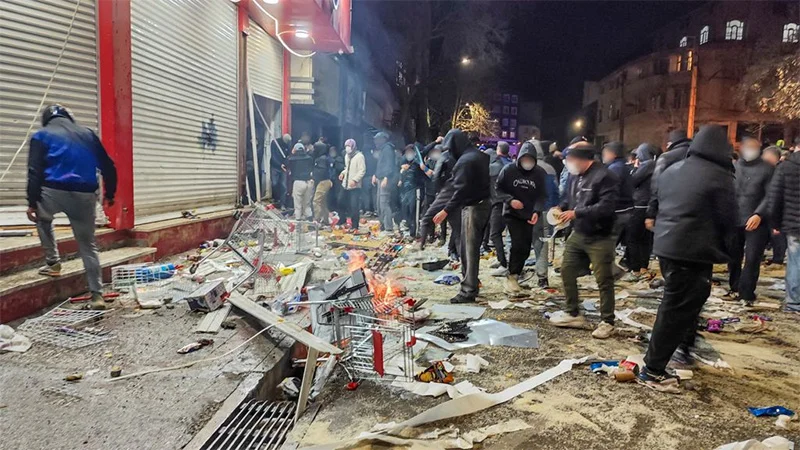
 The world is having the evidence of its eyes all over again that ‘economics drives politics’ and this time around the proof is coming from theocratic Iran. Iranians in their tens of thousands are on the country’s streets calling for a regime change right now but it is all too plain that the wellsprings of the unprecedented revolt against the state are economic in nature. It is widespread financial hardship and currency depreciation, for example, that triggered the uprising in the first place.
However, there is no denying that Iran’s current movement for drastic political change has within its fold multiple other forces, besides the economically affected, that are urging a comprehensive transformation as it were of the country’s political system to enable the equitable empowerment of the people. For example, the call has been gaining ground with increasing intensity over the weeks that the country’s number one theocratic ruler, President Ali Khamenei, steps down from power.
That is, the validity and continuation of theocratic rule is coming to be questioned unprecedentedly and with increasing audibility and boldness by the public. Besides, there is apparently fierce opposition to the concentration of political power at the pinnacle of the Iranian power structure.
Popular revolts have been breaking out every now and then of course in Iran over the years, but the current protest is remarkable for its social diversity and the numbers it has been attracting over the past few weeks. It could be described as a popular revolt in the genuine sense of the phrase. Not to be also forgotten is the number of casualties claimed by the unrest, which stands at some 2000.
Of considerable note is the fact that many Iranian youths have been killed in the revolt. It points to the fact that youth disaffection against the state has been on the rise as well and could be at boiling point. From the viewpoint of future democratic development in Iran, this trend needs to be seen as positive.
Politically-conscious youngsters prioritize self-expression among other fundamental human rights and stifling their channels of self-expression, for example, by shutting down Internet communication links, would be tantamount to suppressing youth aspirations with a heavy hand. It should come as no surprise that they are protesting strongly against the state as well.
Another notable phenomenon is the increasing disaffection among sections of Iran’s women. They too are on the streets in defiance of the authorities. A turning point in this regard was the death of Mahsa Amini in 2022, which apparently befell her all because she defied state orders to be dressed in the Hijab. On that occasion as well, the event brought protesters in considerable numbers onto the streets of Tehran and other cities.
Once again, from the viewpoint of democratic development the increasing participation of Iranian women in popular revolts should be considered thought-provoking. It points to a heightening political consciousness among Iranian women which may not be easy to suppress going forward. It could also mean that paternalism and its related practices and social forms may need to re-assessed by the authorities.
It is entirely a matter for the Iranian people to address the above questions, the neglect of which could prove counter-productive for them, but it is all too clear that a relaxing of authoritarian control over the state and society would win favour among a considerable section of the populace.
However, it is far too early to conclude that Iran is at risk of imploding. This should be seen as quite a distance away in consideration of the fact that the Iranian government is continuing to possess its coercive power. Unless the country’s law enforcement authorities turn against the state as well this coercive capability will remain with Iran’s theocratic rulers and the latter will be in a position to quash popular revolts and continue in power. But the ruling authorities could not afford the luxury of presuming that all will be well at home, going into the future.
Meanwhile US President Donald Trump has assured the Iranian people of his assistance but it is not clear as to what form such support would take and when it would be delivered. The most important way in which the Trump administration could help the Iranian people is by helping in the process of empowering them equitably and this could be primarily achieved only by democratizing the Iranian state.
It is difficult to see the US doing this to even a minor measure under President Trump. This is because the latter’s principal preoccupation is to make the ‘US Great Once again’, and little else. To achieve the latter, the US will be doing battle with its international rivals to climb to the pinnacle of the international political system as the unchallengeable principal power in every conceivable respect.
That is, Realpolitik considerations would be the main ‘stuff and substance’ of US foreign policy with a corresponding downplaying of things that matter for a major democratic power, including the promotion of worldwide democratic development and the rendering of humanitarian assistance where it is most needed. The US’ increasing disengagement from UN development agencies alone proves the latter.
Given the above foreign policy proclivities it is highly unlikely that the Iranian people would be assisted in any substantive way by the Trump administration. On the other hand, the possibility of US military strikes on Iranian military targets in the days ahead cannot be ruled out.
The latter interventions would be seen as necessary by the US to keep the Middle Eastern military balance in favour of Israel. Consequently, any US-initiated peace moves in the real sense of the phrase in the Middle East would need to be ruled out in the foreseeable future. In other words, Middle East peace will remain elusive.
Interestingly, the leadership moves the Trump administration is hoping to make in Venezuela, post-Maduro, reflect glaringly on its foreign policy preoccupations. Apparently, Trump will be preferring to ‘work with’ Delcy Rodriguez, acting President of Venezuela, rather than Maria Corina Machado, the principal opponent of Nicolas Maduro, who helped sustain the opposition to Maduro in the lead-up to the latter’s ouster and clearly the democratic candidate for the position of Venezuelan President.
The latter development could be considered a downgrading of the democratic process and a virtual ‘slap in its face’. While the democratic rights of the Venezuelan people will go disregarded by the US, a comparative ‘strong woman’ will receive the Trump administration’s blessings. She will perhaps be groomed by Trump to protect the US’s security and economic interests in South America, while his administration side-steps the promotion of the democratic empowerment of Venezuelans.

Maharagama today stands at a crossroads. With the emergence of new political leadership, growing public expectations, and the convergence of professional goodwill, the Maharagama Municipal Council (MMC) has been presented with a rare opportunity to redefine the city’s future. At the heart of this moment lies the Silk City (Seda Nagaraya) Initiative (SNI)—a bold yet pragmatic development blueprint designed to transform Maharagama into a modern, vibrant, and economically dynamic urban hub.
This is not merely another urban development proposal. Silk City is a strategic springboard—a comprehensive economic and cultural vision that seeks to reposition Maharagama as Sri Lanka’s foremost textile-driven commercial city, while enhancing livability, employment, and urban dignity for its residents. The Silk City concept represents more than a development plan: it is a comprehensive economic blueprint designed to redefine Maharagama as Sri Lanka’s foremost textile-driven commercial and cultural hub.
A Vision Rooted in Reality
What makes the Silk City Initiative stand apart is its grounding in economic realism. Carefully designed around the geographical, commercial, and social realities of Maharagama, the concept builds on the city’s long-established strengths—particularly its dominance as a textile and retail centre—while addressing modern urban challenges.
The timing could not be more critical. With Mayor Saman Samarakoon assuming leadership at a moment of heightened political goodwill and public anticipation, MMC is uniquely positioned to embark on a transformation of unprecedented scale. Leadership, legitimacy, and opportunity have aligned—a combination that cities rarely experience.
A Voluntary Gift of National Value
In an exceptional and commendable development, the Maharagama Municipal Council has received—entirely free of charge—a comprehensive development proposal titled “Silk City – Seda Nagaraya.” Authored by Deshamanya, Deshashkthi J. M. C. Jayasekera, a distinguished Chartered Accountant and Chairman of the JMC Management Institute, the proposal reflects meticulous research, professional depth, and long-term strategic thinking.
It must be added here that this silk city project has received the political blessings of the Parliamentarians who represented the Maharagama electorate. They are none other than Sunil Kumara Gamage, Minister of Sports and Youth Affairs, Sunil Watagala, Deputy Minister of Public Security and Devananda Suraweera, Member of Parliament.
The blueprint outlines ten integrated sectoral projects, including : A modern city vision, Tourism and cultural city development, Clean and green city initiatives, Religious and ethical city concepts, Garden city aesthetics, Public safety and beautification, Textile and creative industries as the economic core
Together, these elements form a five-year transformation agenda, capable of elevating Maharagama into a model municipal economy and a 24-hour urban hub within the Colombo Metropolitan Region
Why Maharagama, Why Now?
Maharagama’s transformation is not an abstract ambition—it is a logical evolution. Strategically located and commercially vibrant, the city already attracts thousands of shoppers daily. With structured investment, branding, and infrastructure support, Maharagama can evolve into a sleepless commercial destination, a cultural and tourism node, and a magnet for both local and international consumers.
Such a transformation aligns seamlessly with modern urban development models promoted by international development agencies—models that prioritise productivity, employment creation, poverty reduction, and improved quality of life.
Rationale for Transformation
Maharagama has long held a strategic advantage as one of Sri Lanka’s textile and retail centers. With proper planning and investment, this identity can be leveraged to convert the city into a branded urban destination, a sleepless commercial hub, a tourism and cultural attraction, and a vibrant economic engine within the Colombo Metropolitan Region. Such transformation is consistent with modern city development models promoted by international funding agencies that seek to raise local productivity, employment, quality of life, alleviation of urban poverty, attraction and retaining a huge customer base both local and international to the city)
Current Opportunity
The convergence of the following factors make this moment and climate especially critical. Among them the new political leadership with strong public support, availability of a professionally developed concept paper, growing public demand for modernisation, interest among public, private, business community and civil society leaders to contribute, possibility of leveraging traditional strengths (textile industry and commercial vibrancy are notable strengths.
The Silk City initiative therefore represents a timely and strategic window for Maharagama to secure national attention, donor interest and investor confidence.
A Window That Must Not Be Missed
Several factors make this moment decisive: Strong new political leadership with public mandate, Availability of a professionally developed concept, Rising citizen demand for modernization, Willingness of professionals, businesses, and civil society to contribute. The city’s established textile and commercial base
Taken together, these conditions create a strategic window to attract national attention, donor interest, and investor confidence.
But windows close.
Hard Truths: Challenges That Must Be Addressed
Ambition alone will not deliver transformation. The Silk City Initiative demands honest recognition of institutional constraints. MMC currently faces: Limited technical and project management capacity, rigid public-sector regulatory frameworks that slow procurement and partnerships, severe financial limitations, with internal revenues insufficient even for routine operations, the absence of a fully formalised, high-caliber Steering Committee.
Moreover, this is a mega urban project, requiring feasibility studies, impact assessments, bankable proposals, international partnerships, and sustained political and community backing.
A Strategic Roadmap for Leadership
For Mayor Saman Samarakoon, this represents a once-in-a-generation leadership moment. Key strategic actions are essential: 1.Immediate establishment of a credible Steering Committee, drawing expertise from government, private sector, academia, and civil society. 2. Creation of a dedicated Project Management Unit (PMU) with professional specialists. 3. Aggressive mobilisation of external funding, including central government support, international donors, bilateral partners, development banks, and corporate CSR initiatives. 4. Strategic political engagement to secure legitimacy and national backing. 5. Quick-win projects to build public confidence and momentum. 6. A structured communications strategy to brand and promote Silk City nationally and internationally. Firm positioning of textiles and creative industries as the heart of Maharagama’s economic identity
If successfully implemented, Silk City will not only redefine Maharagama’s future but also ensure that the names of those who led this transformation are etched permanently in the civic history of the city.
Voluntary Gift of National Value
Maharagama is intrinsically intertwined with the textile industry. Small scale and domestic textile industry play a pivotal role. Textile industry generates a couple of billion of rupees to the Maharagama City per annum. It is the one and only city that has a sleepless night and this textile hub provides ready-made garments to the entire country. Prices are comparatively cheaper. If this textile industry can be vertically and horizontally developed, a substantial income can be generated thus providing employment to vulnerable segments of employees who are mostly women. Paucity of textile technology and capital investment impede the growth of the industry. If Maharagama can collaborate with the Bombay of India textile industry, there would be an unbelievable transition. How Sri Lanka could pursue this goal. A blueprint for the development of the textile industry for the Maharagama City will be dealt with in a separate article due to time space.
It is achievable if the right structures, leadership commitments and partnerships are put in place without delay.
No municipal council in recent memory has been presented with such a pragmatic, forward-thinking and well-timed proposal. Likewise, few Mayors will ever be positioned as you are today — with the ability to initiate a transformation that will redefine the future of Maharagama for generations. It will not be a difficult task for Saman Samarakoon, Mayor of the MMC to accomplish the onerous tasks contained in the projects, with the acumen and experience he gained from his illustrious as a Commander of the SL Navy with the support of the councilors, Municipal staff and the members of the Parliamentarians and the committed team of the Silk-City Project.
Voluntary Gift of National Value
Maharagama is intrinsically intertwined with the textile industry. The textile industries play a pivotal role. This textile hub provides ready-made garments to the entire country. Prices are comparatively cheaper. If this textile industry can be vertically and horizontally developed, a substantial income can be generated thus providing employment to vulnerable segments of employees who are mostly women.
Paucity of textile technology and capital investment impede the growth of the industry. If Maharagama can collaborate with the Bombay of India textile industry, there would be an unbelievable transition. A blueprint for the development of the textile industry for the Maharagama City will be dealt with in a separate article.
J.A.A.S Ranasinghe
Productivity Specialist and Management Consultant
(The writer can becontacted via Email:rathula49@gmail.com)
Features
Reading our unfinished economic story through Bandula Gunawardena’s ‘IMF Prakeerna Visadum’

Book Review
Why Sri Lanka’s Return to the IMF Demands Deeper Reflection
By mid-2022, the term “economic crisis” ceased to be an abstract concept for most Sri Lankans. It was no longer confined to academic papers, policy briefings, or statistical tables. Instead, it became a lived and deeply personal experience. Fuel queues stretched for kilometres under the burning sun. Cooking gas vanished from household shelves. Essential medicines became difficult—sometimes impossible—to find. Food prices rose relentlessly, pushing basic nutrition beyond the reach of many families, while real incomes steadily eroded.
What had long existed as graphs, ratios, and warning signals in economic reports suddenly entered daily life with unforgiving force. The crisis was no longer something discussed on television panels or debated in Parliament; it was something felt at the kitchen table, at the bus stop, and in hospital corridors.
Amid this social and economic turmoil came another announcement—less dramatic in appearance, but far more consequential in its implications. Sri Lanka would once again seek assistance from the International Monetary Fund (IMF).
The announcement immediately divided public opinion. For some, the IMF represented an unavoidable lifeline—a last resort to stabilise a collapsing economy. For others, it symbolised a loss of economic sovereignty and a painful surrender to external control. Emotions ran high. Debates became polarised. Public discourse quickly hardened into slogans, accusations, and ideological posturing.
Yet beneath the noise, anger, and fear lay a more fundamental question—one that demanded calm reflection rather than emotional reaction:
Why did Sri Lanka have to return to the IMF at all?
This question does not lend itself to simple or comforting answers. It cannot be explained by a single policy mistake, a single government, or a single external shock. Instead, it requires an honest examination of decades of economic decision-making, institutional weaknesses, policy inconsistency, and political avoidance. It requires looking beyond the immediate crisis and asking how Sri Lanka repeatedly reached a point where IMF assistance became the only viable option.
Few recent works attempt this difficult task as seriously and thoughtfully as Dr. Bandula Gunawardena’s IMF Prakeerna Visadum. Rather than offering slogans or seeking easy culprits, the book situates Sri Lanka’s IMF engagement within a broader historical and structural narrative. In doing so, it shifts the debate away from blame and toward understanding—a necessary first step if the country is to ensure that this crisis does not become yet another chapter in a familiar and painful cycle.
Returning to the IMF: Accident or Inevitability?
The central argument of IMF Prakeerna Visadum is at once simple and deeply unsettling. It challenges a comforting narrative that has gained popularity in times of crisis and replaces it with a far more demanding truth:
Sri Lanka’s economic crisis was not created by the IMF.
IMF intervention became inevitable because Sri Lanka avoided structural reform for far too long.
This framing fundamentally alters the terms of the national debate. It shifts attention away from external blame and towards internal responsibility. Instead of asking whether the IMF is good or bad, Dr. Gunawardena asks a more difficult and more important question: what kind of economy repeatedly drives itself to a point where IMF assistance becomes unavoidable?
The book refuses the two easy positions that dominate public discussion. It neither defends the IMF uncritically as a benevolent saviour nor demonises it as the architect of Sri Lanka’s suffering. Instead, IMF intervention is placed within a broader historical and structural context—one shaped primarily by domestic policy choices, institutional weaknesses, and political avoidance.
Public discourse often portrays IMF programmes as the starting point of economic hardship. Dr. Gunawardena corrects this misconception by restoring the correct chronology—an essential step for any honest assessment of the crisis.
The IMF did not arrive at the beginning of Sri Lanka’s collapse.
It arrived after the collapse had already begun.
By the time negotiations commenced, Sri Lanka had exhausted its foreign exchange reserves, lost access to international capital markets, officially defaulted on its external debt, and entered a phase of runaway inflation and acute shortages.
Fuel queues, shortages of essential medicines, and scarcities of basic food items were not the product of IMF conditionality. They were the direct outcome of prolonged foreign-exchange depletion combined with years of policy mismanagement. Import restrictions were imposed not because the IMF demanded them, but because the country simply could not pay its bills.
From this perspective, the IMF programme did not introduce austerity into a functioning economy. It formalised an adjustment that had already become unavoidable. The economy was already contracting, consumption was already constrained, and living standards were already falling. The IMF framework sought to impose order, sequencing, and credibility on a collapse that was already under way.
Seen through this lens, the return to the IMF was not a freely chosen policy option, but the end result of years of postponed decisions and missed opportunities.
A Long IMF Relationship, Short National Memory
Sri Lanka’s engagement with the IMF is neither new nor exceptional. For decades, governments of all political persuasions have turned to the Fund whenever balance-of-payments pressures became acute. Each engagement was presented as a temporary rescue—an extraordinary response to an unusual storm.
Yet, as Dr. Gunawardena meticulously documents, the storms were not unusual. What was striking was not the frequency of crises, but the remarkable consistency of their underlying causes.
Fiscal indiscipline persisted even during periods of growth. Government revenue remained structurally weak. Public debt expanded rapidly, often financing recurrent expenditure rather than productive investment. Meanwhile, the external sector failed to generate sufficient foreign exchange to sustain a consumption-led growth model.
IMF programmes brought temporary stability. Inflation eased. Reserves stabilised. Growth resumed. But once external pressure diminished, reform momentum faded. Political priorities shifted. Structural weaknesses quietly re-emerged.
This recurring pattern—crisis, adjustment, partial compliance, and relapse—became a defining feature of Sri Lanka’s economic management. The most recent crisis differed only in scale. This time, there was no room left to postpone adjustment.
Fiscal Fragility: The Core of the Crisis
A central focus of IMF Prakeerna Visadum is Sri Lanka’s chronically weak fiscal structure. Despite relatively strong social indicators and a capable administrative state, government revenue as a share of GDP remained exceptionally low.
Frequent tax changes, politically motivated exemptions, and weak enforcement steadily eroded the tax base. Instead of building a stable revenue system, governments relied increasingly on borrowing—both domestic and external.
Much of this borrowing financed subsidies, transfers, and public sector wages rather than productivity-enhancing investment. Over time, debt servicing crowded out development spending, shrinking fiscal space.
Fiscal reform failed not because it was technically impossible, Dr. Gunawardena argues, but because it was politically inconvenient. The costs were immediate and visible; the benefits long-term and diffuse. The eventual debt default was therefore not a surprise, but a delayed consequence.
The External Sector Trap
Sri Lanka’s narrow export base—apparel, tea, tourism, and remittances—generated foreign exchange but masked deeper weaknesses. Export diversification stagnated. Industrial upgrading lagged. Integration into global value chains remained limited.
Meanwhile, import-intensive consumption expanded. When external shocks arrived—global crises, pandemics, commodity price spikes—the economy had little resilience.
Exchange-rate flexibility alone cannot generate exports. Trade liberalisation without an industrial strategy redistributes pain rather than creates growth.
Monetary Policy and the Cost of Lost Credibility
Prolonged monetary accommodation, often driven by political pressure, fuelled inflation, depleted reserves, and eroded confidence. Once credibility was lost, restoring it required painful adjustment.
Macroeconomic credibility, Dr. Gunawardena reminds us, is a national asset. Once squandered, it is extraordinarily expensive to rebuild.
IMF Conditionality: Stabilisation Without Development?
IMF programmes stabilise economies, but they do not automatically deliver inclusive growth. In Sri Lanka, adjustment raised living costs and reduced real incomes. Social safety nets expanded, but gaps persisted.
This raises a critical question: can stabilisation succeed politically if it fails socially?
Political Economy: The Missing Middle
Reforms collided repeatedly with electoral incentives and patronage networks. IMF programmes exposed contradictions but could not resolve them. Without domestic ownership, reform risks becoming compliance rather than transformation.
Beyond Blame: A Diagnostic Moment
The book’s greatest strength lies in its refusal to engage in blame politics. IMF intervention is treated as a diagnostic signal, not a cause—a warning light illuminating unresolved structural failures.
The real challenge is not exiting an IMF programme, but exiting the cycle that makes IMF programmes inevitable.
A Strong Public Appeal: Why This Book Must Be Read
This is not an anti-IMF book.
It is not a pro-IMF book.
It is a pro-Sri Lanka book.
Published by Sarasaviya Publishers, IMF Prakeerna Visadum equips readers not with anger, but with clarity—offering history, evidence, and honest reflection when the country needs them most.
Conclusion: Will We Learn This Time?
The IMF can stabilise an economy.
It cannot build institutions.
It cannot create competitiveness.
It cannot deliver inclusive development.
Those responsibilities remain domestic.
The question before Sri Lanka is simple but profound:
Will we repeat the cycle, or finally learn the lesson?
The answer does not lie in Washington.
It lies with us.
By Professor Ranjith Bandara
Emeritus Professor, University of Colombo

Fair weather will prevail except for evening showers in the Kaluthara, Galle, Matara and Rathnapura districts

Doctors threaten strike

Chandrasekar alleges extremists in South and North hinder development

Pakistan HC in Colombo hosts special reception in honour of SAARC Woman of the Year Musarrat Misbah

Port City Colombo secures USD 300 mn FDI commitment for Phase II development

NPP’s national electricity policy blatantly unfair: Sajith

‘Dates have the highest sugar content to fight Coronavirus’

Sunday Island 27 December – Headlines

#SundayIsland 17th December – Headlines

Sunday Island – 28th March

Sunday Island Headlines – 21 March

Sunday Island – 21st February – Headlines
-

 Business4 days ago
Dialog and UnionPay International Join Forces to Elevate Sri Lanka’s Digital Payment Landscape
-

 News4 days ago
Sajith: Ashoka Chakra replaces Dharmachakra in Buddhism textbook
-

 Features4 days ago
The Paradox of Trump Power: Contested Authoritarian at Home, Uncontested Bully Abroad
-

 Features4 days ago
Subject:Whatever happened to (my) three million dollars?
-

 News4 days ago
Level I landslide early warnings issued to the Districts of Badulla, Kandy, Matale and Nuwara-Eliya extended
-

 Business1 day ago
New policy framework for stock market deposits seen as a boon for companies
-

 Opinion6 days ago
The minstrel monk and Rafiki, the old mandrill in The Lion King – II
-

 News4 days ago
65 withdrawn cases re-filed by Govt, PM tells Parliament