
Features
Federalism and paths to constitutional reform


S. J. V. Chelvanayakam: Visionary and Statesman
S. J. V. Chelvanayakam KC Memorial Lecture Delivered at Jaffna Central Collage on Sunday, 26 April, by Professor G. L. Peiris – D. Phil. (Oxford), Ph. D. (Sri Lanka); Rhodes Scholar, Quondam Visiting Fellow of the Universities of Oxford, Cambridge and London; Former Vice-Chancellor and Emeritus Professor of Law of the University of Colombo.
I. Life and Career
Had Mr. Chelvanayakam been with us today, he would no doubt be profoundly unhappy with the state of our country and the world.
Samuel James Velupillai Chelvanayakam was born on 31 March, 1898, in the town of Ipoh, in Malaya. When he was four years of age, he was sent by his father, along with his mother, for the purpose of his education to Tellippalai, a traditional village at the northern tip of Sri Lanka, or Ceylon as the country was then called, in close proximity to the port of Kankesanturai. He attended three schools, Union College in Tellippalai, St John’s College Jaffna and S. Thomas’ College Mount Lavinia, where he was a contemporary of S. W. R. D. Bandaranaike, with whom he was later destined to sign the Bandaranaike-Chelvanayakam Pact.
He graduated in Science as an external student of the University of London, in 1918. In 1927, he married Emily Grace Barr-Kumarakulasinghe, daughter of the Maniyagar, or administrative chief for the area, appointed by the colonial government. He had four sons and a daughter. His son, S. C. Chandrahasan, worked closely with me during my time as Foreign Minister on the subject of repatriation of refugees from India. Chandrahasan’s wife, Nirmala, daughter of Dr. E. M. V. Naganathan, was a colleague of mine on the academic staff of the University of Colombo.
Mr. Chelvanayakam first contested the Kankesanturai constituency at the parliamentary election of 1947. His was a long parliamentary career. He resigned from his parliamentary seat in opposition to the first Republican Constitution of 1972, but was re-elected overwhelmingly at a by-election in 1975. He died on 26 April, 1977.
There are many strong attributes which shine through his life and career.
He consistently showed courage and capacity for endurance. He had no hesitation in resigning from employment, which gave him comfort and security, to look after a younger brother who was seriously ill. As his son-in-law, Professor A.J. Wilson remarked, he learned to move in two worlds: a product of missionary schools, he was a devout Christian who never changed his religion for political gain. He was, quite definitely, a Hindu by culture, and never wished to own a house in Colombo for fear that his children would be alienated from their roots.
Gentle and self-effacing by disposition, he manifested the steel in his character by not flinching from tough decisions. Never giving in to expediency, differences of principle with Mr. G. G. Ponnambalam, the leader of the All Ceylon Tamil Congress, of which Mr. Chelvanayakam was a principal organiser, led him to break away from the Congress and to form a new party, the Ilankai Tamil Arasu Kachchi, or the Federal Party.
During the disturbances in March and April, 1958, he was charged in the Magistrate’s Court in Batticaloa and sentenced to a week’s imprisonment. He was also subject to house arrest, but he never resorted to violence and used satyagraha to make his voice heard. When, in 1961, he was medically advised to travel to the United Kingdom for surgical treatment, he had to be escorted to the airport by the police because he was still under detention. Although physically frail and ailing in health during his final years, he lost none of the indomitable spirit which typified his entire life.
II. Advocacy of Federalism: Origins and Context
At the core of political convictions he held sacrosanct was his unremitting commitment to federalism. A moment of fruition in his life was the formation of the Federal Party, Ilankai Tamil Arasu Kachchi, on 18 December, 1949.
Contrary to popular belief, however, federalism in our country had its origin in issues which were not connected with ethnicity. At its inception, this had to do with the aspirations, not of the Tamils, but of the Kandyan Sinhalese. The Kandyan National Assembly, in its representations to the Donoughmore Commission, in November, 1927, declared: “Ours is not a communal claim or a claim for the aggrandizement of a few. It is the claim of a nation to live its own life and realise its own destiny”.
Mr. S. W. R. D. Bandaranaike, soon after his return from Oxford, as a prominent member of the Ceylon National Congress, was an ardent advocate of federalism. He went so far as to characterise federalism as “the only solution to our political problems”. With Thomas Hobbes in his famous work, The Leviathan, he conceived of liberty as “political power broken into fragments”. Bandaranaike went on to state in a letter published in The Morning Leader on 19 May, 1926: “The two clashing forces of cooperation and individualism, like that thread of golden light which Walter Pater observed in the works of the painters of the Italian Renaissance, run through the fabric of civilisation, sometimes one predominating, sometimes the other. To try and harmonise the two has been the problem of the modern world. The only satisfactory solution yet discovered is the federal system”.
Federalism had a strong ideological appeal, from a Marxist-Leninist perspective. The constitutional proposals, addressed by the Communist Party of Ceylon to the Ceylon National Congress on 18 October, 1944, go very far indeed. They envisioned the Sinhalese and the Tamils as two distinct “nations” or “historically evolved nationalities”. The high watermark of the proposals was the assertion that “Both nationalities have their right to self-determination, including the right, if they so desire, to form their own separate independent state”.
These proposals received further elaboration in a memorandum submitted to the Working Committee of the Ceylon National Congress by two leading members of the Communist Party, Mr. Pieter Keuneman and Mr. A. Vaidialingam. Their premise was set out pithily as follows: “We regard a nation as a historical, as opposed to an ethnographical, concept. It is a historically evolved, stable community of people living in a contiguous territory as their traditional homeland”.
The Soulbury Commission, which arrived in the country in December, 1944, had no hesitation in recognising that “The relations of the minorities – the Ceylon Tamils, the Indian Tamils, Muslims, Burghers and Europeans, with the Sinhalese majority – present the most difficult of the many problems involved in the reform of the Constitution of Ceylon”.
They took fully into account the apprehension expressed by the All Ceylon Tamil Congress that “The near approach of the complete transfer of power and authority from neutral British hands to the people of this country is causing, in the minds of the Tamil people, in common with other minorities, much misgiving and fear”.
III. Constitutional Provisions at Independence
The Souldbury Commission, like the Donoughmore Commission before it, was not friendly to the idea of federalism, principally because of their commitment to the unity of the body politic. Opting for a solution, falling short of federalism, they adopted the approach that, if the underlying fear related to encroachment on seminal rights by capricious legislative action, this anxiety could be convincingly assuaged by enshrining in the Constitution a nucleus of rights placed beyond the reach of the legislature.
The essence of the solution, which commended itself to the Soulbury Commission, was a carefully crafted constitutional limitation on the legislative competence of Parliament, encapsulated in Article 29(2) of the Independence Constitution. The gist of this was incorporation of the principle of non-discrimination against racial or religious communities by explicit acknowledgement of equal protection under the law.
The assumption fortifying this expectation was the attribution of an imaginative role to the judiciary in respect of interpretation. It was lack of fulfillment in this regard that precipitated a setback which time could not heal. Judicial attitudes, including those of the Judicial Committee of the Privy Council, which constituted at the time the highest tier of the judicial hierarchy, were timid and diffident.
When the Citizenship Act of 1948, by means of a new definition, sought to deprive Tamils of Indian origin of the suffrage, no protection was forthcoming from the courts on the ground of impermissible discrimination. This refusal of intervention was premised on an implausibly narrow construction of the word “community”, in that, according to the Courts’ reasoning, in the landmark case of Kodakkan Pillai v. Madanayake, Indian Tamils were not identifiable as a community distinct from the larger community of the Tamils of Ceylon. It is hard to disguise the reality that this was, at bottom, a refusal to deal with the substantive issues candidly and frontally.
The resulting vulnerability of minority rights, which judicial evasion laid bare, was a major contributory cause of the erosion of confidence on the part of minority groups. This mood of suspicion and despair, arising from an ostensibly weak method of protection of human rights, presaged ensuing developments.
IV. Further Quest for a Constitutional Solution

Chelvanayakam
The central theme of this lecture, in honour of a statesman who was an epitome of restraint and moderation, is that the deterioration of ethnic relations, which culminated in a war of unrivalled savagery over a span of three decades, was progressive and incremental. There was no inevitability about the denouement. It was gradual and potentially reversible. At several crucial points, there was opportunity to arrest a disastrous trend. These windows of opportunity, however, were not utilised: extremist attitudes asserted themselves, and polarisation became the outcome. This trajectory was, no doubt, met with dismay by far-sighted leaders of the calibre of Mr. Chelvanayakam.
The formation of the Federal Party was a turning point. With Mr. S.J.V. Chelvanayakam, King’s Counsel, as founder-president, and Dr. E.M.V. Naganathan and Mr. V. Navaratnam as joint secretaries, the party embarked on a journey which marked a radical departure from the conventional thinking of the past. This was plain from the text of seven resolutions adopted at the national convention of the party held in Trincomalee in April, 1951. The foundation of these resolutions was the call to establish a Tamil state within the Union of Ceylon, and the uncompromising assertion that no other solution was feasible.
The path was now becoming manifest. The demand up to now had been for substantial power sharing within a unitary state. This was now giving way to a strident demand for the emergence of a federal structure, destined to be expanded in the fullness of time to advocacy of secession.
Although standing out boldly as a landmark in constitutional evolution, the Federal Party resolutions did not carry on their face the hallmark of finality or immutability. The call of the Tamil leadership for secession yet being some years away, the ensuing decades saw further attempts by different governments to resolve the vexed issues around power sharing.
The first of these was the Bandaranaike-Chelvanayakam pact, signed by the Prime Minister and the leader of the Federal Party on 26 July, 1957. There was an air of uneasy compromise surrounding the entire transaction. This was evident from the structure of the pact, which, as one of its integral parts, contained a section not reduced to writing in any form, but consisting of a series of informal understandings.
The essence of the pact was the proposed system of regional councils which were envisaged as an intermediary tier between the central government and local government institutions. This did break new ground. Not only did the pact confer on the people of the North and East a substantial measure of self-governance through these innovative councils, including in such inherently controversial areas as colonisation, irrigation and local management, but territorial units were conceived of as the recipients of devolved powers. Of particular significance, the regional councils were to be invested with some measure of financial autonomy. The blowback, however, was so intense as to compel the government to abrogate the pact.
The next attempt, eight years later, was by the United National Party, which had vehemently opposed the Bandaranaike–Chelvanayakam Pact. This was the Dudley Senanayake–Chelvanayakam Pact, signed between the leader of the United National Party, at the time Leader of the Opposition, and the leader of the Federal Party. It differed from the Bandaranaike–Chelvanayakam Pact, both contextually and substantively.
As to context, it was signed on 24 March, 1965, on the eve of a parliamentary election, to ensure for the United National Party the support of the Federal Party. A disheartening feature was the plainly evident element of duplicity. Once in government, the Prime Minister’s party showed little interest in implementing the pact. Within three years, the Federal Party left the government, and its representative in the cabinet, Mr M. Tiruchelvam QC, Minister of Local Government, relinquished his portfolio.
Substantively, the lynchpin of the pact was a system of district councils, but there was entrenched control of these bodies by the central government, even in regard to action within their vires. This was almost universally seen as a sleight of hand.
Despite the collapse of these efforts, room for resilience and accommodation had by no means disappeared. Nowhere is this better exemplified than in the events which led up to the drafting and adoption of the “autochthonous” Constitution of 1972. This involved the historic task of severing the centuries-old bond with the British Crown and bringing into being the Republic of Sri Lanka.
One of the Basic Resolutions, which eventually found expression as Article 2 of the new Constitution, characterised Sri Lanka as a unitary state. The Federal Party proposed an amendment that the word “federal” should be substituted for “unitary”. Mr. V. Dharmalingam, the spokesman for the party on this subject, in his address to the Constituent Assembly, on 16 March, 1971, showed flexibility by declaring that the powers of the federating units and their relationship to the centre were negotiable, once the principle of federalism was accepted. Indivisibility of the Republic was emphatically articulated, self-determination in its external aspect being firmly ruled out.
There was no reciprocity, however. Mr. Sarath Muttettuwegama, administering a sharp rebuke, declared: “Federalism has become something of a dirty word in the southern parts of this country”. The last opportunity to halt the inexorable march of events was spurned.
The pushback came briskly, and with singular ferocity. This was in the form of the Vaddukoddai Resolution adopted by the Tamil United Liberation Front at its first national convention held on 14 May, 1976. The historic significance of this document is that it set out, for the first time, in the most unambiguous terms, the blueprint for an independent state for the Tamil nation, embracing the merged Northern and Eastern Provinces. The second part of the Resolution contained the nucleus of Tamil Eelam, its scope extending beyond the shores of the Island. The state of Tamil Eelam was to be home not only to the people of the Northern and Eastern Provinces, but to “all Tamil-speaking people living in any part of Ceylon and to Tamils of Eelam origin living in any part of the world who may opt for citizenship of Tamil Eelam”.
The most discouraging element of this sequence of events was the timid and evasive approach adopted by prominent actors at crucial moments. The District Development Councils Act of 1980 presented a unique opportunity. Disappointingly, however, the Presidential Commission, presided over by Mr. Victor Tennekoon QC, a former Chief Justice and Attorney General, lacked the courage even to interpret the terms of reference as permitting allusion to the ethnic conflict. Despite the persevering efforts of Professor A.J. Wilson, son-in-law of Mr. Chelvanayakam, and a confidant of President J.R. Jayewardene, and Dr. Neelan Tiruchelvam, the majority of the members were inclined to adopt a narrow, technical interpretation of the terms of reference. The setting of the legislation was one in which Tamil formations, such as the Tamil United Liberation Front, were struggling to maintain their moderate postures in an increasingly polarised environment, with pressure from radical elements proving almost irresistible.
The whole initiative paled into insignificance in comparison with a series of tragic events, including the burning of the Jaffna library during the run-up to the District Development Council elections in the North and the calamitous events of Black July 1983. Policymakers, at a critical juncture, had, once again, let a limited opportunity slip through their fingers.
The next intervention occurred in the sunset years of the United National Party administration. This was the Parliamentary Select Committee on the ethnic conflict, known after its Chairman as the Mangala Moonesinghe Committee, appointed in August, 1991.
The Majority Report made a detailed proposal which was intended to serve as the basis of a compromise between two schools of thought—one stoutly resisting any idea of merger of the Northern and Eastern Provinces, and the other demanding such merger as the indispensable basis of a viable solution. An imaginative via media was the concept of the Apex Council, which formed the centrepiece of the Majority Report. It adopted as a point of departure two separate Provincial Councils for the North and the East. This dichotomy would characterise the provincial executive as well: each Provincial Council would have an Executive Minister as the head of the Board of Ministers. However, over and above these, the two Provincial Councils together would constitute a Regional Council for the entire North-East region. Although presenting several features of interest, as a pragmatic mediating mechanism, the proposal did not enjoy a sufficiently broad support base for implementation. (To be concluded)

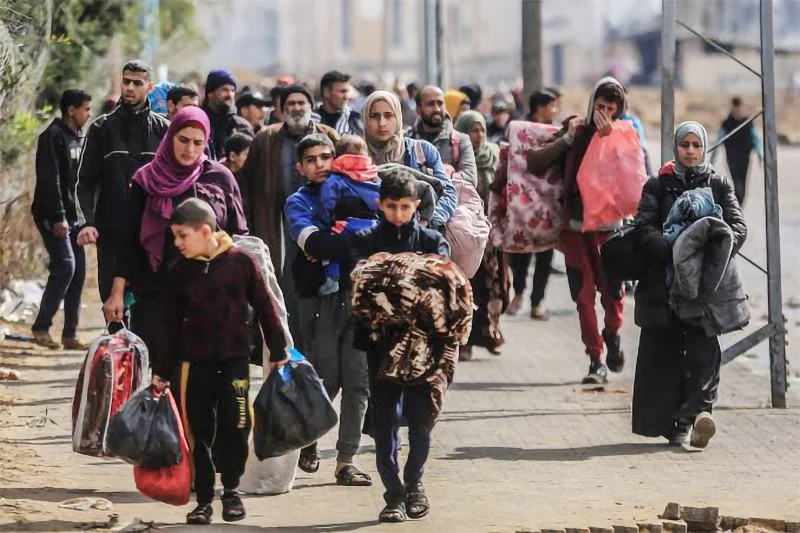
 Despite some sections of the Trump administration persisting with the view that the possibility could not be entirely ruled out of there being a diplomatic solution to the current US-Iran hostilities in West Asia, the skeptic could not be blamed for thinking otherwise. The intensity, scale and frequency of the tit-for-tat strikes by the antagonists over the past few days against selected military targets and civilian infrastructure in particular in West Asia make the adoption of this stance excusable.
The continuing hostilities render the mentioning of the MOU signed between the warring parties in mid-June a laughable matter. While it could very well be that the foes are wishing privately for a cessation of hostilities before long, what seems to be uppermost on their minds right now is to negotiate with each other from a position of strength. This strategy compels them to incapacitate each other militarily to the extent possible, lest they have to concede too much to each other during negotiations. Hence the stepped-up hostilities.
However, even on the question of there being a negotiated political settlement in the West Asian theatre in the longer term, the skeptic could come to be seen as scoring over the optimist. Developments on the ground account for this.
At the time of writing Israel’s Netanyahu government is going ahead in fairly care-free fashion with the establishment of more Jewish settlements in the Gaza and the West Bank, and it’s all happening under the apparently complacent gaze of the US. In fact, some quarters estimate that Israel is in control of some 65% of the Gaza Strip. Ethnic cleansing, that is, is being drastically stepped-up.
Accordingly, in terms of the power relations of West Asia, the world is almost back to the status quo of the late forties of the last century when the state of Israel was established and the Palestinians were reduced to a microscopic minority in the land they came to inhabit. Therefore, even the impartial observer would be compelled to ask: ‘Will a negotiated peace be ever possible in the Middle East?’
The humanist in the observer would prefer to answer this question in the affirmative and it is indeed the ideal stance to adopt considering the staggering human and material costs of the conflict. But the way ahead to peace could be expected to be highly hazardous and arduous. Among other odds, it would also prove an uphill endeavour to win minds and hearts.
The US’ Trump administration would need to be counted out in this pursuit. This is on account of the fact that it has been far too wayward in its management of West Asian affairs in particular over the past couple of years. Given its unpredictable character it is a matter for conjecture whether it could be counted on to live up to its commitments.
Moreover, Israel could be expected to ‘go it alone’ in the Middle East regardless of whether US help is coming or otherwise. It has indicated as much in recent times and Israel could be doubted on this score only at the doubter’s peril. Because time and again Israel has demonstrated that it could steadfastly defend its interests even single-handedly in the Middle East. History bears this out.
However, a durable alliance with the US would stand Israel in good stead. On the matter of military and intelligence assistance, for example, the US’s help proved invaluable for Israel in the past and going forward this is bound to be so as well. Moreover, it is unlikely that the Trump administration would give up on Israel, considering that a strong Israel is crucial for the furtherance of the US’ strategic and economic interests in West Asia.
But whether the above factors would have a considerable bearing on the question of working out a durable solution to the West Asian tangle is an entirely different matter. Israel, as in the case of the Palestinian enclaves, is acutely security conscious and would need to satisfy itself fully that it could live in a security environment that would guarantee its complete safety, going forward.
The Middle East is badly in need of another peace effort on the lines of the Oslo Accords of the mid-nineties that brought the key actors together and helped hammer out a solution that addressed some of their notable concerns. To be sure, that process did not prove to be the ideal answer to the tangle, but it yielded some respite to the region and drove home that one-time sworn foes could indeed negotiate with a degree of success. The West Bank authority, although falling short of fulfilling some key Palestinian aspirations, is testimony that a degree of success is possible if the intent is right.
Given the current realities of West Asia, peace-making is bound to be an uphill challenge. The violence faced in recent times by the Palestinian community, in particular, has been nothing less than mind-numbing. Merciless has been the violence visited on them by the Israeli side. In such circumstances, durable peace in the region could smack of an idealist’s dream.
Nevertheless, there needs to be urgently, a meeting of minds over the divides. The US would need to be counted out as an honest broker in bringing the sides together but the rest of the West would do well to step up to the challenge.
In this exercise the onus would be on the world’s democracies to take the initiative and doggedly stay the course. An acceptable combination would be the EU and the UN. Given their credentials, the main sides in West Asia ought to find them the least controversial.
Even if the relevant institutional and political arrangements could be shored up to take a reconciliation process forward, winning hearts and minds for the peace drive would prove a grueling challenge. Over the past few years in particular tens of thousands of hearts and minds on both sides of the divide have been bruised badly in the runaway murderous violence that has come to define the Middle East.
These badly scarred personalities would need to experience healing without much delay. It is therefore a multi-faceted challenge that is at hand. Since wide-ranging expertise would be needed in the healing process, people’s participation in peace-making, ranging over the divides, would need to be made a durable reality. It will be a time for enthroning humanity and ensuring the rejection of all forms of violence and coercion.
 For many Sri Lankans, Thailand is the go-to holiday — beaches, temples, food, and that famous warm hospitality.
In fact, I’ve been to Amazing Thailand 24 times myself, and was honoured with the Friends of Thailand International Media Award by the Tourism Authority of Thailand for promoting Thai tourism.
The good news I have for you today is that you don’t even need a passport to get a taste of Amazing Thailand.
The Royal Thai Embassy, in Colombo, is bringing a vibrant slice of Thailand, to the city of Colombo, with Thai Festival 2026 — a cultural experience like never before.
Whether you are an avid enthusiast of Thai culture, a total novice, or simply just interested in exploring foreign cultures, Thai Festival 2026 is going to be the perfect opportunity for you to get more than just a glimpse into one of the most celebrated cultural heritages in South East Asia. And ENTRANCE IS FREE.
The festival will be held on the 1st and 2nd of August, 2026, at Siam Nivasa, 43, C.W.W. Kannangara Mawatha, Colombo 7, and the East Parking Area, of the Colombo Municipal Council, from 11:00am to 5:00pm.
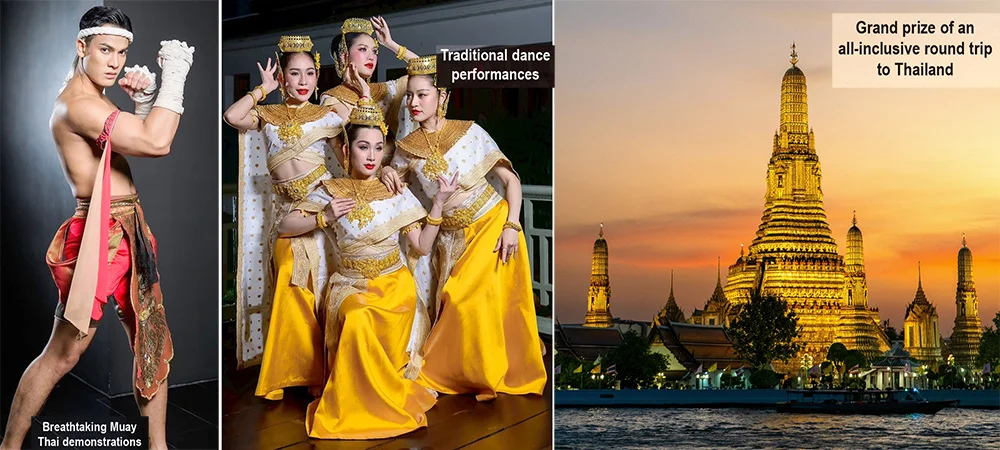
Both days will be full of live entertainment, and dispersed throughout with Thai cultural displays, including exhilarating traditional dance performances and breathtaking Muay Thai demonstrations.
Exploring art and craft specific to Thailand, tasting irresistible authentic Thai cuisine, and playing arcade games, are just a few more fun-filled events available for visitors at the festival premises.
An array of Thai products will also be available for purchase.
While at the festival, you will find Sri Lankan Alumni from Thai universities sharing their experiences with you and willing to answer any questions you might have, related to studying abroad in Thailand.
You can also register for the Muay Thai workshop that will be happening on the 7th and 8th of August, 2026, in Colombo.

Irresistible authentic Thai cuisine
Visitors can also stand a chance to win traditional Thai souvenirs, get exclusive photo opportunities, and, the big one — to enter the raffle draw, at the end of each day, for the grand prize of an all-inclusive round trip to Thailand.
Be sure to avail yourself of this exceptional opportunity and add a cultural spin to your weekend.
To keep up with the latest updates on Thai Festival 2026, head over to the Thai Festival official social media pages.
The Royal Thai Embassy in Colombo official webpage:
https://colombo.thaiembassy.org
Official social media:
Facebook: @RTEColombo
Instagram: @thaiembassysrilanka
Thai Festival official social media:
Facebook: Thai Festival in Colombo
Instagram: @thaifestival_colombo
TikTok: @thaifestival.incolombo

 Hair fall, in this heat, can be so frustrating, and noticing a thin patch is even more worrying. The good news is … yes, with a little care and kitchen ingredients, you can nourish your scalp and support healthy regrowth.
Try these four easy home remedies … even our grandmothers trusted:
* Coconut Oil and Curry Leaves Tonic:
Warm 04 tablespoons of coconut oil, with a handful of curry leaves, till the leaves turn black. Cool, strain, and massage into scalp 02-03 times a week. Leave for 01 hour, or overnight.
Why:
Coconut oil deeply nourishes, while curry leaves help strengthen roots and add shine.
* Onion Juice for Spot Treatment:
With cotton, dab the juice of 01 small onion, directly on the thin/bald patches. Leave for 20-30 minutes, and then wash with a mild shampoo. Use twice a week.
Why:
Rich in sulfur, onion juice helps boost blood circulation to the scalp.
* Aloe Vera and Castor Oil Mask:
Mix 02 tablespoons of fresh aloe vera gel and 01 tablespoon castor oil and apply to the scalp, focusing on thinning areas. Leave for 45 minutes, and then rinse with cool water.
Why:
Aloe vera soothes the scalp, while castor oil coats hair to make it look thicker.
* Fenugreek and Curd Strengthening Pack:
You will need 02 tablespoons fenugreek seeds, soaked overnight, and 02 tablespoons plain curd.
Grind to a paste, apply to scalp for 30 minutes, and then wash.
Why:
Fenugreek strengthens strands and reduces breakage.
Extra Tips for Healthy Hair:
Avoid tight hairstyles that pull on the scalp.
Eat iron and protein rich foods: greens, dhal, eggs, fish.
Use lukewarm water, not hot.
Be gentle when brushing and drying.
Manage stress — it plays a big role in hair fall.
Important: If bald patches are growing, or there is itching/redness, please consult a dermatologist.
Home remedies support hair health, but a doctor can find the exact cause.
Remember, healthy hair starts with a healthy, happy you.

US and Saudi Arabia announce nuclear cooperation deal

Navy seize Indian fishing trawler, nine fishermen poaching in Sri Lankan waters

Sri Lanka edge Qatar in Davis Cup opener

Dambulla Sixers hand Galle Gallants first defeat in LPL 2026

Jaffna Kings beat Colombo Kaps by five runs

Showers will occur in the Western and North-western provinces and Galle, Batticaloa, Ampara and Monaragala districts

‘Dates have the highest sugar content to fight Coronavirus’

Sunday Island 27 December – Headlines

#SundayIsland 17th December – Headlines

Sunday Island – 28th March

Sunday Island Headlines – 21 March

Sunday Island – 21st February – Headlines
-
 Features4 days ago
Two memorable excerpts from a former SLAF commander’s memoir
-

 Business4 days ago
‘Giving up was never an option’: The fisherman who fought back after losing millions in SL
-
 Latest News5 days ago
Davis cup Asia/Oceania Group IV 2026 to be held in Colombo from 20th to 25th July
-
 Features4 days ago
Erdoğan’s New Republic
-

 Life style4 days ago
Taste of the Swiss Alps comes to Colombo
-
 News5 days ago
Evidence recorded in money laundering case against Yoshitha Rajapaksa
-

 News5 days ago
Dengue outbreak gallops ahead: Infections surpasses 73,455, leaving 50 dead
-
 Midweek Review1 day ago
Three high-profile alleged suicides shaping key investigations