
News
Ex-SriLankan CEO’s death: Controversy surrounds execution of bail bond

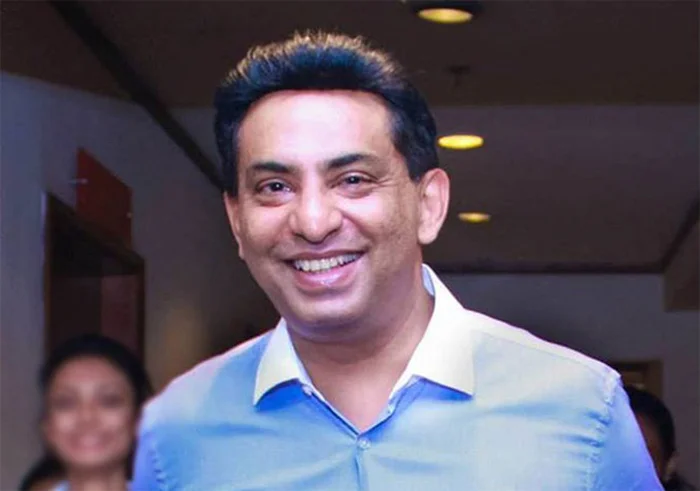
Prof. Prathibha Mahanamahewa has emphasised the need to examine the circumstances under which the court staff executed the bail bond, and the release process, in respect of the late Kapila Chandrasena, former Chief Executive Officer of SriLankan Airlines.
Chandrasena’s body was found in a house at Pedris Road, Colombo 03.
In case of any doubt regarding bail condition/s or any other matter (insufficient surety, identity issues, suspicious documents and unclear order), the Registrar had to get in touch with the relevant Magistrate, Mahanamahewa said.
Mahanamahewa was responding to The Island query regarding the acceptance of two Muslims as sureties. Had they followed the time-tested procedure, court registry/registrar staff would never have accepted sureties as blood relatives of Chandrasena, Mahanamahewa said, alleging a major defect in the execution of the bail bond.
They were arrested by police and remanded by the Colombo Magistrate’s court, till 13 May, pending further investigations.
Colombo Chief Magistrate Asanga S. Bodharagama, on 5 May, granted to Chandrasena cash bail of Rs. 500,000 and three surety bails of Rs. 10 million each. But soon after Chandrasena received bail, the court was told that two of the Rs. 10 million sureties had been produced, after payment of Rs. 15,000 each, were made to those two individuals to act as guarantors.
The bail application had been submitted by Rienzie Arsecularatne, PC, appearing on behalf of Kapila Chandrasena, when the case was earlier taken up, on 28 April.
Police also arrested an elderly person who arranged for the two persons who hadn’t even seen Chandrasena, even once, to offer themselves as sureties.
As soon as the police revealed the fraudulent manner Chandrasena obtained bail, Chief Magistrate Bodharagama issued an order to arrest and produce him before the court. This order was issued consequent to a request made by the Commission to Investigate Allegations of Bribery or Corruption (CIABOC), on the grounds that the defendant had violated bail conditions. The CIABOC wanted Chandrasena held pending the conclusion of the case.
Sources familiar with the execution of bail bond said that the moment the suspects had submitted their National Identity Cards and letters from Grama Sevakas, the court registry/registrar staff should have rejected them. In a such high-profile case, the failure on the part of the lawyers, representing Chandrasena, to check the gsureties’ relationship with Chandrasena, was another glaring shortcoming, sources said, pointing out that after having submitted bail application on 28 April, the defence team should have come prepared to put forward genuine guarantors.
The Island contacted the Bar Association of Sri Lanka for comment on the manner in which the court staff had handled bail for Chandrasena, but there was no response.
Sri Lanka’s former Ambassador to Moscow, accredited to Kiev, Udayanga Weeratunga, said that a thorough investigation should be conducted to ascertain facts about the execution of the bail bond. Asked whether he had been in touch with Chandrasena, Weeratunga said that he spent his first day at Welikada with Chandrasena and Ranjan Ramanayake in one cell. “That happened on 14 February, 2020. I was arrested when I returned to the country, from the UAE, and produced before the then Magistrate Ranga Dissanayake, the incumbent Director General of CIABOC,” Weeratunga said.
Weeratunga said that a couple of months after the change of government in 2024, the US State Department imposed a travel ban on him and Chandrasena and their families over what the US termed as significant corruption.
Weeratunga said that altogether the US designated 14 persons and, of them, two were Sri Lankan, who happened to be him and Chandrasena, accused of corruption in respect of acquisition of MiG 27s from Ukraine and the Airbus deal, during President Mahinda Rajapaksa’s tenure as the President.
SLPP sources said that Chandrasena’s demise shouldn’t prevent proper investigation on his affidavit that claimed pressure brought on him to name Mahinda Rajapaksa as a recipient of the Airbus bribe.
By Shamindra Ferdinando




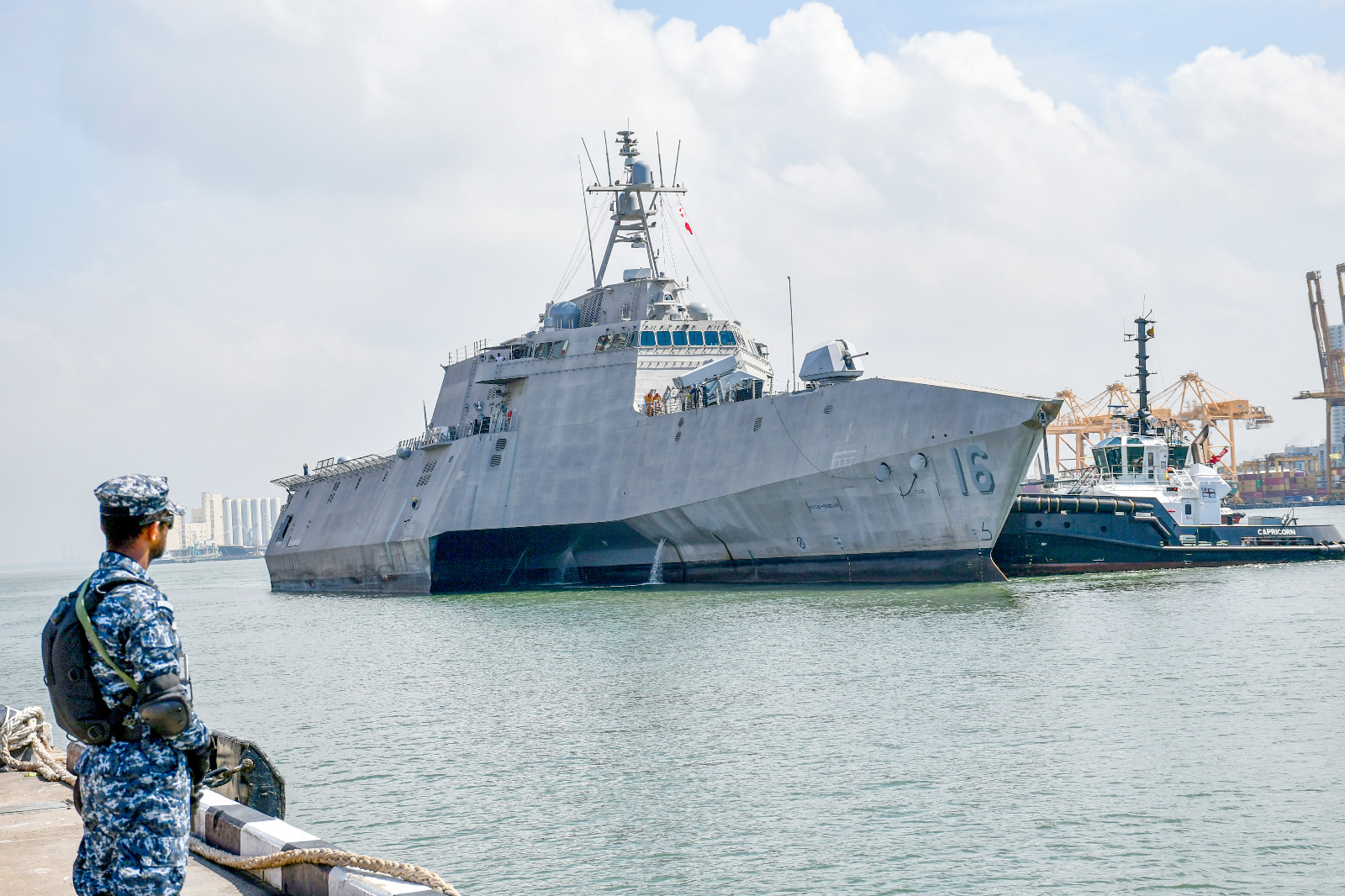
The U.S. Navy ship USS Tulsa (LCS 16) arrived at the Port of Colombo this morning, 7 October 2026 for replenishment purposes.
The visiting ship was welcomed by the Sri Lanka Navy in accordance with naval traditions.
The 127.7-metre-long platform is a Littoral Combat Ship commanded by Commander BM Wanier. Commissioned on 16 February 2019, USS Tulsa has since been in service with the US Navy.
The ship previously made a port call in Sri Lanka on 27 August 2025.
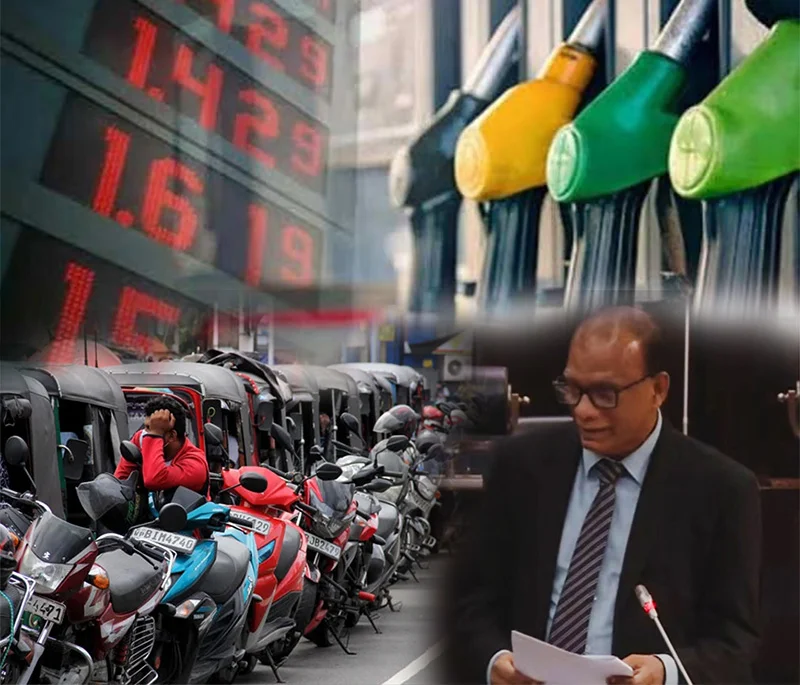
Govt. tells fuel distributors to maintain stocks to ensure uninterrupted supplies
by Saman Indrajith and Norman Palihawadane
The government had instructed private fuel distributors to maintain minimum stocks and ensure uninterrupted supplies to the market, Energy Minister Anura Karunathilaka told Parliament yesterday (06).
Karunathilaka said the Ministry of Energy Secretary had notified the relevant companies of the requirement, following a reduction in supplies by some private distributors, amid higher international fuel prices.
The Minister said private companies had informed the government that they were facing losses because international prices had risen while fuel was being sold, locally, at prevailing prices. As a result, some companies had reduced the volumes released to the market.
The reduced supplies had increased the burden on the Ceylon Petroleum Corporation (CPC), whose share of the diesel market had risen from about 54% to 82%, the Minister said.
“The CPC currently holds an 82% share of the market,” he said, adding that it had increased its supplies, compared with February, to compensate for the reduction by private distributors.
Karunathilaka said the government could not, under the existing agreements with private companies, specify the quantities they should supply to individual filling stations. However, it could require them to maintain minimum stocks in the country.
The Minister said the Energy Ministry had already instructed companies that had failed to maintain the required stocks to take steps to prevent supply disruptions.
The Minister attributed the queues reported at some filling stations to reduced supplies from private distributors, as well as normal variations in fuel distribution. He also said demand for CPC fuel had increased because private companies generally did not provide fuel to dealers on credit, while the CPC offered a three-day credit facility.
“We expect that, as the Ceylon Petroleum Corporation takes on this additional burden, the problem will ease to some extent by Wednesday or Thursday,” Karunathilaka said.
He said instructions had also been issued to increase supplies to CPC filling stations. A special discussion on the issue is scheduled for today (07), with officials of the Energy Ministry and CPC expected to participate,
along with President Anura Kumara Dissanayake.
Meanwhile, Petroleum Dealers’ Association officials have called for an early solution to the supply issue. Association Chairman D.V. Shantha Silva said queues had been reported at many filling stations, mainly those operated by private distributors.
He said the situation was not due to an overall shortage of fuel, but was linked to reduced orders by Lanka IOC, Sinopec and R.M. Parks amid concerns over losses incurred on fuel sales.
The Ceylon Petroleum Private Tanker Owners Association has urged motorists to refrain from panic buying, saying there was no nationwide disruption to fuel supplies.
The government earlier increased fuel prices and introduced a per-litre diesel subsidy following concerns raised by distributors over rising international prices.
by Norman Palihawadane
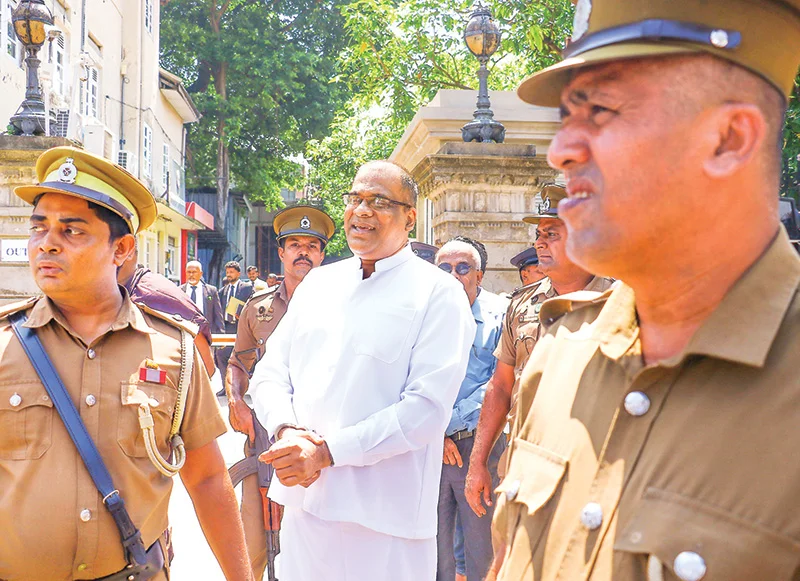
Bodu Bala Sena General Secretary Ven. Galagodaatte Gnanasara Thera, who has been ordered by the court to serve the remainder of his prison sentence, is to be assigned to the prison ‘printing work party’, prison officials said yesterday.
The monk was produced before the Colombo High Court yesterday by prison officials in connection with a warrant issued by the court.
He appeared before the court in civilian attire.
Prison sources said arrangements were being finalised for his detention and that he would subsequently be assigned to the printing work party.
The Thera initially objected when prison officials instructed him to change from his robes into the attire worn by convicted prisoners.
He later agreed to wear the prescribed prison clothes, sources said.
The Supreme Court, in September, annulled the presidential pardon granted to Gnanasara Thera in 2019. He had been serving a six-year prison sentence imposed following his conviction for contempt of court but had served only about nine months when then President Maithripala Sirisena granted him a presidential pardon in May 2019.
Following the Supreme Court ruling, the Thera was required to serve the remainder of his sentence. He was subsequently reported missing, prompting the Court of Appeal to issue an open warrant for his arrest.
The Court of Appeal on Monday ordered the authorities to enforce the remainder of his prison sentence.

U.S. Navy ship USS Tulsa arrives in Colombo for replenishment visit

Smriti Mandhana appointed India captain across formats

Ronaldo apologizes for Portugal walkout; says Jesus broke promise

Showers in the Western, Sabaragamuwa, Central, Uva, North-western and Southern provinces and in Anuradhapura and Mannar districts

Fuel crunch looms

Gnansara Thera to be assigned to prison printing section: Officials

‘Dates have the highest sugar content to fight Coronavirus’

Sunday Island 27 December – Headlines

#SundayIsland 17th December – Headlines

Sunday Island – 28th March

Sunday Island Headlines – 21 March

Sunday Island – 21st February – Headlines
-

 News6 days ago
US-assisted ‘Ice’ detection: NPC to examine IGP’s move to transfer drug-busting team
-

 Editorial5 days ago
Colombo Port drug bust: The plot thickens
-

 Editorial6 days ago
Drug busting, transfers and trust deficit
-

 Features4 days ago
The first woman in the foreign service or Ceylon Overseas Service it was then called
-
 News7 days ago
Sri Lankan facing death penalty in Saudi Arabia: Mano G appeals to Crown Prince
-

 Editorial5 days ago
Fuelling discontent and protest
-

 News2 days ago
Geneva takes up Sallay’s case and govt. ignores opportunity to answer accusations
-

 Latest News4 days ago
Tharindu Rathnayake, bowlers secure Asian Games Bronze for Sri Lanka