
Sports
Eran’s Achilles heel; the selectors


by Rex Clementine
The Cricket Transformation Committee headed by Eran Wickramaratne has received much praise for the manner in which it has gone about its business since being put in charge earlier this year. While bringing transparency and accountability to the affairs of Sri Lanka Cricket, an institution criticised for years over corruption and waste, the committee has also kept its eye on its primary task: drafting a new constitution for the administration of the game.
While most aspects have moved along smoothly, one area has seriously lagged behind; selection.
Selection is one of the most important cogs in the wheel of any cricket administration. The administrators may be doing wonders, but if those entrusted with picking teams do not live up to expectations, the whole machinery can come crashing down.
It is a little like the Yahapalana government that Eran himself was part of. It came in with good intentions, promising transparency, accountability and the wellbeing of the public. But the moment Arjun Mahendran was chosen to head the Central Bank, things began to unravel spectacularly. Is the same fate awaiting Eran’s cricket committee because of its selectors ?
Sadly, the harsh lessons from the West Indies appear not to have been learnt.
Although the Sri Lankan squad for the Test against India later this week has already assembled in Galle, the selectors are yet to announce the team to the public. We know, of course, that squads require the Sports Minister’s approval before they can be released. But some selectors have perfected the art of seeking approval at the eleventh hour, thereby conveniently escaping public scrutiny before a series begins.
Kapila Wijegunawardene surprised many when he picked Niroshan Dickwella in the Sri Lanka ‘A’ squad to face India in June. At a time when India were blooding 15-year-old wonderkids, our selectors were falling back on players in the twilight of their careers for an ‘A’ team. It was hardly evidence of forward planning. More worryingly, it gave the impression that the selectors were completely out of touch.
Being out of touch is one thing. Remaining so by choice is quite another.
If you have been away from the system for some time, there is no shame in consultation. Speak to those who have been around. Ask the coaches. Talk to recently retired players. Seek the views of people who watch domestic cricket week in, week out. Humility is no weakness when you are entrusted with shaping the future of the national team.
The manner in Dickwella has now been parachuted into the Test squad sends all the wrong signals.
Let us not forget why he was dropped in the first place. His wicketkeeping had become sloppy. Costly errors during the tour of New Zealand in 2023 contributed to him losing his place. Now, three years later, he finds himself back in the fold without having accomplished anything substantial enough to demand a recall.
The fact that Dickwella is 33 only strengthens the impression that Sri Lanka are moving backwards rather than forwards.
His selection becomes even harder to understand when you consider that the selectors did not play him in the warm-up game. The other contender, young Anjala Bandara, has been scoring heavily and was given an opportunity in the warm-up match. He failed there and was promptly discarded. That is hardly fair selection.
Bandara is 22 and certainly one for the future. Given the promise he has shown so early in his career, surely the sensible approach is to back him rather than punish him for one failure. That too at the expense of Dickwella. One problem that Sri Lanka’s batters have is that they are unable to bat for long hours. Bandara has shown that he has the patience to see off a couple of sessions.
Then there is Sadeera Samarawickrama. He kept wickets for Sri Lanka before the selectors handed the gloves to Kusal Mendis in order to balance the side. Sadeera hardly disgraced himself when he played Test cricket for Sri Lanka. If the selectors believe Bandara is too raw, would not Sadeera be the more logical choice?
There seems to be precious little logic in the selectors’ thinking. As Kumar Sangakkara once observed, like God, selectors move in mysterious ways.
There are also two prolific young batters knocking on the door in Pasindu Sooriyabandara and Pavan Rathnayake. The time is ripe for one of them to become part of the Test set-up. Why not play one as a batter when there are several wicketkeeping options already in the squad; Kamil Mishara, Nishan Madushka and Dinesh Chandimal?
And please spare us the excuse that none of them keeps wickets regularly for his club. This is a temporary arrangement until Kusal Mendis returns, not a ten year succession plan.
As for Dickwella, we have seen the full package over the years. He has played 54 Tests and there are claims that he remains the best wicketkeeper in the country. Some of us remain unconvinced.
A man who once carried that title with considerable distinction was Prasanna Jayawardene. He was a far superior wicketkeeper and into the bargain, scored four Test hundreds. Dickwella has none.
That is not because Dickwella lacks the skill to make big scores. Far from it. He possesses an abundance of talent. What has too often been missing is discipline. His attitude towards building an innings has repeatedly let him down.
Too often he has thrown away promising starts, harming both himself and the team. Successive selection committees persevered with him in the hope that he would eventually make the most of his considerable talent. That promise remained unfulfilled.
There have also been concerns about his influence within the team environment. Those who doubt that can consult team manager Mahinda Halangoda and draw their own conclusions. Then there was the suspension he received following a positive cocaine test in 2024.
Against that background, it is difficult to understand what exactly the selectors are trying to achieve by returning to Dickwella.
Sri Lankan cricket is supposed to be undergoing transformation. Transformation means looking ahead, identifying the next generation and giving talented young players the confidence that performances in domestic cricket will be rewarded.
It does not mean reaching into the cupboard and pulling out an option that has already been tried 54 times.
Eran Wickramaratne and his committee have done much to earn goodwill since taking charge. They should be careful that poor selection does not squander it. The Yahapalana government learnt the hard way that one disastrous appointment can undo a mountain of good intentions.
With friends like Kapila, Eran doesn’t need enemies.


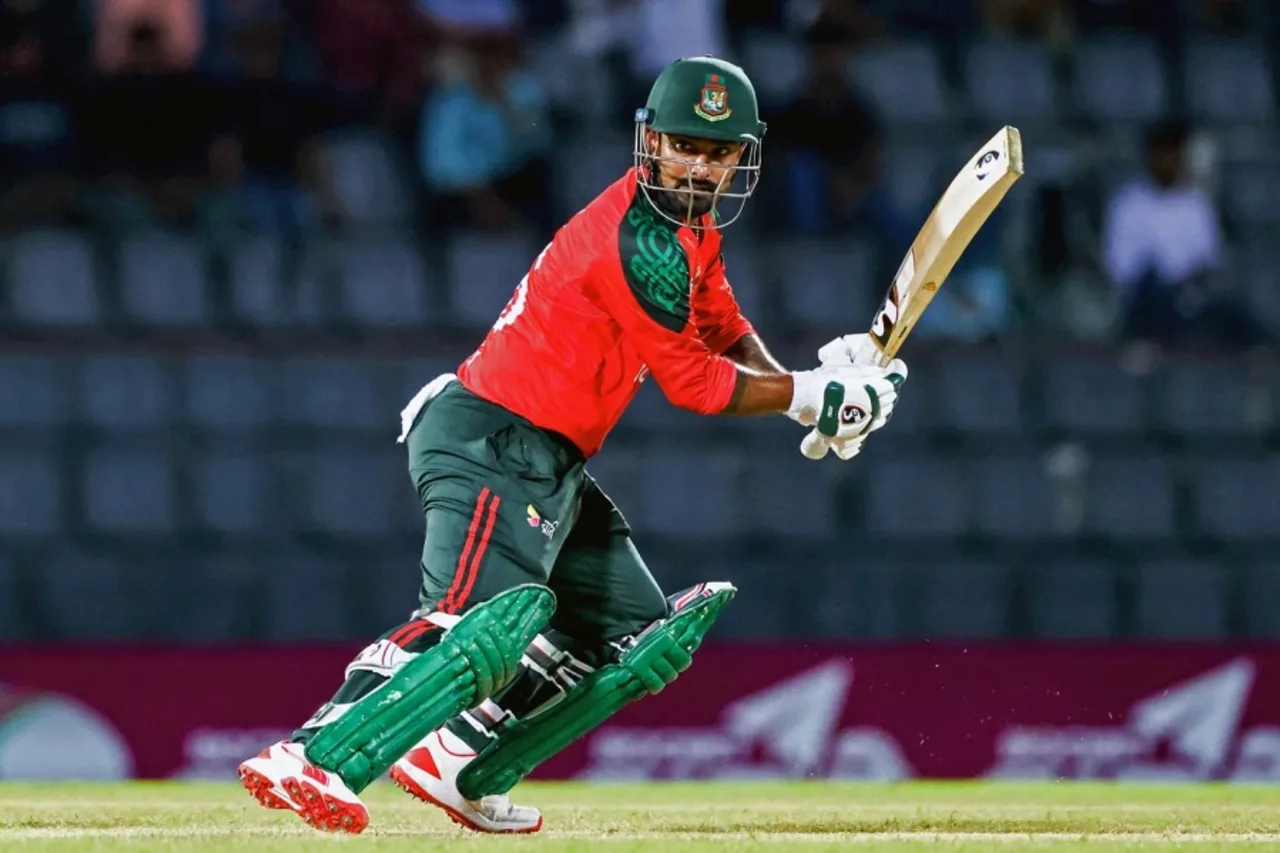
At the end of a wretched week in Nisshin, Bangladesh and Sri Lanka have something real to play for: an Asian Games bronze.
Both teams have a point to prove. Bangladesh recovered well from a poor start in their semi-final against Pakistan, thanks to Towhid Hridoy’s efforts with the bat, but their bowlers couldn’t defend 111 in a 13-overs-a-side game, and Mustafizur Rahman was taken to the cleaners in one of his rare poor outings in T20Is.
But at least they ran Pakistan close. In the other semi-final, India ran riot over Sri Lanka, bowling them out for 45. Sri Lanka had a second-string side on the field, but they wouldn’t have bargained for the basic mistakes they made, like the three run-outs in their innings.
Bangladesh, who can call on most of their first-choice players, start the third-place match as clear favourites, but the testing conditions at Nisshin can even up contests that look one-sided on paper. And both teams will have the motivation of bringing joy to contingents that have endured mostly barren Asian Games campaigns.
After a run-less Australia tour where Litton Das made three ducks in a row in the Test series, he was out for 2 against Pakistan. Litton faced just three balls, off which he attempted two reverse-sweeps, the second of them costing him his wicket. It was a perplexing innings on a pitch that offered a lot of turn and awkward bounce. Sometimes it’s hard to say if a batter is really out of form when he’s made a string of low scores, but Litton, who has led Bangladesh impressively in this format over the last couple of years, will want to break out of this run quickly.
Sahan Arachchige couldn’t quite muster up a captain’s performance against India, especially after his top three batters fell for ducks. He scored 9 before falling to a sweep shot against Axar Patel. He had earlier taken two wickets with his offbreaks. The 30-year-old allrounder now has the chance to put together a better show and inspire his team to the bronze.
Both teams could test their bench strength in the bronze-medal match.
Sri Lanka (probable): Sineth Jayawardena, Lasith Croospulle, Sohan de Livera (wk), Nuwanidu Fernando, Sahan Arachchige (capt), Ashen Bandara, Chamika Karunaratne, Wanuja Sahan, Tharindu Ratnayake, Vijayakanth Viyaskanth, Binura Fernando.
Bangladesh (probable): Tanzid Hasan, Saif Hassan, Litton Das (capt), Parvez Hossain Emon (wk), Towhid Hridoy (c), Mosaddek Hossain, Mahedi Hasan, Rishad Hossain, Aliss Al Islam/Nasum Ahmed, Shoriful Islam, Mustafizur Rahman/Hasan Mahmud.
[Ceicinfo]

The Wanderers Stadium in Johannesburg will host the 2027 ODI World Cup final, as it did in 2003, as well as the marquee match between India and Pakistan on October 10 at next year’s tournament. Wanderers, South Africa’s biggest ground with a capacity of over 30,000, has been preferred over Newlands in Cape Town, an iconic ground because of its mountain backdrop.
Newlands will instead host the opening match between India and defending champions Australia on October 7. So, a re-match of the 2023 final kicks off the group stage of the 14th edition of the tournament. Prior to that, the Namibia Cricket Ground in Windhoek will stage the Super Series, a three-team preliminary round which will decide which side makes it to the 12-team main event. Newlands gets a semi-final as well on November 17, with the other knockout game scheduled to take place in SuperSport Park in Tshwane (Centurion) on November 18. Zimbabwe, the co-hosts, are getting five games in the World Cup group stage and they play all of them at home.
The 12 teams – two of whom have yet to be decided – will be divided into two groups of six. Afghanistan, Australia, India, Pakistan, Zimbabwe and one of the qualifiers make up Group A. Bangladesh, England, South Africa, Sri Lanka, New Zealand and the other qualifier make up Group B. The two qualifiers will come from a 10 team tournament early next year, with the winner advancing to the group stage and the losing finalist and two losing semi-finalists to play the Super Series. A venue for the qualifiers has yet to be established but it is likely to be played either in South Africa or Namibia. The top eight teams besides the co-hosts in the ICC rankings on September 30 this year gained automatic qualification to the World Cup.
The World Cup will be staged between October 2 – to commemorate the birthday of Mahatma Gandhi, who spent two decades working as a lawyer in South Africa – and will conclude on November 21. The semi-finals and the final will have a reserve day.
South Africa, the co-host in group B, begin their campaign against New Zealand – a re-match of the 2026 T20 World Cup semi-final – at Newlands on October 9. Zimbabwe, the co-host in group A, will face Afghanistan in Bulawayo on October 11 to start their journey.
The top three teams of each group will move into the Super 7 phase, with the better fourth-place finisher across the two groups taking the seventh spot. Several teams already have their designations for the Super 7 phase and there is a chance of a second India vs Pakistan game in Cape Town on November 7.
- A1: India
- A2: Australia
- A3: Pakistan
- AB4: England
- B1: New Zealand
- B2: South Africa
- B3: Sri Lanka
If either Bangladesh or Afghanistan or any other team who are not seeded, get through their groups, they will assume seeding of the seeded team that gets knocked out.
In addition to hosting the preliminary round of the World Cup, Windhoek will host three group games, two of them involving 2019 champions England. The newly constructed Mosi-oa-Tunya Stadium in Victoria Falls, Zimbabwe got the final game of the group stages – India vs Zimbabwe on October 24 and three Super 7 matches. According to the ICC’s pre-seeding, these will be India vs Australia on October 28, Pakistan vs England on October 30 and Australia vs New Zealand on November 1.
There will be five matches played at Durban, including the final one of the Super 7 between A1 (India) and B3 (Sri Lanka) on November 14. In all there are 12 venues – Windhoek in Namibia, Victoria Falls, Harare and Bulawayo in Zimbabwe and Cape Town, Paarl, Johannesburg, Tshwane (Centurion), Bloemfontein, Durban, KuGompo City (East London) and Gqeberha (Port Elizabeth).
[Cricinfo]


The ICC has introduced a trial allowing pink balls to be used in daytime Test matches, among a series of changes to the Playing Conditions that come into effect for international series beginning on October 1.
The pink-ball provision is aimed at reducing the loss of playing time due to bad light. Its use will require mutual agreement between the two teams before the start of the Test and, once agreed, the ball colour cannot be changed during the match.
Continuing the push to make full use of playing time, the ICC will also clamp down on excessive time-wasting by batters in men’s cricket. A batter who is not ready to face the next delivery within the prescribed time, in the umpires’ view, will receive a warning for the first offence, followed by a final warning for the second. A third and each subsequent offence will result in five penalty runs being awarded to the fielding side, with Code of Conduct provisions potentially invoked for repeated offences.
Time-wasting came into focus during the Lord’s Test in 2025 when India captain Shubman Gill alleged that his confrontation with Zak Crawley stemmed from the England opener and his batting partner Ben Duckett seemingly arriving at the crease 90 seconds late when tasked with seeing out one final over before close of play on Day 3.
In another Test-specific change, following an MCC recommendation, the fall of a wicket in the final over of the day’s play will no longer automatically bring the day’s play to an end. If conditions remain suitable and the over has not been completed, the remaining deliveries will be bowled rather than carried over to the following day.
The ICC has also tightened the specifications for balls used in women’s international cricket, with separate size and weight requirements now in place for men’s, women’s and junior cricket. A new men’s ball must weigh between 5.5 and 5.75 ounces (156-163 grams) and measure 22.4-22.9 centimetres in circumference. For women’s cricket, the ball must weigh 5-5.25 ounces (142-149 grams) and measure 21.5-22 centimetres in circumference.
Among other changes following MCC recommendations, the ICC has also clarified the requirements around control of the ball, an area that has frequently come under scrutiny in run-out and stumping decisions. The revised laws make it explicit that mere contact with the ball is insufficient for a dismissal. For a wicket to be valid, the ball must be held with complete control at the moment the stumps are broken. Simply brushing the ball with a hand or glove while dislodging the bails will no longer meet the requirement.
The umpire will also have greater leeway in determining whether a ball is finally settled. The ball no longer necessarily has to be in the bowler’s or wicketkeeper’s hands to be considered finally settled.
Meanwhile, in ODIs and T20Is, the 15-minute interval in T20Is is now fixed, although it can be reduced to a minimum of 10 minutes when time has been lost. The ODI and T20I Playing Conditions are now aligned to allow the ‘Head Coach or their designate’ to enter the field of play at drinks intervals. [Cricbuzz]

Bronze at stake as Bangladesh, Sri Lanka look to bring cheer to Asian Games contingents

Wanderers to host 2027 men’s ODI World Cup final as well as India vs Pakistan

Prime Minister joins Gandhi Jayanti Commemoration

Showers or thundershowers will occur in most parts of the island after 1.00 p.m.

Unions resist tripartite EPF management plan

Two arrest warrants issued for Gnanasara thera

‘Dates have the highest sugar content to fight Coronavirus’

Sunday Island 27 December – Headlines

#SundayIsland 17th December – Headlines

Sunday Island – 28th March

Sunday Island Headlines – 21 March

Sunday Island – 21st February – Headlines
-

 Editorial6 days ago
Birth of a bad law
-

 News4 days ago
Police remove Thileepan statue in Jaffna
-

 News6 days ago
TIN mandatory for key transactions from Nov. 1
-

 Features4 days ago
The 22nd Amendment, constitutional recovery and illiberal slippage
-

 Features5 days ago
Of foreigners as CEOs of Lankan ventures
-

 News4 days ago
Sajith rejects Jt. Opp. protest sabotage claim; SJB TU chief demands remedial action
-

 Latest News2 days ago
Gold winner Tharanga gets brand-new Honda Vezel from SLAAJ
-

 Features3 days ago
Thailand’s biggest new global star …