
News
Energy Minister lashes out at international funding agencies

Criticism of Electricity Act Amendments:
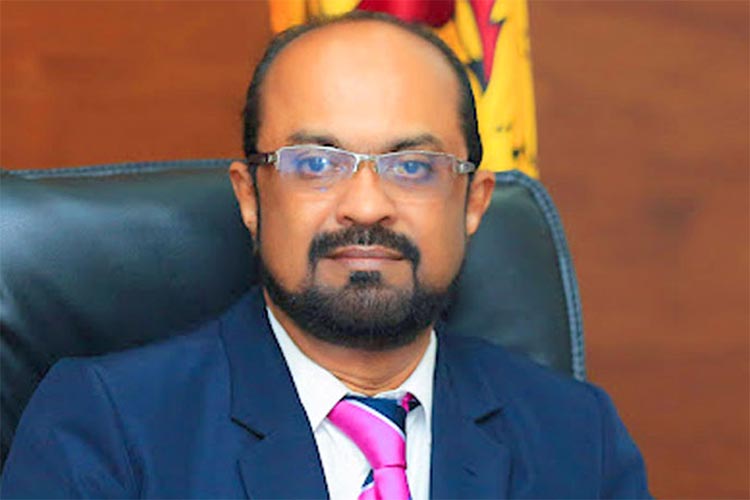
Energy Minister Kumara Jayakody has lashed out at the Japan International Cooperation Agency (JICA), the Asian Development Bank (ADB), and the World Bank over their public criticism of amendments to the Electricity Act, accusing them of bypassing diplomatic channels and politicising the issue.
“This is not how it should be done. They can’t work with us like this,” Minister Jayakody said in a televised interview on Thursday. “They should have handled it more diplomatically instead of going public.”
His remarks follow a joint letter issued by the three development partners raising red flags over provisions in the Electricity Act 2024. The letter voiced concern over clauses mandating permanent state ownership of electricity entities, proposed restructuring of the National Transmission Network Service Provider (NTNSP), and regulatory control over tariffs.
The ADB, the JICA and the World Bank have written to the Energy Minister regarding several key issues concerning the Electricity Act 2024 Amendments published in the Gazette recently.
The World Bank, ADB and JICA have been the major development partners in the power sector of Sri Lanka. The three institutions coordinate closely on key policy issues, investments, and technical assistance.
In a letter addressed to Minister Jayakody recently, the institutions thanked the Ministry of Energy and the Power Sector Reforms Secretariat for their continued engagement over the past several months on this topic.
However, they highlight four issues in the version of the Amendments to the Electricity Act 2024 published in the Gazette and being proposed to Parliament for consideration, which they believe impede the original intent and spirit of the Act regarding sector efficiency, good governance, and financial sustainability, all with the ultimate objective of ensuring a high quality of service to consumers at affordable prices.
“We share these comments in the spirit of supporting the Government of Sri Lanka in the smooth implementation of the final version of the Act and ensuring a strong energy sector for the future,” said the letter, signed by the Country Manager of the World Bank and IFC, ADB Country Director and JICA’s Chief Representative of Sri Lanka Office.
The issues highlighted in the letter are as follows:
Permanent Government Ownership
Section 17 of the principal Act, subsection 2 is amended with entities denoted as (a), (e), (f), (g), and (h)(ii) will remain “permanently” owned by the Government (through Secretary to the Treasury). The rationale for maintaining 100% Government ownership for the NSO, NTNSP, and Pension Liabilities Company is understood. However, legislating permanent 100% Government ownership in the Act, will increase the burden on the state, limit any private investment or opportunities into the Generation Company and Distribution Company, and only hinder the Government’s options for development in a sector with large investment needs.
National Transmission Network Service Provider (NTNSP)
Clause 20, subclause 3: The preliminary transfer plan includes LTL Holdings under the NTNSP. LTL Holdings owns and operates over 1GW of generation assets in Sri Lanka and abroad. Additionally, LTL has multiple other businesses including transmission and distribution projects, transformer manufacturing and other engineering projects. In the same clause, the preliminary transfer plan also includes Sri Lanka Energies under the NTNSP. Sri Lanka Energies has approximately 15 MW of mini-hydro plants, and other businesses including manufacturing meter components.
Having both companies under NTNSP would in turn create a generation company owning approximately 20% of Sri Lanka’s generation assets as well as multiple other businesses, come under the responsibility of the NTNSP. Given the urgent need to upgrade the transmission network and the renewable energy integration needs, bundling businesses outside the core function of NTNSP will likely result in a deterioration in the operations of those businesses and a distraction from the core functions of NTNSP. It will also detract from the principal objective of separating the core functions of the CEB, in this case transmission vs generation, and introducing the necessary transparency and removal of conflicts of interest, which were one of the cornerstones of the reforms.
Distribution Company
Clause 20, subclause 4: The preliminary transfer plan assumes the Distribution Company will assume “the assets, liabilities and functions” of LECO. LECO has been operating as an independent company from CEB distribution divisions and has adopted operational efficiencies and innovations for its customers and employees. This proposal will imply that a distribution company/licensee is going to fully absorb another distribution company/licensee, without considering the commercial, operational and legal ramifications.
The creation of a large NTNSP and Distribution Company, combined with the removal of restrictions on a single entity or Government of Sri Lanka acquiring multiple unbundled entities (clause 15, subclause 3) leaves an opening to reverse the unbundling, and return to a system of operational inefficiencies, conflicts of interests, and poor governance, all at a cost to the consumer.
Role of the regulator in tariff setting
Section 29, subsection 3 is amended with the following language: “by the substitution for the words “in accordance with the national tariff policy”, of the words “in consultation with the Ministry of Finance” rather than “after consultation with Ministry of Finance”. We have noted in previous communications that while this was accepted as a reasonable compromise in theory, we want to reiterate that this could pose challenges when trying to implement the act as this language is unclear and open to interpretation and/or legal challenge since there is ambiguity on who has final authority and accountability on tariff setting.
These changes could undermine the overarching objectives of the Electricity Act and the commitments made by the Government under the Asian Development Bank’s Policy-based Loan and World Bank’s Development Policy Operation. It will also weaken the attractiveness of Sri Lanka for investors, contrary to the Government’s intentions. We urge the Government to consider the points stated in this letter and amend the clauses to ensure they align with the core objectives of the Electricity Act—good governance, competitive procurement, regulatory independence, and financial sustainability.








The government, under heavy Opposition fire over inclusion of a sex website in the Grade 6 English module, as well as overall education reforms, has decided to put on hold reforms in respect of Grade 6.
Cabinet Spokesman and Media and Health Minister Dr. Nalinda Jayatissa announced the government decision yesterday (13) at the post-Cabinet media briefing at the Information Department.
According to him, the decision had been taken at the previous day’s Cabinet meeting, chaired by President Anura Kumara Dissanayake. Dr. Jayatissa said that education reforms pertaining to Garde 6 had been put on hold until 2027.
The Minister said that other proposed education reforms would be implemented as planned. The Minister said that action would be taken against those responsible for the inclusion of a link to a sex website following investigations conducted by the Criminal Investigation Department and the National Education Institute.
The SJB and several other political parties, as well as civil society groups, have accused the government of promoting an LGBTQ agenda, through the proposed education reforms.
The Opposition grouping Mahajana Handa, on Monday, made representations to the Mahanayake Thera of the Malwatta Chapter regarding the controversial reforms, while urging their intervention to halt the project.
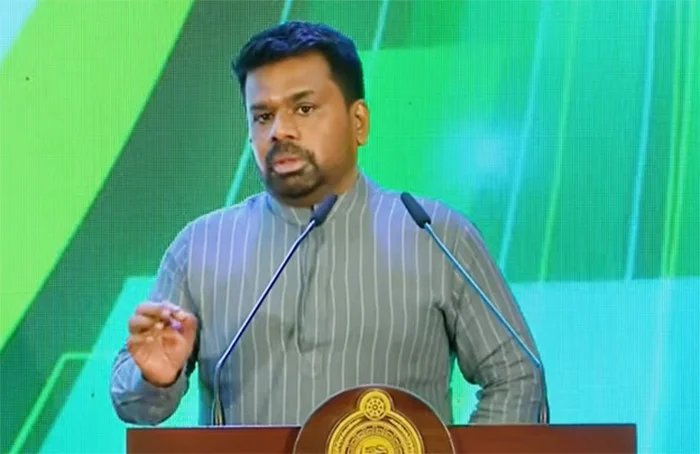
President Anura Kumara Dissanayake yesterday (13) vowed to go ahead with his government’s agenda, regardless of the destruction caused by Cyclone Ditwah.
Emphasising the responsibility on the part of all to contribute to the post-Ditwah recovery efforts, President Dissanayake said that he would have complete faith in the public service.
The President said so at the launch of the re-building Sri Lanka project at the BMICH yesterday.
The JVP and NPP leader said that he wouldn’t take advantage of the death and destruction caused by the cyclone or use the situation as an excuse to reverse their agenda or weaken it.
President Dissanayake said that in spite of many calling for amending the then Budget, in view of the cyclone, the government presented the proposals that were agreed before the disaster struck.

The United States has announced that it will provide the Sri Lanka Air Force with 10 US Navy TH-57 helicopters free of charge.
The announcement was made by outgoing US Ambassador Julie Chung, who stated, on social media, that the helicopters would be transferred under the United States’ Excess Defence Articles programme. The aircraft are Bell 206 Sea Ranger helicopters previously operated by the US Navy.
US sources said that the transfer was intended to strengthen Sri Lanka’s disaster response capabilities, following the devastating cyclone that struck the island at the end of 2025 and killed more than 600 people. US officials have framed the move as a humanitarian measure aimed at improving aerial rescue and relief operations.

Showery condition over the island is expected to reduce from tomorrow (15th)

USA’s Ali Khan claims having been ‘denied’ India visa ahead of T20 World Cup

At least 28 dead as crane collapses onto train in Thailand

Fair weather will prevail except for a few showers in the Uva, Eastern, Western and Central provinces and in Galle, Matara and Rathnapura districts

Trump cancels US-Iran meetings, urges protesters to take over institutions

Govt. bows to pressure, shelves Grade 6 reforms

‘Dates have the highest sugar content to fight Coronavirus’

Sunday Island 27 December – Headlines

#SundayIsland 17th December – Headlines

Sunday Island – 28th March

Sunday Island Headlines – 21 March

Sunday Island – 21st February – Headlines
-

 Business4 days ago
Dialog and UnionPay International Join Forces to Elevate Sri Lanka’s Digital Payment Landscape
-
 News4 days ago
Sajith: Ashoka Chakra replaces Dharmachakra in Buddhism textbook
-

 Features4 days ago
The Paradox of Trump Power: Contested Authoritarian at Home, Uncontested Bully Abroad
-

 Features4 days ago
Subject:Whatever happened to (my) three million dollars?
-

 News3 days ago
Level I landslide early warnings issued to the Districts of Badulla, Kandy, Matale and Nuwara-Eliya extended
-

 News4 days ago
65 withdrawn cases re-filed by Govt, PM tells Parliament
-

 News3 days ago
National Communication Programme for Child Health Promotion (SBCC) has been launched. – PM
-

 Opinion6 days ago
The minstrel monk and Rafiki, the old mandrill in The Lion King – II