
News
Empowering youth a human right and investment – UNDP Rep in SL


Robert Juhkam, Resident Representative, UNDP in Sri Lanka
The National Youth Dialogue (NYD) on Leadership, Innovation and Entrepreneurship is an annual national youth engagement exercise led by the United Nations Development Programme (UNDP) in Sri Lanka.
This year, too in adapting to the new normal, the National Youth Dialogue for 2020/2021 presented a fully virtual participant experience, via Zoom, spanning over five weeks, from Feb 16 to March 18 and included 28 sessions under 10 themes with over 100 speakers and facilitators joining in to share their stories, expertise and experiences with over 2000 participants, the UNDP said.
Together with Youth CO: Lab, the UNDP Asia Pacific programme on youth co-led by UNDP and Citi Foundation, NYD Sri Lanka is part of a family of National Youth Dialogues held each year in more than 20 countries across Asia and the Pacific region.
Speaking at the virtual closing ceremony, Robert Juhkam, Resident Representative, UNDP in Sri Lanka, stated, “Through existing and scaled up platforms for youth, such as the NYD and the HackaDev programme, UNDP Sri Lanka remains steadfast in our support to GoSL and other sectors to continue to build an alliance around youth development – create new partnerships and collaborations, and strengthen existing ones which will be the foundation upon which we can collectively invest our efforts and resources to provide an improved service offering. Empowering youth is both a human right based imperative and a needed investment to build forward better.”
The annual event serves as a national platform to foster meaningful youth participation and learning and engages a diverse group of young people across the island to set the agenda for youth policy action on the part of UNDP and its partners. The event also showcases the impact of UNDP Sri Lanka’s umbrella youth programme- HackaDev.
Speaking on her experiences as a participant this year, Zahra Taha noted, “This platform helped me identify the access points around me to new knowledge, resources, professional expertise support systems, new technologies and also awareness on crucial topics. I wish to highlight that the online experience that we gained through NYD was extraordinary. The interactive nature of the sessions using many online tools, kept the program lively and interesting.”
The event comprised thought and action provoking mini dialogues and innovative learning and development offerings, carefully curated for the benefit of youth.
Highlighting the Government’s role in engaging with youth, Theshara Jayasinghe, Chairman – National Youth Services Council, stated, “It is important to focus on how young people can come forward and lead, challenge existing notions and the status quo, and take risks in being innovative and entrepreneurial. This is why I am pleased that UNDPs National Youth Dialogue, not just in Sri Lanka, but across Asia and the Pacific region, through the Youth Co:Lab programme, has a heavy and consistent focus on these three key elements – leadership, innovation and entrepreneurship”.
The National Youth Dialogue tackled two main issues for young people; the post pandemic new normal and the decade of action towards realizing the sustainable development goals by the year 2030. Under this, a wide range of thematic areas covered during the dialogue included climate change, peace, gender, community engagement, personal development, arts and sports, digital citizenship, education, skills and employment opportunities.
Speaking of their role as an implementing partner of the project, Ravin Basnayake, Country Officer, Citi Sri Lanka Sri Lanka, noted, “We believe youth engagements such as the National Youth Dialogue helps in fostering learning and the development of future leaders, who can face the development challenges of today. This is why Citi Foundation together with UNDP created the Youth Co:Lab programme in the Asia and the Pacific Region and we are very happy about the impact of the programme thus far”.
Facilitators comprised of resource personnel from diverse fields including international athletes, global tech giants, private sector leaders, public officials, education reformists, media influencers and peacebuilders. The sessions were made possible through the efforts of over 25 partner and collaborator organizations, including six UN agencies.
Addressing the gathering Eric Falt, Director and UNESCO Representative to Bhutan, India, Maldives and Sri Lanka stated, “As countries around the world consider their post COVID-19 policy options, through your leadership, innovative ideas, and entrepreneurial spirit, we need you to step up and re-engineer the post COVID world to make it more peaceful, just and where no one hopefully is left behind.”
The National Dialogue in Sri Lanka was convened in partnership with Biodiversity Sri Lanka, Information and Communication Technology Agency of Sri Lanka (ICTA), Asia-Pacific Centre of Education for International Understanding (APCEIU), Vocational Training Authority (VTA) of Sri Lanka, Citi, Cisco, Centre for Communication Training, WHO Sri Lanka, UNESCO New Delhi Cluster Office, UNICEF Sri Lanka, UNFPA Sri Lanka, UNV Sri Lanka, HackaDev, Hashtag Generation, neOOne Associates, Sri Lanka Association for Software Services Companies (SLASSCOM), Citra Social Innovation Lab and Facebook.

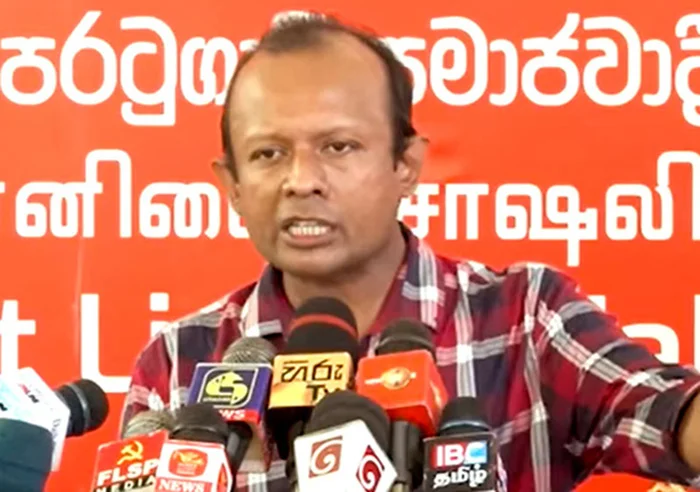
The Frontline Socialist Party (FSP) yesterday accused the government of seeking to use the proposed Protection of the State from Terrorism Act (PSTA) to suppress popular political activity, claiming that some of its provisions were more repressive than those of the Prevention of Terrorism Act (PTA).
FSP Education Secretary Pubudu Jayagoda told a media briefing, in Nugegoda, that the definition of terrorism in the Bill was so broad that it could be used to label almost any form of popular political activity as terrorism.
He said the Bill’s approach to defining terrorism was based largely on attempts to compel a government, or an international organisation, to do, or refrain from doing something, rather than on internationally recognised criteria, such as killings, causing serious bodily harm, kidnapping or acts intended to spread terror among the public.
Jayagoda also alleged that the Bill transferred substantial powers from the judiciary to the executive, while extending powers of arrest, investigation and detention to the armed forces, in addition to the police.
He claimed that the government had sought to portray the Bill as a replacement for the PTA while retaining or introducing provisions that could facilitate political victimisation and repression.
The FSP also questioned the government’s decision to proceed with the Bill, despite having previously sought public views on an earlier draft.
Jayagoda said a draft had been published earlier this year, with the period for public submissions ending on February 28, but the Bill subsequently gazetted was essentially the same draft with some provisions rearranged.
Jayagoda also referred to a letter reportedly sent by Attorney-at-Law Saliya Peiris, a member of a Committee, chaired by President’s Counsel Rienzie Arsecularatne, that had been appointed to draft the legislation. He said Peiris had stated, in the October 06 letter, that changes had been made to the draft prepared by the Committee.
“This means that even the Committee, appointed to prepare the Bill, was a deception,” Jayagoda alleged.
He said that the PSTA was fundamentally similar to the Anti-Terrorism Bill introduced by the previous government, in 2023, which the National People’s Power (NPP) opposed and challenged in court.
“If the NPP opposed that Bill then and is now bringing the same legislation before Parliament, the government must explain its position,” he said.
Jayagoda called on NPP MPs to oppose the PSTA in Parliament and urged trade unions and other groups to build a broad public movement against the legislation.
He challenged the government to an open debate on the Bill.
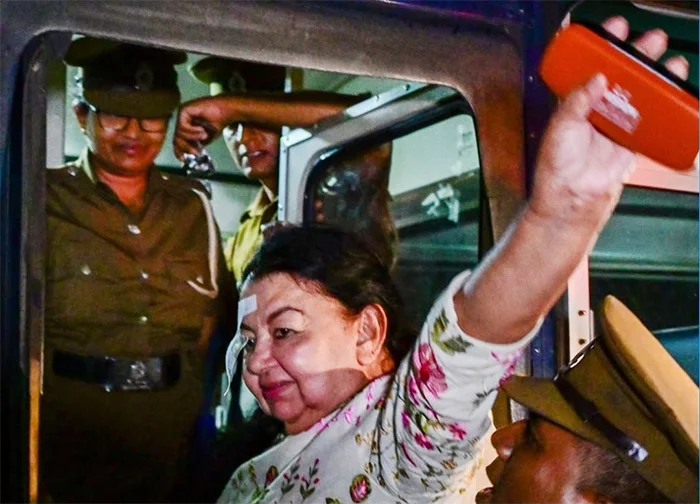
Former First Lady Shiranthi Rajapaksa was yesterday remanded until 13 October after being produced before the Colombo Magistrate’s Court following her arrest by the Commission to Investigate Allegations of Bribery or Corruption (CIABOC).
Shiranthi, wife of former President Mahinda Rajapaksa, was arrested at her residence on Poorwarama Road, Kirulapone, after CIABOC officers recorded a statement from her for nearly two hours.
According to the CIABOC, the arrest was made over allegations that Rs. 10 million obtained from the National Savings Bank through the Siriliya Saviya organisation was misappropriated.
The money was allegedly obtained to provide a Computed Tomography (CT) scanner to the children’s hospital. Investigators allege that the scanner was not provided and that the funds were instead unlawfully used.
CIABOC is investigating alleged offences under the Public Property Act and corruption-related provisions in connection with the transaction and other financial activities involving Siriliya Saviya, which was headed by Rajapaksa.
Rajapaksa returned to Sri Lanka on Monday night on a flight from Malaysia after travelling overseas for medical treatment. She left for Singapore on 16 September after being admitted to a private hospital in Colombo on 15 September following an illness.
She had been due to appear before the Financial Crimes Investigation Division (FCID) on 13 October in connection with its investigation into the financial affairs of Siriliya Saviya.
Meanwhile, her lawyers filed an anticipatory bail application before the Maligakanda Magistrate’s Court on Monday, seeking an order preventing her arrest in connection with the FCID investigation.
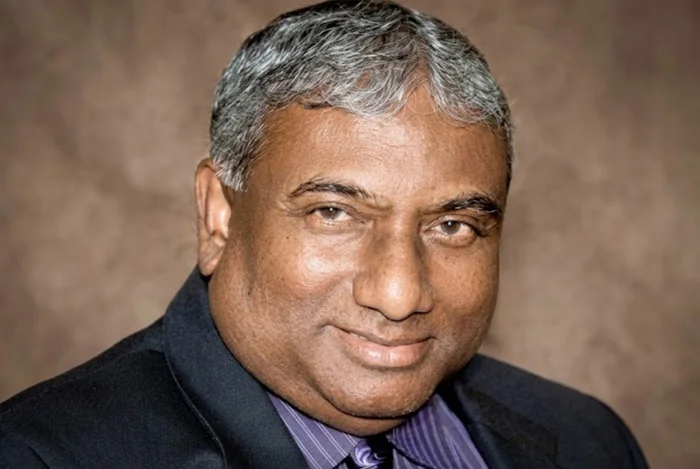
Former National Savings Bank (NSB) Chairman Pradeep Kariyawasam was yesterday granted bail by the Colombo Magistrate’s Court following his arrest by the Commission to Investigate Allegations of Bribery or Corruption (CIABOC).
Kariyawasam, husband of former Chief Justice Shirani Bandaranayake, was arrested in connection with the Bribery Commission’s investigation into the ‘Siriliya Saviya’ account linked to former First Lady Shiranthi Rajapaksa.
The investigation concerns financial activities involving the Siriliya Saviya initiative, which was headed by Rajapaksa, wife of former President Mahinda Rajapaksa.
CIABOC is continuing investigations into the alleged financial irregularities relating to the account.

Showers above 100 mm are likely at some places in the Western, Sabaragamuwa, Central, Uva and Southern provinces and in Anuradhapura district

PSTA worse than PTA: FSP

Shiranthi R remanded until 13 Oct.

Former NSB Chairman Kariyawasam granted bail

Katchatheevu row: India SC urges fishermen to avoid Sri Lankan waters

Remembering Juvenal, Coke, Acton and Machiavelli

‘Dates have the highest sugar content to fight Coronavirus’

Sunday Island 27 December – Headlines

#SundayIsland 17th December – Headlines

Sunday Island – 28th March

Sunday Island Headlines – 21 March

Sunday Island – 21st February – Headlines
-

 Editorial6 days ago
Colombo Port drug bust: The plot thickens
-

 Features4 days ago
The first woman in the foreign service or Ceylon Overseas Service it was then called
-

 Editorial5 days ago
Fuelling discontent and protest
-

 News3 days ago
Geneva takes up Sallay’s case and govt. ignores opportunity to answer accusations
-

 Latest News5 days ago
Tharindu Rathnayake, bowlers secure Asian Games Bronze for Sri Lanka
-
 Foreign News5 days ago
Ten injured after car crashes into rugby supporters in Australia
-

 Features3 days ago
Sri Lanka Cricket Bill: Governance reform is not yet a cricket strategy
-

 News4 days ago
Nearly 20 Iranian tankers stranded off Lanka amid US sanctions