
Opinion
Effects of privatisation of SLT on national security: A citizen’s perspective


by Nimal Gunatilleke
nimsavg@gmail.com
The report of the Parliamentary Sectoral Oversight Committee (PSOC) on National Security, titled, ‘The Effects of Privatisation of Sri Lanka Telecom on National Security’ was presented to the Parliament on 09 June by its Chairman Sarath Weerasekera, MP. It was almost immediately countered by the government by issuing a statement by the Presidential Media Division that the policy decision taken pertaining to the privatisation of Sri Lanka Telecom (SLT) will not compromise national security.
However, the PSOC report has opposed the privatisation of Sri Lanka Telecom PLC as matters sensitive to national security could be compromised if SLT is further privatised. Sri Lanka Telecom – the national information and communications technology solution provider and the leading broadband and backbone infrastructure services provider in the country – is already partially privatised with international companies holding 44.98% of the stake and the government holding 49.5%. The PSOC opined that further privatisation would expose the country’s critical communication infrastructure/sensitive information to private entities whose profit-oriented interests could compromise national security.
The PSOC report warns inter alia that the government must ensure that non-state actors do not have easy access to vital information that can be detrimental to national security. National security, it reports that is not merely the protection against military attacks, but it involves non-military dimensions such as economic security, energy security, food security, etc., and most importantly cyber security, which in turn, could affect our sovereignty. It further states that cybersecurity has become an indispensable component of national security crucial to prevent unauthorized access, data breaches, and disruptions in communications. As an example, the PSOC report quotes the LTTE international network under its “Tamil Eelam Cyber Force” which has already launched multiple attacks on Sri Lankan cyberspace. Several Sri Lankan government websites including its Ministry of Health website, foreign employment and Public Administration websites, and the Sri Lanka Embassy website in China have been hacked in the recent past by the ‘Tamil Eelam Cyber Force’ with their own admission to it while displaying on their website the much-publicized motto – We Never Forget! We Never Forgive! (Tamil Eelam Cyber Force@CyberEelam; https://twitter.com/CyberEelam ).
The PSOC report recommends, as a compromise, that while retaining or buying back segments of the SLT affecting national security, the remainder can be divested through Private Public Partnership ensuring critical infrastructure is protected and all government regulations are strictly adhered to. This would enable the government to ensure national security and exit if necessary. It further says that anyone/organisation with any involvement with extremists in any form should not be allowed to buy any share or have any control over our national assets.
The response of the President’s Media Division to this PSOC report was that it lacks a logical or scientific data analysis pertaining to the subject of national security. The PMD further states that in order to address the deficiencies, it is necessary to examine the operation and regulation of information and communication technology service providers in Sri Lanka, analyse financial data related to the sector, understand Sri Lanka’s national ambitions in this field, assess the available capital capacity, and conduct a comprehensive study of global trends.
The former Director General of the Telecommunications Regulatory Authority of Sri Lanka (TRASL) Professor Rohan Samarajeewa too, opined that the privatisation of SLT does not pose a threat to national security. He has suggested that privatisation with appropriate controls allows for investment and urged authorities to consider their recommendations seriously. He claimed that government communications are mostly done on popular global search engines (like Google-Gmail). Prof. Samarajeeva argued that privatisation does not mean government data is being compromised since data centres in Sri Lanka, including those of the telecom company and Dialog, are rented to store government data. According to Prof Samarajiva, one way to address national security concerns is to ensure the stringent functioning of SLT’s management. As an example, he suggests that with regard to data records, special safeguards can be put in place in addition to safeguards provided by the new Data Protection Act. This has also been referred to in the PMD response.
With respect to global trends in communication technology vis a-vis cybersecurity referred to in the PMD response, there is a wide range of opinions and news reports appearing on the web, which need to be carefully analyzed in order to benefit from them to safeguard our national interests.
Global Trends in the communication technology trade war:
In recent years, more advanced digital communication technologies have taken over the use of popular search engines like Google-Gmail. Some examples are instant messaging (IM), voice-over-Internet Protocol (VoIP) services like Whatsapp, social networking services like Facebook, YouTube, and Twitter, and Video conferencing apps like Zoom, etc. with Artificial Intelligence technology inputs. These have revolutionised the marketplace requiring frequent cyber security upgrades to be in place, especially with the emergence of the next-generation mobile communications technology – the fifth-generation (or 5G).
At the global scale, as any layman of the subject like myself would understand it, there is currently intense warfare going on in cyberspace, with the potential of the 5G technology being exploited for spying and also to sabotage communication on critical public utility infrastructure – everything from electric power, and water supply to sewage disposal, communication networks, and key financial centers thus compromising national security. This configuration of 5G networks means that there are many more points of entry for a hostile power or group to conduct cyber warfare against the critical infrastructure of a target nation or community. It is claimed that in the future, cyber espionage could replace ‘bullets and bombs’ through ‘bits and bytes’ bolstering cyber-attack capabilities on national security priorities. Spy agencies can readily tap into the undersea communication cables landing on one’s territory. Intelligence agencies the world over consider these submarine cables as ‘a surveillance gold mine’ with the attendant potential risk of eavesdropping and/or cyberattacks.
The undersea cables appear to be central to the US-China technology competition with spilling-over effects on other nations, as well. According to TeleGeography, a Washington-based telecommunications research firm, there are more than 400 active cables running along the seafloor across the globe, carrying over 95% of all international internet traffic. More than US$ 10 trillion worth of financial transactions is claimed to be transmitted via these cables every day, according to teleGeography estimates. These data conduits, which transmit everything from emails and banking transactions to military secrets, are vulnerable to sabotage attacks and espionage.
As a result, a cyber-technology-related proxy war between major superpower camps is emerging at a rapid pace. It could eventually determine who achieves economic and military dominance for decades to come, making references to their respective national security, at a time of war. According to a Reuters report (by Joe Brock) dated March 24, 2023, a successful US government campaign has helped the American subsea cable company Subcom LLC beat China’s HMN Tech to win a US$ 600 million contract to build the underwater cable system known as Southeast Asia-Middle East-Western Europe 6 (SeaMeWe6) connecting Singapore to France via India and Sri Lanka, the Middle East, and the Mediterranean countries.
Reuters reports that the US has also apparently worked to pressurise third parties, forcing the World Bank to scrap plans to connect up Pacific island nations to prevent a Chinese company from getting the contract in 2021, and then working to stop a vast, 19,000 km-long connection running from East Asia to India (and Sri Lanka), the Middle East, and Mediterranean countries from being built using HMN Tech cable. It goes on further to say that the US ambassadors in at least six of these en route countries including Singapore, Bangladesh, and Sri Lanka have written to local telecom carriers suggesting that picking SubCom is “an important opportunity to enhance commercial and security cooperation with the United States” or face US sanctions, otherwise. In addition, they have apparently offered the usual carrot as a reward (complementing the above-reported sticks of coercion) such as training grants to several countries en route to the cable network. Sri Lanka Telecom has apparently received US$ 600,000 for this purpose, according to the same Reuters report.
The PSOC report has correctly recognized that the SLT must ensure adequate countermeasures for above mentioned cyber-attacks such as firewalls, electronic surveillance, access control devices, etc. It further recounts the following: The private companies may not commit sufficient funds to ensure the above as national security is not their priority. Hence privatization would increase vulnerability to cyber threats. Private companies have a legal obligation to maximize profits for their shareholders and as such, will not always operate in the public interest. The public may have limited or no oversight over the operations of a private company and consequently making it difficult to hold them accountable for any wrongdoing.
Although the immediate response of the President’s Media Division to this PSOC report was that it lacks a logical or scientific data analysis pertaining to the subject of national security, our reading of the report is somewhat different from that of the PMD, especially considering the sensitivities and vulnerabilities associated with rapidly evolving global communication technology.
According to local media reports, one of several purposes of the controversial visit early this year by the 20-member US defence delegation includes access to submarine telecommunications cables and data, for which the US is apparently willing to provide prior intelligence on terrorist attacks in Sri Lanka.
Sri Lanka is evidently caught between the devil and the deep blue sea for being located in a geostrategic position abundantly endowed with strategically important natural resources. While being at the center of the Indian Ocean Sea Lanes of Communication (SLOC) with extensive ocean and land-based mineral resources, including premium grade graphite and rare earth elements, some political analysts are of the view that Sri Lanka suffers from a ‘Paradox of Plenty’ or perhaps, a geostrategic ‘Resource Curse’. This phenomenon often afflicts countries blessed with abundant natural resources, like Sri Lanka.
Despite being endowed with this politico-geostrategic wealth, the Sri Lanka Government is still up against tough bargaining with the IMF on its current debt restructuring process. A strong case needs to be presented by the Government in one voice resisting the privatization of profit-making institutions, especially those vitally important for national security, as correctly identified in the PSOC report on ‘The Effects of Privatization of Sri Lanka Telecom on National Security’.
It is heartening to learn that the government has taken a step backward towards delaying its formal endorsement of the plan to further privatize the SLT while seeking expert views in the meantime. In the interim, upgrading the laws such as the Computer Crime Act, Electronic Transaction Act, Right to Information Act, Banking Act, Telecommunication Act, Intellectual Property Act, and Data Protection Act, is also necessary to plug any glaring loopholes in the cybersecurity frontier to safeguard national security against emerging cyber threats referred to above.







A Bill of Rights is a formal list of the basic rights and freedoms that belong to the people. These rights are usually enshrined in a country’s constitution to protect citizens from the abuse of government power. Despite its importance, public awareness of this subject in Sri Lanka remains limited. Many citizens do not fully understand how constitutional rights affect their daily lives. Trade unions, political parties, and student groups often organise protests that disrupt normal life. However, fewer people realise that informed and constructive civic engagement aimed at constitutional reform can address many problems in a more peaceful and sustainable manner.
This article summarises a discussion held by the LEADS Forum with constitutional expert Jayampathy Wickramaratne (https://youtu.be/sxmXSVdYWo8?si* N8Uv6h4HgQ163Hjs ) and aims to encourage citizens to become more aware of the importance of constitutional rights. Dr Wickramaratne has been a President’s Counsel since 2001 and has played a key role in several constitutional reform efforts in Sri Lanka, including work related to the Nineteenth Amendment and the Right to Information Act. He has also served as a Member of Parliament and has written extensively on democratic governance. A robust discussion followed his presentation.
Without informed public participation, the same cycles of political conflict may continue, often resulting in unrest, violence, and property damage rather than meaningful solutions.
Sri Lanka’s Constitutional History
Sri Lanka has had three main constitutional frameworks since independence:
1. The Independence (Soulbury) Constitution (1947)
2. The 1972 Constitution
3. The 1978 Constitution
The 1947 Constitution did not include a comprehensive Bill of Rights. It contained some minority protections, such as Section 29(2), which prohibited discriminatory laws. However, later citizenship and voting laws resulted in many Indian Tamil plantation workers losing their voting rights, demonstrating the limits of those protections.
The 1972 Constitution introduced a chapter on fundamental rights. However, these rights were limited, and no court had a special jurisdiction to enforce them. Parliament still retained the power to override them with a two-thirds majority.
The 1978 Constitution has been amended more than twenty times. Critics argue that many of these amendments were driven by political interests rather than the long-term interests of the people.
“A Bill of Rights defines fundamental freedoms and limits government power to prevent abuse. In Sri Lanka, where constitutional reforms have often concentrated power, citizens need to demand strong safeguards, checks and balances, and approval through a referendum—ensuring true democracy based on people’s governance, upholding the supremacy of the constitution.”
The Need for Stronger Constitutional Protection
In many democratic countries, certain rights—such as protection from torture—are considered absolute rights. This means they cannot be restricted under any circumstances.
In Sri Lanka, most fundamental rights can be restricted by law. For example, freedom of speech may be limited for reasons such as national security, public order, or defamation.
However, a modern constitution should clearly distinguish between:
* Absolute rights, which cannot be violated under any circumstances
* Limited rights, which may be restricted only when strictly necessary in the interest of society.
Sri Lanka’s current constitutional framework does not clearly define this distinction.
Limited Judicial Review
Another weakness in Sri Lanka’s constitutional system is the limited power of courts to review laws after they are passed.
Under the 1978 Constitution, laws can normally be challenged only before they are enacted, during the Bill stage. The period provided is very short and often insufficient for professional organisations or civil society to examine proposed laws carefully.
Once a law is passed by Parliament and certified by the Speaker, it generally cannot be challenged in court—even if it conflicts with fundamental rights. This raises serious concerns about the protection of citizens.
Important Rights That Need Strengthening
Sri Lanka’s fundamental rights framework should be aligned more closely with internationally accepted human rights standards.
For example, in many countries, a person who is arrested has the right to:
* Inform a relative or trusted friend
* Consult a lawyer immediately
* Be produced before a judge within a defined time period, such as 24 hours
These safeguards are essential to ensure that individuals are treated fairly and are presumed innocent until proven guilty.
Other important rights that should be clearly recognised include:
* The right to life
* The right to privacy
* Freedom from discrimination
* Freedom of movement
* Freedom of religion without coercion
* Protection against forced marriage
* Protection of property rights
Citizens should also have strong legal protections against arbitrary arrest, unfair trials, and political persecution.
Social and Economic Rights
A modern Bill of Rights should also recognise certain social and economic rights. These may include:
* The right to education, particularly at primary and secondary levels
* The right of access to healthcare, including emergency medical treatment
* The right to a healthy environment
* Right of reasonable access to food and water
* Every citizen should also have the right to benefit from the country’s natural resources, while ensuring their sustainable use for future generations.
Access to Justice
At present, fundamental rights cases are mainly handled by the Supreme Court. However, there is a need for regional appellate courts so that citizens across the country can access justice more easily and without long delays.
Citizens should also be able to challenge actions by the government, institutions, or individuals if those actions violate their fundamental rights.
Why a Bill of Rights Matters
A Bill of Rights defines what governments cannot do to citizens. It protects freedoms such as:
* Freedom of speech
* Freedom of religion
* Freedom of assembly
* The right to a fair trial
* Protection from arbitrary arrest
These protections help prevent abuse of power and ensure equality before the law.
When citizens know their rights are protected, they are more likely to trust public institutions and participate in democratic life.
This, in turn, strengthens social harmony and encourages civic engagement.
A Bill of Rights also safeguards minorities and vulnerable communities from discrimination and marginalisation.
he Role of the Judiciary
A strong Bill of Rights requires an independent and competent judiciary capable of enforcing these protections.
Courts must have the authority, independence, and professional integrity to ensure that governments and public officials
respect constitutional rights.
How the Constitution Can Be Amended
New rights can be added to the Constitution through a constitutional amendment. The process usually includes:
* Drafting a constitutional amendment bill
* Presenting the bill to Parliament
* Review by the Supreme Court if challenged
* Approval by a two-thirds majority in Parliament
* A national referendum if entrenched provisions are affected
* Certification by the Speaker
Some constitutional changes must also be approved directly by the people through a referendum.
The Role of Citizens
Ordinary citizens cannot directly introduce constitutional amendments. However, they can influence the process by:
* Petitioning Members of Parliament
* Raising public awareness
* Encouraging national discussion on constitutional reform
If millions of citizens support a proposal, political leaders cannot easily ignore it.
Limiting Government Power and Protecting Liberty
Democratic systems function best when government power is limited and individual freedoms are protected. This is achieved through:
* Rule of Law – everyone, including government leaders, must obey the law
* Separation of Powers – legislative, executive, and judicial powers are divided
* Checks and Balances – each branch can limit the others
* Independent Institutions – courts, election commissions, auditors and more
Together, these safeguards prevent the concentration of power and protect democracy
A Foundation for a Just Society
A strong Bill of Rights is the foundation of a fair and stable society. It protects human dignity, promotes equality, and ensures that governments remain accountable to the people. To sustain absolute rights in the long term, approval by a public referendum seems prudent, as any subsequent intervention or revision by a two-thirds majority in Parliament would not be legitimate.
For a multi-ethnic and multi-religious country like Sri Lanka, establishing a strong and balanced Bill of Rights is essential if the nation is to move beyond past mistakes and build a more just and democratic future.
By Chula Goonasekera
on behalf of
LEADSForum
(admin@srilankaleads.com)


Recently, we all held our breath when a conflict began to develop very close to Sri Lanka. The sinking of the Iranian frigate IRIS Dena in the Indian Ocean took place in international waters about 30 miles from Sri Lanka’s southern coast. As the whole world watched, the President and the Government of Sri Lanka were faced with a humanitarian crisis. A second Iranian ship was also in distress and needed assistance. Although Sri Lanka’s maritime history dates back to 5th
Century BCE, this type of geopolitical crisis has been very rare.
Sri Lanka considered it the moral responsibility of the country to help out those affected during this geopolitical crisis. It chose to activate its role as a custodian of the Indian Ocean. Perhaps, not many individuals are aware of Sri Lanka’s historical role in calling on the United Nations to declare the Indian Ocean a Zone of Peace. In 1971, under the leadership of the first woman prime minister of the world, Sirimavo Bandaranaike, Sri Lanka, together with Tanzania brought forth a resolution to the 26th Session of the General Assembly of the United Nations to declare the Indian Ocean a “Zone of Peace.” This was done to avoid it being used by superpower rivalries to gain military control of the region. Sri Lanka’s Ambassador Shirley Amarasinghe, the President of the 31st general Assembly of the UN was responsible for working on this resolution as with others dealing with the “Law of the Sea”.
Chandra Fernando, Educational Consultant, USA)
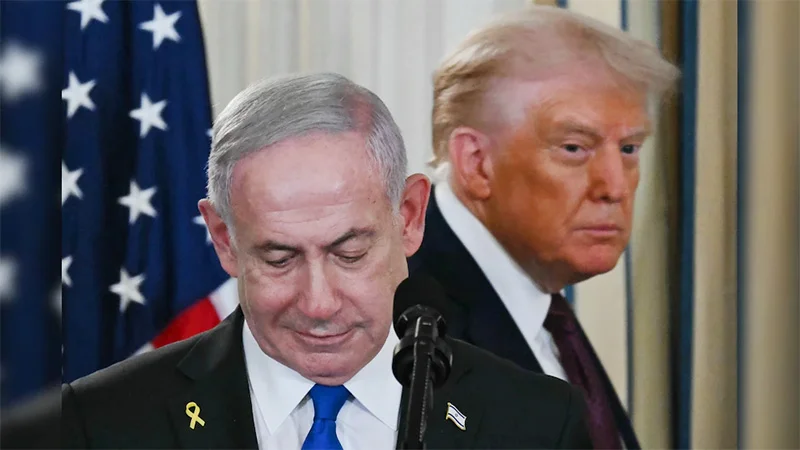
Wars often produce moments when leaders feel compelled to seek a decisive stroke that will end the conflict once and for all. History shows that such moments can generate choices that would have seemed unthinkable only months earlier. When Harry S. Truman authorised the atomic bombings of Hiroshima and Nagasaki in 1945, the decision emerged from precisely such wartime pressures. As the conflict involving the United States, Israel and Iran intensifies today, the world must ensure that a similar moment of desperate calculation does not arise again.
The lesson of that moment in history is not that such weapons can end wars, but that once the logic of escalation begins to dominate wartime decision-making, even the most unthinkable options can enter the realm of strategic calculation. The mere possibility that such debates could arise is reason enough for policymakers everywhere to approach the present conflict with extreme caution.
As the war drags on, both Donald Trump and Benjamin Netanyahu will face mounting pressure to produce decisive results. Wars rarely remain confined to their original scope once expectations of rapid victory begin to fade. Political leaders must demonstrate progress, military planners search for breakthroughs, and public narratives increasingly revolve around the need for a conclusive outcome. In this environment, media speculation about “exit strategies” or “off-ramps” for Washington can unintentionally increase pressure on decision-makers. Even well-intentioned commentary can shape the climate in which leaders make decisions, potentially nudging them toward harder, more dramatic actions.
Neither the United States nor Israel lacks the technological capability associated with advanced nuclear arsenals. The nuclear arsenals of advanced powers today are far more sophisticated than the devices used in 1945. While their existence is intended primarily as deterrence, prolonged wars have historically forced strategic communities to examine every available option. Even the discussion of such possibilities is deeply unsettling, yet ignoring the pressures that produce such debates can be dangerous.
For that reason, policymakers and societies on all sides must recognise the full range of choices that prolonged wars can place before leaders. For Iran’s leadership and its wider strategic community, absorbing this reality may be essential if catastrophic escalation is to be avoided. From Tehran’s perspective, the conflict may well be seen as existential. Yet history also shows that wars framed as existential struggles can generate the most dangerous strategic decisions.
The intellectual climate in Washington has also evolved. A number of influential voices in Washington now argue that the United States has become excessively risk-averse and that restoring global credibility requires a more assertive posture. Such arguments reflect a broader shift toward the language of renewed deterrence and strategic competition. Yet this very logic can make it politically harder for leaders to conclude conflicts without visible demonstrations of strength.
The outcome of this conflict will also be watched closely by other major powers. In 1945, the atomic decision was shaped not only by the desire to end a brutal war but also by the strategic message it sent to rival states observing the emergence of a new geopolitical era. Today, other significant powers will similarly draw lessons from how the United States manages both the conduct and the conclusion of this conflict.
This is why cool judgment is essential at this stage of the war. Whether the original decision to go to war was wise or ill-advised is now largely beside the point. Once a conflict has begun, the overriding priority must be to prevent escalation into something far more dangerous.
In such moments, the international system can benefit from the quiet diplomacy of actors that retain a degree of strategic autonomy. Among emerging nations, India stands out as a major emerging power in this regard. Despite its energy dependence on the Gulf and deep economic engagement with the United States, India has consistently demonstrated a capacity to maintain independent channels of communication across geopolitical divides.
This unique positioning may allow New Delhi to explore, discreetly and without public fanfare, avenues for de-escalation with Washington, Tel Aviv and Tehran alike. At moments of heightened tension in international politics, the world sometimes requires what might be called an “adult in the room”: a state capable of engaging all sides while remaining aligned exclusively with none.
If the present conflict continues to intensify, the value of such diplomacy may soon become evident. The most important lesson from 1945 is not only the destructive power of nuclear weapons but the pressures that can drive leaders toward choices that later generations struggle to comprehend. History shows that when wars reach their most desperate phases, restraint remains the only safeguard against catastrophe.
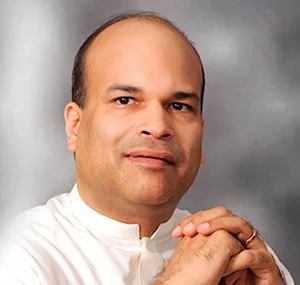
(Milinda Moragoda is a former Cabinet Minister and diplomat from Sri Lanka and founder of the Pathfinder Foundation, a strategic affairs think tank, can be contacted via email@milinda. This was published ndtv.com on 2026.03.1
by Milinda Moragoda

‘Dates have the highest sugar content to fight Coronavirus’

Sunday Island 27 December – Headlines

#SundayIsland 17th December – Headlines

Sunday Island – 28th March

Sunday Island Headlines – 21 March

Sunday Island – 21st February – Headlines
-

 News7 days ago
CIABOC questions Ex-President GR on house for CJ’s maid
-

 News6 days ago
Bailey Bridge inaugurated at Chilaw
-

 Features2 days ago
Trincomalee oil tank farm: An engineering marvel
-
 News5 days ago
CIABOC tells court Kapila gave Rs 60 mn to MR and Rs. 20 mn to Priyankara
-

 News6 days ago
Pay hike demand: CEB workers climb down from 40 % to 15–20%
-

 Editorial7 days ago
Couple QR-based quota with odd-even rationing
-

 Features5 days ago
Science and diplomacy in a changing world
-

 News4 days ago
Colombo, Oslo steps up efforts to strengthen bilateral cooperation in key environmental priority areas