
Opinion
Zia Mohyeddin: One of a kind


Born: 30 June (or 20 December) 1931, Lyallpur; Passed on: 13 February 2023, Karachi
By Beena Sarwar
The great Zia Mohyeddin was already a legend when I first interacted with him as an adult in the mid-1990s. He had recently moved to Lahore where I then lived at Lakshmi Mansion at Regal Chowk. I was working on the launch of weekly The News on Friday, a brainchild of my editor the multi-talented Imran Aslam who revered Zia sahib.
Both were alumni of the prestigious Government College Lahore and its GCDC, the Government College Drama Club. Knowing my family’s connection to Zia sahib, Imran asked me to approach him for a weekly column.
Pakistan’s progressive movement revolved largely around the great poet Faiz Ahmed Faiz, whose work Zia Mohyeddin so eloquently recited in his signature style, his distinctive, gravelly voice setting him apart from others. As part of the same circle, Zia sahib, born in 1931 in then Lyallpur (Faisalabad), Punjab, knew my father Dr M. Sarwar who led Pakistan’s first nationwide student movement, the Democratic Students Federation, 1948-54.
Zia Mohyeddin breathed his last on the day Faiz sahib’s birth anniversary is celebrated. Feeling unwell, he had been rushed to the hospital where he had to undergo surgery for an aneurysm. He reportedly told the surgeon, “Do what you have to do fast and patch me up, I have a lot of work.” This included travelling to Lahore for the upcoming Faiz Festival, 17-19 Feb.
For over 30 years, Faiz sahib’s poems were among the literary pieces Zia sahib recited every 31st of December in Lahore at the annual ‘Zia Mohyeddin ke saath aik sham’ (an evening with Zia Mohyeddin). The tradition, started in 1986 by his nephew Naveed ‘Bobby’ Riaz, was interrupted only by the Covid-19 pandemic in 2019 and 2020.
A theatre graduate of RADA, London’s renowned Royal Academy of Dramatic Arts, the suave Zia Mohyeddin had acted in several theatre productions, making his West End debut in ‘A Passage to India’ as Dr Aziz in 1960. He played memorable roles in Lawrence of Arabia (1962) and Merchant-Ivory’s Bombay Talkie (1970) as well. He had also starred in Jamil Dehlavi’s Immaculate Conception (1994) and the mini-series, The Jewel in the Crown (1984).
For several years he hosted The Zia Mohyeddin Show, a talk show-cum-variety programme for Pakistan Television, 1969-73, showcasing talent from across the country with his trademark sophistication and wit.
“It was such a sophisticated, well presented show. I remember thinking, I wish we had more like him,” recalls feminist activist Khushi Kabir in Dhaka.
During most of Gen. Ziaul Haq’s military rule, Zia sahib had lived in self-exile in Birmingham, U.K. with his second wife, the iconic kathak dancer Nahid Siddiqui. Gen. Zia’s death in a mid-air explosion followed by Benazir Bhutto’s win in the already scheduled elections in 1988 cleared the way for the return of progressive activists, writers, and artists to Pakistan. Zia sahib and Nahid split up in 1991.
Shortly afterwards, aged little over 60, he met Azra Bano Zaidi, an emerging singer and actor through her friend, the singer Tina Sani. Their love story defied their 30-year age difference and the two had married in 1994.
Obtaining Zia sahib’s phone number from Bobby, I called and introduced myself. Zia sahib graciously invited me over. That’s when I first met Azra although our families have pre-partition connections. She is now a well established performer in her own right.
Over an elegant cup of tea, I explained what Imran Aslam wanted. Zia sahib knew Imran of course and liked the idea of writing a column. He was also firm about getting paid the top rate. He wouldn’t do a weekly piece but agreed to write a fortnightly one. The News on Friday became The News on Sunday after then Prime Minister Nawaz Sharif changed the weekly holiday to conform with international banking days. Unfortunately, the digital archives of The Zia Mohyeddin Column don’t go to his earlier writings.
Some years later, I interviewed Zia sahib for my first documentary, a project for my master’s degree in Television Journalism at Goldsmiths College, London. My focal character was Nahid Siddiqui, a symbol of how dance became a political issue under Gen. Ziaul Haq. Zia Mohyeddin had headed the PAA Performing Arts Academy where they met and where she began her career. Talking to me at his Lahore home in April 2001, he shared his disappointment at how bureaucracy and bigotry have combined to oppress the arts in Pakistan.
A perfectionist and a stickler for detail, equally at home in English and Urdu, Zia sahib would not tolerate a mixing of the two languages – or a misspelling of his name.In the mid-1990s, he painstakingly, for weeks, tutored a grandniece sitting for her ‘A’ Levels, horrified that she intended to substitute a reading of ‘Umrao Jan’ with watching the movie.
When she returned after the exam he wanted to know what the questions were and how she had answered them. The last part of the exam had been a test of the feminine-masculine terms, including the feminine of ٹٹو — ‘tattu’ (mule).
“And what did you write for the feminine?” asked Zia sahib.
Now a senior financial communications specialist in Boston, Rima Hyder still laughs as she recalls how Zia Mamoo, as she called him, leapt agilely onto a sofa in horror at her response. Standing on the sofa he called out to Rima’s mother Tasawar in the kitchen. What kind of daughter had she raised? But Tasawar herself didn’t know the correct answer.Outraged but amused, Zia sahib patiently explained that the feminine of mule in Urdu is ‘tattwani’ – not the word which translates as excretion.In 2005, he became the founding director of the National Academy of Performing Arts in Karachi which is still going strong. He has also received numerous awards and honours in Pakistan and abroad.
Zia Mohyeddin was the youngest of six siblings, with five older sisters. Family legend has it that when the baby Zia was born, his sisters announced their intention of skipping school to celebrate. Their father Khadim Mohyeddin, a writer and poet who was reportedly the first ‘professor of music’ at the University of Punjab, would have none of it.
His sole surviving sister Razia Ishaq, 101 years old, is a poet living in Indianapolis with her family. Besides Azra, he leaves two sons, Minos Ameer and Risha Ameer, from his first marriage with Sarwar Zemani; another Hassan “Moyo” Mohyeddin from Nahid Siddiqui, and a daughter, Alia, from Azra.
“He leaves behind a huge void,” says Nahid. “Just to have that kind of quality around in Pakistan was very consoling and inspiring.”
In June 2017, Zia sahib penned his last piece for TNS: ‘For nearly a quarter of a century I have been writing a column which appeared in this newspaper every fortnight. I am grateful to TNS which allowed my ramblings to be worthy enough to appear in a section called “Literati”. Enough is enough though, and my jottings on Hamlet should be considered as my swan song: Farewell!’
Farewell, Zia sahib. You will always be one of a kind.
Beena Sarwar is a journalist and journalism teacher in Boston. She is founder editor Sapan News Network. www.beenasarwar.com
This is a Sapan News syndicated feature available to use with credit to Sapan News Network – www.southasiapeace.com


Doctor Upul Wijayawardhana (eminent physician), posed a riddle for us. He wrote about that island Sri Lanka as ‘ this little dot in the ocean’ when deriding the remark of President Dissanayake who had said that Sri Lanka was a hunduva , a term that indicated a small volume: me hunduve inna puluvan da? (Can you live in this restricted space?) Most sensible people, even uneducated, judge that the volume of a little drop (of whatever) is smaller than that of a hunduva; so is weight. When the learned doctor emphatically maintains ‘….we are not a hunduva’ but ‘… a little dot in the ocean…’, is the pot calling the kettle black or worse?
Physically and population wise, Sri Lanka is neither ‘a little dot’ nor ‘a hunduva. This is all in the rich imaginations of Dissanayake and Wijayawardhana. I once counted that there were more than 50 members of the UN who were smaller than Sri Lanka in physical and population size. England was a sizeable island with a small population in the northwest corner of Europe in late 18th century when it began to become what China, with 1.3 billion people and jutting out to the Pacific, is now. From about 1850, when the population of Great Britain was about 20 million, less than that of Sri Lanka in 2026, it ruled more than half the world. Besides, do not forget Vanuatu, Kiribati, Cook Islands, Antigua and Barbuda, Barbados, Lesotho and New Zealand (who habitually beats us at cricket). New Zealand with 5 million population played against 1.5 billion population India (1:300) for the T20 cricket championship a few weeks ago. I quietly wished New Zealand would win; so much for crap about dots in the Indian Ocean or the south Pacific.
Dr. Wijayawardhana also wrote about history and about ‘The achievements of Hunduwa’. The massive reservoirs and extensive irrigation systems in rajarata and ruhuna as well as the stupa are indeed tremendous works of irrigation and bear witness to superior ingenuity and organising ability, for the time they were built. They compare very well among structures elsewhere in the ancient world. Terms like ‘granary of the East’ must be taken with more than a grain of salt. Facile use of such terms does not take account of whatever shreds of evidence there is of adversity in those times. Monsoon Asia over the ages has more or less regularly suffered from floods, droughts and consequent famines. The last dire famine was in Bengal in 1944. The irrigation works in Lanka were a magnificent response to those phenomena. The modern response has been scientific agriculture making India a major grain exporter, from near famine conditions in 1973-74. Recall Indira Gandhi’s garibi hatao (eliminate poverty) speech to the General Assembly of the UN, that year.
The bhikkhu who wrote down the tripitaka in aluvihara did so because there was the threat of a severe famine in the course of which learned bhikkhu might have come to harm. Buddhist thought over centuries had been passed from generation to generation vocally (saamici patipanno bhagavato savaka (listener) sangho) and the departure from that tradition must have required a major threat of famine. There are stories of bhikkhu from Lanka fleeing from dire straits. In the same vein, while the mahavamsa speaks of kings and their valiant deeds, there is little account of the large mass of little people who lived then. Sensible teaching of the history of a people must include the history of as much of the people as possible and some idea of the history of other peoples in comparable times to avoid feeling dangerously smug and arrogant, which we have seen many times over.
Usvatte-aratchi

The resignation of Energy Minister Kumara Jayakody comes after several weeks of controversy over his ministerial role. The controversy sharpened when the minister was indicted by the Commission on Bribery and Corruption for a transaction he was involved in ten years ago as a government official in the Fertiliser Corporation. The other issue was the government’s purchase of substandard coal from a new supplier. Minister Jayakody’s resignation followed the appointment of a Special Presidential Commission of Inquiry to investigate coal and petroleum purchases. The minister who resigned, along with the Secretary to the Ministry of Energy, Udayanga Hemapala, stated that they did not wish to compromise the integrity of the investigation to be undertaken by the Commission of Inquiry.
The government’s initial resistance to holding the minister accountable for the costly purchase was based on the argument that the official procedure had been followed in ordering the coal. However, the fact that the procedure permitted a disadvantageous purchase which has come to light on this occasion suggests a weakness in the process. The government’s appointment of the Special Presidential Commission of Inquiry to examine purchases as far back as 2009 follows from this observation. In this time 450 purchases are reported to have been made, and if several of them were as disadvantageous as this one, the cost to the country can be imagined. The need to investigate transactions since 2009 also arises from the possibility that loopholes in official government procedures in the past would have permitted private enrichment at a high cost to the country.
Concerns have been expressed in the past that the purchase of coal and petroleum, often on an emergency basis, enabled the use of emergency procurement processes which do not require going through the full tender procedures. The government has pledged to eradicate corruption as its priority. As a result, the general population would expect it to do everything within its power to correct those systems that permitted such corruption. Accountability is not only forward looking to ensure non-corrupt practices in the present, it is also backward looking to ensure that corrupt practices of the past are discontinued. This would be a matter of concern to those who headed government ministries and departments in previous governments. Those who have misapplied the systems can be expected to do their utmost to resist any investigation into the past.
Politically Astute
One of the main reasons for the government’s continuing popularity among the general population, as reflected in February 2026 public opinion poll by Verité Research, has been its willingness to address the problem of corruption. Public opinion studies have consistently shown that corruption remains one of the top concerns of citizens in Sri Lanka. The arrests and indictments of members of former governments have been viewed with general satisfaction as paving the way to a less corrupt society. At the same time, the resignations of Minister Kumara Jayakody and Secretary Udayanga Hemapala are an indication that not even government members will be spared if they are found to have crossed red lines. This is an important signal, as public confidence depends not only on holding political opponents to account but also on demonstrating fairness and consistency within one’s own ranks.
There appears to be a strategy on the part of the opposition to target government leaders and allege corruption so that ministers will be forced to step down. Organised protests against other ministers, and demonstrations outside their homes, are on the rise. The government appears not to want to give in to this opposition strategy and therefore delayed the resignation of Minister Jayakody until it had itself established the Special Presidential Commission of Inquiry. It enabled the minister to step down without it seeming that the government was yielding to opposition pressure. In political terms, this was a calibrated response that sought to balance the need for accountability with the need to maintain authority and coherence in governance.
The demand by opposition parties to focus attention on the coal problem could also be seen as an attempt to shift the national debate from the corruption of the past to controversies in the present. The opposition’s endeavour would be to take the heat off themselves in regard to the corruption of the past and turn it onto the government by making it the focus of inquiries into corruption. The decision to set up a Special Presidential Commission of Inquiry accompanied by the resignation of the minister and the ministry secretary was a politically astute way of demonstrating that the government will have no tolerance for corruption. It will also help to remind the general public about the rampant corruption of past governments which prevents the opposition’s corruption accusations against the government from gaining traction amongst the people.
New Practice
The resignation of a government minister who faces allegations but has not been convicted is still a relatively new practice in Sri Lanka. The general practice in Sri Lanka up to the present time has been for those in government service, if found to be at fault, to be transferred rather than removed from office. This is commonly seen in the case of police officers who, if found to have used excessive force or engaged in abuse, are transferred to another station rather than subjected to more serious disciplinary action. A similar pattern was seen in the case of former minister Keheliya Rambukwella, who faced allegations of corruption in the health field but was reassigned to a different portfolio rather than removed from government.
Against this background, the present resignation assumes greater importance. It signals a willingness to break with past practices and to establish a higher standard of conduct in public office. However, a single instance does not in itself create a lasting change. What is required is the consistent application of the same principle across all cases, irrespective of political affiliation or convenience. This is where the government has an opportunity to strengthen its credibility. By ensuring that the same standards of accountability are applied to its own members as to those of previous governments, it can demonstrate that its commitment to good governance is not selective.
The establishment of the Special Presidential Commission of Inquiry, the willingness to accept ministerial resignation, and the recognition of systemic weaknesses in procurement are all steps in the right direction. The challenge now is to ensure that these steps are followed through with determination and consistency. If the investigations are conducted impartially and lead to meaningful reforms, the present controversy could mark a turning point. The resignation of the minister should not be seen as an isolated event but as the beginning of a new practice. If it becomes part of a broader pattern of accountability, it can contribute to a new political culture and to restoring public trust in government.
by Jehan Perera

The Island newspaper’s lead news item on the 12th of April 2026 was on the CEB request to shut down rooftop solar power during the low demand periods. Their argument is that rooftop solar panels produce about 300 MW power during the day and there is no procedure to balance the grid with such a load.
We as well as a large academic and industrial consortium members have been trying to promote solar energy as a viable and sustainable power source since the early 1990’s. We formed the Solar Energy Society and made representations to Government politicians about the need to have solar power generation. This continuous promotional work contributed to the rapid increase in PV solar companies from three in the early 1990’s to over 650 active PV solar companies established today in the country. These companies have created tens of thousands of high-quality jobs, as well as moving in the right direction for sustainable development.
However, all these efforts appear to have been in vain since the CEB policy makers have continuously rejected solar energy as a viable alternative. Their power generation plans at that time did not include solar energy at all but only relied on imported coal power plants and diesel power generation. Even at the meetings where CEB senior staff were present, we emphasised the importance of installation of battery storage facilities and grid balancing for which they have done nothing at all over the past three decades. Now they have grudgingly accepted the need to include solar energy, which was an election promise of the present government. The government policy is that Sri Lanka should go for renewables to satisfy 70% of its energy needs by 2030 and soon move towards the green hydrogen technology by using solar and wind energy.
The question is why the diesel generators and hydropower stations cannot be shut off one by one to accommodate the solar power generated during the daytime. Unlike a coal-fired plant, diesel generators and hydro power plants can be shut off in a relatively shorter period of time. Norochchalai Lakvijaya power plant produces around 900 MW of power while the total country requirement is 2500 MW on a daily basis. The remainder is provided by diesel generators, hydro and other renewable energy sources.
The need for work to achieve this goal of grid balancing should be the primary responsibility of the CEB. Modern grid balancing systems are in operation in countries such as Germany where around 56% of its energy come from renewable sources. They also plan to increase this to reach 80% of the energy required through renewables by 2030. Our CEB is hell bent on diesel power plants. Who benefits from such emergency power purchases is anybody’s guess?
The Government and the CEB should realise that all roof top solar plants are privately financed through personal funds or bank loans with no financial burden on the Government. It is a crime to request them not to operate these solar panels and get the necessary credits for the power transmitted to the national grid. It appears that the results of CEB’s lack of grid balancing experience and unwillingness to learn over three decades have now passed to the privately-funded rooftop solar panel owners. It is unfortunate that the Government is not considering the contributions of ordinary individuals who provide clean power to the national grid at no cost to the Government. Over 150,000 rooftop solar panels owners are severely affected by these ruthless decisions by the CEB, and this will lead to the un-popularity of this new government in the end.
by Professors Oliver Ileperuma and I M Dharmadasa

Advisory for Severe Lightning issued for the Western, Sabaragamuwa, Central, North-western, North-central, Southern, Uva provinces, and Ampara and Batticaloa districts

Will another film star be able to sway the election in India’s Tamil Nadu?

‘Team audit’ done, Kirsten hopes Sri Lanka keep ‘progressing and improving’

Nuwan Thusara withdraws lawsuit against Sri Lanka Cricket

Compensation payments and reconstruction activities related to the Ditwah relief measures must be expedited with special attention at the district level – PM

South Korean fighter jets collided due to pilots taking pictures, report finds

‘Dates have the highest sugar content to fight Coronavirus’

Sunday Island 27 December – Headlines

#SundayIsland 17th December – Headlines

Sunday Island – 28th March

Sunday Island Headlines – 21 March

Sunday Island – 21st February – Headlines
-
 News2 days ago
Rs 13 bn NDB fraud: Int’l forensic audit ordered
-

 Business5 days ago
Harnessing nature’s wisdom: Experts highlight “Resist–Align” path to resilience
-

 Opinion3 days ago
Shutting roof top solar panels – a crime
-

 News5 days ago
Gratiaen Trust announces longlist for the 33rd Annual Gratiaen Prize
-

 News4 days ago
From Nuwara Eliya to Dubai: Isha Holdings markets Agri products abroad
-

 Latest News7 days ago
Singapore Zoo’s first Sri Lankan leopard cubs make their public debut
-
 News5 days ago
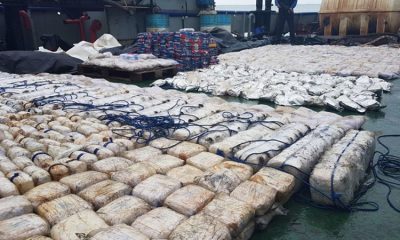
Heroin haul transported on 50-million-rupee contract
-
 News3 days ago
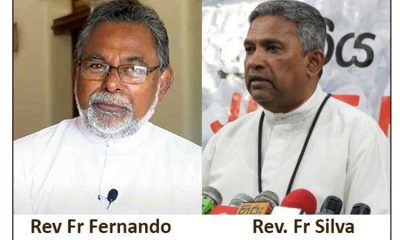
Church calls for Deputy Defence Minister’s removal, establishment of Independent Prosecutor’s Office