
Features
Educational reforms Sri Lanka demands today for a brighter tomorrow

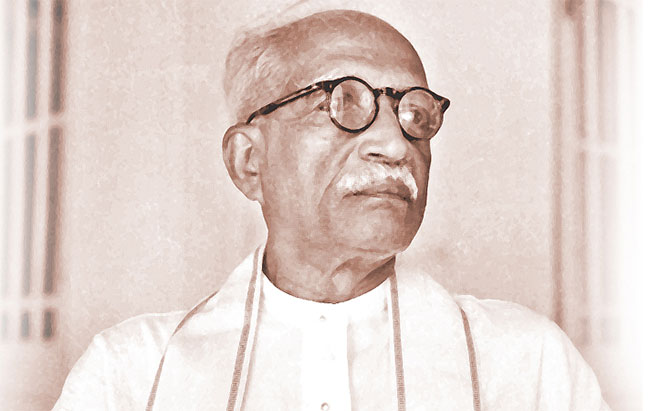
The 32nd Dr. C. W. W. Kannangara Memorial Lecture titled ‘For a country with a future’: Educational reforms Sri Lanka demands today’ delivered by Prof. Athula Sumathipala, Director, Institute for Research and Development, Sri Lanka and Chairman, National Institute of Fundemental Studies, Hanthana, on Oct 13, at the National Institute of Education, Maharagama
Continued From Tuesday (25)
Research on the current school education system, in Sri Lanka, has indicated that teachers recruited for maths and science education are often placed in schools without adequate teacher education and professional development. Short-term training sessions for these teachers are primarily carried out by Teacher Centres and Divisional Education Offices. These in-service training sessions need to be modernised to help provide teachers with the knowledge, attitudes, skills, and values to meet the demands for high-quality teachers. It is a weakness, within the system, that there is no national level consensus on the objectives to be met on Sri Lanka’s teacher education and professional development. A number of institutions work on this matter in isolation, and an eminent Sri Lankan educator, Dr. G. B. Gunewardena, stated, in 2012, that it is a necessity to have a confluent system to liaise between all these separate institutions. It is also necessary to further study the effectiveness of in-service training sessions in improving the quality of teachers.
Principals’ professional
development
This is not a factor that has received much attention in the Sri Lankan education system. All that usually happens is that the divisional/provincial education office informs principals when a new circular is issued. This has led to principals focusing more on meeting the responsibilities imposed upon them, by senior officers, and working according to the circulars, rather than on working on their responsibilities towards students and teachers nor on attempting to build a high-quality education system. There is very limited research on professional development of principals.
The key institution that offers professional development training to Sri Lankan principals is the Faculty of Education Leadership, Development and Management affiliated with the National Institute of Education. It is, however, very difficult for principals from areas faraway from Colombo to attend such trainings. Travel and financial difficulties, and the resistance to residential courses, are the key problems, whereas there is also no motivating factor for principals to participate in such programmes. It is, therefore, rare that principals, from far away areas, such as Ampara, for example, opt for continuous professional development.
However, it is clear that the number of principals participating in these trainings has increased as the training has moved to online learning. This is clearly a benefit of online education. Research on education systems in other countries has shown that although online education is less successful for school children, it can be highly effective in adult education.
For the new educational reforms to be truly effective, it is important to emphasise on the need to consider the bigger picture. Accordingly, a significant change in the mentality of students, teachers and society that helps place teachers and the teaching profession at an honoured and optimal level is necessary.
(vii) Integrating research within the overall scheme of education
Children are by nature researchers. They are inquisitive and explore the world from the day they are born. Children want to know everything; they question everything they see. Some children take apart toys to see how the toy works. This is science. Scientists, who investigate the world, are those who do what children do, in a professional and systematic manner. In this sense, every child is a researcher and a scientist. Researchers go beyond asking questions. They seek answers, or solutions, to the problem, based on research methods, make observations, arrive at conclusions, based on the observed data, and derive theories from it.
It is, therefore, easy to turn every child into a researcher and explorer. It is questionable as to what extent our education system achieves this objective. The group and individual project work introduced for G.C.E. Advanced Level students was an excellent opportunity to achieve such an objective. However, it appears that the value of this project work was not fully appreciated, and, perhaps, because of it, individual project work was removed from the Advanced Level Syllabus. I do not believe there is sufficient emphasis on research. even within the university system. Moreover, research projects are frequently concluded with the limited objective of obtaining career promotion.
Research and development, innovation and
technological transformation
The post-industrial knowledge economy and its growth is closely interlinked with innovation and localised research capacity. University-based research has been shown to be an effective driver for such economically productive innovation. In order to remain globally competitive, it is, therefore, necessary for a country to utilise state investment in universities to stimulate research and development. In line with this global trend, most top Asian Universities have transformed, from ‘Teaching Universities’ to ‘Research Universities’.
A paradigm shift is required in Sri Lankan graduate and post-graduate education to position research and innovation as a key feature and to develop persons with the creative vision for innovation, along with the wide and deep knowledge necessary to convert that vision into a reality. Contribution from research and development is critically necessary for Sri Lanka to stabilise its economy, to ensure national security and for the sustainable development of strategically important sectors. Strategy should focus on capturing available opportunities in a dynamic world since scientific opportunity cannot often be predicted. Flexibility in responding to novel ideas and seizing available opportunities is important for success. For example, the knowledge gaps that were exposed during Covid-19 created unprecedented opportunity for research on as yet unexplored fields. It is also necessary to create mechanisms in co-operation with industry, for the commercial exploitation of innovative products arising from the research, as well as for knowledge creation and transfer.
Sri Lanka urgently needs reforms in higher education that lead to establishing a value chain of co-operation and integration between multiple fields, which can ultimately result in innovation being converted to new products and services. Mere imitation of what is being done in this regard in foreign countries will not, however, suffice in this instance. An in-depth study of the geographic, cultural and socio-economic factors that can impact the relationship between universities and industry is necessary, and these findings should be used to determine a model best suited to Sri Lanka.
Co-operation between universities and industry on innovative products should be developed within a format that benefits all stakeholders. Capacity building, job creation and creation of intellectual property should also be included as part of this process. The research agenda of higher education institutions should, therefore, be developed within a structured framework of scientific, economic and social factors, that can lead to practical solutions for supporting innovation, technological development and its disbursement.
Innovation ecosystem model is a mechanism that has successfully been adopted by many countries and economies with a research and development agenda, and this could be used to help convert Sri Lankan universities into innovation centres where research and development projects are carried out. Accelerating innovation requires the cumulative action and support of a research-friendly vision and culture, legal and regulatory framework, financial and human resources, infrastructure and finally, supportive end-market users. To identify the best mechanisms to stimulate innovation in areas where Sri Lanka has a competitive edge, the innovation process should be considered in its entirety, bearing in mind the inter-dependencies between various stakeholders.
As the first step, research prioritisation should be carried out to identify the sectors which are necessary for post-Covid economic restructuring. Priority should be given to areas such as health, nutrition, food security, import substitution and export promotion. Technological innovation can be used to investigate areas such as online learning, environmental protection, increasing local production, and renewable energy sources such as solar, wind and tidal energy. Policy-making, at a national level, should be evidence-based and universities should be encouraged to play a pivotal role in this endeavour.
Secondly, research and development centres should be created with a global vision, adhering to the highest quality measures and research should be carried out on the most globally relevant fields, so that these institutions and the research benefits generated remain globally competitive. Building effective links with globally reputed research and development institutions, entrepreneurs and industry can add further value to Sri Lankan universities and entrepreneurs, leading to further national development.
In order to arrive at this transformation, attention needs to be paid to increasing resources through investment, identifying and utilising skilled human resources, recruiting and retaining the best researchers and innovators, and to carrying out critically necessary structural changes. Further, key factors necessary are: establishing the highest quality research centres, collective action to raise funds including sourcing donations, and, improving the ability to compete for international research funding. A ‘Department for sourcing, supporting and managing research funding’ should be established at university level. Post-graduate programmes should be structured around key research projects that can lead to effective outputs.
For knowledge creation, it is necessary to strengthen research in Sri Lankan universities.
The focus of research should shift from publishing research papers and using it for promotion towards commercial development of the outcomes of the research.
The new knowledge created from research should be useful for socio-economic development, yielding returns to the public. It is necessary to address the loopholes in this process, to remove obstacles and create opportunities for research that leads to intellectual property creation, innovation and commercialisation. The University Act could be used for this purpose.
Research findings should be used to inform policy-making at national, regional and international levels.
The obstacles to bringing in competitively won research funding from reputed foreign research funding institutions into the country, should be removed urgently.
We need to clearly understand that we live in an era which demands not one Dr. Kannangara but hundreds of, thousands of, Dr. Kannagaras in order to overcome the challenges ahead of us.
The single mechanism to overcome the multiple crises Sri Lanka faces now is to create productive citizens meeting the requirements of the modern world. Finally, I would like to emphasize that this is, indeed, the most appropriate time for a discussion on the broad educational reforms necessary to develop teachers, intellectuals, educators and politicians who can think beyond personal gain, have the knowledge, skills, attitude and the will, to help create such citizens.
Special thanks to Dr. Godwin Kodithuwakku, Former Director, Research and Development Unit, National Institute of Education.
References
1. K.H. M. Sumathipala, The History of Education in Sri Lanka 1796-1965. Tissa Prakashakayo. Dehiwala. 1968.
2. Dr. Swarna Jayaweera, ‘Expansion of educational opportunity–an unfinished task’. Dr. C.W.W. Kannangara Memorial Oration 1989. 13 October 1989.
3. Professor Narada Warnasuriya. ‘The role of the state in higher education’. Dr. C.W.W. Kannangara Memorial Oration 2008. 16 October 2008.
4. Professor Sujeewa Amarasena. ‘Medical Education and the Kannangara Philosophy’. Dr. C.W.W. Kannangara Memorial Oration 2017. 13 October 2017.
5. Mr. R.S. Medagama. ’A review of educational reforms in the Post-Kannangara era.’ Dr. C.W.W. Kannangara Memorial Oration 2014. 13 October 2014.
6. Institute for Research and Development, Battaramulla. ‘’Educational reforms the country demands to create a productive citizen adaptable to the modern world’. Gaveshana, January-March 2022. 39th edition.
About the auther….
Prof. Athula Sumathipala is the Director, Institute for Research and Development, Sri Lanka, which he proposed and co-founded in 1997. Since 2020 he is the Chairman of the National Institute of Fundamental Studies at Hanthana Kandy. He is a Visiting Professor in Psychiatry and Biomedical Research at the Faculty of Medicine, Kotelawala Defence University, Sri Lanka. Prof. Sumathipala has an academic background in Psychiatry and Family Medicine. Furthermore, Prof Athula Sumathipala is also an Emeritus Professor of Psychiatry at School of Medicine, Faculty of Medicine & Health Sciences, Keele University, UK. He is also an Emeritus Professor of Global Mental Health, Kings College, London, UK. He is a Member of the Regional Expert Group on Mental Health for WHO South-East Asia Region. He is the only Sri Lankan to serve as an Editorial Board member of the British Journal of Psychiatry, since it was founded in 1850s.
He is considered an international expert in mental health, ethics and twin research. The majority of his research is based in Sri Lanka, and he has given leadership to multicentre research in collaboration with internationally renowned researchers. He has made an impressive global contribution to scholarly work exceeding 100 publications and text book chapters to publications arising from Oxford University Press and Cambridge University Press
The greatest contribution in his academic career is the establishment of the Institute for Research & Development (IRD) in Sri Lanka, nurturing it from one room and a handful of people to what it is today: an internationally recognised academic research centre that conducts innovative research for policy impact, locally and internationally, and promotes capacity building at all levels.
The IRD received ‘Excellence in international collaboration for the advancement of science and technology’ National Awards Science and Technology Achievements 2018. Its founder Prof Sumathipala received. Individual outstanding leadership in promoting and developing science and technology. National Awards Science and Technology Achievements 2018. He has received HE President’s award (National Research Council of Sri Lanka) for publications in 2001, 2009, annually from 2010 to 2015, and in 2017.
He has been a research ambassador for Sri Lanka, representing the country as a keynote speaker, and panellist at a number of high-profile scientific meetings in numerous international locations.






 ‘Adapt, shrink or die’ – thus runs the warning issued by the Trump administration to UN humanitarian agencies with brute insensitivity in the wake of its recent decision to drastically reduce to $2bn its humanitarian aid to the UN system. This is a substantial climb down from the $17bn the US usually provided to the UN for its humanitarian operations.
Considering that the US has hitherto been the UN’s biggest aid provider, it need hardly be said that the US decision would pose a daunting challenge to the UN’s humanitarian operations around the world. This would indeed mean that, among other things, people living in poverty and stifling material hardships, in particularly the Southern hemisphere, could dramatically increase. Coming on top of the US decision to bring to an end USAID operations, the poor of the world could be said to have been left to their devices as a consequence of these morally insensitive policy rethinks of the Trump administration.
Earlier, the UN had warned that it would be compelled to reduce its aid programs in the face of ‘the deepest funding cuts ever.’ In fact the UN is on record as requesting the world for $23bn for its 2026 aid operations.
If this UN appeal happens to go unheeded, the possibilities are that the UN would not be in a position to uphold the status it has hitherto held as the world’s foremost humanitarian aid provider. It would not be incorrect to state that a substantial part of the rationale for the UN’s existence could come in for questioning if its humanitarian identity is thus eroded.
Inherent in these developments is a challenge for those sections of the international community that wish to stand up and be counted as humanists and the ‘Conscience of the World.’ A responsibility is cast on them to not only keep the UN system going but to also ensure its increased efficiency as a humanitarian aid provider to particularly the poorest of the poor.
It is unfortunate that the US is increasingly opting for a position of international isolation. Such a policy position was adopted by it in the decades leading to World War Two and the consequences for the world as a result for this policy posture were most disquieting. For instance, it opened the door to the flourishing of dictatorial regimes in the West, such as that led by Adolph Hitler in Germany, which nearly paved the way for the subjugation of a good part of Europe by the Nazis.
If the US had not intervened militarily in the war on the side of the Allies, the West would have faced the distressing prospect of coming under the sway of the Nazis and as a result earned indefinite political and military repression. By entering World War Two the US helped to ward off these bleak outcomes and indeed helped the major democracies of Western Europe to hold their own and thrive against fascism and dictatorial rule.
Republican administrations in the US in particular have not proved the greatest defenders of democratic rule the world over, but by helping to keep the international power balance in favour of democracy and fundamental human rights they could keep under a tight leash fascism and linked anti-democratic forces even in contemporary times. Russia’s invasion and continued occupation of parts of Ukraine reminds us starkly that the democracy versus fascism battle is far from over.
Right now, the US needs to remain on the side of the rest of the West very firmly, lest fascism enjoys another unfettered lease of life through the absence of countervailing and substantial military and political power.
However, by reducing its financial support for the UN and backing away from sustaining its humanitarian programs the world over the US could be laying the ground work for an aggravation of poverty in the South in particular and its accompaniments, such as, political repression, runaway social discontent and anarchy.
What should not go unnoticed by the US is the fact that peace and social stability in the South and the flourishing of the same conditions in the global North are symbiotically linked, although not so apparent at first blush. For instance, if illegal migration from the South to the US is a major problem for the US today, it is because poor countries are not receiving development assistance from the UN system to the required degree. Such deprivation on the part of the South leads to aggravating social discontent in the latter and consequences such as illegal migratory movements from South to North.
Accordingly, it will be in the North’s best interests to ensure that the South is not deprived of sustained development assistance since the latter is an essential condition for social contentment and stable governance, which factors in turn would guard against the emergence of phenomena such as illegal migration.
Meanwhile, democratic sections of the rest of the world in particular need to consider it a matter of conscience to ensure the sustenance and flourishing of the UN system. To be sure, the UN system is considerably flawed but at present it could be called the most equitable and fair among international development organizations and the most far-flung one. Without it world poverty would have proved unmanageable along with the ills that come along with it.
Dehumanizing poverty is an indictment on humanity. It stands to reason that the world community should rally round the UN and ensure its survival lest the abomination which is poverty flourishes. In this undertaking the world needs to stand united. Ambiguities on this score could be self-defeating for the world community.
For example, all groupings of countries that could demonstrate economic muscle need to figure prominently in this initiative. One such grouping is BRICS. Inasmuch as the US and the West should shrug aside Realpolitik considerations in this enterprise, the same goes for organizations such as BRICS.
The arrival at the above international consensus would be greatly facilitated by stepped up dialogue among states on the continued importance of the UN system. Fresh efforts to speed-up UN reform would prove major catalysts in bringing about these positive changes as well. Also requiring to be shunned is the blind pursuit of narrow national interests.

 Hi! Great to be back after my Christmas break.
Thought of starting this week with egg white.
Yes, eggs are brimming with nutrients beneficial for your overall health and wellness, but did you know that eggs, especially the whites, are excellent for your complexion?
OK, if you have no idea about how to use egg whites for your face, read on.
Egg White, Lemon, Honey:
Separate the yolk from the egg white and add about a teaspoon of freshly squeezed lemon juice and about one and a half teaspoons of organic honey. Whisk all the ingredients together until they are mixed well.
Apply this mixture to your face and allow it to rest for about 15 minutes before cleansing your face with a gentle face wash.
Don’t forget to apply your favourite moisturiser, after using this face mask, to help seal in all the goodness.
Egg White, Avocado:
In a clean mixing bowl, start by mashing the avocado, until it turns into a soft, lump-free paste, and then add the whites of one egg, a teaspoon of yoghurt and mix everything together until it looks like a creamy paste.
Apply this mixture all over your face and neck area, and leave it on for about 20 to 30 minutes before washing it off with cold water and a gentle face wash.
Egg White, Cucumber, Yoghurt:
In a bowl, add one egg white, one teaspoon each of yoghurt, fresh cucumber juice and organic honey. Mix all the ingredients together until it forms a thick paste.
Apply this paste all over your face and neck area and leave it on for at least 20 minutes and then gently rinse off this face mask with lukewarm water and immediately follow it up with a gentle and nourishing moisturiser.
Egg White, Aloe Vera, Castor Oil:
To the egg white, add about a teaspoon each of aloe vera gel and castor oil and then mix all the ingredients together and apply it all over your face and neck area in a thin, even layer.
Leave it on for about 20 minutes and wash it off with a gentle face wash and some cold water. Follow it up with your favourite moisturiser.

 Superlatives galore were used, especially on social media, to highlight R&B singer Ne-Yo’s trip to Sri Lanka: Global superstar Ne-Yo to perform live in Colombo this December; Ne-Yo concert puts Sri Lanka back on the global entertainment map; A global music sensation is coming to Sri Lanka … and there were lots more!
At an official press conference, held at a five-star venue, in Colombo, it was indicated that the gathering marked a defining moment for Sri Lanka’s entertainment industry as international R&B powerhouse and three-time Grammy Award winner Ne-Yo prepares to take the stage in Colombo this December.
What’s more, the occasion was graced by the presence of Sunil Kumara Gamage, Minister of Sports & Youth Affairs of Sri Lanka, and Professor Ruwan Ranasinghe, Deputy Minister of Tourism, alongside distinguished dignitaries, sponsors, and members of the media.
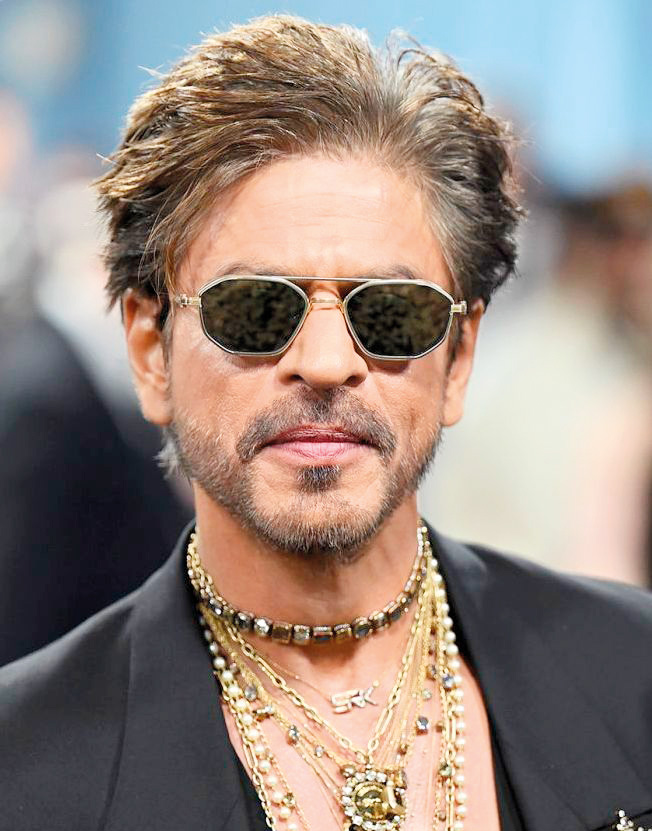
Shah Rukh Khan: Disappointed his fans in Sri Lanka
According to reports, the concert had received the official endorsement of the Sri Lanka Tourism Promotion Bureau, recognising it as a flagship initiative in developing the country’s concert economy by attracting fans, and media, from all over South Asia.

Nick Carter: His concert, too, was cancelled due to “Unforeseen circumstances
However, I had that strange feeling that this concert would not become a reality, keeping in mind what happened to Nick Carter’s Colombo concert – cancelled at the very last moment.
Carter issued a video message announcing he had to return to the USA due to “unforeseen circumstances” and a “family emergency”.
Though “unforeseen circumstances” was the official reason provided by Carter and the local organisers, there was speculation that low ticket sales may also have been a factor in the cancellation.
Well, “Unforeseen Circumstances” has cropped up again!
In a brief statement, via social media, the organisers of the Ne-Yo concert said the decision was taken due to “unforeseen circumstances and factors beyond their control.”
Ne-Yo, too, subsequently made an announcement, citing “Unforeseen circumstances.”
The public has a right to know what these “unforeseen circumstances” are, and who is to be blamed – the organisers or Ne-Yo!
Ne-Yo’s management certainly need to come out with the truth.
However, those who are aware of some of the happenings in the setup here put it down to poor ticket sales, mentioning that the tickets for the concert, and a meet-and-greet event, were exorbitantly high, considering that Ne-Yo is not a current mega star.
We also had a cancellation coming our way from Shah Rukh Khan, who was scheduled to visit Sri Lanka for the City of Dreams resort launch, and then this was received: “Unfortunately due to unforeseen personal reasons beyond his control, Mr. Khan is no longer able to attend.”
Referring to this kind of mess up, a leading showbiz personality said that it will only make people reluctant to buy their tickets, online.
“Tickets will go mostly at the gate and it will be very bad for the industry,” he added.

Around 40 dead in Swiss ski resort bar fire, police say

President pays homage to the Sacred Tooth Relic

Zohran Mamdani sworn in as New York City mayor

In pictures: New Year welcomed around the world

Foreign warships commended for their assistance during weather disaster in Sri Lanka

Machu Picchu train crash leaves one dead and dozens injured

‘Dates have the highest sugar content to fight Coronavirus’

Sunday Island 27 December – Headlines

#SundayIsland 17th December – Headlines

Sunday Island – 28th March

Sunday Island Headlines – 21 March

Sunday Island – 21st February – Headlines
-
 News7 days ago
Street vendors banned from Kandy City
-

 Sports4 days ago
Gurusinha’s Boxing Day hundred celebrated in Melbourne
-

 News7 days ago
Lankan aircrew fly daring UN Medevac in hostile conditions in Africa
-
 News2 days ago
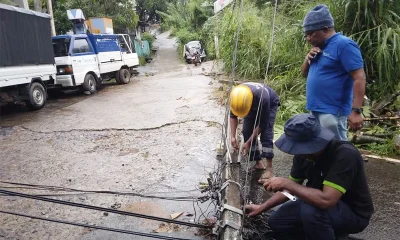
Leading the Nation’s Connectivity Recovery Amid Unprecedented Challenges
-

 Sports5 days ago
Time to close the Dickwella chapter
-

 Features3 days ago
It’s all over for Maxi Rozairo
-

 Features7 days ago
Rethinking post-disaster urban planning: Lessons from Peradeniya
-

 Opinion7 days ago
Are we reading the sky wrong?