
Features
Education Reforms and Democratic Deficit: A Warning for Sri Lanka

Introduction
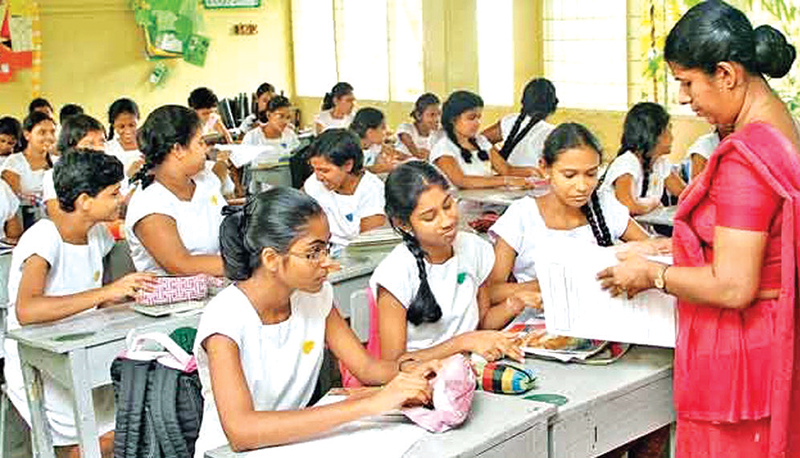
Education reforms are among the most consequential policy decisions a nation can undertake. They shape not only the intellectual capacity of future generations but also the economic resilience, social cohesion, democratic culture, and long-term sovereignty of a country. In Sri Lanka, education has historically functioned as a powerful engine of social mobility, equity, and national integration. From the mid-twentieth century onward, free education enabled generations from rural and disadvantaged backgrounds to access higher learning and professional careers, thereby contributing to nation-building and relative social stability.
Against this backdrop, any attempt to reform the education system without broad-based, meaningful stakeholder consultation carries profound risks. The growing perception that recent or proposed education reforms in Sri Lanka have been hurried, opaque, and insufficiently consultative signals a looming danger. Teachers, academics, students, parents, professional bodies, universities, trade unions, provincial authorities, and civil society actors increasingly express concern that they are being treated as passive recipients rather than active partners in reform.
The critical question, therefore, is not merely whether reforms will succeed or fail, but who will ultimately bear the cost of failure. Will political leaders and senior bureaucrats be held accountable, or will the burden fall disproportionately on students, families, and the nation as a whole? It is widely arguing that while political actors may face short-term criticism, it is the entire nation especially its youth, that will be penalized if education reforms proceed without inclusive consultation, contextual sensitivity, and long-term vision.
The Imperative for Education Reform in Sri Lanka
It must be acknowledged at the outset that education reform in Sri Lanka is not only desirable but imperative. The education system faces multiple, well-documented structural challenges, foremost among them a growing mismatch between educational outcomes and labour market demands. This disconnect is evident across disciplines, including STEM fields (science, technology, engineering, and mathematics) as well as HEMS, humanities, education, management, and the social sciences where limited integration with applied, vocational, and industry-relevant training constrains graduate employability. As a result, graduate unemployment and underemployment have become persistent features of the system, steadily eroding public confidence in the relevance, quality, and economic value of higher education.
Global competitiveness has declined as Sri Lanka struggles to keep pace with rapidly evolving knowledge economies. Regional and socioeconomic inequities remain entrenched, with rural, estate, and conflict-affected areas lagging behind urban centres in infrastructure, teacher availability, and learning outcomes. Public educational institutions from primary schools to universities remain chronically underfunded, while research output and innovation ecosystems are weak by international standards. Moreover, curricula at many levels continue to emphasize rote learning and examination performance over critical thinking, creativity, problem-solving, and interdisciplinary learning. These deficiencies are real and demand reform. However, the legitimacy, sustainability, and effectiveness of reform depend not only on technical design but also on participatory governance and social consensus.
Sri Lanka introduced the more advanced National Vocational Qualification (NVQ) framework around 2004-2005 through the Tertiary and Vocational Education Commission (TVEC), established under the TVEC Act No. 20 of 1990, with the objective of creating a unified, competency-based vocational education and training system. Subsequently, the Sri Lanka Qualifications Framework (SLQF) was established in 2012 to integrate the NVQ framework into a single, coherent national qualifications structure encompassing both higher education and vocational training. This integration was intended to ensure parity of esteem, transparency, and clear progression pathways across academic and vocational streams.
While periodic amendments and reforms are necessary to align the system with evolving international standards, such reforms should strengthen not curtail the fundamental principles and institutional integrity of the NVQ and SLQF frameworks. These foundational structures have been carefully designed to safeguard quality, mobility, and inclusivity, and any reform that undermines them risks weakening the coherence and credibility of Sri Lanka’s national qualifications system.
Participatory Governance and the Legitimacy of Reform
Education is not a purely technocratic domain. It is deeply embedded in culture, language, values, identity, and social aspirations. Consequently, reforms imposed from the top however well-intentioned often encounter resistance, misinterpretation, or unintended consequences when they fail to engage those who must implement and live with them. Participatory governance in education reform involves structured, transparent, and inclusive consultation processes that genuinely incorporate stakeholder feedback into policy design. This includes not only elite consultations with select experts but also systematic engagement with teachers’ unions, university senates, student bodies, parent-teacher associations, professional councils, provincial education authorities, and independent scholars.
When reforms are designed in isolation often driven by political expediency, external pressure, or short-term fiscal considerations the system becomes vulnerable to distortion and eventual collapse. Policies may appear coherent on paper but prove unworkable in classrooms, lecture halls, and rural schools. The absence of consultation undermines moral authority and weakens public trust, even before implementation begins.
Sri Lanka’s education system, particularly in the post-independence period, has evolved as a distinctive synthesis of Buddhist philosophy and selected Catholic and Western pedagogical principles, while consistently giving primacy to cultural continuity, family values, and social cohesion. Rooted in a civilizational history spanning over 2,500 years, education in Sri Lanka has never been merely a vehicle for skills transmission; it has functioned as a moral and cultural institution shaping disciplined, compassionate, and socially responsible citizens. Buddhist values such as mindfulness, ethical conduct, respect for knowledge, and social harmony have historically informed educational thinking, while the legacy of nearly five centuries of colonial engagement introduced institutional rigor, structured curricula, and global academic standards. Importantly, this hybrid model respected religious pluralism and ethnic diversity, allowing Buddhism to guide the philosophical core of education without marginalizing other faiths or traditions. Within this context, ad hoc deviations from established educational principles particularly those introduced without broad-based consultation become deeply contentious.
Proposals such as curtailing History from a core subject to a peripheral “basket” subject are therefore viewed not merely as curricular adjustments, but as symbolic ruptures with national memory, identity, and civic consciousness.
Many educators and scholars argue that while Sri Lanka must undoubtedly modernize and adapt to contemporary global demands, reform should aim to produce modern yet civilized citizens technically competent, historically grounded, and ethically anchored.
The long-standing British and Commonwealth-influenced education system, once widely respected for its balance of academic excellence and moral formation, demonstrates that modernization need not come at the expense of cultural depth. Meaningful reform, therefore, must proceed through inclusive dialogue, historical sensitivity, and collective ownership, ensuring that progress strengthens rather than erodes the intellectual and cultural foundations of Sri Lankan society.
Erosion of Trust: Teachers, Academics, and the Front-line of Education
The most immediate consequence of inadequate stakeholder consultation is the erosion of trust. Teachers and academics are the backbone of the education system. They translate policy into practice, mediate curriculum content, mentor students, and sustain institutional continuity across political cycles. When they perceive reforms as imposed rather than co-created, morale suffers. This erosion of trust often manifests as low ownership of reforms, passive compliance, or active opposition through trade unions and professional associations. In Sri Lanka, where teachers’ unions and university academics have historically played a significant role in public discourse, such opposition can quickly escalate into strikes, protests, and prolonged disruptions to learning.
Beyond organized resistance, there is a more insidious cost: disengagement. Teachers who feel dis-empowered may adhere mechanically to new directives without conviction or creativity. Academics may withdraw from curriculum development and institutional leadership, focusing instead on individual survival strategies. Over time, this hollowing out of professional commitment undermines educational quality far more than any single policy flaw.
Students and Parents: Anxiety, Uncertainty, and Silent Costs
Students and parents are often the least consulted yet most affected stakeholders in education reform. Sudden changes to curricula, assessment methods, language policies, or admission criteria create confusion and anxiety. Families invest years of effort, emotional energy, and financial resources based on existing educational pathways. Abrupt policy shifts can render these investments uncertain or obsolete. For students, particularly those from disadvantaged backgrounds, instability in education policy translates into lost opportunities. Transitional cohorts may suffer from poorly aligned syllabi, inadequately trained teachers, or unclear progression routes to higher education and employment. These losses are rarely captured in official evaluations but have lifelong consequences for individuals.
Once trust is lost among students and parents, even well-designed reforms struggle to gain acceptance. Education systems depend on shared belief in fairness, predictability, and merit. Without these, social legitimacy erodes, and private alternatives often expensive and unequal proliferate, further fragmenting the system.
Democratic Accountability and the National Public Good
From a governance perspective, bypassing consultation weakens democratic accountability. Education is not merely a sectoral policy area; it is a national public good with inter-generational consequences. Decisions taken today shape the cognitive, ethical, and civic capacities of citizens decades into the future. When reforms are developed without inclusive dialogue, they risk being narrow, urban-centric, or misaligned with ground realities.
Provincial disparities may widen as centrally designed policies fail to accommodate linguistic diversity, regional labour markets, and infrastructural constraints. Marginalized communities already facing barriers to quality education may be further excluded. Such outcomes contradict the foundational principles of Sri Lanka’s post-independence education philosophy, which emphasized equity, access, and national integration. Reforms that deepen inequality rather than reduce it undermine social cohesion and long-term stability.
Who Pays the Price When Reforms Fail?
The question of accountability lies at the heart of this debate. In the short term, politicians may face public criticism, media scrutiny, protests, or electoral backlash. However, history suggests that political accountability in complex policy domains like education is often diffuse and delayed. Governments change, ministers rotate portfolios, and policy architects move on to new roles.
In contrast, the nation pays an enduring price. Students become the silent victims, losing critical years of learning under unstable or poorly implemented policies. Employers confront a workforce ill-prepared for modern economic demands, necessitating costly retraining or reliance on foreign expertise. Universities struggle with incoherent mandates, fluctuating regulations, and declining international credibility. The cumulative effect is stagnation in human capital development the most critical resource for a small, resource-constrained country like Sri Lanka.
Long-Term National Consequences
In the long run, the costs of failed or poorly designed education reforms manifest in multiple dimensions. Economic productivity declines as skills mismatches persist. Brain drain accelerates as talented students and academics seek stability and opportunity abroad. Social frustration grows among youth who feel betrayed by a system that promised mobility but delivered uncertainty.
Such frustration can spill over into social unrest, political polarization, and declining trust in public institutions. National competitiveness weakens as innovation ecosystems fail to mature. No political narrative, however persuasive, can compensate for a generation that feels shortchanged by experimental or externally driven policies.
External Funding, Donor Influence, and Policy Sovereignty
A particularly sensitive dimension of contemporary education reform in Sri Lanka is the role of external funding and donor influence. In economically bankrupt or fiscally constrained countries, education reform funding from institutions such as the World Bank and the Asian Development Bank (ADB) is common. Such funding can provide much-needed resources for infrastructure, teacher training, digitalization, and system modernization.
However, donor-funded reforms often come with policy conditionality, timelines, and performance indicators that may not fully align with national contexts. When reforms are hurried to meet funding milestones rather than educational realities, the risk of superficial compliance increases. There is a danger that reforms become single-sided approaches driven more by the logic of grants and loans than by pedagogical soundness and social consensus. Policy-makers and top bureaucrats must therefore exercise extreme caution when engaging with donor-driven reform agendas. Education, like health, is integral to the long-term health of a nation. Short-term fiscal relief should not come at the cost of policy sovereignty, institutional stability, or social trust.
The Role of Bureaucracy and Political Leadership
Senior bureaucrats and political leaders occupy pivotal positions in shaping education reform trajectories. Their responsibility extends beyond drafting policy documents and securing funding. They must act as stewards of the public interest, balancing economic constraints with educational integrity. This requires humility to acknowledge the limits of centralized expertise, openness to dissenting views, and commitment to transparent decision-making. Consultation should not be treated as a symbolic ritual or box-ticking exercise, but as a substantive process that can reshape policy direction. Failure to do so risks reducing education reform to an administrative experiment one conducted on the lives and futures of millions of young citizens.
Towards Inclusive, Sustainable Education Reform
Meaningful stakeholder consultation is not a procedural luxury; it is a strategic necessity. While genuine dialogue may slow the pace of reform, it ultimately strengthens both the quality and durability of outcomes. Inclusive engagement enables policymakers to identify blind spots, anticipate implementation challenges, and adapt reforms to diverse social and local contexts. More importantly, it fosters shared ownership, reduces resistance, and enhances long-term sustainability. When consultation is embedded in reform processes, policy initiatives evolve beyond short-term political agendas to become national missions that transcend electoral cycles and donor-driven timelines.
Instruments such as white papers, public hearings, pilot testing, independent evaluations, and phased implementation are essential for bridging the gap between policy intent and classroom reality. Sri Lanka possesses the intellectual capital and institutional experience to adopt such approaches provided the necessary political will is exercised.
Recent public discourse widely reflected across social media platforms and multiple information sources underscores the consequences of neglecting these principles. The inclusion of references to sexually explicit web-based content in a Grade 6 teaching module-later temporarily withdrawn-stands as a clear example of an uncoordinated and hastily executed intervention. This episode exposed serious deficiencies in the reform process, particularly the absence of meaningful stakeholder consultation and the lack of rigorous academic, ethical, and pedagogical review prior to implementation.
The present Sri Lanka government rose to power with the explicit backing of civil society activists, university academics, and progressive intellectuals who have long championed pro-people values. Central to this moral and political support were firm commitments to free education, equal opportunities for poor and marginalized communities, national sovereignty, the protection of valuable historical and cultural heritage, and respect for all religious beliefs and sentiments. These principles resonated deeply with the public, particularly with students, teachers, and parents who viewed education not as a commodity but as a social right and a cornerstone of social justice. The government’s legitimacy, therefore, was built not merely on electoral victory but on a perceived ethical alignment with pluralism, inclusivity, and democratic participation.
From the standpoint of education reform, however, there is a growing and troubling contradiction between these proclaimed values and the government’s actual conduct. Policies and reform initiatives increasingly appear to be designed and advanced with minimal consultation, technocratic haste, and an over reliance on elite or external inputs, sidelining the very constituencies that once formed its moral backbone. This dissonance risks hoodwinking the public using the language of equity, free education, and reform while pursuing approaches that undermine participatory decision-making and social trust.
When political movements invoke progressive ideals but act in ways that contradict them, especially in a sensitive domain like education, the result is public disillusionment. Over time, such contradictions do not merely weaken specific reforms; they erode confidence in political movements themselves, turning education reform from a collective national endeavor into yet another instrument of political expediency.
Conclusion
If education reforms in Sri Lanka continue to be pursued without wide, sincere, and institutionalized stakeholder consultation, the immediate political consequences may indeed appear manageable. Ministers may weather criticism, senior officials may be transferred, and compliance reports to external agencies may be duly completed. However, this apparent surface-level stability masks a far deeper and more enduring national cost. The erosion of trust between policymakers and the education community such as teachers, academics, students, and parents will accumulate silently but steadily.
Reforms conceived in isolation risk weakening institutional morale, fragmenting professional consensus, and fostering cynicism among the youth, who will increasingly perceive education not as a pathway to empowerment but as an arena of uncertainty and imposed change. While individual decision-makers may evade lasting accountability, the collective penalty will be borne by society at large, particularly by generations whose intellectual formation and civic confidence are shaped within these contested systems.
Education reform should be a unifying national project one that builds shared purpose, strengthens social cohesion, and nurtures critical yet responsible citizens. When consultation is inclusive and genuine, reform can inspire confidence, encourage innovation, and align modernization with cultural continuity. In its absence, however, reform becomes divisive, alienating those entrusted with implementation and confusing those meant to benefit.
Education is not a domain for hurried experiments, technocratic shortcuts, or externally scripted solutions divorced from local realities. It is the bedrock of national resilience, sovereignty, and long-term development. To disregard this is not merely a policy miscalculation; it is a gamble with Sri Lanka’s future, one whose costs may take decades to repair and whose consequences the nation can ill afford to ignore.
Finally, I would like to end by quoting a thought that has immensely helped shape Finnish education in its current strength. Finnish education scholar Pasi Sahlberg, whose work has profoundly influenced Finland’s globally admired education system, aptly reminds us: “Educational change depends on what teachers do and think; it is as simple and as complex as that.”
Prof. M. P. S. Magamage is a senior academic and former Dean of the Faculty of Agricultural Sciences at the Sabaragamuwa University of Sri Lanka. He is an accomplished scholar with extensive international exposure. Prof. Magamage is a Fulbright Scholar, Indian Science Research Fellow, and Australian Endeavour Fellow, and has served as a Visiting Professor at the University of Nebraska–Lincoln, USA. These views are entirely personal and do not represent any institution, association, or organization.E mail; magamage@agri.sab.ac.lk
by Prof. MPS Magamage ✍️
Sabaragamuwa University of Sri Lanka


 It was a few years back that a former President of Sri Lanka took it on himself to pronounce SAARC ‘dead’. Since then there have been other sections of Sri Lankan opinion that have joined the critics of SAARC and taken the solemn stance that SAARC has indeed died what may be called a natural death.
Their fatalism is understandable. SAARC has failed to meet at heads of government or state level for the past several years to take the SAARC process notably forward. Regional cooperation has more or less been only an appealing idea. No substantive concrete projects have taken off to make the idea a hard reality. ‘Inner paralysis’ seems to be SAARC’s lot. Hence the fatalism in these circles.
However, being one of the worst cash-strapped regions of the world and a teemingly populated one with people virtually left to their devices, what choices do the ‘SAARC Eight’ have other than to try their best to band together and continue with their cooperation efforts, however small they may be?
There is no escaping the mounting debt trap for many of these countries and bankrupt Sri Lanka is a glaring example, but ‘throwing in the towel’ and abandoning themselves entirely to the diktats of the strongest economies and their agencies will prove a ‘living death’ for many countries in the SAARC fold.
The gains may be meagre but giving-up on SAARC cooperation in full would prove self-defeating for the organization and South Asia. Right now, the collective intention ought to be to salvage what the region could from the tenuous cooperative efforts. Moreover, such initiatives could go some distance to generate a degree of goodwill among the Eight and help in sustaining a dialogue process.
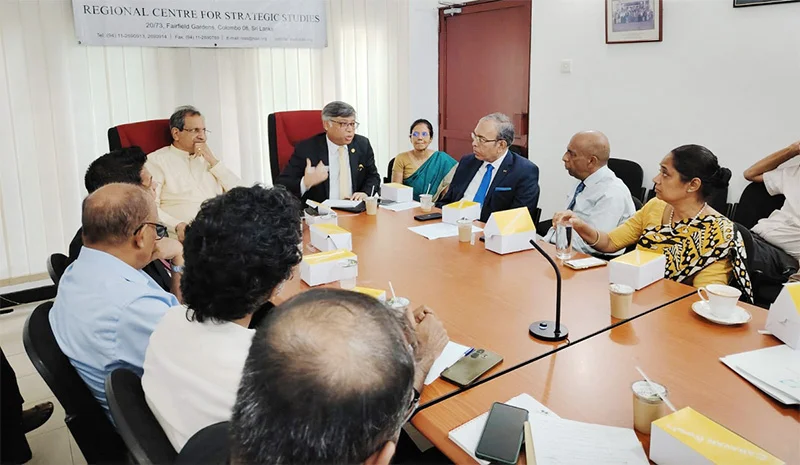
Given this backdrop it proved ‘a stich in time’ for the Regional Centre for Strategic Studies (RCSS), Colombo, to recently host the SAARC Secretary General Ambassador Md. Golam Sarwar to a round table discussion on the unifying potential of SAARC and its future possibilities, besides other related issue areas.
Held on June 24th and moderated by RCSS Executive Director and former ambassador Ravinatha Aryasinha, the forum brought together a vibrant, wide ranging audience comprising academicians, diplomats, senior public servants, civil society activists and many others. Following the presentation by Ambassador Golam Sarwar titled, ‘Reigniting SAARC: Achievements, Challenges and the Way Ahead’, a lively Q&A followed.
The above forum could be described as an act of lighting the proverbial ‘candle’ rather than ‘cursing the darkness.’ It surely is a ‘darkness’ that could be seen as daunting considering that the region’s pivotal powers, India and Pakistan, are failing to act in a spirit of accord but are engaged in bitter finger-pointing on a number of questions of vital importance to SAARC.
On the other hand, what is the rest of the region doing to bring the above sides together? It is disappointing that to date the rest of SAARC has failed to launch a major diplomatic drive to bring peace between the feuding regional heavyweights. It needs to act without delay and establish its earnestness and this effort would need to prove SAARC’s staying power in the unfolding months and even years.
In assessing SAARC’s seeming failure local opinion in particular has failed to factor in what could be described as weak leadership. Since Sheikh Mujibur Rahman of Bangladesh, the founding father of SAARC, the region has failed to produce a visionary leader who could advance the SAARC cause with charisma and drive.
Among other reasons, weak leadership accounts considerably for the faltering and stuttering status, as it were, of SAARC. Badly needed are leaders who could go the extra mile, think less of narrow national interests and work diligently towards the collective well being of the region but SAARC’s millions of ordinary people have been made to wait in vain for leaders of such stature. Instead, they have been burdened with politicians who seem to be relishing the apparently moribund state of SAARC.
Looking back, it could be said that it was the dynamic leadership factor that led to the launching of the Non-Aligned Movement and for its sustenance for a few decades. True, it could be seen in some quarters that NAM is no more, but as in the case of SAARC, the former too has been unfortunate to be burdened over the years with politicians who lack the vision and drive to unflaggingly advance the fortunes of the South. NAM and SAARC lack the dynamism and vision of leaders of the stature of Jawaharlal Nehru, for example, to give them the required guidance and intellectual depth.
The reasons are complex for there not being among us currently political leaders with the vision and the steadfast commitment to advance the legitimate interests of the South. However, it could be stated with conviction that the majority of Southern leaders have too easily caved in to the demands of the global North and its financial agencies.
These leaders have failed to see, for instance, that the largely market economy oriented Northern governments would not view with favour a centrist economic model that attaches priority to the interests of the dis-empowered publics of the South. This realization ought to have dawned on the current government in Sri Lanka, for instance, some while ago but it has no choice but to abide by IMF dictates since economic survival at present is unthinkable without the latter’s succour.
Accordingly for SAARC this should be the time for some soul-searching. Priority needs to be attached to ending the feuding between India and Pakistan since at present the material fortunes of the region hinge largely on these regional giants giving peaceful relations among them a try. This is no easy challenge to meet but some daring, visionary diplomacy needs to take hold among the rest of SAARC.
There is some sense in SAARC bringing the peoples of the region together through programs that address their best collective interests. A meeting of minds among SAARC nations could enable SAARC and its agencies to build a region-wide people’s movement for progressive political and economic change that could in turn lead to the region’s political leaders sensitizing themselves more to the neglected needs of their publics.
However, the time is ‘now’ for the initiation of these progressive changes and the voice of SAARC well wishers would need to drown out those of their critics.
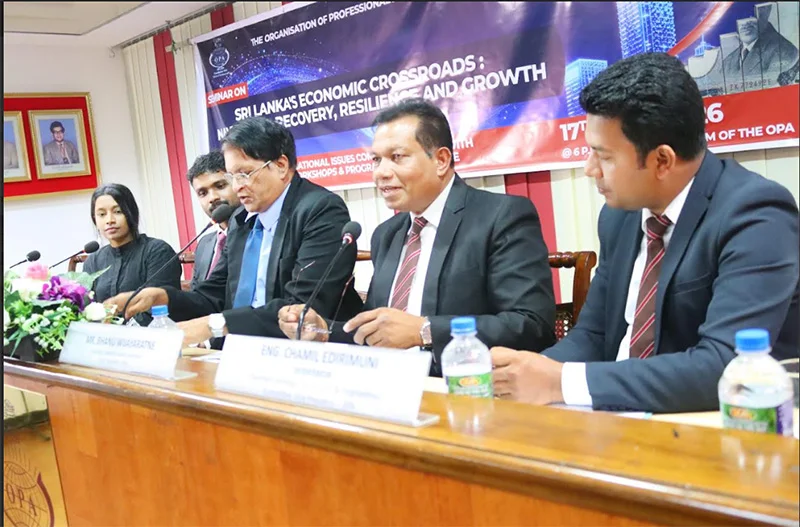
A seminar, “Sri Lanka’s Economic Crossroads: Navigating Recovery, Resilience and Growth” was recently held by the Organisation of Professional Associations of Sri Lanka (OPA) at the OPA Auditorium, bringing together economists, OPA members, and professionals from diverse fields for an insightful discussion on Sri Lanka’s economic recovery and future growth prospects.
The event was held under the patronage of Jayantha Gallehewa, President of the OPA, and was jointly organised by the National Issues Committee (NIC) and the Seminars, Workshops and Programmes Committee of the OPA. The event reaffirmed the organisation’s commitment to advancing professional excellence, fostering insightful intellectual engagement, facilitating interdisciplinary knowledge exchange and creating a constructive platform for informed dialogue on issues of national importance.
The panel of speakers comprised Dr. Harsha Aturupane, Lead Economist and Programme Leader for Human Development at the World Bank for Sri Lanka and the Maldives; Dr. Achinthya Koswatta, Senior Lecturer in Economics at the Open University of Sri Lanka, and Anushan Kapilan, Lead Economist at Verité Research.
In his welcome address, the President of the OPA emphasised that Sri Lanka was at a critical juncture in its economic recovery journey where sustained reforms, effective implementation, and collective national commitment are essential to achieving long-term stability, resilience and inclusive growth. He noted that the country had experienced one of the most severe economic crises in its history with the economy contracting by 7.8 percent in 2022 and a further 11.5 percent in 2023, resulting in significant economic and social challenges.
Delivering his introductory remarks Bhanu Wijeyaratne, Vice President of the OPA and Chairman of the National Issues Committee, underscored the need to move beyond short-term economic stabilisation towards a comprehensive agenda of structural transformation. He observed that the economic crisis had revealed deep-rooted weaknesses within the economy, including persistent fiscal pressures, rising public debt, foreign exchange limitations, and insufficient diversification of the export base. He stressed that addressing these challenges through strategic reforms, institutional strengthening and long-term economic planning would be essential to establishing a more resilient and competitive economy.
While acknowledging recent positive developments, including improved inflation management, tourism recovery and signs of economic stabilisation, Wijeyaratne stressed the need to advance reforms aimed at strengthening fiscal discipline, enhancing productivity, improving competitiveness, developing human capital and reinforcing governance and institutional effectiveness.
He further highlighted the important role of professionals, businesses, academia and other stakeholders in contributing to evidence-based dialogue and supporting Sri Lanka’s journey towards a resilient, inclusive and sustainable economic future.
Delivering the keynote presentation, Dr. Harsha Aturupane provided a comprehensive assessment of Sri Lanka’s economic prospects within the broader context of global economic transformation. He argued that Sri Lanka functioned as a small open economy whose performance is significantly influenced by developments in the global marketplace. External factors could not be controlled, and the country must strengthen its domestic capacity and resilience to respond effectively to international economic shifts, he noted.
Tracing the evolution of global economic systems, Dr. Aturupane highlighted the transition from ideological divisions between state-controlled and market-oriented economies towards increasingly pragmatic approaches focused on growth, competitiveness and development. He noted that Sri Lanka’s own economic journey reflects a similar evolution, with contemporary policy debates now centred on practical solutions for sustainable economic progress.
The presentation also examined the transformative impact of globalisation. Dr. Aturupane observed that global economic integration had enabled several East Asian economies, including South Korea, Singapore, Taiwan and Hong Kong, to achieve remarkable economic advancement through export-led growth strategies. Sri Lanka similarly benefited from this process through the expansion of its apparel industry and increased integration into global value chains.
Turning to Sri Lanka’s recovery programme, Dr. Aturupane emphasised that the ongoing stabilisation process should be viewed as a national programme supported by the International Monetary Fund rather than solely as an IMF initiative. He observed that strong worker remittances, improved tourism earnings, enhanced government revenue mobilisation and prudent import management have contributed significantly to economic stabilisation.
Despite this progress, he cautioned that rebuilding foreign exchange reserves and meeting future debt obligations remain major challenges. He underscored the need to strengthen export performance, attract investment and generate sustainable foreign exchange earnings to ensure long-term economic resilience.
The discussion also focused on monetary stability, inflation management and exchange-rate policy. Dr. Aturupane stressed that maintaining price stability was fundamental to sustainable growth and household welfare, while sound monetary policy remains essential for preserving economic confidence.
Looking beyond stabilisation, he argued that Sri Lanka must transition towards a broader economic transformation agenda. Sustainable growth, he noted, will depend on expanding productive capacity through investment, technological advancement, innovation, skills development and structural reforms.
Among the key constraints identified was the high cost of energy, which continues to affect competitiveness and investment attractiveness. Dr. Aturupane emphasised the importance of improving efficiency and affordability within the energy sector to enhance Sri Lanka’s business environment.
He further highlighted the social dimensions of the crisis, noting the rise in poverty and economic vulnerability among households. Strengthening social protection systems and ensuring inclusive growth, he argued, must remain central components of the national development agenda.
Another critical challenge identified was Sri Lanka’s demographic transition. With an ageing population, outward migration and evolving labour market dynamics, the country is increasingly confronting labour shortages in several sectors. Dr. Aturupane suggested that greater automation, increased labour-force participation and strategic workforce planning would be necessary to address these emerging realities.
Concluding his presentation, he emphasised the need to improve governance, strengthen institutions, enhance competitiveness and create an enabling environment for private sector investment. Sri Lanka’s future success, he noted, will depend on its ability to move decisively beyond crisis management towards a development model founded on resilience, innovation, productivity and inclusive growth.
Dr. Achinthya Koswatta reiterated the importance of policy consistency and predictability in fostering investment and industrial development. She observed that frequent policy changes create uncertainty and discourage long-term investment decisions, whereas stable and coherent policy frameworks build confidence and support sustainable economic transformation.
Meanwhile, Anushan Kapilan highlighted the substantial progress achieved in restoring macroeconomic stability following the recent crisis. He noted significant improvements in fiscal performance, including increased government revenue, reduced reliance on debt financing and a historically low fiscal deficit.
He further observed that public debt levels are declining faster than anticipated, economic growth has exceeded expectations and inflation has been brought under control more rapidly than forecast. Nevertheless, he cautioned that the recovery remains uneven, particularly within the industrial sector and that many households have yet to experience a meaningful improvement in living standards.
The seminar was expertly coordinated by Eng. Chamil Edirimuni, Vice President of the OPA and Chairman of the Seminars, Workshops and Programmes Committee, while the technical moderation and interactive discussion session were facilitated by Bhanu Wijeyaratne, Vice President of the OPA and Chairman of the National Issues Committee.
The event was attended by Tisara De Silva, President-Elect of the OPA, Eng. Ravi Rupasinghe, General Secretary, Past Presidents, members of the Executive Council, representatives of the General Forum and professionals representing a wide range of disciplines.
The seminar concluded with a vibrant exchange of ideas and perspectives, reaffirming the importance of evidence-based policy dialogue, institutional collaboration and collective national commitment in advancing Sri Lanka’s economic recovery, resilience and sustainable growth.

 Yes, for UK-based presenter and artiste Samantha Kay, home is where the heart – and the roots – are. And her roots run deep in Sri Lanka.
In an exclusive interview with The Island, Samantha says “I’m proud to be Sri Lankan. My mum is from Kandy and my dad is from Colombo, so Sri Lanka has always held a very special place in my heart.
“Whenever I visit Sri Lanka, I love spending time on the beautiful south coast, especially Hikkaduwa and Mirissa. It’s somewhere I always feel connected to my roots and completely at peace.”
Now living in Bournemouth, on the south coast of England, where, she says, she is lucky to be close to some of the UK’s most beautiful beaches, including the iconic Sandbanks, Samantha has built a career that refuses to fit into one box.
She is a radio presenter, podcast host, singer-songwriter, personal trainer and life coach.
“I genuinely love the variety because every role allows me to connect with people and, hopefully, make a positive difference in someone’s day.”
Of course, music has taken her far.
One of her proudest achievements, she says, was releasing a song with 90s music icon Angie Brown, which reached No. 9 in the UK Club Charts.
She also reached the final stages of The X Factor and performed at Wembley Stadium in front of thousands.
Beyond music, Samantha competed in bikini bodybuilding across the UK, winning several titles. “It taught me discipline, resilience and self-belief,” she recalls.
Today, her focus is on radio, podcasting and coaching women. Her podcast encourages people to live life on their own terms rather than feeling pressured to follow society’s expectations.
Says Samantha: “Whether someone is single, changing careers, travelling solo or simply trying to find their purpose, I want them to know that it’s never too late to create a life that feels authentic. If you’ve ever felt like you don’t fit into the box, maybe you were never meant to.”
Samantha Kay also spent a year in Dubai, performing at five-star hotels, including FIVE, and coaching at the iconic outdoor gym on Palm Jumeirah.
“I taught strength and conditioning classes, and hosted wellness retreats, combining my passion for music, health and inspiring others.”
However, with family matters calling her back to the UK, she made the choice to return. “Family comes first,” she says.
Looking ahead, Samantha plans to grow her radio and podcast work, release more music, and expand her wellness retreats.
“My biggest passion is helping people, especially women, build confidence and believe in themselves,” she says.
“Wherever my career takes me, I hope to continue inspiring others to live with courage, kindness and authenticity, while never forgetting my Sri Lankan roots.”

Current El Niño Status in Sri Lanka

A few showers may occur in the Western, Sabaragamuwa and North-western provinces and in Kandy, Nuwara-Eliya, Galle and Matara districts.

Argentina face fine for Falklands banner in semi-final win

US launches fresh strikes on Iran as Trump warns Tehran it ‘better behave’

Govt. move to extend retirement ages of top judges: Opp. complains to UN

Dengue surge pushes hospitals to the brink as cases near 70,000

‘Dates have the highest sugar content to fight Coronavirus’

Sunday Island 27 December – Headlines

#SundayIsland 17th December – Headlines

Sunday Island – 28th March

Sunday Island Headlines – 21 March

Sunday Island – 21st February – Headlines
-
 News6 days ago
Herath warns prospective migrant workers not to get fleeced by racketeers
-
 Features4 days ago
Prison riots and politics: NPP’s biggest challenge and Sri Lanka’s biggest opportunity
-

 Editorial5 days ago
What’s the world coming to?
-
 Foreign News6 days ago
Tensions erupt in Indian state after 11-year-old raped and murdered
-
 Features6 days ago
Devanesan Annan – in Memoriam
-
Editorial6 days ago
Punishment in hellholes
-
 News7 days ago
Representatives of the Organization of Professional Associations (OPA) of Sri Lanka meet the Prime Minister
-
 Features1 day ago
Dirty Money