
Latest News
Education holds the power to unite people politically, socially, and economically. – PM


Prime Minister Dr. Harini Amarasuriya stated that education is a process of sharing collective knowledge, and has the power to bring people together politically, socially, and economically.
The Prime Minister made these remarks while addressing the conference held on Tuesday (18) at the Galle Face Hotel, Colombo, aimed at fostering cooperation among countries in Asia, the Middle East, and the Pacific region regarding the role of education within the Green Transition.
The Erasmus+ Programme funded by the European Union, is one of the world’s leading initiatives for international cooperation in education, training, youth, and sports. Its objectives include enhancing mobility between countries, intercultural exchange, capacity development, and policy advancement.
The programme creates opportunities for collaboration and funding in higher education, vocational training, youth development, and institutional partnerships in Sri Lanka. This conference will be held from the 18th to the 20th of this month at the Galle Face Hotel, Colombo.
Further expressing her views, Prime Minister Dr. Harini Amarasuriya sated:
“As a legacy of the post-colonial education system, Sri Lanka has become a country with a high literacy rate.
However, today, education has become something that focuses only on individual success and achievement. As a result, the planning and principles of education have become heavily driven by competition.
Consequently, our education system has become extremely competitive and examination-oriented. Education should not be a process aimed solely at individual achievement.
What we now strive for is to move away from this educational model and restore the true purpose of education where its aims be not merely scoring high marks, but sharing collective knowledge and strengthening transformative learning.
We often forget the transformative power of education. It goes beyond personal achievement. Education has the ability to unite people politically, socially, and economically. Therefore, it is essential to shape education into a shared space of mutual expectation and mutual success.
Within our new education reforms, promoting collaborative learning, fostering a sense of responsibility towards one another, building responsibility towards the world, and especially towards the environment amidst today’s global challenges, have become extremely important.
Amid the spread of unscientific methods and misinformation in the modern world, the necessity of education has become even more pronounced. Moreover, the pressures within the university system can also be overcome through this transformation.
The importance of such dialogues, exchanges, and discussions emphasises once again the need for transformative education, a form of learning that encourages sharing of ideas and working together.
Transforming our education system from a cage of competition into a free space of collaboration and responsible knowledge-sharing is one of the fundamental challenges Sri Lanka must overcome for its future”.
The event was attended by the Ambassador of the European Union to Sri Lanka Carmen Moreno, Secretary to the Ministry of Education, Higher Education and Vocational Education Nalaka Kaluwewa, as well as regional representatives and government officials.


[Prime Minister’s Media Division]




Former first lady Shiranthi Rajapaksa, wife of former President Mahinda Rajapaksa was produced before the Hulftsdorp court, after being arrested by officers of the Commission to Investigate Allegations of Bribery or Corruption (CIABOC) and produce
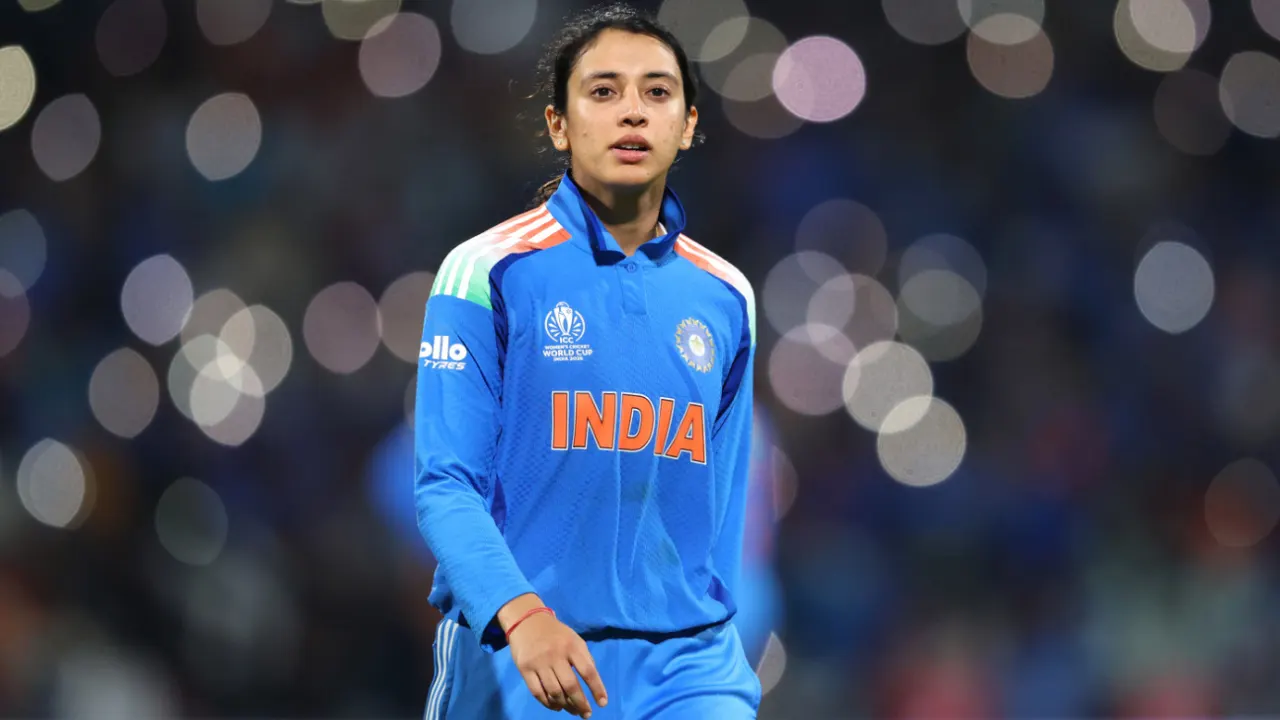
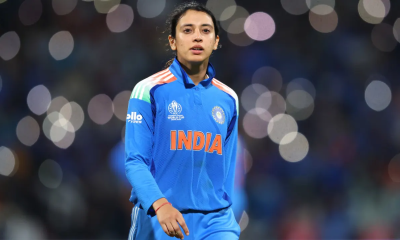
Smriti Mandhana has been named India’s all-format women’s captain on the same day Harmanpreet Kaur stepped down from the role after nearly a decade since she first took over.
Mandhana – vice-captain to Harmanpreet for much of this period – has previously led India in four ODIs and 18 T20Is, apart from captaining Maharashtra in domestic cricket and Royal Challengers Bengaluru in the Women’s Premier League.
Mandhana’s first assignment will be the limited-overs series against Zimbabwe beginning with the three T20Is in Raipur from October 16. On Tuesday, Mandhana was part of the selection meeting chaired by Amita Sharma to pick the squad for the tour.
Terming the appointment a “special honour”, Mandhana also acknowledged the contributions of her predecessor in her welcome note.
“I would also like to acknowledge Harmanpreet and the contribution she has made as captain over the years,” she was quoted as saying by the BCCI. “She has led the team with great commitment and has been an important part of our journey.
“I understand the responsibility that comes with this role and look forward to working with the team, learning along the way and giving my best to take Indian cricket forward.”
Mandhana’s appointment comes on the back of a review meeting held on Monday in Guwahati. Chaired by secretary Devajit Saikia, the meeting was also attended by Mandhana, Harmanpreet and head coach Amol Muzumdar to chart a roadmap forward, with an eye on next year’s inaugural Women’s Champions Trophy in February as well as the T20 World Cup and Los Angeles Olympics in 2028.
Mandhana, India’s best all-format batter, has been knocking on the doors for a while. Earlier this year, she led RCB to their second WPL title, in which she also top-scored in the final.
In September, she overtook Mithali Raj to become the leading run-scorer in women’s international across formats. Her 18 international hundreds are also the most in women’s cricket. She is also the first Indian woman to score centuries in all formats.
[Cricinfo]
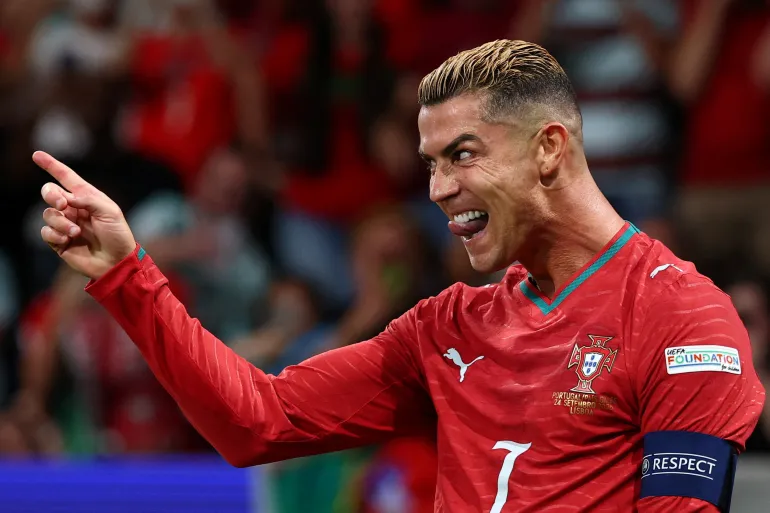
Cristiano Ronaldo has accused Portugal coach Jorge Jesus of twice breaking his word, saying a failed agreement to publicly explain his omission against Norway drove him out of the camp, but insisting he remained available after any punishment.
In a lengthy statement, the 41-year-old gave his account of the dispute that prompted his departure from Copenhagen before Portugal’s Nations League match versus Denmark last week.
Ronaldo said Jesus had agreed a plan under which the forward would miss the Norway and Denmark matches to manage his fitness. However, on the day of the Norway game, the coach told him he would play for 30 minutes.
“Everyone knows the rest. I warmed up from halftime onwards, watched the minutes tick by and wasn’t called on,” Ronaldo said.
“The manager had broken his word to me.”
Portugal’s captain and all-time leading scorer said a subsequent meeting with Jesus, attended by his club side Al Nassr’s sporting director Simao Coutinho, produced an agreement for the coach to clarify events at his next news conference.
According to Ronaldo, an eight-point document was prepared saying he had never demanded playing time, had respected Jesus’s decisions and that the coach asking him to warm up without bringing him on had been a mistake.
Ronaldo said the agreed notes did not require Jesus to apologise to him but said the coach’s public remarks bore no resemblance to their private discussion.
“It was the second time he had broken his word to me,” Ronaldo said. “I decided to leave the training camp without waiting for any further broken promises.”
The statement provided Ronaldo’s account, but on Sunday, after Portugal’s win over Norway, Jesus denied he had made any agreement with the player, nevertheless leaving the door open for his return.
The Portuguese Football Federation (FPF) did not immediately respond to a request for comment about Ronaldo’s statement.
Ronaldo apologised for failing to greet supporters after the Norway match and for leaving his teammates, accepting that his captaincy made his conduct more serious.
“The consequences of my actions must be assessed and punished by the Portuguese Football Federation,” he said.
Despite the rupture, Ronaldo said he was not limiting his international ambitions to a farewell appearance.
“If I’m physically fit, playing for my club – scoring goals, I hope – after serving whatever suspension is imposed on me, I’ll be available, as I’ve always been until now, to compete and win for our national team,” he added.
(Aljazeera)

Former first lady Shiranthi Rajapaksa arrested by CIABOC

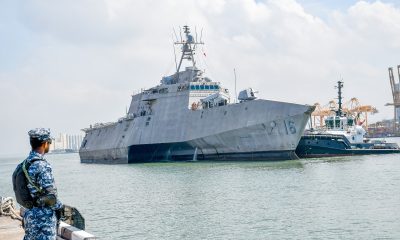
U.S. Navy ship USS Tulsa arrives in Colombo for replenishment visit

Smriti Mandhana appointed India captain across formats

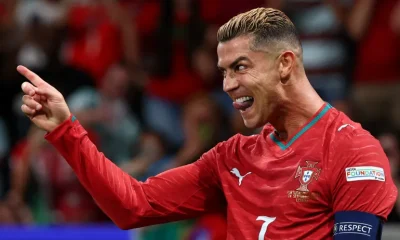
Ronaldo apologizes for Portugal walkout; says Jesus broke promise

Showers in the Western, Sabaragamuwa, Central, Uva, North-western and Southern provinces and in Anuradhapura and Mannar districts

Fuel crunch looms

‘Dates have the highest sugar content to fight Coronavirus’

Sunday Island 27 December – Headlines

#SundayIsland 17th December – Headlines

Sunday Island – 28th March

Sunday Island Headlines – 21 March

Sunday Island – 21st February – Headlines
-

 News7 days ago
US-assisted ‘Ice’ detection: NPC to examine IGP’s move to transfer drug-busting team
-

 Editorial6 days ago
Colombo Port drug bust: The plot thickens
-

 Editorial7 days ago
Drug busting, transfers and trust deficit
-

 Features4 days ago
The first woman in the foreign service or Ceylon Overseas Service it was then called
-
 News7 days ago
Sri Lankan facing death penalty in Saudi Arabia: Mano G appeals to Crown Prince
-

 Editorial5 days ago
Fuelling discontent and protest
-

 News3 days ago
Geneva takes up Sallay’s case and govt. ignores opportunity to answer accusations
-

 Latest News5 days ago
Tharindu Rathnayake, bowlers secure Asian Games Bronze for Sri Lanka