
Latest News
ECB push back at Pakistan ‘shadow-ban’ reports ahead of Hundred auction

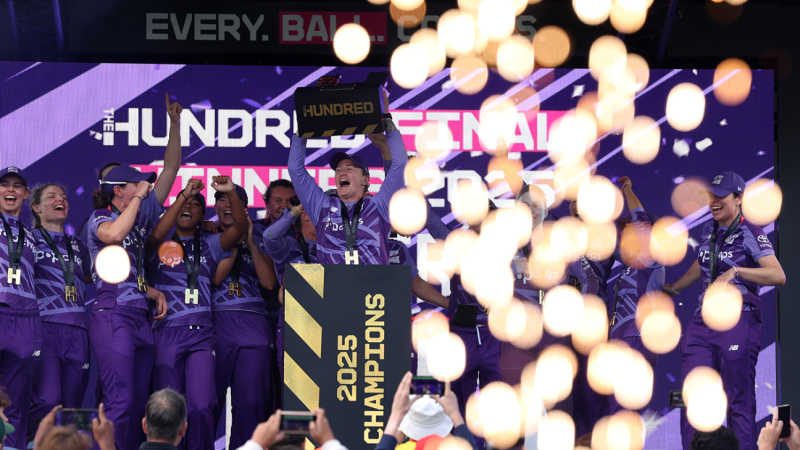
Shaheen Shah Afridi, Shadab Khan and Harris Rauf are among more than 950 players to have registered for the Hundred’s inaugural auctions next month, as the ECB faces scrutiny over whether new Indian investors will effect an IPL-style ‘shadow ban’ on Pakistani players.
No active Pakistan international has featured in the IPL since the 2008 terror attacks in Mumbai, and only a handful of players have appeared for foreign franchises run by IPL ownership groups since their global expansion.
Richard Gould, the ECB’s chief executive, insisted last year that the involvement of Pakistani players in the Hundred would be unaffected by the league’s privatisation, with four franchises now part-owned or fully run by IPL ownership groups.
But the BBC reported on Thursday that no IPL-owned Hundred teams will bid for Pakistani players at the auctions next month, citing messages from a “senior official” at the ECB to an agent. The ECB say that they have not been shown the messages in question and pushed back against the story, but Michael Vaughan, the former England captain, urged the board to address the issue more proactively.
“The ECB need to act fast on this,” Vaughan wrote on X. “They own the league and this should not be allowed to happen .. the most inclusive sport in the country is not one that allows this to happen.”
ESPNcricinfo has learned that more than 50 Pakistani players – including Afridi, Shadab, Rauf, Saim Ayub and Usman Tariq – have registered for next month’s draft, which will be held in Piccadilly, London on March 11 (women’s) and 12 (men’s).
Babar Azam and Mohamed Rizwan are notable absentees from the longlist of nominated players, though in any case their availability would be significantly limited by Pakistan’s scheduled Test series against West Indies in August. Pakistan’s limited-overs teams are not due to play in the Hundred’s window from July 21 to August 16.
Mustafizur Rahman the Bangladesh seamer whose contract with Kolkata Knight Riders was cancelled last month at the BCCI’s request, has also registered for the Hundred auction.
Only nine Pakistani players have featured in the first five seasons of the Hundred, with teams often reluctant to sign them on account of clashes with international fixtures and a handful of high-profile, late-notice withdrawals, including Afridi and Naseem Shah in 2024.
Four IPL franchises are now involved in the Hundred as part-owners or full owners: Mumbai Indians (MI London), Lucknow Super Giants (Manchester Super Giants), Sunrisers Hyderabad (Sunrisers Leeds) and Delhi Capitals (Southern Brave).
Teams run by Capitals co-owners and Southern Brave owners GMR Group have previously signed Pakistani players, including Imad Wasim, Zaman Khan (both Seattle Orcas) and Shan Masood (Hampshire). The other three franchises have not previously signed active Pakistan internationals for any of their teams.
Geopolitical tensions between India and Pakistan escalated last year, and the recent group-stage match between the two teams at the T20 World Cup was nearly cancelled after the Pakistani government threatened to boycott the fixture.
An ECB spokesperson said: “The Hundred welcomes men’s and women’s players from all over the world and we would expect the eight teams to reflect that.
“Almost 1,000 cricketers from 18 nations have registered for The Hundred auction, with representation on the longlist of over 50 players respectively from Australia, South Africa, New Zealand, Pakistan and West Indies.”
Franchises without IPL investors may see a potential ‘shadow ban’ as an opportunity to sign Pakistani players at next month’s auctions. The American-owned Desert Vipers picked four Pakistanis in the side that won the ILT20 final earlier this year and were the only team in the tournament to select Pakistani players.
James Thomas, Birmingham Phoenix’s performance director, told ESPNcricinfo that the franchise will be “really open” to signing overseas players regardless of nationality.
“Birmingham is a hugely diverse city,” Thomas said. “You’ve got to pick players for what they can bring in terms of performance but when you look at the bigger picture… We want our teams to be representative of the city and the region as well. If we align, and we get players who speak to the different demographics of the city, that’s brilliant.”
The longlist of players for the Hundred auctions includes several high-profile England players such as Jonny Bairstow, Adil Rashid, Joe Root (men’s) and Tammy Beaumont, Dani Gibson, Linsey Smith (women’s), though Ben Stokesis a notable absentee as he tapers his workload outside of his commitments as Test captain.
Sophie Devine, Beth Mooney and Deepti Sharma are among the overseas players available in the women’s auction, while Trent Boult, Aiden Markram and Sunil Narine have registered for the men’s. Most of Australia’s men’s Test players have not registered due to a clash with their home series against Bangladesh in August.
The auctions – which will be live-streamed, though not broadcast live – will both start with a marquee set of ‘hero’ players based on nominations submitted by the eight franchises. Each team has already made up to four pre auction signings, with new investment in the Hundred prompting a “reset” among the squads.
Salary caps in the Hundred have risen sharply for 2026 to £2.05 million (men’s) and £880,000 (women’s). Each team will also be permitted to field four overseas players per match, an increase from three in previous seasons.
[Cricinfo]

Latest News
Warm welcome extended to the President of the Socialist Republic of Vietnam at the Presidential Secretariat
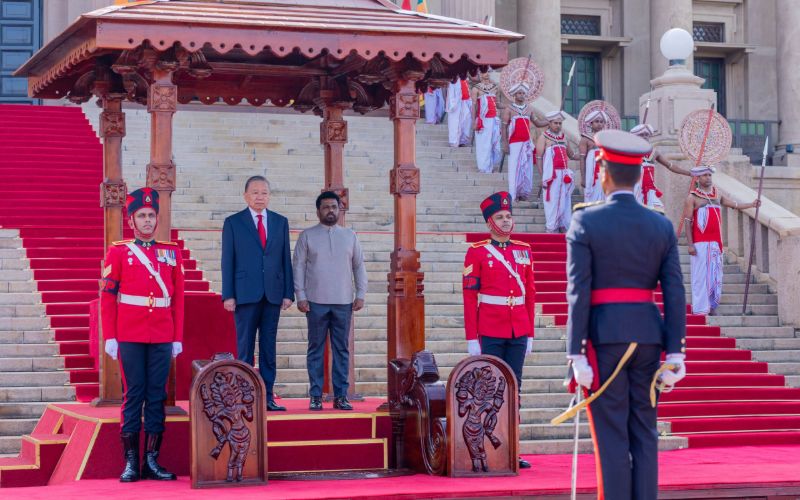
The official welcoming ceremony for the President of the Socialist Republic of Vietnam and General Secretary of the Central Committee of the Communist Party of Vietnam, To Lam, who is on a State visit to Sri Lanka at the invitation of President Anura Kumara Dissanayake, was held this morning (08th May 2026) at the Presidential Secretariat under the patronage of President Dissanayake.
President To Lam is undertaking this State visit with the aim of further strengthening the economic, cultural and social ties between Vietnam and Sri Lanka.
Upon his arrival at the Presidential Secretariat, escorted by the Police Mounted Division, President To Lam was warmly received by President Anura Kumara Dissanayake.
Following the playing of the national anthems of both countries, the official welcoming ceremony for President To Lam formally commenced.
On the occasion, President To Lam was accorded a ceremonial gun salute with full State honours.
Thereafter, President To Lam and President Anura Kumara Dissanayake reviewed the Tri-Forces Guard of Honour, following which the Vietnamese and Sri Lankan delegations were introduced.
The two leaders also posed for official photographs.
Representing the Government of Sri Lanka at the occasion were Minister of Foreign Affairs, Foreign Employment and Tourism Vijitha Herath, Minister of Labour and Deputy Minister of Finance and Planning Dr Anil Jayantha Fernando, Minister of Science and Technology Professor Krishantha Abeysena, Minister of Buddhasasana, Religious and Cultural Affairs Dr Hiniduma Sunil Senevi, Minister of Environment Dr Dhammika Patabendi, Minister of Public Security and Parliamentary Affairs Ananda Wijepala, Secretary to the President Dr Nandika Sanath Kumanayake, Secretary to the Ministry of Defence Air Vice Marshal Sampath Thuyacontha (Retired), Secretary to the Ministry of Foreign Affairs Aruni Ranaraja, along with a number of senior officials from both countries.
(PMD)
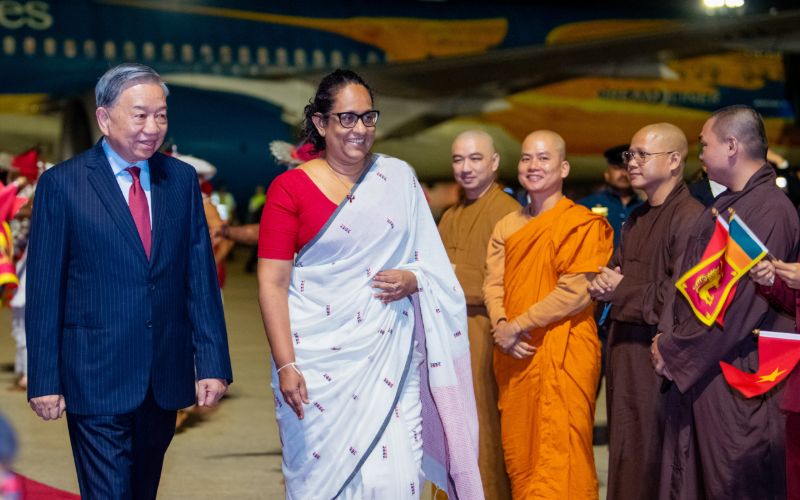
President To Lam, President of the Socialist Republic of Vietnam, General Secretary of the Central Committee of the Communist Party of Vietnam, accompanied by a delegation of 209 members arrived in Sri Lanka on Thursday (07) night on a state visit.

Construction and Concrete waste recycling centre opened in Ekala under the Clean Sri Lanka programme

President of the Socialist Republic of Vietnam pays floral tribute to the Ho Chi Minh Statue

Urgent reforms needed to eradicate drug menace, says President

Warm welcome extended to the President of the Socialist Republic of Vietnam at the Presidential Secretariat

BCCI to conduct surprise checks on IPL teams over compliance of guidelines

President of the Socialist Republic of Vietnam arrives in Sri Lanka on State Visit

‘Dates have the highest sugar content to fight Coronavirus’

Sunday Island 27 December – Headlines

#SundayIsland 17th December – Headlines

Sunday Island – 28th March

Sunday Island Headlines – 21 March

Sunday Island – 21st February – Headlines
-
 News4 days ago
CJ urged to inquire into AKD’s remarks on May 25 court verdict
-
 News2 days ago
MIT expert warns of catastrophic consequences of USD 2.5 mn Treasury heist
-

 News5 days ago
USD 3.7 bn H’tota refinery: China won’t launch project without bigger local market share
-
 News6 days ago
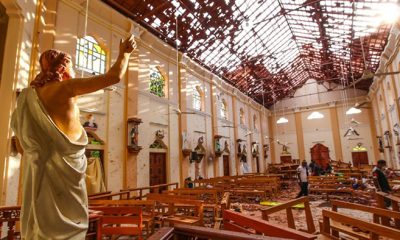
Easter Sunday Case: Ex-SIS Chief concealed intel, former Defence Secy tells court
-
 News7 days ago
Ten corruption cases set for court in May, verdict ordered in one case – President
-

 Business6 days ago
Dialog Surpasses 1,000 5G Sites, Strengthening Nationwide 5G Coverage
-

 Editorial5 days ago
Deliver or perish
-

 Editorial2 days ago
Clean Sri Lanka and dirty politics