
News
Easter Sunday massacre: Justice for victims high priority for Catholic Church

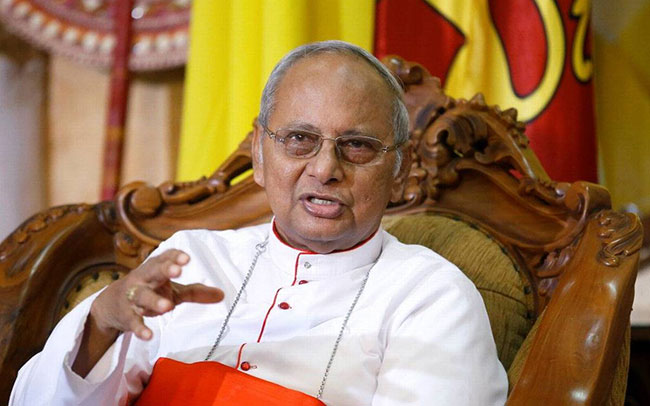
Cardinal reiterates call for implementation of PCoI recommendations
By Shamindra Ferdinando
Justice for 2019 Easter Sunday victims and their families remains a high priority for Archbishop of Colombo Rt. Rev. Malcolm Cardinal Ranjith.
In spite of the incumbent dispensation dragging its feet, on the issue much to the disappointment and ire of the Catholic Church, the prelate is determined to continue his struggle.
Malcolm Cardinal Ranjith, in an exclusive interview with The Island at the Archbishop’s House, Borella, on Tuesday (21) emphasized his resolve and that of the Catholic Church to bring the ongoing campaign to a successful conclusion, whatever the impediments. The Catholic community expected justice, the Cardinal said, though the vast number of victims were Catholics, other communities, too, were affected. Those in authority shouldn’t forget that several dozens of foreigners perished in those multiple and almost simultaneous attacks.
“We had no option but to seek the intervention of the Geneva-based United Nations Human Rights Council as the government hampered the investigation. The decision was made against the backdrop of the government pursuing a strategy contrary to the promises repeatedly made in the run-up to the last presidential election in Nov 2019,” the Cardinal said.
The prelate examined the handling of the Easter Sunday investigation, taking into consideration the government statement at the ongoing UNHRC sessions. Addressing the 50th UNHRC session in Geneva, on June 13, Foreign Minister Prof. G.L. Peiris, who is also the Chairman of the ruling SLPP said: “On the Easter Sunday attacks, the Attorney General has sent out several indictments to High Courts and the Trials in this regard are proceeding.”
Asserting that an attempt was being made to deceive the international community and even the current crisis that had been caused by shortsighted policies of the incumbent dispensation exploited to cover up its own sins, the Cardinal urged the government to address what he called essentially an accountability issue. The prelate warned it would be a grave mistake on their part to believe that the time would solve the issues at hand. Referring to the 2015 Geneva resolution, co-sponsored by Sri Lanka, the Cardinal emphasized the inordinate delay in addressing the Easter Sunday issues would be disadvantageous to Sri Lanka struggling to cope up with an extremely dicey economic situation.
A statement issued by the Foreign Ministry quoted Prof. Peiris as having told Geneva sessions: “The international community is aware of the grave social and economic situation that Sri Lanka has been faced with in recent weeks. While this situation has been aggravated by ongoing global crises, including the pandemic, the focus of the protests has consisted of demands for economic relief and institutional reform. In recognition of these challenges and in moving forward in an inclusive manner, we consider it crucial to heed the aspirations of all segments of our people, in particular, the youth.”
The Archbishop of Colombo reiterated that whatever the bombastic public pronouncements made, both here and abroad, the government hadn’t heeded their serious concerns over the Easter Sunday investigations. The government owed an explanation and public apology as regards the failure on its part to implement recommendations made by the Presidential Commission of Inquiry (PCoI) into the Easter Sunday carnage.
The bottom line is that the recommendations made by PCoI, that had been appointed by former President Maithripala Sirisena and accepted by the incumbent President, were yet to be implemented, the Cardinal stressed. Sirisena, now an SLPP Member of Parliament, in his capacity as the President, named the five-member PCoI in late Sept 2019. The PCoI handed over its report to President Gotabaya Rajapaksa on Feb 01, 2021.
Recalling the simmering controversy over the government withholding some crucial sections of the report, the Cardinal pointed out that none of the major recommendations had been implemented yet. “That is the crux of the matter,” the key member of the Catholic Bishops’ Conference said. “The moment a disputable decision to appoint a six-member Ministerial Committee to study the recommendations and the report of the Sectoral Oversight Committee on National Security was made we realized the duplicity of the current leadership. The government sought to suppress those reports,” the Cardinal pointed out.
The Committee headed by Minister Chamal Rajapaksa included Johnston Fernando, Udaya Gammanpila, Ramesh Pathirana, Prasanna Ranatunga and Rohitha Abeygunawardena.
The Cardinal said that the Catholic Church and the vast majority of people had been quite mystified by the appointment of that group as the recommendations were made by a highly qualified team. The PCoI, led by Supreme Court Judge Janak de Silva, included Court of Appeal Judge Nishshanka Bandula Karunaratne, retired Supreme Court Judges Nihal Sunil Rajapaksha and A.L. Bandula Kumara Atapattu and former Secretary to the Ministry of Justice W.M.M.R. Adhikari. H.M.P. Buwaneka Herath functioned as the Secretary to the PCoI.
Declaring that the hapless public, struggling to make ends meet, had lost faith in the current political party setup, the Cardinal said that none of those lawmakers earned the respect of the public. Their pathetic response, both in and outside Parliament, to the developing economic crisis, underscored the fact that the country couldn’t depend on the current lot at all. Instead of repeatedly warning of an impending famine, due to a toxic combination of reasons ranging from the overnight change in the agricultural policy to the forex crisis, the government should provide clear solutions, the Cardinal added.
Questioning the much touted ‘One Country, One Law’ concept that had been promoted by the incumbent administration, the Catholic Leader stressed that the country should be re-built on the basis of (1) equality in every aspect (11) law enforcement and related mechanisms, such as the Commission to Investigate Allegations of Bribery or Corruption (CIABOC) should be free from political interference and (111) targeted action to eradicate waste, corruption, irregularities and mismanagement.
Having dismissed the International Monetary Fund (IMF) advice, the government was now pleading for a debt restructuring programme, the Cardinal said. However, perusal of reports of the Parliamentary watchdog committees, COPE, COPA and COPF disclosed in spite of the country asking for a moratorium on debt repayment, corruption was at full swing, the Archbishop said.
The Cardinal compared the government’s inaction in respect of the PCoI report on the Easter Sunday massacre and parliamentary reports that dealt with the events leading to the current crisis. “In both instances, culprits are known,” he said.
Responding to further questions, the leader of the Catholic Church said that the discovery of a hand grenade inside All Saints Church, Borella, on January 11, this year, revealed machinations amidst turmoil. The recovery of the grenade three days before the Catholic Church marked 1,000 days’ since the Easter Sunday massacre took an unprecedented turn when examination of CCTV footage of the church led to the identification of the person who brought the device into the church at 9.52 am on the same day. Despicable attempt to frame innocent persons for the grenade affair went awry due to the availability of the video footage, the Cardinal said, warning the country would pay a heavy price for staged incidents of violence. Violence that had been triggered by interested parties in several places during yahapalana administration, particularly Ampara and Digana-Kandy, in early 2018 and Beruwela and Darga town in 2014, in the run-up to the 2015 presidential poll, underscored the grave danger posed by elements hell-bent on exploiting ethnic and religious sentiments for their advantage.
The Easter Sunday massacre, too, should be examined in the same context, the Cardinal said, underscoring the responsibility on the part of the executive, the legislature and the judiciary to uphold the rights of all. Perhaps the major reason for the deterioration of good governance is the executive and members of the legislature keen on exercising political power than serving the people.
Rt. Rev. Malcolm Cardinal Ranjith also briefly discussed the efforts made by the Catholic Church to bring the war to an end during the presidency of Chandrika Bandaranaike Kumaratunga (1994-2005) and the first term of Mahinda Rajapaksa (2005-2010). The wartime Bishop of Mannar the late Dr. Rayappu Joseph had been involved in these attempts, the Cardinal recalled focusing on a journey they undertook in August 2007. Having secured approval from the then President Mahinda Rajapaksa and clearance from General Sarath Fonseka, they had met senior LTTE representatives at a location near Iranamdu tank east of the Kandy-Jaffna A9 road. “But, we couldn’t convince them to stop fighting.”

Sri Lanka’s president says his government turned down a request from the United States to land two US combat aircraft at a civilian airport earlier this month.
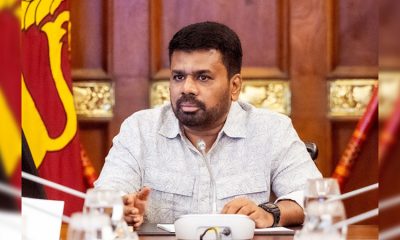
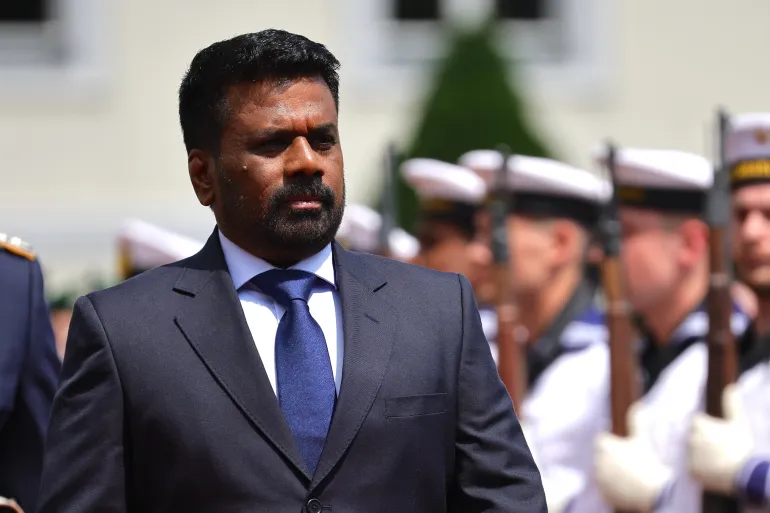
President Anura Kumara Dissanayake told Sri Lanka’s parliament on Friday that Washington had requested permission for the aircraft to land at Mattala Rajapaksa International Airport in southern Sri Lanka from March 4 to 8.
The request was made on February 26, two days before the US and Israel launched their military offensive against Iran.
“They wanted to bring two warplanes armed with eight antiship missiles from a base in Djibouti”, Dissanayake told lawmakers. “We turned down the request to maintain Sri Lanka’s neutrality”, he added to applause.
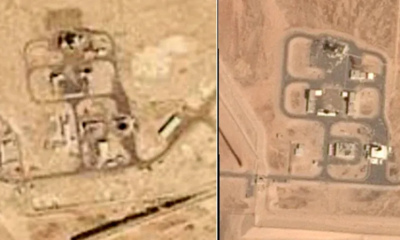
The US-Israeli war on Iran has sparked widespread concern globally, as Iranian missile and drone attacks across the wider Middle East have sent energy prices soaring and fuelled fears of a widening conflict.
US President Donald Trump has also been pressuring Washington’s allies to show more support for the war, slamming NATO countries as “cowards” for refusing to help secure the Strait of Hormuz.
Iran has essentially shuttered the critical Gulf waterway amid the war, forcing leaders around the world to scramble to try to offset the effects on their economies and energy supplies.
Amid the turmoil, many countries have refused to get directly involved in the war while calling for urgent de-escalation.
On Friday, Switzerland announced that it would halt any weapons exports to the US that could be used in military operations against Iran, citing its longstanding policy of neutrality.
“The export of war materiel to countries involved in the international armed conflict with Iran cannot be authorised for the duration of the conflict”, the Swiss government said.
Sri Lanka’s president also cited his country’s neutrality in the decision to deny the US request to land the two aircraft at Matalla airport earlier this month.
Dissanayake said he had received another request that same day, on February 26, from Iran to seek permission for three naval vessels to make a goodwill visit to Sri Lanka.
“With two requests before us, the decision was clear,” he said, noting that the government denied both to avoid taking sides as signs of escalating conflict emerged.
“Had we said ‘yes’ to Iran, we would have had to say ‘yes’ to the US, as well”, Dissanayake added.
In early March, Sri Lanka’s navy rescued 32 Iranian crew off IRIS Dena after it was torpedoed by a US submarine off the country’s coast, killing at least 84 people.
Days later, Sri Lanka evacuated more than 200 crew members from a second Iranian vessel, IRIS Bushehr, after the ship requested assistance from Colombo.
[Aljazeera]

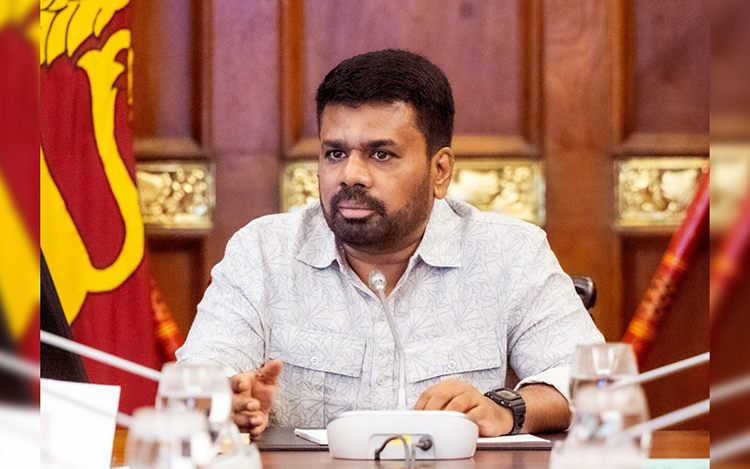
Sri Lanka refused the request by three Iranian ships to come to Sri Lanka on a goodwill visit and the request by the United States to land two of its fighter jets in Mattala, President Anura Kumara Dissanayake told Parliament yesterday.
“Sri Lanka maintained neutrality by refusing the two requests by both the US and Iran,” he said.
President Dissanayake provided a clarification on domestic fuel prices in light of rising crude oil prices in the global market and subsequent fuel price increases in other countries, triggered by the ongoing crisis in the Middle East.
The President highlighted that the Ceylon Petroleum Corporation (CPC) currently supplies 57% of the country’s fuel requirements, while the remaining 43% is supplied by the private sector.
He further noted that private sector suppliers have requested pricing that reflects current global market rates for the fuel they import.
Accordingly, the President emphasised that a decisive decision on fuel price adjustments must be reached as expeditiously as possible to ensure the continuity of the national fuel supply.
Addressing the Parliament, the President stated that the current pricing formula dictates that for every one-dollar increase in global oil prices, domestic fuel prices must rise by Rs. 2.
He noted that the primary impact being faced is driven by the surge in global fuel prices rather than the depreciation of the rupee against the US dollar.
The President said that, globally, countries have been compelled to make difficult decisions regarding fuel costs, with price increases ranging from approximately 6% to 50%.
He added that while global prices have risen by as much as 49%, the domestic increase has been limited to 8%.
He further stated that Sri Lanka is currently facing a significant challenge in maintaining fuel supply.
The Ceylon Petroleum Corporation (CPC) accounts for 57% of the country’s fuel supply. He noted that had the CPC been the sole supplier, fluctuations could have been managed by offsetting current losses with future profits.
However, he said the private sector now controls 43% of the market, and their position is that if retail prices do not reflect the current landed cost of fuel, they will cease imports.
He added that, from a business perspective, this is a valid concern, as private companies reportedly incur a loss of approximately USD 55 million per shipment, which he said is unsustainable.
The President emphasised that the contribution of the private sector is essential to maintaining the national fuel supply, but noted that they will only participate if they are able to sell at cost-reflective prices.
He stressed that the issue of fuel pricing must, therefore, be addressed urgently.
He also pointed out that under the existing Act, companies are permitted to increase prices; however, the maximum retail price is determined by the Ceylon Petroleum Corporation.
“Although we have entered into agreements with these private companies, the necessary legislative amendments to the Act have not yet been finalised,” he noted.
Regarding government revenue, the President stated that tax income from fuel currently stands at Rs. 20 billion, compared to Rs. 240 billion generated last year from taxes on diesel.
Latest News
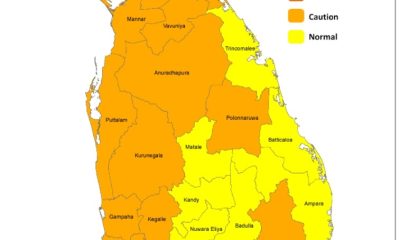
Heat Index likely to increase up to ‘Caution level’ at some places in the Western, Sabaragamuwa, North-central, Southern and North-western provinces and in Monaragala, Mannar, Vavuniya and Mullaitivu districts

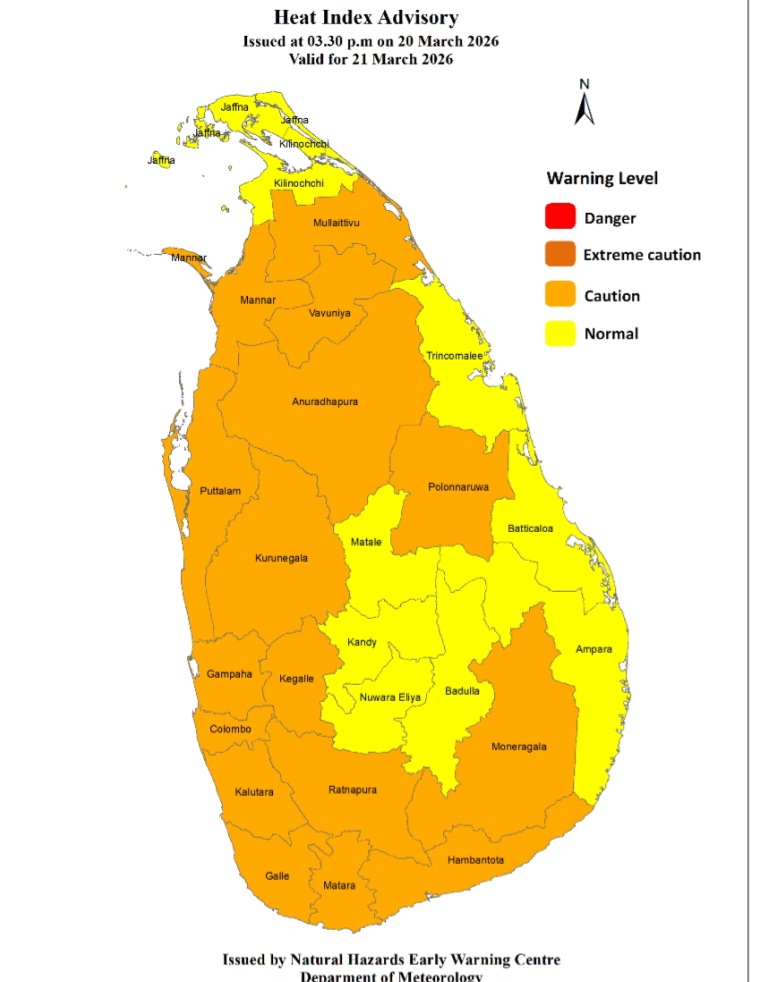
Warm Weather Advisory Issued by the Natural Hazards Early Warning Centre of the Department of Meteorology at 3.30 p.m. on 20 March 2026, valid for 21 March 2026
The public are warned that the Heat index, the temperature felt on human body is likely to increase up to ‘Caution level’ at some places in the Western, Sabaragamuwa, North-central, Southern and North-western provinces and in Monaragala, Mannar, Vavuniya and Mullaitivu districts.
The Heat Index Forecast is calculated by using relative humidity and maximum temperature and this is the condition that is felt on your body. This is not the forecast of maximum temperature. It is generated by the Department of Meteorology for the next day period and prepared by using global numerical weather prediction model data.
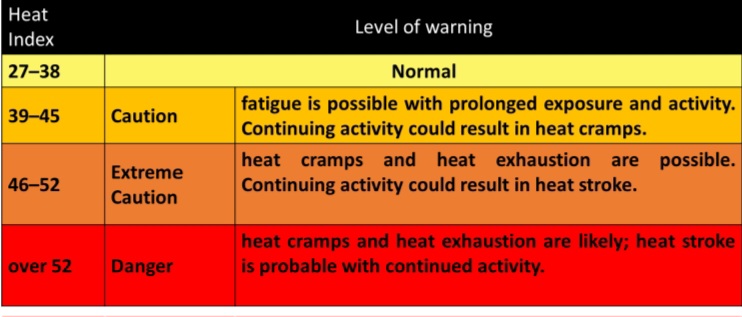
Effect of the heat index on human body is mentioned in the above table and it is prepared on the advice of the Ministry of Health and Indigenous Medical Services.
ACTION REQUIRED
Job sites: Stay hydrated and takes breaks in the shade as often as possible.
Indoors: Check up on the elderly and the sick.
Vehicles: Never leave children unattended.
Outdoors: Limit strenuous outdoor activities, find shade and stay hydrated.
Dress: Wear lightweight and white or light-colored clothing.
Note:
In addition, please refer to advisories issued by the Disaster Preparedness & Response Division, Ministry of Health in this regard as well. For further clarifications please contact 011-7446491

Sri Lanka says it denied US request to land two aircraft at Mattala airport

Eid celebrations dimmed by war and displacement across Middle East

Showers may occur at several places in the Western, Sabaragamuwa, Northwestern and Uva provinces and in Galle, Matara, Kandy and Nuwara-Eliya districts after 1.00 pm.

Iranian strikes on bases used by US caused $800m in damage, new analysis shows

President maintains Lanka has been even-handed in dealing with Iran and US

Heat Index likely to increase up to ‘Caution level’ at some places in the Western, Sabaragamuwa, North-central, Southern and North-western provinces and in Monaragala, Mannar, Vavuniya and Mullaitivu districts

‘Dates have the highest sugar content to fight Coronavirus’

Sunday Island 27 December – Headlines

#SundayIsland 17th December – Headlines

Sunday Island – 28th March

Sunday Island Headlines – 21 March

Sunday Island – 21st February – Headlines
-

 Business5 days ago
Browns EV launches fast-charging BAW E7 Pro at Rs. 5.8 million
-

 Life style6 days ago
From culture to empowerment: Indonesia’s vision for Sri Lanka
-

 News3 days ago
CIABOC questions Ex-President GR on house for CJ’s maid
-

 Life style6 days ago
Ranjith Fernando celebrates cricketing journey with Hob Nails to Spikes
-

 News4 days ago
Sri Lankan marine scientist Asha de Vos honoured at UNGA opening
-

 Features5 days ago
Achievements of the Hunduwa!
-
 Latest News6 days ago
QR code system will be implemented for fuel with effect from 06.00 a.m. today (15th)
-

 News4 days ago
Australian HC debunks misleading travel risk claims for Sri Lanka