
Sports
Dushmantha Chameera and Lahiru Kumara in Sri Lanka’s T20 World Cup squad, subject to fitness

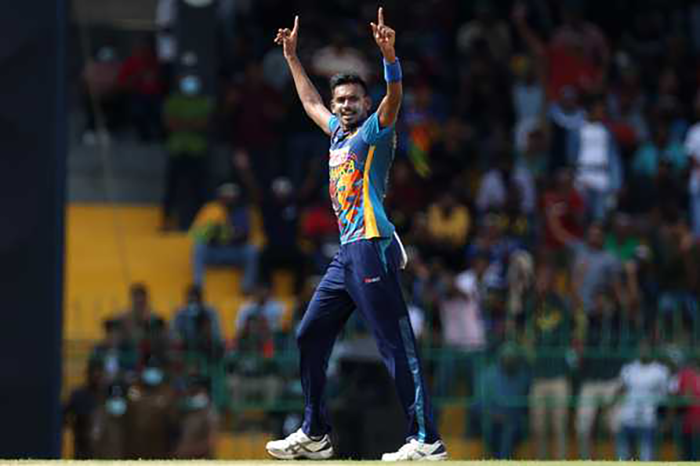
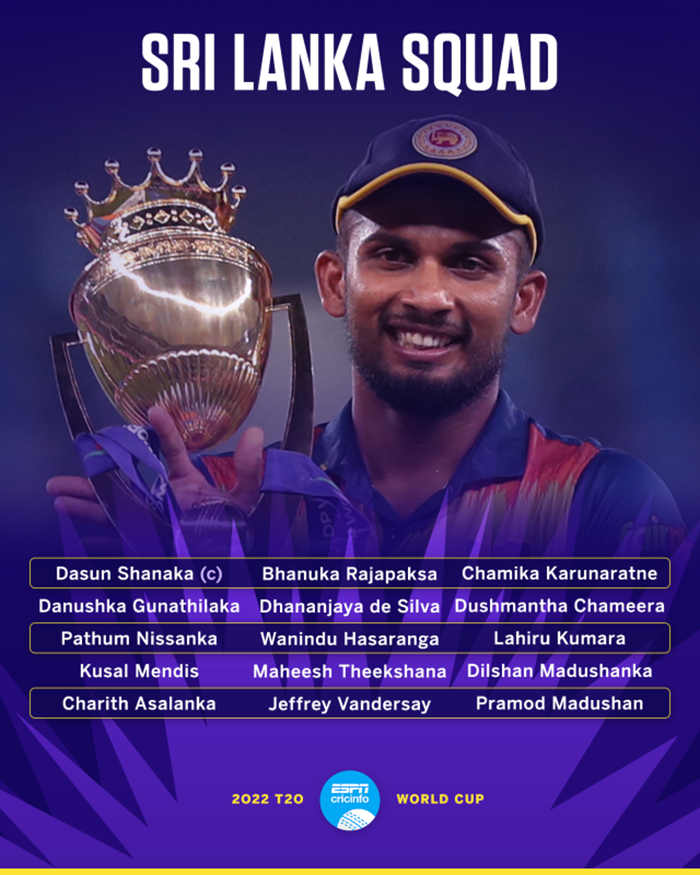
Sri Lanka have shown faith with the group of players that won the Asia Cup, with the inclusions of fast bowlers Dushmantha Chameera and Lahiru Kumara – who missed that tournament due to injury – the only change, as they named their 15-man squad for the upcoming T20 World Cup in Australia.
From the squad that toured the UAE, batters Dinesh Chandimal, Ashen Bandara and Nuwanidu Fernando, and left-arm spinner Praveen Jayawickrama have been listed as standby players alongside left-arm quick Binura Fernando. This means Matheesha Pathirana, Asitha Fernando and Nuwan Thushara miss out.
The inclusions of Chameera and Kumara, however, are subject to them being passed fit. Kumara is recovering from a hamstring strain, while Chameera has been nursing an ankle injury – which spread into his calf and forced him out of the Asia Cup squad.Much of Sri Lanka’s hopes of going deep in the World Cup, on bouncy Australian pitches, will hinge on their fitness, with these two the only bowlers in their ranks capable of consistently hitting speeds in the 145kph range.
That said, in the 21-year-old Dilshan Madushanka and the 28-year-old Pramod Madushan, Sri Lanka have two stirring, if relatively green, seamers ready to step in if needed. The pair, both of whom had been uncapped prior to the Asia Cup, proved impressive deputies over the course of the tournament.
However, with both Madushanka and Madushan happier pitching it up and looking for swing, the likes of Chameera and Kumara offer the variety needed to succeed on Australian tracks; in Sri Lanka’s tour of Australia earlier this year, the latter pair found a lot of joy in hitting the deck hard.
While their injury concerns remain, they will nevertheless be a part of the squad that heads off to a training camp in Pallekele, Kandy, on September 25, to give them every chance to prove their fitness ahead of the World Cup.
Aside from the uncertainty in the fast-bowling ranks, the rest of the squad has virtually picked itself – not something commonly said about Sri Lankan teams in recent times.
Dasun Shanaka, who will lead the side, will have at his disposal a fairly settled batting unit. Pathum Nissanka and Kusal Mendis look to have locked down their places at the top of the order following a string of important stands in the Asia Cup, while the middle and lower order has the firepower of Shanaka, Bhanuka Rajapaksa, Wanindu Hasaranga and Chamika Karunaratne.The only question marks remain in the crucial No. 3 and No. 4 spots, where the trio of Charith Asalanka, Danushka Gunathilaka and Dhananjaya de Silva will be vying for two places.
Asalanka had a poor Asia Cup by his standards, and found himself out of the side that beat Pakistan in the final. He was replaced by de Silva, who had been on the fringes for most of the tournament, but impressed with both bat and ball in the two games he came in for.While admittedly a small sample size, de Silva’s ability to bowl his flat offbreaks economically in the middle overs, while offering considerable heft with the bat, provides a versatility that neither Asalanka nor Gunathilaka provide. Gunathilaka, nominally an opener, however does offer the potential for explosiveness in the middle order – even if he didn’t showcase that as much as he would have liked at the Asia Cup.
On the spin-bowling front, Hasaranga and Maheesh Theekshana form an enviable pairing, while in Jeffrey Vandersay there’s an able deputy waiting in the wings.Sri Lanka will start their T20 World Cup campaign on October 16 against Namibia.
(Cricinfo)




The BCB’s integrity unit found “credible suspicion” during the ongoing BPL, which made them undertake “routine” operations, including questioning players and seizing mobile phones of franchise officials. According to a BCB press release on Sunday, the unit hasn’t put any player under investigation nor have they found anyone guilty thus far.
“As part of standard integrity procedures, several foreign players have been spoken to privately as witnesses in order to verify recruitment processes, contractual arrangements, and payment structures,” the BCB statement read. “Such meetings are confidential and preventive in nature, and do not imply that any player is under investigation or has already been found guilty.”
The statement follows Dhaka Capitals’ chief executive Atik Fahad accusing the integrity unit officers of barging into their batter Rahmanullah Gurbaz’z hotel room in Sylhet over the weekend. Fahad also suggested the mental toll on his players could force the franchise to rethink its participation in the future editions.
“The anti-corruption unit should have at least considered this before going to such a player, but this type of behaviour with a big player is something neither he can accept nor can we accept,” Fahad said during a press briefing. “Going into the room of a big foreign player – someone who is playing in the ILT20 and elsewhere – and creating trouble like that.
“If the management is not content mentally, if my players are not content, what better result can we expect? We are running the BPL while losing BDT 2-3 crore every year. On top of that, if we are mentally tortured like this, I don’t know how we can stay competitive or continue to operate a franchise. If this situation continues, we won’t have the courage to continue at all. I invest money, absorb losses, bring CSR funds from different companies, and then leave with humiliation. That is simply not possible.”
Players and officials of Noakhali Express were also reportedly questioned, though the franchise has said they have protested against the integrity unit officials’ behaviour.
The BCB, however, declared they have full confidence in the integrity unit’s process, as it has helped them reduce suspicious activities in the past.
“Such measures by the BCB IU [integrity unit] are part of BCB’s zero-tolerance policy and drive against corrupt cricketing activities,” a BCB statement said. “The BCB IU operates in accordance with the general processes under the prevailing anti-corruption code of the ICC. Therefore, there has been no violation of the rights of any player or franchisee personnel by the BCB IU team in any way.
“These preventive measures by the BCB IU have resulted in an approximately 80% reduction in alerts relating to suspicious activities. The BCB reiterates its zero-tolerance policy towards corruption, and remains firmly committed to protecting the credibility, transparency and reputation of the Bangladesh Premier League.”
[Cricinfo]
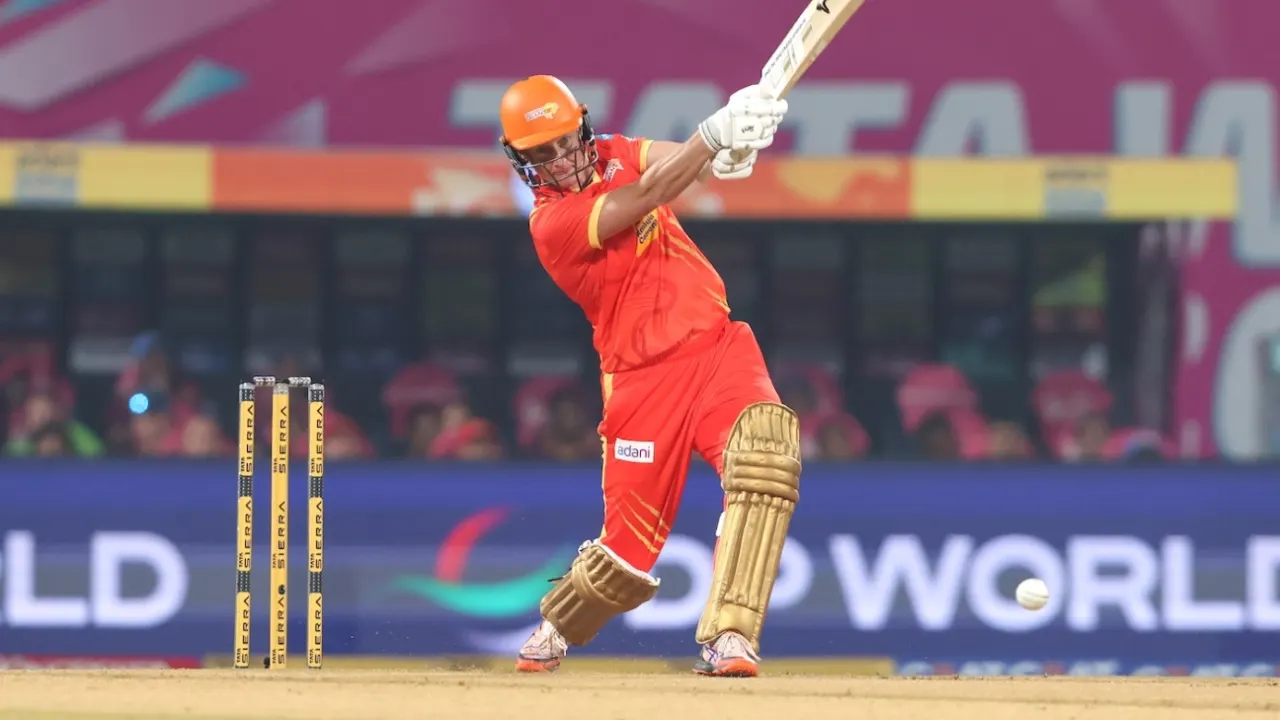
Gujarat Giants (GG) put on a commanding 209 and would have thought they were well ahead when Delhi Capitals’ (DC) equation read 48 off 18. But Laura Wolvaardt turned things around – almost – for DC with a 19-run over to make it 29 off 12 and then seven from six. But GG turned the tables again when Sophie Devine , who had smashed a belligerent 95 off 42, removed the two set batters in the last over and conceded just two runs to snatch a four-run victory to help GG top the table.
GG’s second win in a row became DC’s second loss on the bounce and placed them at the bottom even though their batters buried the ghosts of being bundled for 145, under 24 hours before this game. The run-fest that swung wildly throughout at the DY Patil Stadium saw a total tally of 414 – the second highest in WPL – and was the second day in a row that GG posted a 200-plus total.
Their total could have been a lot more had DC not pulled things back through Nandani Sharma’s hat-trick after Devine’s demolition of the bowlers. DC, however, came agonisingly close, within seven runs of sealing the highest WPL chase. But Devine took the pace off the ball and the steam out of DC’s chase.
Devine came out all guns blazing and muscled the ball to all sides of the park as the DC bowlers failed to keep it outside her hitting arc. After a thick edge off her bat fell short of the keeper in the first over, Devine got going with a couple of fours in the next, off Chinelle Henry, and took off properly in the fourth by smashing Nandani for a 16-run over. The real damage came in the sixth over with the introduction of spin, when Devine smoked Sneh Rana for 32 in an over, which became the most expensive in WPL history.
After starting the over with two consecutive fours – the second nearly taken by a one-handed Marizanne Kapp at cover point – Devine bludgeoned Rana for four sixes, all on the leg side as the ball was aimed for the stumps again and again. By the time the over ended, Rana had lost her length so horribly that she bowled a full toss and Devine lapped it up for her fifth six, soon after her 25-ball fifty.
N Shree Charani and Henry managed to pull things back briefly by conceding just 15 off the next 14 balls and also sent back Beth Mooney, but there was no stopping Devine. She hammered another three sixes in four balls even as Charani took the pace off the ball and Devine raced into the 90s, looking set to become the first centurion of the tournament.
But Devine’s wait for a century continued; she had also scored 99 for Royal Challengers Bengaluru a couple of seasons ago. Nandani, who made her WPL debut on Saturday, sent down a back-of-the-hand variation which Devine top-edged behind the wicket and Charani, running back from short fine leg, hung on to a catch that nearly touched the sky before coming down. Charani got her second wicket when Rodrigues flung to her right at cover in the next over to send back Georgia Wareham and the promising Anushka Sharma soon holed out for 13.
Gardner then took charge after getting a life on 22, even as DC exposed GG’s inexperienced lower order, and peppered the boundary regularly. She went after both pace and spin alike before finding long-on to finish on a quick 49 off 26 before DC conceded just eight runs in the last two overs. GG suffered a collapse of 4 for 8 in the end with Nandani striking thrice in a row in the last over to take the fourth hat-trick and the first by an uncapped player in the WPL
Renuka Singh put down Lizelle Lee’s tough return catch on the second ball of the chase, and the DC opener showed how costly the drop was. She crashed the next ball through the covers and finished the over with a no-look six straight down the ground. She continued to pepper the boundary even as Shafali Verma struggled for rhythm. Though DC’s powerplay score read 47 for 1 compared to GG’s 80 for 0, Lee ensured they weren’t too far behind.
If Devine’s innings was about brute force, Lee combined her well-timed drives with the odd aerial shot to keep the run rate close to nine an over. She went 4, 4 and 6 against Wareham for her 33-ball fifty as Wolvaardt played second-fiddle with GG still needing 120 from the last 10. The equation became a lot stiffer when GG’s spinners conceded just 23 in the three overs after the halfway mark before Lee tore into Wareham again.
Wolvaardt was on 28 off 20 when Lee eventually found Devine at long-on for 86, which left DC to get 79 of 34. DC promoted the big-hitting Henry ahead of Jemimah Rodrigues and Kapp, but she also holed out after just one six. Rodrigues eventually walked out at No. 5 and crashed her first ball wide of long-on for a 17-run 16th over.
GG were still well ahead with the equation reading 60 off 24. Wolvaardt then used her long limbs to attack the spinners, especially going after Gardner in the 18th over when they needed 48 from 18. She often went straight down the ground when she had the length and otherwise found the gap square or through the covers to find the boundary regularly. After three fours and a six off Gardner, she dispatched Kashvee Gautam, who started the 19th over with two no-balls, for a six over midwicket which swung the game further for DC.
When Rodrigues ended the penultimate over by lofting Gautam over the covers, DC would have thought they had it in the bag with just seven to get from six. But Devine, who had earlier leaked 19 in two wicketless overs, first had Rodrigues glove one behind off a slower ball, kept Kapp to just one run off two balls, and then had Wolvaardt caught at deep midwicket with five to get off two. Rana walked out for the last ball and could’t even connect, and GG scraped through
Brief scores:
Gujarat Giants Women 209 in 20 overs (Beth Mooney 19, Sophie Devine 95, Ashleigh Gardner 49, Anushka Sharma 13, Kashvee Gautam 14; Chinelle Henry 2-43, Nandani Sharma 5-33, Shree Charani 2-42, Shafali Verma 1-21) beat Delhi Capitals Women 205 for 5 in 20 overs (Lizelle Lee 86, Shafali Verma 14, Laura Wolvaardt 77, Jemimah Rodrigues 15; Kashvee Gautam 1-48, Sophie Devine 2-21, Rajeshwari Gayakwad 2-34) by four runs
[Cricinfo]

Under 19 Cricket
During a weekend where no team went allout for an outright victory, Jaden Amaraweera’s unbeaten century and Abheeth Paranawidana’s six wicket haul were the individual highlights in the traditional Under 19 cricket matches worked off.
The Thomian players’ individual efforts came in their match aganst Wesley. With the match heading for a no decision, Amaraweera hammered an unbeaten 102 runs in just 78 balls. His knock included ten fours and seven sixes as the home team posted 144 for one at close. In the first innings, Paranawidana’s six wicket haul helped Thomians take a healthy first innings lead.
At Reid Avenue, Aveesha Samash missed a century by two runs as he became one of the five victims of Ramiru Perera in the first innings. Incidentally, the Joes stopped their first innings three runs behind the Royal total with three wickets remaining. But a result remained a distant reality.
There was no result at Ananda Mawatha as well despite thirtyone wickets falling.
Kithma Widanapathirana with ball and bat was the standout player for Ananda, while Dinul Wijesinghe and Ryan Gregory excelled for St. Anthony’s.
Match Results
Amaraweera scores century at Mount Lavinia
Scores
S. Thomas’ 292 in 79.6 overs (Jaden Amaraweera 39, Ludeesha Matarage 73, Aaron Kodituwakku 28, Reshon Soloman 56, Shanil Perera 33; Rashmika Amararatne 4/58, Rasheed Nahyan 2/54, Methnula Mayadunna 2/46) and 144 for 1 in 23.1 overs (Jaden Amaraweera 102n.o., Avinash Fernando 39)
Wesley 205 all out in 77.2 overs (Sehandu Athauda 55, Charana Malinbada 21, Lithum Senuja 31, Shamma Fernando 29, Kavindu Hettiarachachi 34; Abheeth Paranawidana 6/56, Reshon Soloman 2/20)
Royal 265, Joes 262/7 at Reid Avenue
Scores
Royal 265 all out in 78 overs (Hirun Liyanarachchi 28, Rehan Peiris 82, Yasindu Dissanayake 24, Manuth Dasanayaka 25, Shehandu Sooriyaarachchi 20n.o.; Nushan Perera 3/100, Vishwa Peiris 5/60) and 163 for 3 in 32 overs (Hirun Liyanarachchi 28, Udantha Gangewatta 36, Ramiru Perera 53n.o., Yasindu Dissanayake 37n.o.)
St. Joseph’s
262 for 7 decl. in 80 overs
overs (Yenula Dantanarayana 30, Aveesha Samash 98, Dilpa Ruwanaka 55, Chamath Perera 21, Nushan Perera 29n.o.; Ramiru Perera 5/72)
St. Anthony’s 163, Ananda 151 at Ananda Mawatha
Scores
St. Anthony’s 163 all out in 68.2 overs (Praveen Gamage 21, Dinul Wijesinghe 65n.o., Ryan Gregory 21; Pasan Batugahage 2/22, Kithma Widanapathirana 3/58, Sharada Jayarathna 3/29) and 161 all out in 59 overs (Sanuka Kalpana 24, Sisal Hemaka 20, Sadew Amarakoon 28, Chamalka Gunathilake 28n.o.; Himira Kudagama 4/53, Kithma Widanapathirana 2/36, Sharada Jayarathna 2/35)
Ananda 151 all out in 40.2 overs (Kithma Widanapathirana 74; Ryan Gregory 4/52) and 14 for 1 in 3.3 overs

BCB’s integrity unit finds ‘credible suspicion’ during BPL

Devine’s 95 trumps Lee, Wolvaardt fifties in see-saw thriller

Fairly heavy showers about 75 mm are likely at some places in the Western, North-western and Sabaragamuwa provinces

President proposes; Speaker disposes

Sri Lanka loses Rs.7.5 bn due to coal tender irregularities: FSP

CID summons SJB MP for criticising education reforms

‘Dates have the highest sugar content to fight Coronavirus’

Sunday Island 27 December – Headlines

#SundayIsland 17th December – Headlines

Sunday Island – 28th March

Sunday Island Headlines – 21 March

Sunday Island – 21st February – Headlines
-

 News1 day ago
Sajith: Ashoka Chakra replaces Dharmachakra in Buddhism textbook
-

 Business2 days ago
Dialog and UnionPay International Join Forces to Elevate Sri Lanka’s Digital Payment Landscape
-

 Features2 days ago
The Paradox of Trump Power: Contested Authoritarian at Home, Uncontested Bully Abroad
-

 News7 days ago
Interception of SL fishing craft by Seychelles: Trawler owners demand international investigation
-

 News1 day ago
Level I landslide early warnings issued to the Districts of Badulla, Kandy, Matale and Nuwara-Eliya extended
-

 Features2 days ago
Subject:Whatever happened to (my) three million dollars?
-

 News6 days ago
Broad support emerges for Faiszer’s sweeping proposals on long- delayed divorce and personal law reforms
-

 News1 day ago
65 withdrawn cases re-filed by Govt, PM tells Parliament