
News
Draft for a new Monetary Law Act unveiled

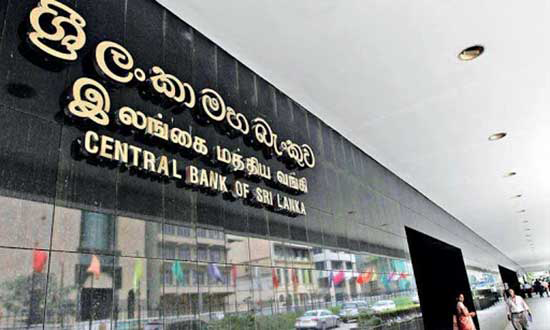
ECONOMYNEXT –Sri Lanka has unveiled a draft for a new Monetary Law Act which will give independence for the central bank to operate flexible policy and implement both monetary and exchange rate policy.The central bank will have two primary objectives under clause 06.
(1) The primary object of the Central Bank shall be to achieve and maintain domestic price stability.
(2) The other object of the Central Bank shall be to secure the financial system stability.
It is also seeking from legislators powers to support government policy and target an output gaps (growth).
Subject to the two objectives the central bank “shall” support the general economic policy framework of the Government provided for in any law.
In seeking price stability, the central bank “shall take into account, inter alia, the stabilization of output towards its potential level.
In the existing law there was no specific legal authority for the central bank to print money to boost growth, ex-Deputy Central Bank Governor W A Wijewardene had said. The stimulus or output gap targeting which led to currency crises was probably illegal.
The central bank would implement both money and exchange policies under the new law.
According to the new Section 20:
(1) Subject to the provisions of this Act, the powers, duties and functions of the Central Bank shall be to –
(a) determine and implement monetary policy; (b) determine and implement the exchange rate policy;
(c) hold and ensure the prudent and effective
management of the official international reserves of Sri Lanka.
According to Section 11 of the new law:
“(1) There shall be a Monetary Policy Board of the Central Bank (in this Act referred to as the “Monetary Policy Board”), which is charged with the formulation of monetary policy of the Central Bank and implementation of a flexible exchange rate regime in line with the flexible inflation targeting framework in order to achieve and maintain domestic price stability.:
In the previous law, under primary objectives, then Central Bank Governor A J Jayewardene removed a responsibility for exchange rate policy (stabilizing the external value do the rupee), after more active open market operations was developed as a pre-cursor to moving towards inflation targeting with a floating rate.
However, in practice the central bank continued to intervene in forex markets, collect reserves and sell, operating a so-called impossible trinity policy regime, triggering a series of currency crises especially from 2012 amid more aggressive open market operations, eventually leading to external default, according to critics.
Critics have called for tight laws to block the central bank from operating conflicting money and exchange rate policies and either confine it to operating monetary policy (low inflation targeting with a controlled interest rates), abandoning exchange rate policy or operate a hard peg and abandon money printing to suppress rates.
Legislators have in the past uncritically passed exchange and import controls law robbing the liberties of citizens, instead of blocking conflicting money and exchange policies of the central bank.The new law however will not have provisional advances, a method that limited money printing above the 1950 anchor to 10 percent of expected revenues.
Legislator Kabir Hashim, an economist, has already fired a warning shot, pointing out that the country’s economic bureuacrats have ignored top classical economists who advised Sri Lanka including Singapore economic architect Goh Ken Swee (who called for a hard peg) and B R Shenoy who called for a clean float.


The Sri Lanka Aviation Unit operating under the United Nations (UN) mandate in the Central African Republic (CAR) has successfully carried out a critical Casualty Evacuation (CASEVAC) mission, under extremely hostile and volatile conditions.
The mission had been launched in response to an urgent request to evacuate two United Nations personnel who had sustained combat-related injuries in the Zemio area, the Sri Lanka Air Force (SLAF) said.
Accordingly, the evacuation has been conducted using a Mi-17 helicopter (UNO 325P).
The aircraft was captained by Wing Commander Nelson De Silva, with Flight
Lieutenant Arunoda Ekanayake serving as co-pilot.
The aircrew comprised Squadron Leader Sandeepa Wijayathunga, Sergeant WCN Senevirathne, and Corporal DVPM Rodrigo. The Aeromedical Evacuation Team included Group Captain Sujith Perera, Flight Sergeant KW Sumedha, and Flight Sergeant RDH Karunadasa, who provided critical in-flight medical care to the casualties, the SLAF stated.
The extraction site was located approximately 20 kilometres northeast of the Zemio Permanent Operating Base (POB) and posed significant operational challenges.
They included extremely dusty landing conditions, an unstable and rapidly evolving tactical environment, and the requirement for a precision landing under constant threat, the SLAF said.
Despite these constraints, the aircrew demonstrated remarkable courage, sound judgement, and outstanding airmanship throughout the operation.
A comprehensive threat assessment conducted by the aircraft commander, taking into account the critical condition of the casualties, reflected exceptional adaptability and operational decision-making, the statement added.
According to the SLAF, the total flight duration of the mission was one hour and 45 minutes. The injured personnel were safely evacuated from the hostile location and successfully transported to Bangui for advanced medical treatment.

Sri Lanka will mark National Safety Day today (26) with countrywide religious observances, a national moment of silence and the main state commemoration at the Peraliya Tsunami Memorial in Galle, officials said yesterday.
The annual observance, declared in the aftermath of the 2004 Indian Ocean tsunami that claimed over 35,000 lives and left more than 5,000 people missing, is held each year to honour victims of the tsunami and other disasters, while reinforcing public awareness on disaster preparedness.
Disaster Management Centre (DMC) Director General Retired Major General Sudantha Ranasinghe said the 2025 programme would be conducted with due consideration to prevailing weather conditions caused by the Ditwah cyclone, with district-level multi-religious observances planned across the country.
“National Safety Day is a moment of remembrance and reflection. It also reminds us of the importance of preparedness, early warning and community resilience,” he said.
The main national commemoration will take place at the Peraliya Tsunami Memorial from 8.30 a.m. to 11.00 a.m., with the participation of government representatives, religious leaders, disaster survivors and families of victims.
Secretary to the Ministry of Defence Air Vice Marshal (Retd) Sampath Thuyacontha said a two-minute silence will be observed nationwide from 9.25 am to 9.27 am today, in memory of all those who lost their lives to the tsunami and other disasters.
“All institutions and members of the public are requested to observe this moment of silence as a mark of respect and national solidarity,” he said.
DMC Additional Director General Pradeep Kodippili urged the media to provide wide coverage to the main commemoration in Galle as well as district-level programmes organised through District Secretariats.
“Media support and public participation are essential to ensure that the lessons of past disasters remain alive and that a culture of safety is strengthened across the country,” Kodippili said.
National Safety Day has been observed annually on December 26 since 2005.
By Ifham Nizam ✍️

All forms of street vending within the Kandy Municipal Council area will be banned from January 1, Mayor Chandrasiri Wijenayake has said.The Kandy Mayor said the decision had been taken as part of efforts to preserve it as a clean and aesthetically pleasing city and to allow the public to move freely while enjoying its surroundings.
He said the ban would apply not only to streets in the city centre but across the entire municipal council area. The move, he added, follows long-standing public requests for a more systematic regulatory framework within the Kandy urban area and is aimed at ensuring public convenience and welfare.
Wijenayake stressed that the decision would be implemented without reversal.
The Kandy Municipal Council has already issued formal notices to pavement vendors directing them to cease operations. Street vendors had requested a three-month grace period to relocate, which will expire on December 31.
By S. K. Samaranayake ✍️

Showers may occur in the Northern, Eastern and Uva provinces and in Polonnaruwa, Matale and Nuwara-Eliya districts

Lankan aircrew fly daring UN Medevac in hostile conditions in Africa

Lanka to observe National Safety Day today

Street vendors banned from Kandy City

Police fully armed with breathalyser test kits during season of cheer

Hunt on for cops aiding and abetting heroin trafficking network in Moratuwa, Lunawa, Angulana and Ratmalana

‘Dates have the highest sugar content to fight Coronavirus’

Sunday Island 27 December – Headlines

#SundayIsland 17th December – Headlines

Sunday Island – 28th March

Sunday Island Headlines – 21 March

Sunday Island – 21st February – Headlines
-

 News3 days ago
Members of Lankan Community in Washington D.C. donates to ‘Rebuilding Sri Lanka’ Flood Relief Fund
-

 Latest News6 days ago
Landslide early warnings issued to the districts of Badulla, Kandy, Kurunegala, Matale and Nuwara-Eliya extended till 8AM on Sunday (21)
-

 News4 days ago
Air quality deteriorating in Sri Lanka
-
 Business5 days ago
Browns Investments sells luxury Maldivian resort for USD 57.5 mn.
-
 Editorial6 days ago
Cops as whipping boys?
-
Latest News7 days ago
Landslide early warnings issued to the Districts of Badulla, Kandy, Kurunegala, Matale and Nuwara Eliya extended
-

 News4 days ago
Cardinal urges govt. not to weaken key socio-cultural institutions
-
 Features5 days ago
Another Christmas, Another Disaster, Another Recovery Mountain to Climb