
News
Dr. Malik suggests burying COVID -19 victims in impermeable wrapping

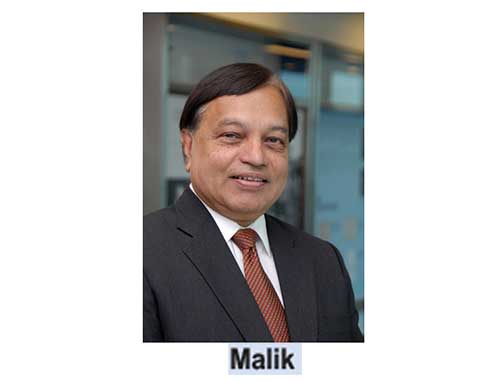
By M.A. Kaleel
The claim that the burial of dead bodies of COVID-19 victims could lead to the spread of coronavirus is nonscientific, says Professor Malik Peiris, a world renowned Pathologist and Virologist, currently serving as the Chair Professor of the Department of Virology at the University of Hong Kong. He is also one of the leading scientists who discovered the virus that causes SARS.
Dr Peiris told The Island: “The answer is simple. Viruses can only replicate in living cells unlike certain bacteria like Ebola. Viruses by definition require living cells to replicate. Once a person has died and the cells in his body have died the virus will die. This is the first reason.
“The second reason is the infectious period. The period before the onset of clinical symptoms and the 4-5 days after the onset of clinical symptoms is highly infectious. It is very unlikely that a person will die soon after getting the symptoms. He may die one or two weeks after the symptoms have developed. During this period the chance of infection is very low, and with the development of antibodies it is much lower.
“You are not going to bury the dead bodies right in running water. When you bury the body six feet down wrapped in impermeable wrapping, it is very safe. If there is a residual infectious virus by any remote chance, for it to filter through many feet of soil and get into water and survive it is very remote.
“Therefore, the transmission of Coronavirus from burial is extremely unlikely. I’m very familiar with this business of burial,” he said.


The Executive Committee of the Government Medical Officers Association (GMOA) has set a 10-day deadline for the NPP government to implement the agreement reached between them and Health and Media Minister Dr. Nalinda Jayatissa recently.
The GMOA yesterday (14) declared that the decision to launch a countrywide strike on 23 January had been taken at the EC meeting held on Tuesday (13).
GMOA Secretary Dr. Prabath Sugathadasa said his Association had resorted to trade union action in the recent past against the failure on the part of the government to address their grievances through the 2026 Budget. However, the GMOA called off such trade union action after Dr. Jayatissa, in writing, assured that the Cabinet approval would be obtained to create a special category of public service as Sri Lanka Health Service to accommodate all categories of doctors and increase the doctors’ DAT (Disturbance, Availability, & Transport) allowance, resolve transport issues in terms of the 22/99 circular, transform additional allowance to a permanent allowance and resolve issues surrounding the research allowance.
The GMOA blamed Minister Jayatissa and the Health Ministry for the developing situation. (SF)

Minister of Fisheries, Aquatic and Ocean Resources Ramalingam Chandrasekar has said that extremists operate both in the South and, to some extent, in the North, and that they often ignore the genuine needs of the people. Minister Ramalingam alleged that these extremists try to obstruct development efforts, the Ministry said.
The Minister said so when the Australian High Commissioner in Sri Lanka, Matthew Duckworth met him at the National People’s Power (NPP) office in Jaffna.
The Minister also assured that, unlike in the past, strong security guarantees have now been firmly established under the NPP administration, creating a conducive and confidence-building environment for diaspora Tamils and foreign investors to invest in Sri Lanka without hesitation.
During the meeting, the High Commissioner and the Minister engaged in extensive discussions on key political, economic and development-related issues. Particular attention was given to the long-standing friendly relations between Sri Lanka and Australia, partnerships founded on democratic values, and the prevailing situation in Sri Lanka’s Northern Province.
The discussions also focused on post-conflict development efforts in the North, governance reforms, transparency, accountability and the evolving political culture under the administration of the National People’s Power.
Minister Ramalingam Chandrasekar expressed his sincere gratitude to the Australian Government for the humanitarian assistance extended to the people of Sri Lanka affected by Cyclone Ditwah. He noted that standing with people beyond political differences during times of disaster is a true reflection of genuine international friendship. The Minister also briefed the High Commissioner on the ongoing national programmes aimed at restoring normalcy and strengthening resilience.
Highlighting the growing public trust in the government, particularly in the Northern Province, the Minister emphasised that development programmes are being implemented in a manner that safeguards this trust. He elaborated on development initiatives currently underway in the North, under the NPP-led administration, stating that these efforts are backed by firm political decisions to transform post-war reconstruction from promises into tangible action.
Special emphasis was placed on strengthening the fisheries sector, protecting aquatic resources and promoting the marine economy in ways that directly enhance the livelihoods of the northern communities. The Minister further explained that the proposed investment zones in the Northern Province are designed not merely as land allocations, but as comprehensive projects that generate employment, facilitate technology transfer and ensure a balanced regional economic development.
Calling for Australian cooperation in these investment initiatives, Minister Chandrasekar encouraged Australian investors, as well as members of the Sri Lankan diaspora living in Australia, to actively participate in Sri Lanka’s development journey. He urged the High Commissioner to play a facilitative role in easing diaspora and foreign investment engagement, noting that overseas Sri Lankans—particularly those investing in the Northern Province—can become a vital force in promoting national unity, economic equity and sustainable development.
The Australian High Commissioner stated that the National People’s Power government clearly reflects the emergence of a corruption-free administration. He observed that governance, based on transparency, the rule of law and accountability, has earned the confidence of the international community. He further assured Australia’s full support for the development of the Northern Province.
Duckworth affirmed that Australia is keen to explore investment opportunities, industrial development prospects, job creation and sustainable economic growth in the North, and that Australia recognises and welcomes development efforts supported by political stability and clear policy direction.
Emphasising reconciliation, the High Commissioner remarked that racism must be defeated in Sri Lanka, and that the deep wounds and trauma, embedded in people’s lives over decades, must be healed. True reconciliation, he said, should be born in the country itself, grounded in justice and equality, and not remain merely a slogan.
The meeting was attended by National People’s Power Members of Parliament K. Ilangumaran, J. Rajeevan and Sri Bhavanandaraja, Jaffna Municipal Councillor S. Kabilan, representatives of the Australian High Commission, and several other invitees.
News
Pakistan HC in Colombo hosts special reception in honour of SAARC Woman of the Year Musarrat Misbah

Pakistan HC in Colombo Major General Faheem Ul Aziz, HI (M), yesterday (14) hosted a formal reception at his residence to celebrate the very well-deserved achievement of Ms. Musarrat Misbah, a prominent Pakistani entrepreneur and social worker who was honored with the SAARC Woman of the Year Gold Award at the WCIC Prathibhabhisheka Women Entrepreneur Awards 2025.
Pakistan HC statement: “Ms. Misbah is recognized as a renowned humanitarian and social entrepreneur, who is presently heading the Depilex Smile Again Foundation. Her foundation is working as symbol of hope across South Asia, providing medical treatment and vocational training to women. While applauding and recognizing her phenomenal efforts, the High Commissioner appreciated her contributions and the corporate social responsibility, by her foundation. He emphasized that Musarrat’s recognition as the SAARC Woman of the Year reflected the deep-rooted commitment of both Pakistan and Sri Lanka to fostering gender equality and empowering women within the regional framework.”

Doctors threaten strike

Chandrasekar alleges extremists in South and North hinder development

Pakistan HC in Colombo hosts special reception in honour of SAARC Woman of the Year Musarrat Misbah

Port City Colombo secures USD 300 mn FDI commitment for Phase II development

NPP’s national electricity policy blatantly unfair: Sajith

MP Amarakeerthi murder verdict to be announced on 11 Feb.

‘Dates have the highest sugar content to fight Coronavirus’

Sunday Island 27 December – Headlines

#SundayIsland 17th December – Headlines

Sunday Island – 28th March

Sunday Island Headlines – 21 March

Sunday Island – 21st February – Headlines
-

 Business4 days ago
Dialog and UnionPay International Join Forces to Elevate Sri Lanka’s Digital Payment Landscape
-

 News4 days ago
Sajith: Ashoka Chakra replaces Dharmachakra in Buddhism textbook
-

 Features4 days ago
The Paradox of Trump Power: Contested Authoritarian at Home, Uncontested Bully Abroad
-

 Features4 days ago
Subject:Whatever happened to (my) three million dollars?
-

 News4 days ago
Level I landslide early warnings issued to the Districts of Badulla, Kandy, Matale and Nuwara-Eliya extended
-

 Business1 day ago
New policy framework for stock market deposits seen as a boon for companies
-

 Opinion6 days ago
The minstrel monk and Rafiki, the old mandrill in The Lion King – II
-

 News4 days ago
65 withdrawn cases re-filed by Govt, PM tells Parliament