
Features
Dr. Coomaraswamy underscores need to stick to PFMA, diligently follow IMF programme


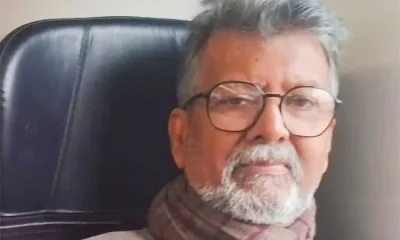
Former Governor of the Central Bank Dr. Indrajith Coomaraswamy stressed the importance and the responsibility on the part of new Secretary to the Treasury Dr. Harshana Suriyapperuma to strictly follow the Public Finance Management Act (PFMA) to ensure macroeconomic stability.
Dr. Coomaraswamy warned that any sort of deviation from clear framework embedded in the PFMA would be catastrophic. Cooramaswamy said so in response to The Island query what should be new Treasury Chief’s responsibility.
Dr. Harshana Suriyapperuma recently succeeded Mahinda Siriwardana who served for a period of three turbulent years (April 8, 2022 to April 8, 2025).
Son of internationally reputed civil servant the late Raju Coomaraswamy, affectionately dubbed “Roving Raju”, Dr. Indrajith Coomaraswamy served as the Governor of the Central Bank during 2016-2019 period.
Asked to explain the challenges faced ahead by the former NPP National List MP and first time entrant to parliament Dr. Suriyapperuma in managing the economy, Dr. Coomaraswamy said: “Mahinda Siriwardana has done an outstanding job as Secretary to the Treasury. Siriwardana and the Governor, Dr. Nandalal Weerasinghe, have played crucial roles in bringing about the extremely impressive and widely acclaimed stabilization of the economy since the dark days of 2022.
Unsustainable budget deficits have been the root cause of the repeating bouts of macroeconomic stress that have been a major drag on the development prospects of the country. The PFMA which was enacted during Siriwardena’s tenure has addressed this by introducing clear and more robust fiscal rules which ensure fiscal sustainability. The commitment to a primary surplus in the budget is the centerpiece. It will serve not only to help to contain and reduce the stock public debt but also to prevent unsustainable budget deficits which pump excess demand into the economy thereby fueling inflation and creating import pressure which undermines the balance of payments. The inevitable outcome has been the volatility in interest and exchange rates experienced by the country time and again with very damaging consequences for businesses and households. So, it is imperative that the new ST adheres to the clear framework embedded in the PFMA as the foundation for maintaining macroeconomic stability.
In addition, tax administration can continue to be improved by digitalization. This includes full implementation of RAMIS in IRD and the Single Window in Customs. This would enable revenue enhancement without increases in taxes. The improvement in expenditure management should also be maintained, including through the use of technology (ITMIS). This would assist in avoiding episodes like the recent inadvertent misreporting of arrears. Impeccable integrity and firmness to resist undue political pressure are important attributes for any Treasury Chief.
(Q)Do you think the Economic Transformation Act would ensure consensus among political parties represented in Parliament?
(A):Now that a sound platform has been created by stabilizing the macroeconomic fundamentals, there needs to be a laser-like focus on implementing structural reforms that place the country on a path of sustained growth. There are reforms needed to strengthen the growth framework of the country by increasing productivity. These include factor market reforms; SoE reform; improving the investment climate; strengthening investment promotion; trade policy reform, including trade agreements and tariff/paratariff reforms; modernizing education, training and skills development; and digitalising delivery of public services. In addition, priority needs to be attached to removing the anti-export bias in the policy framework. Since 2000, exports and tradable as a percentage of GDP have halved. The opposite of what should have happened.
The Economic Transformation Act addresses reforms in these areas. In his Budget Speech, the President stated he proposes to implement the Economic Transformation Act, with amendments. The highest priority needs to be given to implementing a package of transformative reforms. These reforms have been well known for decades. Two reasons can be found for the non-implementation: (1) long gestation periods that tend to extend beyond an electoral cycle thereby disincentivizing politicians who have traditionally focused on short-term political expediency; (2) though these reforms benefit many they threaten the vested interests of a powerful politically connected few. This time around the reforms are very urgent to achieve growth of at least 5 percent to ensure there isn’t another painful debt restructuring; and to make material progress in reversing the sharp increase in poverty and vulnerability. The Sri Lankan people have been extraordinarily patient, so far. However, the majority of the population have not seen an improvement in their living standards. They would expect this to change sooner rather than later. So, continuing to kick the can down the road is a dangerous option at this juncture. Also, this government has less baggage than its predecessors in terms of pandering to vested interests. So, it should have more room to maneuver on the necessary reforms.
Given the social and political dangers inherent in not implementing the structural reforms necessary to avert another debt restructuring and to reverse the increase in poverty, it is clearly in the interests of all parties in the country to support a robust package of structural reforms. It remains to be seen whether they can act in their enlightened self-interest.

(Q)IMF recently appreciated govt response to the situation and its ability to meet conditions. What do you think?
(A) The IMF has been extremely appreciative of SL’s impressive performance in stabilizing its economy with the support of an EFF program. At the beginning of the year, the Managing Director, Crystalina Georgieva, was animated to exclaim “Bravo Mr. President” during a remote conversation with President AKD at the beginning of this year. In addition, the First Managing Director, Gita Gopinath, was very positive in her assessment of SL’s program performance and commended the authorities for the progress made, when she visited SL to attend the recent CBSL/MoF/IMF Conference. So, the two most senior IMF officials have appreciated the performance of the SL authorities. In addition, the Executive Board approved the next disbursement
However, the IMF has also been clear that the Government needs to build on the sound foundation by accelerating structural reforms to achieve sustained growth and poverty reduction.
There is considerable cross-country evidence that policy consistency is a crucial determinant of sustained economic success.
(Q)Minister Lalkantha recently declared that regardless of opposition the govt would adhere to IMF formula…what is your message to trade unions, professionals and political parties?
(A)The key components of the IMF program, such as fiscal consolidation; flexible inflation targeting for price stability; financial system stability; prudent debt management; building external reserves; eradicating corruption; and strengthening governance are all objectives that SL should pursue with or without an IMF program. Having IMF support enables a less severe blend of adjustment and financing. Without IMF disbursements and the additional financing a program catalyst, there would be more severe austerity as Sri Lanka acts to remove the imbalances in its economy which led to the most severe crisis, in 2022, that affected all Sri Lankans, including trade unions, academics and political parties.
Dr. Coomaraswamy said:
Sri Lanka has achieved a new paradigm for macroeconomic management: -Public Finance Management Act has addressed the root cause of macroeconomic stress.
The Central Bank Act has removed fiscal dominance in monetary policy formulation. The Treasury has been removed from the governance structures of the CBSL. Deficit financing is no longer possible with CBSL being prohibited from lending to the government. Flexible inflation targeting prevents financial repression and artificially low interest rates which lead to price and balance of payment instability.
= The Public Debt Management Act removes the fragmented institutional architecture and the conflict of interest for the CBSL which arises from simultaneously setting interest rates to maintain price stability and raising money as cheaply as possible for the government.
=Full cost pricing for SMEs which de-risks the government budget, protects the balance sheets of the state banks and encourages the use of targeted cash transfers to provide social protection rather than untargeted subsidies which disproportionately benefit the non-poor.
=Anti-corruption legislation and the action plan to implement the recommendations of the IMF Governance Diagnostic.
If the above-mentioned are kept intact, the repeated home grown causes of macroeconomic stress can be avoided. The whole country should be committed to this.
In addition, fiscal, monetary and external buffers should be built as insurance against exogenous shocks.
By Shamindra Ferdinando ✍️


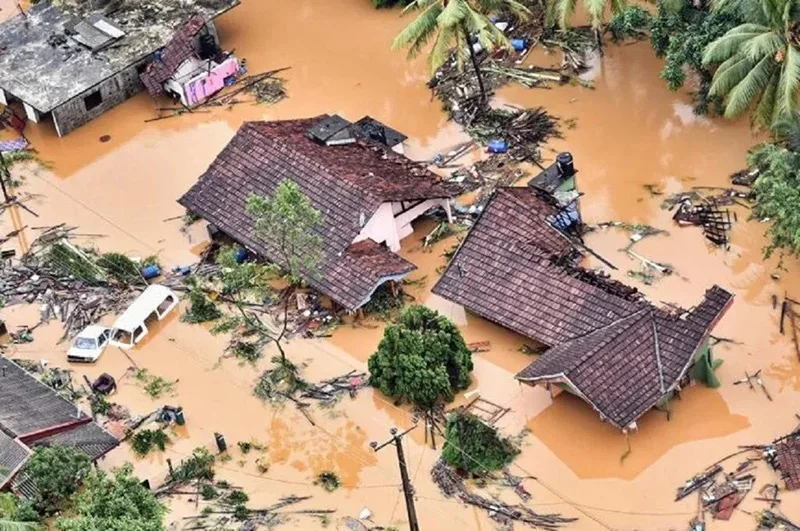
The manner in which the government succeeded in mobilising support from the international community, immediately after the devastating impact of Cyclone Ditwah, may have surprised many people of this country, particularly because our Opposition politicians were ridiculing our “inexperienced” government, in the recent past, for its inability to deal with the international community effectively. However, by now it is evident that the government, with the assistance of the international community and local nongovernmental actors, like major media organisations, has successfully managed the recovery efforts. So, let me begin by thanking them for what they have done so far.
Yet, some may argue that it is not difficult to mobilise the support for recovery efforts from the international community, immediately after any major disaster, and the real challenge is to sustain that support through the next few weeks, months and years. Because the recovery process, more specifically the post-recovery reconstruction process, requires long-term support. So, the government agencies should start immediately to focus on, in addition to initial disaster relief, a longer-term strategy for reconstruction. This is important because in a few weeks’ time, the focus of the global community may shift elsewhere … to another crisis in another corner of the world. Before that happens, the government should take initiatives to get the support from development partners on appropriate policy measures, including exceptional trade preferences, to help Sri Lanka in the recovery efforts through the medium and the long term.
Use of Trade Preferences to support recovery and reconstruction
In the past, the United States and the European Union used exceptional enhanced trade preferences as part of the assistance packages when countries were devastated by natural disasters, similar to Cyclone Ditwah. For example:
- After the devastating floods in Pakistan, in July 2010, the EU granted temporary, exceptional trade preferences to Pakistan (autonomous trade preferences) to aid economic recovery. This measure was a de facto waiver on the standard EU GSP (Generalised Scheme of Preferences) rules. The preferences, which were proposed in October 2010 and were applied until the end of 2013, effectively suspended import duties on 75 types of goods, including textiles and apparel items. The available studies on this waiver indicate that though a significant export hike occurred within a few months after the waiver became effective it did not significantly depress exports by competing countries. Subsequently, Pakistan was granted GSP+ status in 2014.
- Similarly, after the 2015 earthquakes in Nepal, the United States supported Nepal through an extension of unilateral additional preferences, the Nepal Trade Preferences Programme (NTPP). This was a 10-year initiative to grant duty-free access for up to 77 specific Nepali products to aid economic recovery after the 2015 earthquakes. This was also a de facto waiver on the standard US GSP rules.
- Earlier, after Hurricanes Mitch and Georges caused massive devastation across the Caribbean Basin nations, in 1998, severely impacting their economies, the United States proposed a long-term strategy for rebuilding the region that focused on trade enhancement. This resulted in the establishment of the US Caribbean Basin Trade Partnership Act (CBTPA), which was signed into law on 05 October, 2000, as Title II of the Trade and Development Act of 2000. This was a more comprehensive facility than those which were granted to Pakistan and Nepal.

What type of concession should Sri Lanka request from our development partners?
Given these precedents, it is appropriate for Sri Lanka to seek specific trade concessions from the European Union and the United States.
In the European Union, Sri Lanka already benefits from the GSP+ scheme. Under this arrangement Sri Lanka’s exports (theoretically) receive duty-free access into the EU markets. However, in 2023, Sri Lanka’s preference utilisation rate, that is, the ratio of preferential imports to GSP+ eligible imports, stood at 59%. This was significantly below the average utilisation of other GSP beneficiary countries. For example, in 2023, preference utilisation rates for Bangladesh and Pakistan were 90% and 88%, respectively. The main reason for the low utilisation rate of GSP by Sri Lanka is the very strict Rules of Origin requirements for the apparel exports from Sri Lanka. For example, to get GSP benefits, a woven garment from Sri Lanka must be made from fabric that itself had undergone a transformation from yarn to fabric in Sri Lanka or in another qualifying country. However, a similar garment from Bangladesh only requires a single-stage processing (that is, fabric to garment) qualifies for GSP. As a result, less than half of Sri Lanka’s apparel exports to the EU were ineligible for the preferences in 2023.
Sri Lanka should request a relaxation of this strict rule of origin to help economic recovery. As such a concession only covers GSP Rules of Origin only it would impact multilateral trade rules and would not require WTO approval. Hence could be granted immediately by the EU.
United States
Sri Lanka should submit a request to the United States for (a) temporary suspension of the recently introduced 20% additional ad valorem duty and (b) for a programme similar to the Nepal Trade Preferences Programme (NTPP), but designed specifically for Sri Lanka’s needs. As NTPP didn’t require WTO approval, similar concessions also can be granted without difficulty.
Similarly, country-specific requests should be carefully designed and submitted to Japan and other major trading partners.
(The writer is a retired public servant and can be reached at senadhiragomi@gmail.com)
by Gomi Senadhira
Novelists, poets, short story writers, lyricists, politicians and columnists use words for different purposes. While some of them use words to inform and elevate us, others use them to bolster their ego. If there was no such thing called words, we cannot even imagine what will happen to us. Whether you like it or not everything rests on words. If the Penal Code does not define a crime and prescribe a punishment, judges will not be able to convict criminals. Even the Constitution of our country is a printed document.
A mother’s lullaby contains snatches of sweet and healing words. The effect is immediate. The baby falls asleep within seconds. A lover’s soft and alluring words go right into his or her beloved. An army commander’s words encourage soldiers to go forward without fear. The British wartime Prime Minister Winston Churchill’s words still ring in our ears: “… we shall defend our Island, whatever the cost may be, we shall fight on the beaches, we shall fight on the landing grounds, we shall fight in the fields and in the streets, we shall fight in the hills; we shall never surrender …”
Writers wax eloquent on love. English novelist John Galsworthy wrote: “Love is no hot-house flower, but a wild plant, born of a wet night, born of an hour of sunshine; sprung from wild seed, blown along the road by a wild wind. A wild plant that, when it blooms by chance within the hedge of our gardens, we call a flower; and when it blooms outside we call a weed; but flower or weed, whose scent and colour are always wild.” While living in a world dominated by technology, we often hear a bunch of words that is colourless and often cut to verbal ribbons – “How R U” or “Luv U.” Such words seem to squeeze the life out of language.
Changing medium
Language is a constantly changing medium. New words and forms arrive and old ones die out. Whoever thought that the following Sinhala words would find a place in the Oxford English Dictionary? “Asweddumize, Avurudu, Baila, Kiribath, Kottu Roti, Mallung, Osari, Papare, Walawwa and Watalappan.” With all such borrowed words the English language is expanding and remains beautiful. The language helps us to express subtle ideas clearly and convincingly.
You are judged by the words you use. If you constantly use meaningless little phrases, you will be considered a worthless person. When you read a well-written piece of writing you will note how words jump and laugh on the paper or screen. Some of them wag their tails while others stand back like shy village belles. However, they serve a useful purpose. Words help us to write essays, poems, short stories and novels. If not for the beauty of the language, nobody will read what you write.
If you look at the words meaningfully, you will see some of them tap dancing while others stand to rigid attention. Big or small, all the words you pen form part of the action or part of the narrative. The words you write make your writing readable and exciting. That is why we read our favourite authors again and again.
Editorials
If a marriage is to succeed, partners should respect and love each other. Similarly, if you love words, they will help you to use them intelligently and forcefully. A recent survey in the United States has revealed that only eight per cent of people read the editorial. This is because most editorials are not readable. However, there are some editorials which compel us to read them. Some readers collect such editorials to be read later.
Only a lover of words would notice how some words run smoothly without making a noise. Other words appear to be dancing on the floor. Some words of certain writers are soothing while others set your blood pounding. There is a young monk who is preaching using simple words very effectively. He has a large following of young people addicted to drugs. After listening to his preaching, most of them have given up using illegal drugs. The message is loud and clear. If there is no demand for drugs, nobody will smuggle them into the country.
Some politicians use words so rounded at the edges and softened by wear that they are no longer interesting. The sounds they make are meaningless and listeners get more and more confused. Their expressions are full of expletives the meaning of which is often soiled with careless use of words.
Weather-making
Some words, whether written or spoken, stick like superglue. You will never forget them. William Vergara in his short essay on weather-making says, “Cloud-seeding has touched off one of the most baffling controversies in meteorological history. It has been blamed for or credited with practically all kinds of weather. Some scientists claim seeding can produce floods and hail. Others insist it creates droughts and dissipates clouds. Still others staunchly maintain it has no effect at all. The battle is far from over, but at last one clear conclusion is beginning to emerge: man can change the weather, and he is getting better at it.”
There are words that nurse the ego and heal the heart. The following short paragraph is a good example. S. Radhakrishnan says, “In every religion today we have small minorities who see beyond the horizon of their particular faith, not through religious fellowship is possible, not through the imposition of any one way on the whole but through an all-inclusive recognition that we are all searchers for the truth, pilgrims on the road, that we all aim at the same ethical and spiritual standard.”
There are some words joined together in common phrases. They are so beautiful that they elevate the human race. In the phrase ‘beyond a shadow of doubt’, ‘a shadow’ connotes a dark area covering light. ‘A doubt’ refers to hesitancy in belief. We use such phrases blithely because they are exquisitely beautiful in their structure. The English language is a repository of such miracles of expression that lead to deeper understanding or emphasis.
Social media
Social media use words powerfully. Sometimes they invent new words. Through the social media you can reach millions of viewers without the intervention of the government. Their opinion can stop wars and destroy tyrants. If you use the right words, you can even eliminate poverty to a great extent.
The choice of using powerful words is yours. However, before opening your mouth, tap the computer, unclip a pen, write a lyric or poem, think twice of the effect of your writing. When you talk with a purpose or write with pleasure, you enrich listeners and readers with your marvellous language skills. If you have a command of the language, you will put across your point of view that counts. Always try to find the right words and change the world for a better place for us to live.
By R. S. Karunaratne
karunaratners@gmail.com
Eighteen Years of Delay:
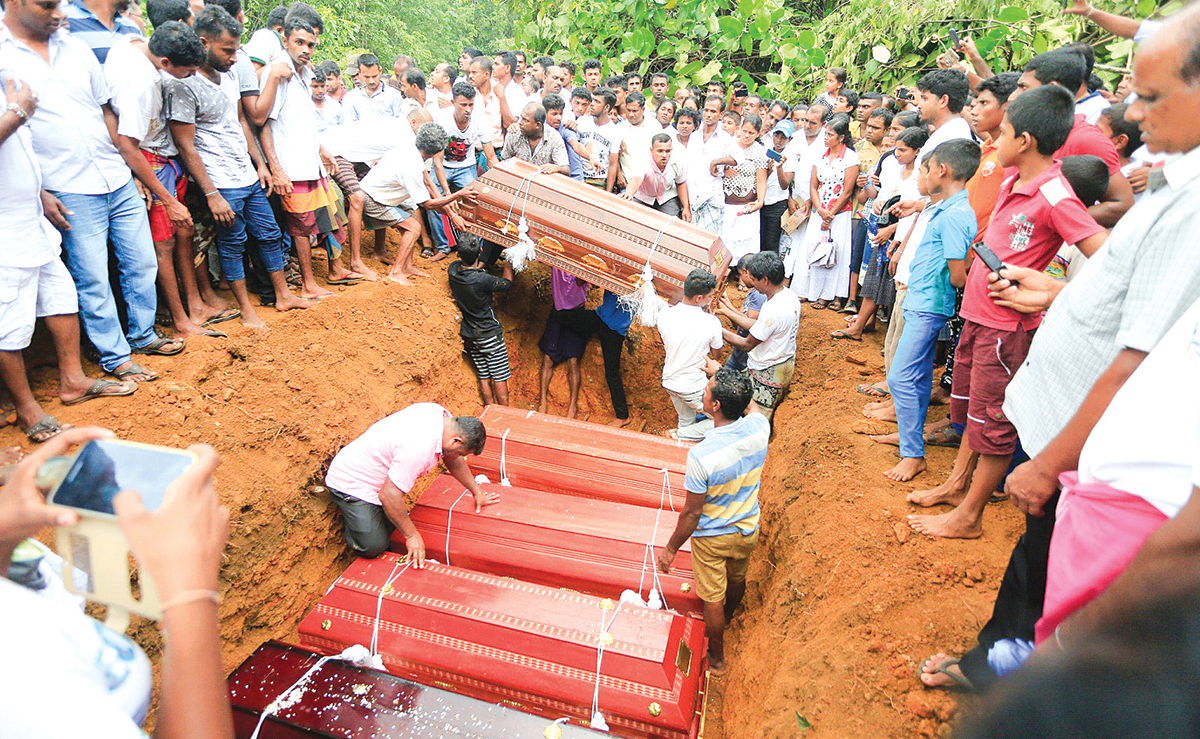
Cyclone Ditwah has come and gone, leaving a trail of extensive damage to the country’s infrastructure, including buildings, roads, bridges, and 70% of the railway network. Thousands of hectares of farming land have been destroyed. Last but not least, nearly 1,000 people have lost their lives, and more than two million people have been displaced. The visuals uploaded to social media platforms graphically convey the widespread destruction Cyclone Ditwah has caused in our country.
The purpose of my article is to highlight, for the benefit of readers and the general public, how a project to establish a Doppler Weather Radar system, conceived in 2007, remains incomplete after 18 years. Despite multiple governments, shifting national priorities, and repeated natural disasters, the project remains incomplete.
Over the years, the National Audit Office, the Committee on Public Accounts (COPA), and several print and electronic media outlets have highlighted this failure. The last was an excellent five-minute broadcast by Maharaja Television Network on their News First broadcast in October 2024 under a series “What Happened to Sri Lanka”
The Agreement Between the Government of Sri Lanka and the World Meteorological Organisation in 2007.
The first formal attempt to establish a Doppler Radar system dates back to a Trust Fund agreement signed on 24 May 2007 between the Government of Sri Lanka (GoSL) and the World Meteorological Organisation (WMO). This agreement intended to modernize Sri Lanka’s meteorological infrastructure and bring the country on par with global early-warning standards.
The World Meteorological Organisation (WMO) is a specialized agency of the United Nations established on March 23, 1950. There are 193 member countries of the WMO, including Sri Lanka. Its primary role is to promote the establishment of a worldwide meteorological observation system and to serve as the authoritative voice on the state and behaviour of the Earth’s atmosphere, its interaction with the oceans, and the resulting climate and water resources.
According to the 2018 Performance Audit Report compiled by the National Audit Office, the GoSL entered into a trust fund agreement with the WMO to install a Doppler Radar System. The report states that USD 2,884,274 was deposited into the WMO bank account in Geneva, from which the Department of Metrology received USD 95,108 and an additional USD 113,046 in deposit interest. There is no mention as to who actually provided the funds. Based on available information, WMO does not fund projects of this magnitude.
The WMO was responsible for procuring the radar equipment, which it awarded on 18th June 2009 to an American company for USD 1,681,017. According to the audit report, a copy of the purchase contract was not available.
Monitoring the agreement’s implementation was assigned to the Ministry of Disaster Management, a signatory to the trust fund agreement. The audit report details the members of the steering committee appointed by designation to oversee the project. It consisted of personnel from the Ministry of Disaster Management, the Departments of Metrology, National Budget, External Resources and the Disaster Management Centre.
The Audit Report highlights failures in the core responsibilities that can be summarized as follows:
· Procurement irregularities—including flawed tender processes and inadequate technical evaluations.
· Poor site selection
—proposed radar sites did not meet elevation or clearance requirements.
· Civil works delays
—towers were incomplete or structurally unsuitable.
· Equipment left unused
—in some cases for years, exposing sensitive components to deterioration.
· Lack of inter-agency coordination
—between the Meteorology Department, Disaster Management Centre, and line ministries.
Some of the mistakes highlighted are incomprehensible. There is a mention that no soil test was carried out before the commencement of the construction of the tower. This led to construction halting after poor soil conditions were identified, requiring a shift of 10 to 15 meters from the original site. This resulted in further delays and cost overruns.
The equipment supplier had identified that construction work undertaken by a local contractor was not of acceptable quality for housing sensitive electronic equipment. No action had been taken to rectify these deficiencies. The audit report states, “It was observed that the delay in constructing the tower and the lack of proper quality were one of the main reasons for the failure of the project”.
In October 2012, when the supplier commenced installation, the work was soon abandoned after the vehicle carrying the heavy crane required to lift the radar equipment crashed down the mountain. The next attempt was made in October 2013, one year later. Although the equipment was installed, the system could not be operationalised because electronic connectivity was not provided (as stated in the audit report).
In 2015, following a UNOPS (United Nations Office for Project Services) inspection, it was determined that the equipment needed to be returned to the supplier because some sensitive electronic devices had been damaged due to long-term disuse, and a further 1.5 years had elapsed by 2017, when the equipment was finally returned to the supplier. In March 2018, the estimated repair cost was USD 1,095,935, which was deemed excessive, and the project was abandoned.
COPA proceedings
The Committee on Public Accounts (COPA) discussed the radar project on August 10, 2023, and several press reports state that the GOSL incurred a loss of Rs. 78 million due to the project’s failure. This, I believe, is the cost of constructing the Tower. It is mentioned that Rs. 402 million had been spent on the radar system, of which Rs. 323 million was drawn from the trust fund established with WMO. It was also highlighted that approximately Rs. 8 million worth of equipment had been stolen and that the Police and the Bribery and Corruption Commission were investigating the matter.
JICA support and project stagnation
Despite the project’s failure with WMO, the Japan International Cooperation Agency (JICA) entered into an agreement with GOSL on June 30, 2017 to install two Doppler Radar Systems in Puttalam and Pottuvil. JICA has pledged 2.5 billion Japanese yen (LKR 3.4 billion at the time) as a grant. It was envisaged that the project would be completed in 2021.
Once again, the perennial delays that afflict the GOSL and bureaucracy have resulted in the groundbreaking ceremony being held only in December 2024. The delay is attributed to the COVID-19 pandemic and Sri Lanka’s economic crisis.
The seven-year delay between the signing of the agreement and project commencement has led to significant cost increases, forcing JICA to limit the project to installing only one Doppler Radar system in Puttalam.
Impact of the missing radar during Ditwah
As I am not a meteorologist and do not wish to make a judgment on this, I have decided to include the statement issued by JICA after the groundbreaking ceremony on December 24, 2024.
“In partnership with the Department of Meteorology (DoM), JICA is spearheading the establishment of the Doppler Weather Radar Network in the Puttalam district, which can realize accurate weather observation and weather prediction based on the collected data by the radar. This initiative is a significant step in strengthening Sri Lanka’s improving its climate resilience including not only reducing risks of floods, landslides, and drought but also agriculture and fishery“.
Based on online research, a Doppler Weather Radar system is designed to observe weather systems in real time. While the technical details are complex, the system essentially provides localized, uptotheminute information on rainfall patterns, storm movements, and approaching severe weather. Countries worldwide rely on such systems to issue timely alerts for monsoons, tropical depressions, and cyclones. It is reported that India has invested in 30 Doppler radar systems, which have helped minimize the loss of life.
Without radar, Sri Lanka must rely primarily on satellite imagery and foreign meteorological centres, which cannot capture the finescale, rapidly changing weather patterns that often cause localized disasters here.
The general consensus is that, while no single system can prevent natural disasters, an operational Doppler Radar almost certainly would have strengthened Sri Lanka’s preparedness and reduced the extent of damage and loss.
Conclusion
Sri Lanka’s inability to commission a Doppler Radar system, despite nearly two decades of attempts, represents one of the most significant governance failures in the country’s disastermanagement history.
Audit findings, parliamentary oversight proceedings, and donor records all confirm the same troubling truth: Sri Lanka has spent public money, signed international agreements, received foreign assistance, and still has no operational radar. This raises a critical question: should those responsible for this prolonged failure be held legally accountable?
Now may not be the time to determine the extent to which the current government and bureaucrats failed the people. I believe an independent commission comprising foreign experts in disaster management from India and Japan should be appointed, maybe in six months, to identify failures in managing Cyclone Ditwah.
However, those who governed the country from 2007 to 2024 should be held accountable for their failures, and legal action should be pursued against the politicians and bureaucrats responsible for disaster management for their failure to implement the 2007 project with the WMO successfully.
Sri Lanka cannot afford another 18 years of delay. The time for action, transparency, and responsibility has arrived.
(The views and opinions expressed in this article are solely those of the author and do not necessarily reflect the policy or position of any organization or institution with which the author is affiliated).
By Sanjeewa Jayaweera

Several spells of showers will occur in the Northern, North-Central, Eastern, Uva and Central provinces

Bondi Beach gunmen who killed 15 after targeting Jewish celebration were father and son, police say

Govt. urged to take action against deputy minister

India sends stock of life-saving medicines

George Keyt Foundation contributes to national disaster relief efforts

New Ambassador to South Korea appreciates job opportunities for Lankans

‘Dates have the highest sugar content to fight Coronavirus’

Sunday Island 27 December – Headlines

#SundayIsland 17th December – Headlines

Sunday Island – 28th March

Sunday Island Headlines – 21 March

Sunday Island – 21st February – Headlines
-
 Features6 days ago
Finally, Mahinda Yapa sets the record straight
-
 News6 days ago
Cyclone Ditwah leaves Sri Lanka’s biodiversity in ruins: Top scientist warns of unseen ecological disaster
-
 Features6 days ago
Handunnetti and Colonial Shackles of English in Sri Lanka
-
 Business4 days ago
Cabinet approves establishment of two 50 MW wind power stations in Mullikulum, Mannar region
-
 News5 days ago
Gota ordered to give court evidence of life threats
-
 Features6 days ago
An awakening: Revisiting education policy after Cyclone Ditwah
-

 Features4 days ago
Cliff and Hank recreate golden era of ‘The Young Ones’
-
 Opinion6 days ago
A national post-cyclone reflection period?