
News
Don’t encourage EPF members to utilize holdings for current expenditure: CFL

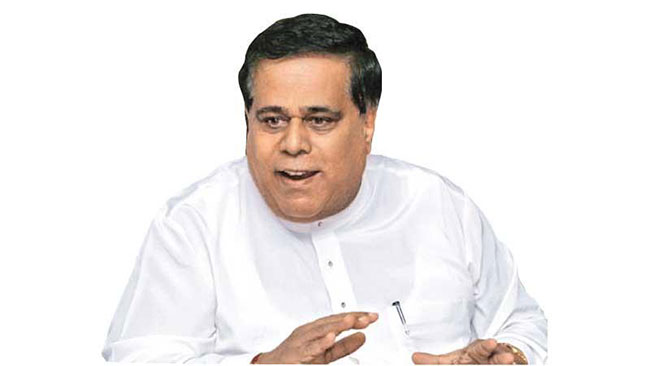
The Ceylon Federation of Labour (CFL) has lodged its objections with Labour Minister Nimal Siripala de Silva over the proposed ‘mild’ amendments to the EPF Act urging that the EPF, being the sole retirement benefit available to private sector “is best treated as a closed scheme and workers encouraged to avoid using moneys lying to their credit for current expenditure.”
CFL General Secretary TMM Rasooldeen in a letter to the minister has pointed out that the proposed amendment “cut across the original objective of the Act which was to provide a tax free benefit to individual members on retirement.”
We understand the reasons you mention for reviewing the pre-retirement benefits but we believe your proposal to completely unlock the Fund works against its very viability, he has said.
In 2010 when the then minister proposed that members be allowed to draw on their EPF balances for medical expenses, the CFL declined to support it “as it overlapped with medical facilities provided by the Employees Trust Fund (ETF) unnecessarily draining member balances available at retirement.”
They suggested instead that the ETF widens the scope of its medical benefits to include the EPF as well.
Rasooldeen said the proposed amendment seeks to allow members with Rs.300,000 or more contributions to their credit over a ten year period to withdraw up to 30% of it for undefined purposes. Saying the EPF as a retirement fund earlier permitted withdrawals for housing purposes considered an investment. But the track record of the EPF Housing Loan Scheme with its 40% default rate suggests even this to have been a failure.
“Since the fund balance of the member is offered as a guarantee to banks and released to cover defaults, it affects member balances in the long term. The CFL has always felt that the pressure to withdraw funds prior to retirement should be resisted by authorities,” he stressed.
“As an organization that stands for secure and strong social protection coverage for workers, we feel the proposed ‘open sesame’ amendment will render a death blow to its already fragile structure. We decline to support them as we are not convinced that they serve the best interests of member-owners of the EPF,” Rasooldeen said..
“Apart from the Parliament of Sri Lanka, it is the owner-members of EPF who have the right to suggest changes to the original objectives of the Fund. The EPF Act does not envisage a role for trade unions. Therefore, it is our firm belief that trade unions in the NLAC (National Labour Advisory Committee) are ill suited to decide on the matter.
“We suggest that a way be found to constructively engage the main stakeholders before effecting the proposed changes to which we object to. We trust you will no doubt appreciate that unions in the NLAC cannot act as proxies to the over 2.5 million who are the owners of the fund.”



Anuradhapura Chief Magistrate, Siyapath Sasindu Wickramaratne, on Friday (12) ordered former Atamasthanadhipathi Pallegama Hemarathana Thera, who stands accused in a case involving the alleged serious sexual abuse of a minor girl, to provide a blood sample for DNA testing.
Accordingly, the court directed the suspect monk to appear before the Government Analyst’s Department on June 16 and provide a blood sample to the Government Analyst.
The order was issued after considering a further report submitted to court by the Nittambuwa Police.
Police informed the court that, pursuant to an earlier court order, certain case material had been forwarded to the Government Analyst on May 4, 2026, for DNA examination.
According to police, the material consisted of clothing allegedly stained with blood, which had been buried and concealed by the girl and later recovered during investigations.
Police further informed the court that the Government Analyst’s report had confirmed the presence of DNA evidence on the clothing.
Investigators told court that it was necessary to obtain a biological sample from the suspect monk in order to compare it with the DNA evidence recovered from the garments.
Police therefore requested an order compelling the suspect to provide a blood sample so that it could be determined whether the DNA evidence found on the girl’s clothing matched that of the suspect.
Having considered the submissions, the Magistrate ordered the suspect monk to provide the blood sample. The court also directed the Government Analyst to submit the report of the subsequent DNA examination.Pallegama Hemarathana Thera was previously remanded in connection with the case and was later released on stringent bail conditions.

(Asiatimes) From this week, those using private buses in Sri Lanka may face severe transport disruption, as operators in the sector have decided to cut services by 50%. Among the reasons for the protest are mounting losses, rising fuel costs and the government’s failure to grant fare concessions. At a press conference held on 7 June, Gemunu Wijeratne, president of the Sri Lanka Private Bus Owners’ Association, explained that “the authorities have not responded positively to requests for a review of bus fares and support measures regarding fuel”.
Meanwhile, around 25% of private transport vehicles have already voluntarily ceased operations due to financial difficulties. According to the majority of owners, “the decision comes after ongoing disputes with the authorities regarding fare adjustments and financial relief, which have not been met to date, despite numerous requests made over a long period”. Commuters, especially in Colombo and the surrounding areas, risk facing delays and overcrowding as the reduced fleet operates under the new directive.
According to Wijeratne, “the association will continue to provide a reduced service until the government approves a revised bus fare, in line with the rise in fuel prices”. The alternative for the government, he continues, is to provide “a direct subsidy to operators, as recent fuel price increases have placed considerable pressure on daily transport operators”.
During peak hours such as the morning, school finishing times and the evening rush hour, only essential services will be guaranteed. During these times, instead of four journeys, only three will be made. Overall, operations will be reduced to around 50%. “The government,” the chairman clarifies, “must take responsibility for this situation, as the majority of students and employees use private buses for their daily commutes, particularly to and from Colombo to various parts of the country.”
Operators in the sector point out that although they requested a temporary exemption to guarantee bus services for one month, neither the National Transport Commission nor the Minister of Transport responded positively. The annual fare review is due to be implemented during the first week of July, adding that they have the “legal authority” to “apply the revised fares”. On 5 June, Wijeratne continues, “we held discussions that were unsuccessful. Diesel prices are expected to rise by the end of this month. In view of all this, we are proceeding with the fare review. This year’s fare adjustment will be difficult for the public to bear, as all costs have risen by around 20–25%”.
The president of the Association of Private Bus Owners concludes by noting that “we cannot continue to operate at a loss. For this reason, we have asked the authorities for some concessions on diesel within the regulatory framework, but these measures have not been implemented. We have therefore decided to step up our industrial action. This week we will intensify our action by changing timetables and limiting operations. The decision was taken – he notes – due to the lack of a positive response to the request for a fare review following the recent rise in fuel prices”.
Recently, the Ceylon Petroleum Corporation (CPC) increased fuel prices in accordance with its monthly pricing formula. Among the changes, the price of a litre of petrol was increased by 15 rupees, rendering the current tariff structures unsustainable. To grasp the scale of the emergency and understand the impact on the population, AsiaNews spoke to Akalanka Punchihewa, Senuli Amrasekara and Dunesh Mayadunne, commuters from various parts of the country who travel to the capital every day for work. “We struggle,” they confirm, “to get to work from Kandy, Kurunegala and Galle. The recent decision by private bus operators is a severe blow, as we have to spend several hours in long queues just to get on a bus. The service provided by buses run by the Sri Lanka Transport Board (SLTB) is inferior to that of private buses. And we cannot,” the commuters conclude, “afford to travel to work by car or motorbike, as we are unable to bear the increased cost of fuel.”
by Arundathie Abeysinghe

Former Minister of Special Projects and former Deputy Minister of Economic Development S.M. Chandrasena was indicted before the Colombo High Court on Friday (12) on charges of corruption relating to the alleged misuse of government-imported seed maize intended for low-income farmers.
The indictment, filed by the Commission to Investigate Allegations of Bribery or Corruption (CIABOC), contains two charges under the Bribery Act in connection with an incident alleged to have occurred in the Anuradhapura District between January 1 and December 31, 2014.
According to the prosecution, seed maize stocks imported with public funds and earmarked for distribution to low-income farmers at concessionary prices were diverted from their intended purpose.
The indictment alleges that Chandrasena exerted undue influence on public officials, including the Director of Planning at the Anuradhapura District Secretariat, to facilitate the distribution of 36,000 kilos of seed maize to his associates instead of eligible beneficiaries.
CIABOC maintains that the alleged conduct constitutes an offence punishable under Section 70 of the Bribery Act.
Chandrasena was arrested by Bribery Commission officials on July 4 last year in connection with the investigation and was subsequently produced before the Colombo Magistrate’s Court.
He was later released on bail on August 1 after being held in custody.The case is expected to be taken up before the Colombo High Court on a future date.

Court orders former Atamasthanadhipathi to provide blood sample for DNA testing

High fuel prices spark outrage in transport sector, services halved

Former Minister S.M. Chandrasena indicted over alleged misuse of seed maize stocks

England salute Chamari as Sri Lanka dare to dream

The NPP’s Constitutional Reforms: Purposes and Processes

From Colombo to Canada and Back: How Thevin Gamage found his voice through cinema

‘Dates have the highest sugar content to fight Coronavirus’

Sunday Island 27 December – Headlines

#SundayIsland 17th December – Headlines

Sunday Island – 28th March

Sunday Island Headlines – 21 March

Sunday Island – 21st February – Headlines
-
 News7 days ago
Women’s T20 World Cup 2026 warm-up: Chamari Athapaththu’s 94 helps Sri Lanka beat Pakistan
-

 Editorial6 days ago
Probe Sallay’s complaint
-
 News4 days ago
Local firms move millions of dollars overseas for phantom imports: Govt.
-
 News2 days ago
CIABOC summons Yoshitha over his participation in British Navy training programme
-
 Midweek Review4 days ago
July 09: An inexcusable overall security failure and exceptional contingency plan
-

 Opinion5 days ago
Could Sri Lanka once again face an economic crisis similar to 2022?
-

 News4 days ago
AI raises concerns over arrest of Sallay and rapper under PTA
-
 News5 days ago
Sallay refuses to end hunger strike unless probe is taken out of CID led by Shani