
Editorial
Dollars and conscience

Friday 5th August 2022
Sri Lanka’s struggle to shore up its crumbling economy continues, and there are no signs of promised foreign assistance materialising anytime soon. The Cabinet has just retained the services of some foreign firms for external debt restructuring, which is one of the main conditions for the IMF bailout package. When the country finally decided to ask for IMF help, after months of dilly-dallying, which took a heavy toll on its foreign reserves, it expected some bridge loans to tide it over until the finalisation of IMF assistance. But it has been left to fend for itself; only India has extended some tangible help, which has stood it in good stead. At this rate, the IMF is likely to take a month of Sundays to deliver promised assistance, and the economic situation here is sure to take a turn for the worse, further aggravating social unrest, which inhibits economic recovery.
Governor of the Central Bank of Sri Lanka (CBSL) Dr. Nandalal Weerasinghe has expressed displeasure at the manner in which local exporters are handling their dollar earnings. Taking part in a recent Hiru TV discussion, he said Sri Lanka’s export proceeds amounted to about one billion dollars a month, but only 20% of them were converted to rupees, and exporters claimed that loan repayments and raw material imports, etc., accounted for 80% of their foreign earnings. Disputing their much-publicised claim, Dr. Weerasinghe said that according to the CBSL data, those percentages were not realistic, and about 50% of export proceeds should be brought into the country through the banking system and converted to rupees. If the exporters did so, the country would have enough dollars for fuel imports, he added.
Everyone knows that most Sri Lankan exporters park a sizeable chunk of their foreign earnings overseas while the country is desperate for forex. The question is how to ensure that the country benefits from its export proceeds the way it should. Many economic analysts have been asking this question during the past several years, but there has been no satisfactory answer, much less meaningful action to prevent forex rackets. Jayampathy Molligoda, in his article, ‘Why is the Singapore dollar strong and the SL rupee weak?’ published in this newspaper on Wednesday (03), discussed some vital issues pertaining to export earnings. Pointing out that the private sector had benefited from low interest rates, and the float of the rupee, he asked whether the country was getting export proceeds in keeping with the applicable regulations and, if not, whether the CBSL strictly enforced penalties for noncompliance.
As for the government’s efforts to boost the forex inflow by removing impediments thereto, the so-called moral suasion alone will not do. There are some exporters who really feel for the country and play a straight bat, as it were, but sadly they are only a microscopic minority. The need for tough laws to curb forex rackets cannot be overemphasised. Some loopholes in the Exchange Control (FE) Act have enabled unscrupulous exporters to leave most of their dollars overseas while the Sri Lankan economy is screaming, and they have to be closed as a national priority.
Leniency breeds irregularities in the world of business. This is what has happened since 2017, according to the Opposition, which says the original FE Act, which was designed to prevent questionable forex outflows, was replaced with a new one in 2017 under the Yahapalana government purportedly to liberalise the flow of foreign exchange. The move was obviously aimed at helping the UNP cronies, some of whom had fallen foul of the law. The new Act, according to the Opposition, did away with provision for the mandatory confiscation of assets of the forex law violators; under the previous Act, such violations were criminal offences.
The FE Act, which is said to have benefited forex racketeers, has to be changed and remedial action taken to regulate export proceeds, which are a sine qua non for resolving the current economic crisis. Ironically, the aforesaid questionable changes to the FE laws were introduced when Ranil Wickremesinghe was the Prime Minister in the Yahapalana government. Its ill-effects are being felt under his presidency!
Now that it has been revealed that the exporters’ skulduggery costs the country a huge chunk of export proceeds, and has stood in the way of efforts being made to raise dollars for fuel imports, etc., the government has to do everything in its power to strengthen the foreign exchange laws. Fairness demands that the wealthy exporters who benefit from a host of concessions and the rupee depreciation, make a significant contribution to the ongoing efforts to revive the economy and ameliorate the suffering of fellow citizens. Exporters themselves will gain hugely from the availability of dollars for imports, especially fuel, which is essential for economic recovery and socio-political stability.


It is said that when the people fear the government, there is tyranny, and when the government fears the people there is liberty. However, in a bid to retain its hold on power, a government that fears the people, tends to resort to draconian measures that are deleterious to civil liberties and democracy and could lead to tyranny. Among them is the misuse of Emergency regulations on some pretext or another. Sri Lanka has spent most of its post-Independence years under a state of Emergency.
The JVP-NPP government keeps on extending emergency regulations even though several months have passed since the landfall of Cyclone Ditwah, which warranted their imposition. It drew severe criticism for an initial delay in declaring a state of Emergency, which it now cannot do without for all intents and purposes. A staunch critic of Emergency and the Prevention of Terrorism Act (PTA), the JVP/NPP came to power, promising to abolish the PTA and use the Emergency regulations responsibly, but it has reneged on that pledge.
On Thursday, Parliament voted to extend the State of Emergency under the Public Security Ordinance. There were 137 ayes and 27 nays. Members of the SJB, the ITAK, the NDF, the SLPP and Jaffna District Independent MP Dr. Ramanathan Archchuna opposed the government motion seeking the extension of Emergency. A vote was held after ITAK MP Shanakiyan Rasamanickam called for division. Worryingly, only 165 MPs, including the Speaker, were present in the 225-member House at the time of voting. Where were the other 60 MPs? Among the absentees were 21 government MPs and 33 Opposition members, according to media reports. At least the Opposition, which called for a division on the motion, should have ensured that all its MPs were present in the House. So much for the commitment of the MPs to their legislative duties and functions. They often haul state employees over the coals for dereliction of duty. First of all, they should put their own house in order.
A state of Emergency is no doubt a legitimate constitutional tool, but it must be used responsibly and sparingly strictly in response to genuine crises. Its extension for political reasons risks undermining democratic institutions, civil liberties and, most of all, public trust in democratic governance.
The deplorable practice of keeping a country under Emergency regulations for extended periods leads to the weakening of democratic culture, public distrust in government, corruption, lack of transparency, the debilitation of civil society and media freedom, an authoritarian drift, and economic and social uncertainty. The misuse of Emergency regulations could create a climate of instability, driving investors away at a time when Sri Lanka is emerging from its worst-ever economic crisis and desperately seeking foreign direct investment to build its forex reserves.
Political leaders currently in the Opposition wax eloquent in Parliament on the ill-effects of a prolonged state of Emergency. But their parties cannot absolve themselves of the blame for the culture of Emergency; the UNP, the SLFP and the JVP are prominent among them. There have been numerous instances where Emergency regulations were invoked in this country. In 1953, a UNP government imposed an emergency rule to restore order during a countrywide hartal. The SLFP did so in 1958 to suppress communal riots. Thereafter, the UNP used Emergency regulations to suppress a Tamil civil disobedience campaign. The SLFP and its leftist allies started the practice of extending Emergency regulations to consolidate its power after crushing the JVP’s first uprising in 1971. The situation took a turn for the worse under the UNP governments after 1977, and the country was under a state of Emergency during the Eelam war, which ended in 2009. The main Tamil political parties backed the LTTE both in and outside Parliament. In the post-war period, an anti-Muslim riot, the Easter Sunday terror attacks, the beginning of the current economic crisis, a mass uprising and natural disasters also led to the imposition of Emergency regulations.
Emergency has been more abused than used in this country. The incumbent government is now emulating the SLFP, the UNP and the coalitions led by them where all bad practices are concerned, while pontificating on the virtues of good governance.

Saturday 11th April, 2026
The JVP-NPP government has dropped the fig leaf of good governance and defended Energy Minister Kumara Jayakody allegedly involved in a coal procurement scam, which has cost the state coffers billions of rupees and caused a huge drop in the national power supply. It went so far as to defeat a no-faith motion against him in Parliament yesterday. In 2023, the JVP/NPP vehemently condemned the then SLPP-UNP government for defending Minister Keheliya Rambukwella allegedly involved in a pharmaceutical procurement scandal. It has just done what it vilified its predecessor for.
The SLPP-UNP government at least allowed legal action to be taken against Rambukwella, who was arrested, remanded and prosecuted, but the incumbent administration has ensured that Jayakody remains above the law.
The no-faith motion was a smart move by the Opposition. It caused the government to make a mockery of its commitment to upholding the rule of law and accountability. President Anura Kumara Dissanayake himself defended his friend, Jayakody, in Parliament on Tuesday, sending a clear signal to the NPP parliamentary group; they had to vote en bloc against the no-faith motion on Friday. It is now clear that the JVP-NPP government has no qualms about defending tainted politicians.
The coal scam will not go away simply because the no-faith motion against Jayakody has been defeated. Governments abuse their parliamentary majorities to defend their members and protect their interests. Now, the Opposition will take the coal issue to the streets and flog it hard to gain political mileage. It held a demonstration near Parliament yesterday. It has got hold of something to beat the government with.
There is no way the government can prove its claim that there has been no wrongdoing on its part where the low-grade coal imports are concerned. The National Audit Office itself has pointed out serious procurement irregularities related to coal imports. Power tariffs will have to be increased again to meet the additional cost of operating oil-fired power plants to make up for the generation shortfall at Norochcholai. It has been reported that Sri Lanka’s household electricity tariffs are among the highest in South Asia, and further power tariff hikes will make the situation far worse, and Sri Lanka will have its work cut out to attract foreign investors who factor in power prices before parking their money in any investment destination. Ordinary Sri Lankans are struggling to make ends meet, and their patience is wearing thin, and this will make the task of mobilising popular support easier for the Opposition. It was people’s economic hardships and public protests that made the JVP’s meteoric rise to power possible in 2024.
Governments with supermajorities succumb to the arrogance of power and ruin things for themselves. The best way out of the current coal imbroglio would have been for the JVP-NPP government to ask Minister Jayakody to step down and let the national anti-graft commission and the police institute legal action against him. Such a course of action would have helped the government convince the public that it was serious about fulfilling its pledge to eliminate bribery and corruption and send a clear message to the corrupt elements in its ranks that they would not be protected.
The JVP/NPP is now without any moral right to be critical of former Presidents who defended their cronies involved in corrupt deals. A fish is said to rot from the head down.

Friday 10th April, 2026
A motion of no confidence against Energy Minister Kumara Jayakody is scheduled to be taken up in Parliament, today. The JVP-NPP government, which came to power promising to eliminate bribery and corruption and cleanse Parliament, finds itself in an unenviable position. It assured the public that its members would be above suspicion, but it is now in the dock over a corrupt deal. It has chosen to defend Minister Jayakody indicted of corruption and allegedly involved in a corrupt coal procurement deal. The only way the JVP/NPP can extricate itself from the current imbroglio is to ask Minister Jayakody to step down.
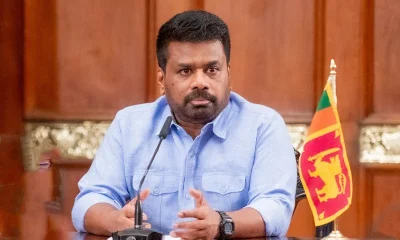
President Anura Kumara Dissanayake badly dented his good governance credentials on Tuesday by claiming in Parliament that the low-quality of coal imports had caused a drop in electricity generation at the Norochcholai power plant, but there had been no irregularities in the coal procurement process. He sought to fix the blame squarely on the coal supplier. He was obviously defending his friend, Jayakody, caught in a cleft stick. Interestingly, no sooner had he made that claim than the National Audit Office released its report on the coal procurement process revealing very serious irregularities therein. This official document has helped knock the bottom out of the government’s argument in defence of Minister Jayakody.
Keheliya Rambukwella and several Health Ministry panjandrums who served under him were arrested, remanded and prosecuted for their involvement in the procurement of substandard medicines which caused huge losses to the state coffers. So, why Minister Jayakody and his officials have not been dealt with in a similar manner over the coal scam defies comprehension. There is a prima facie case against them. The JVP-NPP government has made a mockery of its commitment to upholding the rule of law and accountability. The SLPP-UNP government ruined its chances of winning elections by defending Rambukwella and defeating a no-faith motion against him in 2023. The JVP-NPP administration is doing something similar.
The worst is yet to come where the adverse impact of the coal scam is concerned. Electricity tariffs will have to be increased again to recover the additional cost of burning diesel to produce more than 150 MW of electricity a day to make up for the Norochcholai generation shortfall caused by low-grade coal imports, independent experts have pointed out, warning of power cuts in a few months. The Opposition has stated that unofficial load shedding is already on. It has produced documentary proof in support of its claim.
More information about the Health Ministry procurement rackets came to light after the defeat of the no-faith motion against Rambukwella. Similarly, the magnitude of the coal procurement scam is yet to be determined. JVP/NPP politicians are known for their glib tongue, but they will not be able to pull the wool over the eyes of the resentful public battered by the soaring cost of living.
Two-thirds parliamentary majorities are apparently accursed in this country. Governments with such steamroller majorities indulge in corruption, succumb to the arrogance of power, which blinds them to reality, and dig their own political graves. They remind us of Lord Acton’s words of wisdom about the corruptive nature of power. One may recall that the SLFP-led United Front government, which abused its two-thirds majority, had a Humpty-Dumpty-style fall in 1977.
The Mahinda Rajapaksa government, which had a razor-thin majority, defeated the LTTE, developed the economy, implemented many development projects and lived up to the people’s expectation, but it failed pathetically after securing a second term and mustering a two-thirds majority in 2010. It became a metaphor for corruption, and suffered a catastrophic fall. The Gotabaya Rajapaksa government also became a victim of its two-thirds majority, so to speak. The JVP-NPP government is moving in the same direction, defending corrupt politicians and covering up crooked deals.
Ironically, many key Opposition figures who are flaying the JVP-NPP government for corruption and trying to engineer its ouster are themselves facing allegations of corruption. The people seem to have little option but to set thieves to catch thieves.

Sanju Samson and Jamie Overton deliver first points for Chennai Super Kings

Arya, Prabhsimran and Shreyas help Punjab Kings ace another 200-plus chase

Beauty of Sri Lanka in focus: Global showcase blends art, diplomacy and conservation

Showers expected in the Western, Sabaragamuwa, Central, Southern, North-western and Uva provinces and in Ampara, Batticaloa and Polonnaruwa districts after 1.00 p.m.

Heat index likely to increase up to ‘Caution level’ at some places in the Northern, North-central, North-western, Western, Sabaragamuwa, Southern and Eastern provinces and Monaragala district

Sun directly overhead Cheddikulam, Kebithigollewa, Gomarankadawala and Nilaveli about 12:11 noon. today [12]

‘Dates have the highest sugar content to fight Coronavirus’

Sunday Island 27 December – Headlines

#SundayIsland 17th December – Headlines

Sunday Island – 28th March

Sunday Island Headlines – 21 March

Sunday Island – 21st February – Headlines
-

 News5 days ago
Lankan-origin actress Subashini found dead in India
-

 News3 days ago
AG: Coal procurement full of irregularities
-

 Business2 days ago
Israeli attack on Lebanon triggers local stock market volatility
-

 Business3 days ago
Hayleys Mobility introduces Premium OMODA C9 PHEV
-

 Business2 days ago
HNB Assurance marks 25 years with strategic transformation to ‘HNB Life’
-

 Sports3 days ago
DS to face St. Anthony’s in ‘Bridges of Brotherhood’ cricket encounter
-

 News5 days ago
UN Regional Director launches SL’s first Country Gender Equality Profile during official visit
-
 News4 days ago
AKD admits import of substandard coal, blames technicalities and supplier