
News
Doctors oppose online sale of booze

The Sri Lanka Medical Association (SLMA) and the Government Medical Officers Association (GMOA) yesterday registered their opposition for a Finance Ministry decision to allow consumers to purchase liquor online through supermarket chains.
In a letter to Prime Minister Mahinda Rajapaksa, who is also the Minister of Finance, SLMA President, Dr. Padma Gunaratne and Prof. Narada Warnasuriya, Chairperson SLMA Expert Committee on Tobacco, Alcohol and Illicit Drugs, have said they are gravely concerned about the reported move to allow the online sales of alcohol.
“We assume that the Department is aware that the National Authority on Tobacco and Alcohol Act (NATA) No. 26 of 2006 expressly prohibits advertising alcohol in the internet. Internet sales will also circumvent the age, time and place restrictions mandated for alcohol sales in this country, through the Excise Ordinance and the NATA Act,” they said.
Given below are excerpts of the SLMA letter to the Prime Minister: “The Department of Exercise has put forth many unsubstantiated arguments to support this move; they were previously put forth by the alcohol industry against alcohol control measures in Sri Lanka.
“It causes grave concern that the Deputy Commissioner of Law Enforcement of the Excise Department has claimed that the production and sale of illicit alcohol had gone up within the last two weeks to an extent that warrants the government to bypass the laws of the country and allow the online sales of alcohol.
“Such spokespersons for the department should provide concrete evidence for such claims, including the volumes, locations and the harm caused by such illicit alcohol during the past two weeks. They should also provide evidence on the volumes and where the claimed hoarding and illegal sales (selling previously purchased alcohol at high prices) is taking place.
“We also wish to point out that the primary task of the Excise Department and its spokesperson is enforcing the laws related to alcohol in Sri Lanka, especially the laws on illicit alcohol. If they know the extents and the locations of production and the points of sale so precisely, they should be raiding such locations and prosecuting the perpetrators, rather than issuing press statements helpful to the alcohol industry, and at the same time implying the Department cannot enforce its own mandate.
“You would also agree sir, that the groups that use illegal alcohol is very different from the groups consuming legal alcohol. Very few people who consume legal alcohol will turn to illegal alcohol when there is a scarcity or a price increase.
“The Department of Excise also claims that large amounts of money is lost to the government as tax revenue during this period. This is only one side of the story. Studies in Sri Lanka has shown that the annual economic costs of alcohol far outweighs the tax income. Therefore, each day that alcohol is not sold in Sri Lanka will bring net economic benefits to the government and the people.
Therefore, we earnestly request the government not to provide permission for internet sales of alcohol which will make matters worse for all Sri Lankans already suffering from many hardships due to
Covid-19 pandemic. As it is well known that alcohol use is associated with poverty, violence against
women, injuries, suicides and many illnesses, providing easy access to alcohol will amplify these
problems at a time which is difficult for both the government and the people.”
Meanwhile GMOA President, Dr. Anuruddha Padeniya said that he would meet President Gotabaya Rajapaksa today and express the doctors’ opposition to the move, which could undo a lot of good that had been done over the last year, he said.



The Welfare Benefits Board has announced that the March allowance for senior citizens over 70 years of age will be credited to each beneficiaries account on Thursday (26th).
693,801 senior citizens over the age of 70 years are set to benifit under this welfare scheme

A looming power crisis is casting an ominous shadow over the country, with engineers warning that the current “no power cut” situation may not last beyond the Sinhala and Tamil New Year due to worsening diesel shortages and ongoing coal-related disruptions.
A senior electrical engineer, attached to the Ceylon Electricity Board Engineers Union, cautioned that while authorities appear to be managing the system for now, the underlying fuel constraints are reaching a critical point.
He told The Island: “At the moment, there are no scheduled power cuts across the country. But this is being maintained under significant strain. With the diesel shortage and unresolved coal issues, sustaining uninterrupted supply, beyond the New Year period, will be extremely challenging.”
The engineer noted that thermal power generation — particularly diesel-based plants — has become increasingly difficult to sustain due to limited fuel stocks and logistical bottlenecks. At the same time, the substandard quality coal supply issues that have plagued recent shipments continue to undermine the efficiency of base-load generation.
“We are stretching available resources to avoid immediate outages. owever, unless there is a rapid improvement in fuel availability, the system will be forced into load shedding soon after the New Year,” he warned.
According to him, authorities are likely to delay any scheduled outages until after the festive season to avoid public backlash and economic disruption during a traditionally sensitive period.
“Most probably, they will try to continue like this until the New Year. But after that, daytime or peak-time load shedding becomes almost inevitable if the situation remains unchanged,” he added.
Energy analysts say the warning reflects a deeper structural vulnerability within the power sector, where over-reliance on imported fossil fuels — particularly diesel and coal — continues to expose the system to external shocks and procurement failures.
The recent use of substandard coal has already resulted in reduced generation capacity at the country’s sole coal power plant at Norochcholai, compounding the pressure on thermal plants to bridge the shortfall. Engineers say this has forced operators to depend more heavily on costly diesel generation — an option now constrained by supply shortages.
Industry sources indicate that demand is also on the rise, particularly during night peak hours, possibly driven by increased reliance on electricity for cooking, amid gas shortages, further tightening the supply-demand balance.
Despite the absence of official announcements, insiders suggest contingency planning for load shedding is already underway.
“If the fuel situation does not improve within the next few weeks, controlled power cuts will be the only viable option to protect the grid from a total system failure,” the engineer stressed.
The warning comes at a time when the country is attempting to maintain economic stability following successive crises, with uninterrupted power supply considered critical for industry, commerce, and daily life.
However, unless urgent corrective measures are taken to secure reliable fuel supplies and stabilise generation capacity, the return of power cuts — including during daytime hours — appears increasingly unavoidable, an expert said.
By Ifham Nizam
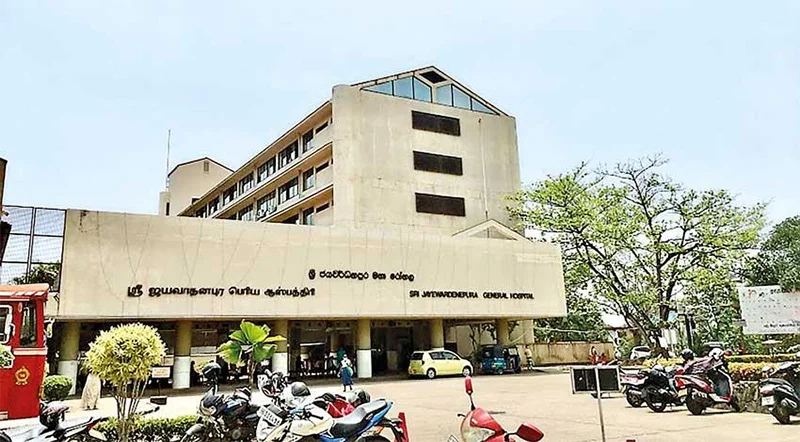
Japanese Ambassador to Colombo, Akio Isomata, on 24 March, handed over the newly established dental unit and 4D Angio CT suite at Sri Jayewardenepura General Hospital. Health Minister Dr. Nalinda Jayatissa and other senior officials from the Ministry of Health and the hospital attended the event.
Highlighting the strong partnership between Japan and Sri Lanka in the health sector, the Embassy issued the following press release yesterday: “This handover marks the second phase of the project, following the initial provision of ophthalmic equipment in December 2023. The current phase represents a significant milestone, featuring the introduction of a state-of-the-art CT Angiography system – the first of its kind in South Asia – as well as dental units. These contributions are expected to enhance Sri Lanka’s capacity to address non-communicable diseases (NCDs), including cancer, stroke, and diabetes, thereby saving lives, reducing long-term complications, and improving the quality of life of patients.
The CT Angiography system integrates CT scanning and angiography functions, enabling highly accurate and timely diagnosis and treatment. It is expected to further strengthen the hospital’s role as a key medical hub in Sri Lanka and the wider region.
In addition, the provision of 10 dental units will support the establishment and enhancement of dental services at the hospital. In Japan, oral health is considered closely linked to overall health and plays an important role in extending healthy life expectancy. This support is, therefore, also expected to contribute to the promotion of preventive healthcare in Sri Lanka.
The Sri Jayewardenepura General Hospital was constructed in 1984 with grant assistance from the Government of Japan. The well-known “1001-bed” story—originating from former President J.R. Jayewardene’s remark to add one more bed to the originally planned 1,000—remains a memorable episode reflecting the history of this cooperation.
Japan has consistently supported Sri Lanka’s health sector over the decades, including the development of medical facilities, strengthening of blood supply systems, and support during the COVID-19 pandemic through vaccine delivery assistance. Furthermore, during Sri Lanka’s recent economic crisis, Japan provided fuel essential for maintaining healthcare services, and in times of natural disasters, dispatched emergency medical teams to deliver urgent care. These efforts demonstrate Japan’s continued commitment to standing by Sri Lanka, especially in times of need. These efforts reflect Japan’s commitment to “investment in people” and “human security,” supporting a healthcare system in which all individuals can live healthy and dignified lives.
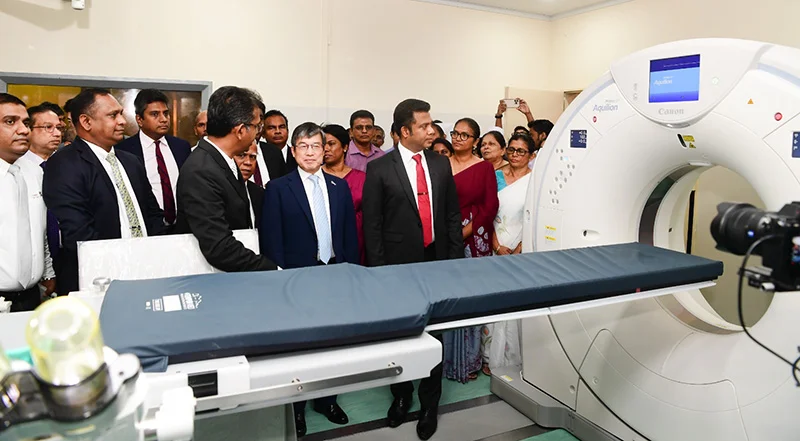
Japanese Ambassador Isomata with Minister Dr Jayatissa and officials (pic courtesy Japanese Embassy)
Ambassador Isomata remarked, “This support is not merely for the provision of equipment, but also for the consolidation of the foundation for safeguarding lives and livelihoods. Sri Jayewardenepura General Hospital, built with the support of Japan, stands as a symbol of the longstanding friendship between our two countries. We sincerely hope that this project will contribute to building a sustainable healthcare system that benefits future generations in the field of medicine and further strengthen our partnership.”
Minister Jayatissa highlighted,” This is not just a donation of machines. It is an investment in the lives and futures of our patients. By establishing this modern dental unit, we are addressing a critical need in the prevention and treatment of oral diseases for our population. I wish to express our deepest gratitude to the Government and people of Japan for this generous assistance. These are acts of true friendship, and the people of Sri Lanka will always remember them with gratitude.”
Japan will continue to work closely with Sri Lanka to further strengthen the healthcare sector and deepen the longstanding friendship between the two countries.”

Russia launches 948 drones at Ukraine in largest attack over 24-hour period

Oil at $150 will trigger global recession, says boss of financial giant BlackRock

Showers will occur at several places in the Western and Sabaragamuwa provinces and in Galle and Matara districts after 2.00 pm

Senior citizens above 70 years to receive March allowances on Thursday (26)

CEB Engineers warn public to be prepared for power cuts after New Year

Japanese boost to Sri J’pura Hospital, an outright gift from Tokyo during JRJ rule

‘Dates have the highest sugar content to fight Coronavirus’

Sunday Island 27 December – Headlines

#SundayIsland 17th December – Headlines

Sunday Island – 28th March

Sunday Island Headlines – 21 March

Sunday Island – 21st February – Headlines
-

 Features2 days ago
Trincomalee oil tank farm: An engineering marvel
-

 News6 days ago
Bailey Bridge inaugurated at Chilaw
-

 News5 days ago
CIABOC tells court Kapila gave Rs 60 mn to MR and Rs. 20 mn to Priyankara
-

 News6 days ago
Pay hike demand: CEB workers climb down from 40 % to 15–20%
-
 Features5 days ago
Science and diplomacy in a changing world
-

 News4 days ago
Colombo, Oslo steps up efforts to strengthen bilateral cooperation in key environmental priority areas
-

 Features2 days ago
The scientist who was finally heard
-

 News2 days ago
Substandard coal deepens energy crisis, warns former CEB Chief