
Business
Dilmah and Good Life X launch The Lost Ingredients Lab


Helping agri-related SMEs and entrepreneurs innovate and scale sustainably
Post-pandemic health, economic and social challenges have made everyone re-think the current way of doing business. With increasing risks for supply chains to be affected by disruptions, building resilience is taking on ever-greater importance today. Sustainability and technology have a key role to play here. In fact, moving into eco-friendly value chains has proven to deliver higher financial gains while creating positive societal impact.
Dilmah Tea has teamed up with Good Life X to launch the Lost Ingredients Lab: a platform for Sri Lankan organic and regenerative agriculture and food sectors to integrate their value chains through innovation and collaboration. The Lost Ingredients Lab is an initiative under the ‘Support to Small and Medium Enterprises in the Organic Agriculture Sector’ Programme of the Multi-Donor Action (MDA) jointly co-financed by the European Union (EU) and the German Federal Ministry for Economic Cooperation and Development (BMZ), implemented by Deutsche Gesellschaft für Internationale Zusammenarbeit (GIZ) GmbH. The programme is aimed at creating investment opportunities in the domestic agri-food sector, emphasizing the growing importance of digitalizing the domestic organic food sector, and supporting organic food producers in Sri Lanka to access new markets, particularly in the EU.
“In addition to bringing key native ingredients to international markets, the project will engage SMEs and entrepreneurs in the process of innovation and sustainable growth. Participants will undergo an eight-month programme, in which the first phase focuses on research and development and the second phase concentrates on product development. This initiative could not come at a better time as Sri Lankan businesses face the need to adapt amidst unprecedented economic hardship,” a Dilmah ews release said.
“The key local ingredients have high nutritional value, health benefits, and unique properties of particular interest for international markets. SMEs and entrepreneurs who work directly and indirectly with these ingredients will have the opportunity to explore new markets and technologies and disrupt existing business models.
“Dilmah believes Sustainable Development Goal (SDG) 17: Partnership for the Goals is key to achieving the other 16 SDGS and drives conservation and restoration through its environmental sustainability arm: Dilmah Conservation. Dilmah has found Good Life X to be a like-minded technical partner for the Lost Ingredients Lab. An innovation and development catalyst, GLX provides critical knowledge and expertise to rapidly advance the prospects of South Asian startups, SMEs, and investors focusing on regeneration and innovation through their solutions.”
Follow @DilmahConservation and @GoodLifeX on Facebook, and Instagram for future updates.

Business
India’s youth demand a new economic deal as protest movement victory shakes political establishment

By Sanath Nanayakkare ✍️
For years, India has been held up across South Asia as one of the world’s fastest-growing major economies and as a manufacturing powerhouse attracting billions of dollars in foreign investment while emerging as a global technology hub. In Sri Lanka too, India’s economic success has often been cited as a model of sustained growth.
Yet a youth protest movement that last week forced the resignation of India’s Education Minister has exposed a less visible reality: impressive economic growth does not necessarily guarantee opportunity, fairness or confidence among a country’s younger generation.
What began as public outrage over repeated examination paper leaks quickly evolved into one of India’s largest youth mobilisations in years. The youth-led “Cockroach Janta Party” (CJP), born on social media, expanded into a nationwide movement demanding sweeping reforms to India’s examination system and greater government accountability.
Political analysts say the movement differs fundamentally from earlier protests over citizenship laws, agricultural reforms or ideological issues. Rather than opposing a specific government policy, the protesters questioned whether the Indian state could still guarantee meritocracy and the principle that hard work and ability, rather than privilege or corruption, determine success.
That distinction gives the movement significance far beyond education. For millions of young Indians, highly competitive examinations represent the primary gateway to government employment, professional careers and upward social mobility. When repeated paper leaks undermined confidence in those examinations, many students concluded that the promise of equal opportunity itself was being eroded.
The protests therefore became less about examination irregularities than about the credibility of public institutions and the state’s ability to deliver fair economic opportunity.
In many ways, the movement has revealed a growing disconnect between India’s impressive macroeconomic achievements and the everyday experiences of many young people.
Although India continues to post strong economic growth, attract record foreign investment and strengthen its position in global manufacturing and technology, those achievements have not generated enough quality jobs for the millions entering the labour market each year.
As a result, competition for government employment has become exceptionally intense because such jobs offer stable incomes, social prestige and long-term security. When recruitment examinations are compromised, years of preparation and personal sacrifice can be rendered meaningless almost overnight.
According to analysts, this broader economic frustration explains why the protests spread rapidly across India, attracting support not only from students but also from parents, professionals and ordinary citizens who increasingly view the issue as one of governance rather than politics.
Some political observers argue that India’s youth are, in effect, demanding a new political and economic architecture ; one that places institutional integrity, equal opportunity and effective delivery of public services at the centre of governance.
Responding to mounting public pressure, Prime Minister Narendra Modi pledged swift legal action against those responsible for examination fraud and announced fast-track courts to prosecute offenders. The resignation of Education Minister Dharmendra Pradhan marked one of the most significant concessions made by the government in response to public protests in recent years.
Whether those measures will restore public confidence remains uncertain. Political scientists opine that many protest movements lose momentum after achieving their immediate objectives. Others believe the Cockroach movement signals something more enduring because it reflects broader concerns over employment prospects, institutional trust and economic opportunity.
With hundreds of millions of citizens under the age of 35, India’s youth remain one of the country’s most important economic and political constituencies. Increasingly, they appear to be demanding more than rapid GDP growth. They are asking for an economy where opportunity is genuinely based on merit and where public institutions can be trusted to deliver on that promise.
For observers in Sri Lanka and elsewhere in South Asia, the movement offers a timely reminder that headline economic growth, while essential, is not by itself sufficient. Unless growth creates credible opportunities, strengthens institutions and sustains public confidence, even the world’s strongest economic success stories can face growing demands for a new economic deal.
When The Island Financial Review sought a public policy analyst’s perspective on the implications for Sri Lanka, he said: “This is an eye-opener for Sri Lanka. Economic recovery and GDP growth alone are not enough. Strong institutions and credible pathways to opportunity are equally essential if growth is to inspire public confidence, particularly among young people.”
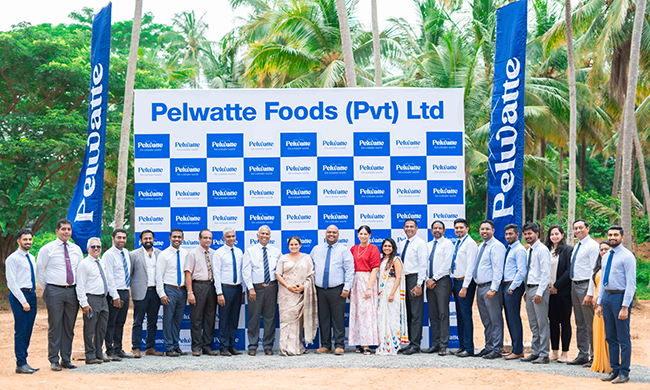
Pelwatte Dairy Industries has officially broken ground on its Greenfield Liquid Milk Manufacturing Facility in Kurunegala, at a ceremony held to mark the commencement of construction, marking a major expansion of its dairy operations. Set to open in July 2027, the facility represents Pelwatte’s transition from its longstanding leadership in full cream milk powder into liquid dairy products, strengthening access to fresh, locally manufactured dairy products for Sri Lankan consumers.
With the project moving from planning to execution, the ground-breaking marks a key milestone in bringing the facility closer to reality. Once operational, the plant will produce a variety of fresh liquid milk products, including plain milk and flavoured varieties like chocolate, vanilla, strawberry, and iced coffee, expanding Pelwatte’s product line to accommodate evolving consumer preferences.
Commenting on the milestone, Managing Director Akmal Wickramanayake said, “Breaking ground is more than just the beginning of construction; it’s the moment when our dedication becomes real. Families have trusted Pelwatte for high-quality dairy nutrition through our milk powder products for decades. By bringing world-class liquid milk production to Sri Lanka and producing products that promote healthier families while strengthening the country’s dairy industry, this facility enables us to build on that legacy. When the facility begins operations in 2027, we look forward to welcoming consumers to a new chapter of Pelwatte.”
Chairman Ariyaseela Wickremanayake added, “Pelwatte has always believed that strengthening local industries is an investment in Sri Lanka’s future. Our long-term goals of developing the country’s dairy industry, creating lasting value for local communities and farmers, and guaranteeing that future generations have access to nutritious, locally produced dairy products are all reflected in this project.”
The investment comes at a time when nutrition continues to be a national priority, particularly in supporting the health and development of mothers and children. By expanding local manufacturing capacity, Pelwatte aims to strengthen Sri Lanka’s dairy supply chain and increase access to fresh milk products for households across the country.

The Commercial Bank of Ceylon claimed six awards at the 2026 Asian Banking & Finance (ABF) Awards in Singapore—the highest tally for any Sri Lankan bank—spanning Retail, Wholesale, and Corporate & Investment Banking. The wins reflect the Bank’s strength in financial performance, technology-led innovation, sustainability, and complex solutions.
In Retail Banking, Commercial Bank was named ‘Private Bank of the Year’ and ‘SME Bank of the Year,’ recognising its sector-leading performance and sustained support for Sri Lanka’s SME sector. In 2025, it became the first private bank to grow its loan book beyond Rs. 2 trillion, recording Rs. 541 billion growth in 12 months. It has also been the largest SME lender for five consecutive years, per the Ministry of Finance.
In Wholesale Banking, the Bank won ‘Sri Lanka Domestic AI Initiative of the Year’ for its AI-powered SME Credit Underwriting Solution, and ‘Green Financing Bank of the Year’ for advancing sustainable lending.
In Corporate & Investment Banking, it received ‘Corporate Client Initiative of the Year’ for its TradeLink platform and ‘Debt Deal of the Year’ for its landmark Rs. 15 billion Green Bond issued in 2025.
Managing Director/CEO Sanath Manatunge said the breadth of recognition—from private banking and AI to green finance and corporate transactions—affirms the Bank’s balanced strategy and collective team effort, reinforcing its role in shaping Sri Lanka’s banking future.

Sooryavanshi the star as India complete 3-0 sweep

US and Iran hit pause on strikes for second day

Showers will occur in the Western, Sabaragamuwa and North-western provinces and in Galle, Matara, Kandy and Nuwara-Eliya districts

Chamika, Colambage help Galle Gallants consolidate top spot

BASL challenges NPP MP to repeat false claims outside Parliament

Judges’ retirement age row: Govt.-BASL powwow on the cards

‘Dates have the highest sugar content to fight Coronavirus’

Sunday Island 27 December – Headlines

#SundayIsland 17th December – Headlines

Sunday Island – 28th March

Sunday Island Headlines – 21 March

Sunday Island – 21st February – Headlines
-

 Features1 day ago
MBS: The Man of the Last Laugh
-
 Features1 day ago
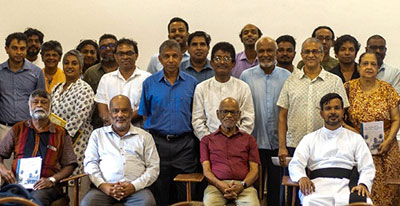
A Landmark Gathering of Minds: The Ceylon Journal Roundtable Revives the Spirit of Intellectual Dialogue
-

 Midweek Review5 days ago
Three high-profile alleged suicides shaping key investigations
-

 Latest News2 days ago
Develop a programme to allocate underutilised state land for investment by returning migrant workers – President
-

 Life style1 day ago
A proud Sri Lankan voice in Australian Parliament
-

 News2 days ago
Fort Magistrate orders arrest of MP Archchuna
-

 Editorial1 day ago
‘Cockroaches’ tame a mighty regime
-

 Editorial2 days ago
An indictment of all parties