
Business
DigitALL: Are Sri Lankan Women Abandoned in Digital Transformation?

By Lakshila Wanigasinghe
Written for International Women’s Day on 08 March 2023.
Technology plays an important role in modern society. It connects, innovates, and transforms economies and societies at large. Yet, women and girls continue to have limited access to technology. This gender bias is also present in Sri Lanka, where women comprise of over 50% of the population.
This year, the United Nations marks International Women’s Day with the theme “DigitALL: Innovation and technology for gender equality”, focusing on the digital gender gap’s impact on widening socio-economic inequalities. This blog explores the factors hindering Sri Lankan women’s access to technology and discusses some ways to overcome them.
Digital Gender Divide
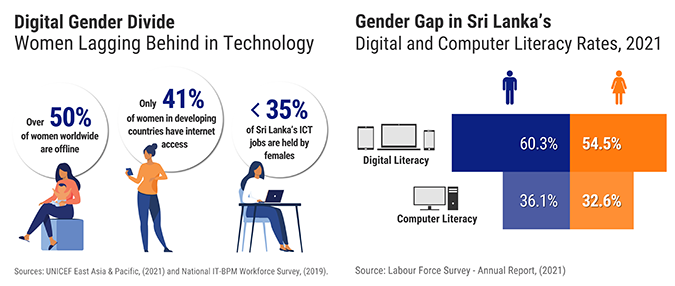
The term digital gender divide refers to the gap in digital adoption and use across genders. Findings suggest that more than half of all women worldwide are offline. The gender gap in digital access is wider across developing countries, where the internet penetration rate is 53% and 41% for adult men and women respectively.
COVID-19 emphasised the importance of technology as many government services, education, business, and financial services were performed online during this time. It also confirmed that many groups not only lack access to the digital economy but also resources, technology, and knowledge. In Sri Lanka, only one out of five households owned a desktop or laptop computer in 2021. Less than half of the population used the internet, and email users were even fewer. While Sri Lanka reported a digital literacy rate of 57.2% in 2021, the computer literacy rate was only 34.3%, with females falling behind in both aspects (Figure 1).
Although Sri Lanka’s higher rate of digital literacy comes across as a positive indicator, it is important to note that the measure for digital literacy is an individual’s ability to ‘use a computer, laptop, tablet or smartphone on his/her own.’ However, this measure may not fully reflect true digital literacy as it can also include those who only use smartphones for voice calls. Even against this measure, it is evident that women are underrepresented.
The digital gender divide adversely impacts women’s access to education, health, and financial inclusion. Women and girls face various obstacles, including the limited availability, knowledge, and socio-cultural barriers, which prevent them from fully utilising digital resources. Another deterrent is the high costs associated with digital devices and internet services, especially for rural households. Sri Lanka’s rural and estate sectors lag in digital and computer literacy in comparison to the urban sector. This is likely to have a more significant impact on girls and women in these regions. Further, digital safety concerns relating to cybercrimes, online harassment, greater potential for hate speech, and the overall lack of accountability for such actions discourage some women from using technology entirely.
Closing the Gap
Enhancing Employability Prospects – In today’s growing digital era, the absence of digital literacy and usage will reduce women’s employability prospects further widening gender inequalities. Hence addressing it is crucial to narrowing economic and social inequalities. As the job market shifts towards highly skilled positions, women must adapt and prepare to remain competitive. It can be expected that these jobs will increase more formal employment opportunities and secure forms of income generation. Currently, only 34% of ICT jobs in Sri Lanka are held by females. Increasing female representation the sector will also contribute towards having more role models for girls interested in pursuing similar fields in the future. Thus, shattering the glass ceiling requires immediate action to close the digital gender divide in the long run.
Gender Equality at Work – To address the existing gender bias, policymakers and organisations must work together to establish ‘female-friendly’ policies and programmes. Making women feel welcome and empowered is a good starting point. While addressing gender stereotypes is important, they also need to be coupled with other facilities such as safe transport and flexible work schedules to encourage more women to apply for positions in male dominated fields. This would not only increase the number of women in the field but also help women receive family support to pursue careers in technology.
Empowering Rural Women – It is necessary to provide equal opportunities for women in tech and allow them to grow so that their success can inspire other women to follow suit. This also includes bridging the urban-rural divide in technology access. Hence introducing rural women to digital technology, formal banking and digital financial solutions is important. This could also include specialised training and loan schemes for females interested in entering the technology field. Improving women’s access opens up opportunities for secure financing and a path out of poverty -by engaging in various businesses, especially at a time when e-commerce is popular. These positive economic outcomes can be a game changer for rural female-headed households and Sri Lanka as a whole. Moreover, they can provide small businesses access to international markets if done correctly.
Skill Improvements – Survey findings link higher educational attainment and knowledge in English to greater computer literacy in Sri Lanka. Thus, promoting higher education and English literacy among girls from a young age will prove mutually beneficial in improving computer literacy rates. While ICT is included in the current school curriculum, what is taught at the mandatory level is inadequate. Therefore, it is essential that policymakers update the subject matter to meet the growing digital demand. In line with this, disparities in resource allocations at the school level must also be addressed (such as inadequate availability of computers in smaller schools, absence of computer labs etc.). Encouraging girls to pursue Science, Technology, Engineering and Mathematics (STEM) is critical because ‘there won’t be any women in tech without girls in STEM.’
Given Sri Lanka’s current economic standing, it is also important to consider resource allocations. This is especially concerning allocating funds towards distributing computers to less-developed schools, organising training programs for rural women etc. While these are essential measures in bridging the digital gender gap, implementing any initiatives in stages is best. This will provide a better mechanism to monitor the impact of actions on closing the gap and help adjust course as necessary, without unnecessary waste of scarce resources.
Link to original blog:
https://www.ips.lk/talkingeconomics/2023/03/08/digitall-are-sri-lankan-women-abandoned-in-digital-transformation/
Lakshila Wanigasinghe is a Research Officer at the IPS with research interests in poverty, social welfare, development, education, and health. She holds an MSc in Economics with a concentration in Development Economics and a BA in Economics with concentrations in International, Financial and Law and Economics from Southern Illinois University Carbondale (SIUC), US. (lakshila@ips.lk)


The Asian Development Bank (ADB) has approved a $100 million results-based loan to help Sri Lanka transform its technical and vocational education and training (TVET) system, equip more young people with industry-relevant skills, and strengthen the country’s competitiveness and inclusive growth.
The Skills Development System Transformation Program will support the Government of Sri Lanka’s efforts in improving the quality and relevance of skills training, strengthening links between training providers and industries, and expanding employment opportunities for youth. The program will increase women’s employment opportunities in nontraditional jobs in fields including automotive technology, engineering, information and communications technology, construction, and renewable energy.
“A skilled workforce is essential to Sri Lanka’s long-term economic transformation and competitiveness,” said ADB Country Director for Sri Lanka Shannon Cowlin. “This program will help create stronger pathways from education to employment by making training more responsive to industry needs, expanding opportunities for young people and women, and ensuring that graduates have the skills required by a modern and evolving economy.”
Though Sri Lanka’s economy is recovering, it faces skills shortages in priority sectors, high youth unemployment, and low female labor force participation. Many employers report difficulty finding workers with the skills needed in a changing economy.
Aligned with the Government of Sri Lanka’s Technical and Vocational Education and Training Sector Strategic Framework 2026–2035, the nationwide program will be implemented from 2027 to 2031 and is expected to directly benefit more than 100,000 young people through improved access to quality, employment-oriented training.
By Ifham Nizam
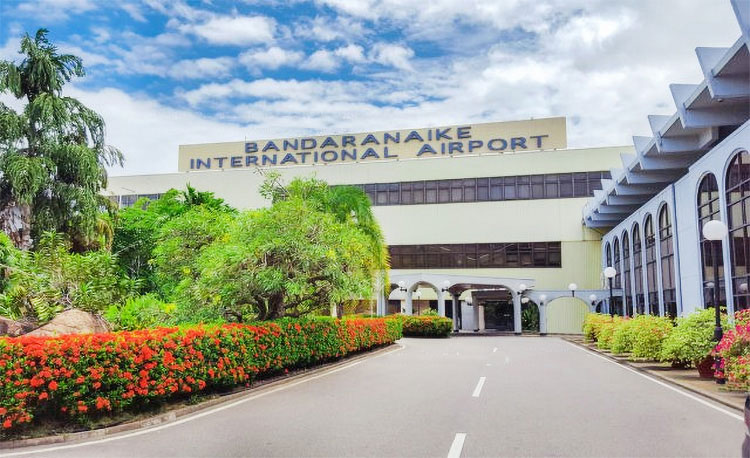
The government has cleared a USD 40.84 million and Rs. 8,548.75 million contract to build a dedicated aviation fuel pipeline from Muthurajawela to Bandaranaike International Airport (BIA), alongside a massive new fuel storage facility with a capacity of 92,000 cubic metres.
Energy Minister Anura Karunatilaka said the project represented a major investment in strengthening the infrastructure underpinning Sri Lanka’s aviation fuel supply and ensuring more reliable fuel availability at the country’s main international airport.
‘This project will provide the infrastructure required to strengthen the reliability and continuity of aviation fuel supplies to Bandaranaike International Airport, Karunatilaka said.
The contract has been awarded to China Petroleum Pipeline Engineering Company Limited, following an international competitive procurement process in which three bids were received.
The project will see a new aviation fuel storage tank complex constructed at Muthurajawela, together with the associated infrastructure required for handling and transferring aviation fuel.

By Hiran H Senewiratne
Trading activity on the Colombo Stock Exchange (CSE) gathered pace yesterday as global fuel prices began to show signs of easing, according to market analysts.In this context, both indices moved upwards. All Share Price Index up by 67.97 points while S and P SL20 up by 8.30 points.
Turnover stood at Rs 1.4 billion with seven crossings. Those crossings were reported in Sampath Bank 1.7 million shares crossed to the tune of Rs 238 million and its share price traded at Rs 140, Access Engineering two million shares crossed to the tune of Rs 159 million and its share price traded at Rs 79.50, LOLC one million shares crossed to the tune of Rs 129 million and its share price traded at Rs 129, HNB 100,000 shares crossed to the tune of Rs 38.4 million and its share price traded at Rs 384, JKH 1.9 million shares crossed to the tune of Rs 35 million and its share price traded at Rs 18.60, Hayleys 100,000 shares crossed to the tune of Rs 22.50 million and its share price traded at Rs 225 and Richard Pieris 847,000 shares crossed to the tune of Rs 22 million and its share price traded at Rs 25.50.
In the retail market top seven companies that have mainly contributed to the turnover were Sampath Bank Rs 114 million (813,000 shares traded), JKH Rs 100 million (5.3 million shares traded) LB Finance Rs 49 million (325,000 shares traded), HNB Finance Rs 30 million (27 million shares traded), HNB Rs 27 million (70000 shares traded), NTB Rs 25 million (82000 shares traded ) and Lanka IOC Rs 21 million (666,000 shares traded). During the day 65 million shares volumes changed hands in 10433 transactions.
The Banking and manufacturing sector counters performed well. In the banking sector Sampath Bank let the market while manufacturing sector especially JKH also significantly performed well. With the fuel revision Land IOC also a significant stock at the floor.
Meanwhile, First Capital Treasuries said that Ramesh Schaffter resigned as a Non-Independent Non-Executive Director with effect from October 1, to facilitate the restructuring of the company’s board.
Yesterday the Central Bank announced the US Dollar rate as against rupee. The rupee was quoted flat at Rs 330.65/80 to the US dollar in the spot market , while bond yields dropped, dealers said.

ADB approves $100 million loan to boost skills development and jobs for youth in Sri Lanka

‘Career of Evil’

Homer’s Odyssey

Ex-minister Johnston alleges some officials fabricating evidence against political opponents

Ananda Ganegoda: Pioneer in popularising Sinhala music

ICC introduces pink-ball daytime Test trial, new time-wasting penalties

‘Dates have the highest sugar content to fight Coronavirus’

Sunday Island 27 December – Headlines

#SundayIsland 17th December – Headlines

Sunday Island – 28th March

Sunday Island Headlines – 21 March

Sunday Island – 21st February – Headlines
-

 Editorial6 days ago
Birth of a bad law
-

 News4 days ago
Police remove Thileepan statue in Jaffna
-

 Features7 days ago
Beyond traditional jobs: Why Sri Lanka needs to facilitate the gig economy
-

 News6 days ago
TIN mandatory for key transactions from Nov. 1
-

 Features4 days ago
The 22nd Amendment, constitutional recovery and illiberal slippage
-

 Features4 days ago
Of foreigners as CEOs of Lankan ventures
-

 News4 days ago
Sajith rejects Jt. Opp. protest sabotage claim; SJB TU chief demands remedial action
-

 Features3 days ago
Thailand’s biggest new global star …