
News
Deterioration of public security: Sajith, Ranil, Namal in joint appeal to international organisations

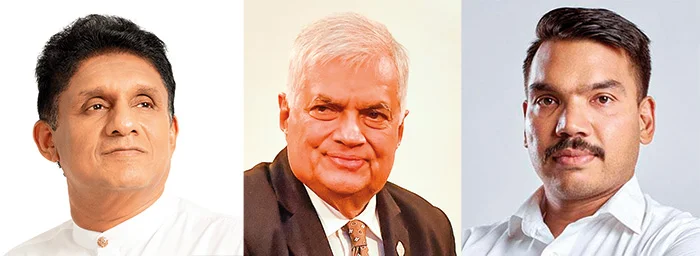
The Opposition, in an unprecedented joint letter addressed to several international organisations, has raised the deterioration of public security under the NPP government.
Opposition and SJB leader Sajith Premadasa, former President and UNP leader Ranil Wickremesinghe and SLPP parliamentary group leader Namal Rajapaksa are among the signatories to the letter addressed to the International Bar Association, Commonwealth Lawyers Association, International Commission of Jurists, International Association of Young Lawyers, International Association of Democratic Lawyers, Amnesty International, Human Rights Watch, International Federation for Human Rights, the World Organisation against Torture, Frontline Defenders, Office of the High Commissioner for Human Rights, United Nations Special Rapporteur on Human Rights Defenders.
The text of the letter: “We wish to draw your attention to a series of alarming events which have been taking place in our country in the recent past. There is now a recurring pattern of shootings and killings, with the use of sophisticated firearms, with more than 60 lives lost last year and 9 in the New Year up to now.
“An incident which occurred in broad daylight on 13 February 2026, in the immediate vicinity of a high-security zone, claimed the lives of attorney-at-law Buddhika Mallawarachchi and his wife.
“This incident has sent shockwaves through the ranks of the legal profession in our country. The Bar Association of Sri Lanka, resorting to an extraordinary course of action after an interval of 14 years, convened a meeting of the entire membership of the Association, comprising more than 3,500 attorneys-at-law, and unanimously resolved at that meeting that all members of the profession should refrain from engaging in their professional work throughout the country on Monday, 16 February. The result of this decision was that all courts, from the Supreme Court to Magistrate’s Courts in all parts of the country, were closed on that day, and thousands of cases scheduled for hearing had to be postponed.
“Within an hour of this killing, there were statements attributed to the police that the victim of the murder had appeared professionally for a criminal well known for drug trafficking, and that the motive for the killing arose from criminal activity on the part of his clients. In the absence of any investigation at that point, there is no doubt that this was a reckless and irresponsible intervention, calculated to distort the issue, and to diminish in the public mind the gravity of this despicable atrocity.
“For a country which has been justifiably proud of the stature and integrity of institutions responsible for the administration of justice, it is singularly disheartening that there is now, to a significant extent, erosion of an environment conducive to the proper functioning of the courts system. Prevailing conditions no longer allow Bench and Bar to fulfil their duties with robust independence, bereft of fear and favour.
“This poses a basic challenge to the right of any accused person, enshrined in the Constitution of the country, to be represented by Counsel.
“There is clear evidence of pressure brought to bear on the Attorney-General, which has the effect of politicising exercise of the prosecutorial function, with consequent detriment to perceived fairness of the criminal justice process. Due process, natural justice and established traditions are being cynically violated by vicious political attacks which have taken the place of legal submissions in Courts of Law.
“Rising public discontent across the spectrum is sought to be suppressed by the provisions of a proposed anti-terrorism law which, in its present form, strikes at the very root of cherished democratic institutions and values in the country, and demonstrably infringes core obligations undertaken by Sri Lanka in international instruments, including the International Covenant on Civil and Political Rights. Directly targeted are media institutions with obvious vulnerability for owners, editors, executive staff, and media personnel at all levels.
“The extreme politicization of the police force, under the leadership of an Inspector-General who has jettisoned even the appearance of detachment and objectivity, militates seriously against professionalism and impartiality in respect of criminal investigations, including the inquiry into the recent killing of a member of the legal profession.
“The Government is clearly in breach of its duty to take administrative and, if necessary, legislative measures to give effect to Article 9(4) of the Luxembourg Convention, adopted by the Council of Europe, for the protection of lawyers. The Commonwealth Association on 9 July 2016 emphatically endorsed the Convention by the assertion that “If the lawyer is not protected, then no one is protected”.
“These salient features of a vibrant democracy are today under sustained and formidable challenge in our country.
“The Minister of Public Security and Parliamentary Affairs, Ananda Wijepala, has failed dismally in his duty to secure the safety of citizens and to forestall the increasingly manifest deterioration of law and order in Sri Lanka.
“We would like to alert international professional bodies with regard to the grave threats to the life and safety of professionals in our country, and urge them to make suitable interventions to help us preserve a culture which we have held sacrosanct over the decades.”
Other signatories are Prof. G. L. Peiris, Patali Champika Ranawaka, Mano Ganesan, Dilith Jayaweera, Jeewan Thondaman, Premanath Dolawatte, Sugeeswara Bandara, Prasanna Ranatunga, Anuradha Jayaratne, Ravi Karunanayaka, Anura Priyadarshana Yapa, Asanka Nawaratne and Senal Welgama.




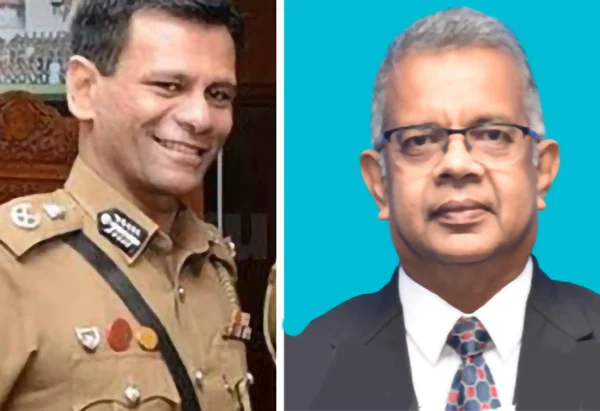
Senior DIG among those slated for transfer
By Shamindra Ferdinando
The National Police Commission (NPC) is expected to take up Police Headquarters recommendation to transfer a group of police officers responsible for a major ‘Ice’ bust at the Colombo port recently.
NPC sources told The Island that recommendation in respect of transfers was received last week. Sources said that though the NPC was scheduled to meet today (01), whether IGP Priyantha Weerasooriya’s recommendation would be discussed and decided today was not known.
Members of the NPC are retired High Court Judge Lalith Ekanayake (Chairman), K. Karunaharan, Dilshan Kapila Jayasuriya, A.A.M. Illiyas and Jayantha Jayasinghe
The IGP directed the Special Investigation Unit (SIU) to probe those who carried out the 31 August, 2026 raid that resulted in the detection of 463 kgs of ‘Ice’ concealed in a container that arrived from Pakistan.
The US Embassy declined to comment on the probe though it declared that the largest ever narcotics detection was made on intelligence made available by the US Drug Enforcement Administration (DEA).
The officers investigated for what an authoritative Headquarters source called shortcomings and lapses on the part of the raiding party, belonged to the Central Crime Investigation Bureau (CCIB). Senior DIG Ranmal Kodituwakku who, on behalf of the CCIB, received information directly from the DEA, is among those Police Headquarters wanted to transfer.
CCIB carried out the raid after having obtained a search order from the Aluthgama Magistrate court. Among the suspects taken in this connection are three Pakistani nationals.

* First Reading of the Budget on 7 October
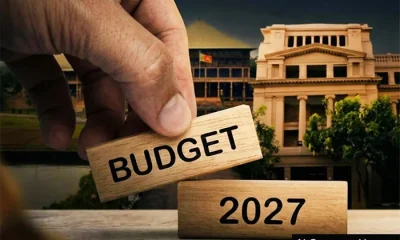
The Committee on Parliamentary Business has decided that the Second Reading of the Appropriation Bill for the year 2027 (Budget Speech/presentation of Budget proposals) will take place on 12 November, followed by the Second Reading debate from 13 November to 14 December.
Secretary General of Parliament Kushani Rohanadeera said this had been decided at a meeting of the Committee on Parliamentary Business held recently under the chairmanship of Speaker Dr. Jagath Wickramaratne.
Accordingly, the Appropriation Bill was scheduled to be presented to Parliament for its First Reading on 7 October, the Secretary General said.
It was also decided that the Second Reading of the Appropriation Bill (Budget Speech) would be delivered by President Anura Kumara Dissanayake, in his capacity as the Minister in charge of Finance, on Thursday, 12 November, 2026.
Thereafter, the Second Reading debate will be held for seven days, from 13 November to 20 November. Accordingly, the vote on the Second Reading will be held at 6.00 pm on 20 November.
Thereafter, the Committee Stage debate will be held for 19 days, from 21 November to 14 December , with the vote on the Third Reading of the Budget scheduled for 6.00 pm on 14 December.
During this period, the Budget debate will be held every day, including Saturdays, except on public holidays and Sundays. Parliament is scheduled to meet at 9.30 am on each of these days.
From 9.30 am to 10.00 am each day, time will be allocated for the Parliamentary business specified under Standing Order 22(1) to (6). Thereafter, five Questions for Oral Answers will be taken up from 10.00 am to 10.30 am, followed by one question under Standing Order 27(2) from 10.30 am to 11.00 am.
Accordingly, the debate is scheduled to be held from 11.00 am to 6.00 pm on all days, except the two days on which votes are scheduled to be taken, Motions at the Adjournment Time will be taken up for debate from 6.00 pm to 6.30 pm, based on a 50:50 time allocation between the Government and the Opposition, the Secretary General stated.
It was also approved that during the Second Reading debate, 60% of the debate time will be allocated to the Government and 40% to the Opposition, while during the Committee Stage debate, 40% will be allocated to the Government and 60% to the Opposition.
Furthermore, if a division is called for on an Expenditure Head, relating to a Ministry, the relevant vote will be held at 6.00 pm at the conclusion of the proceedings on the respective day.
News
CB Governor confident over timely disbursement of next IMF tranche; hands post-2027 programme decisions to govt.

By Sanath Nanayakkare
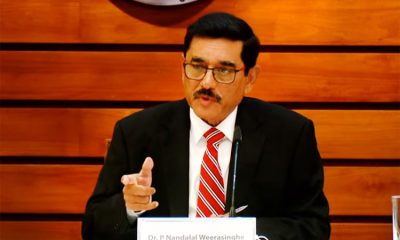
Central Bank Governor Dr. Nandalal Weerasinghe addressed queries on the nation’s IMF bailout programme yesterday and indicated that Sri Lanka expects to reach a Staff-Level Agreement with the Fund shortly, clearing the path for the next tranche of funding under the $3 billion EFF arrangement before the end of the year.
Answering questions on Sri Lanka’s economic path, after the current programme expires in March 2027, Dr. Weerasinghe clarified that seeking a follow-up IMF arrangement was entirely a policy decision for the government rather than the Central Bank, maintaining the institutional boundary between Central Bank operations and political decision-making.
The Governor remained firm in his projection that the national economy would expand by around 4 percent throughout 2026, demonstrating economic resilience, even amid external volatilities, such as high oil prices.
Dr. Weerasinghe expressed confidence in the domestic economy’s underlying momentum. While international financial institutions and multilateral agencies had pegged Sri Lanka’s growth prospects at more conservative levels, typically around 3.0 to 3.5 percent, he emphasised that CBSL’s projections are grounded in continuous analysis of real-time indicators.
“When you compare with several other agencies, their growth projections hover around 3 to 3.5 percent. However, the economy is already growing at around 4 percent. In our projections, the economy will maintain this growth rate of around 4 percent throughout the year,” Governor Weerasinghe said.
He noted that despite mid-year quarter adjustments due to volatile oil prices, real economic indicators, including steady credit expansion across the commercial banking sector and sustained industrial and service activity, indicate that the growth trajectory remains firmly on track above the 4 percent benchmark.
Reiterating the Central Bank’s primary mandate, Dr. Weerasinghe noted that monetary policy actions remained focused on anchoring inflation and curtailing excess demand to prevent runaway price spikes.
On inflation targeting, the Governor mentioned that CBSL had submitted a technical recommendation to the Ministry of Finance to maintain an inflation target of 5 percent (+ or – 2 percent band) over the next three-year horizon.
Responding to inquiries on differing target forecasts announced by external agencies such as the IMF, Dr. Weerasinghe underscored that the Central Bank’s recommendations stem strictly from domestic technical and empirical evaluations.
“Our recommendation is based on pure technical and empirical analysis considering the country’s specific situation. We have recommended maintaining a 5 percent target for the next three years, and the government has accepted this recommendation,” he added.
Regarding foreign exchange management, the Governor noted that the Central Bank continues its active market intervention strategy aimed at smoothing out undue exchange rate volatility rather than resisting natural market trends.
Dr. Weerasinghe concluded that while the short-to-medium-term outlook remained assured, the combination of a steady 4 percent growth target and proactive fiscal measures would firmly anchor macroeconomic stability through 2026 and beyond.

Trump hints US could strike Iran, warns time coming

Showers or thundershowers will occur at most part of the island after 1.00 p.m.

US-assisted ‘Ice’ detection: NPC to examine IGP’s move to transfer drug-busting team

2027 Budget to be held from 12 Nov. to 14 Dec.

CB Governor confident over timely disbursement of next IMF tranche; hands post-2027 programme decisions to govt.

Cabinet spokesman explains why Thileepan statue was removed

‘Dates have the highest sugar content to fight Coronavirus’

Sunday Island 27 December – Headlines

#SundayIsland 17th December – Headlines

Sunday Island – 28th March

Sunday Island Headlines – 21 March

Sunday Island – 21st February – Headlines
-

 Editorial5 days ago
Birth of a bad law
-

 Features6 days ago
Beyond traditional jobs: Why Sri Lanka needs to facilitate the gig economy
-

 News3 days ago
Police remove Thileepan statue in Jaffna
-
 Latest News6 days ago
Kusal, Wellalage star as Sri Lanka defend 322 in Headingley thriller
-

 News5 days ago
TIN mandatory for key transactions from Nov. 1
-

 Features3 days ago
The 22nd Amendment, constitutional recovery and illiberal slippage
-

 Features3 days ago
Of foreigners as CEOs of Lankan ventures
-

 News3 days ago
Sajith rejects Jt. Opp. protest sabotage claim; SJB TU chief demands remedial action