
Features
Deterioration of police and culpability of political party system


In terms of Section 17 of the Removal of Officers (Procedure) Act, No. 5 of 2002, a Resolution presented for the removal of T.M.W. Deshabandu Tennakoon from the post of The Inspector-General of Police was passed by a majority vote in Parliament on August 5, 2025, understandably with the governing party NPP having a steamroller majority in it.
Altogether 177 lawmakers voted for the resolution, whereas one MP (Ramanathan Archchuna) abstained from voting. Forty-seven MPs refrained from taking a stand.
The failure on the part of 47 MPs to take a stand on such a vital issue must be a matter of grave concern and reflects the fact that their consciences did not permit them to take such a decision to go with their party’s decision. Most of them represented the main Opposition Samagi Jana Balawegaya (SJB). The SJB leadership should inquire into the circumstances its elected and appointed MPs refrained from voting for the politically charged resolution. It would be pertinent to mention that the ruling National People’s Power (NPP) moved the resolution with the backing of the SJB. Therefore, the absence of so many SJB MPs at the time of voting must receive due consideration.
Three-member Sri Lanka Podujana Peramuna (SLPP/Pohottuwa party) refrained from voting. Having tacitly backed Deshabandu Tennakoon’s appointment, the SLPP must have felt embarrassed to vote for the resolution. Many eyebrows were raised when SLPP parliamentary group leader Namal Rajapaksa criticised and questioned the government move. The National List MP declared that both as an MP and as an individual he wouldn’t vote for it as the issue at hand was before courts. The MP asserted that the debate in Parliament may influence judicial proceedings.
Unfortunately, the government parliamentary group failed to remind lawmaker Rajapaksa how the UPFA impeached Shirani Bandaranayake, the 43rd Chief Justice, and removed her from Office on January 13th, 2013, after the then President Mahinda Rajapaksa ratified the impeachment motion passed by Parliament.
That motion to oust IGP Tennakoon was passed by Parliament with 155 MPs voting for and 49 opposing it. Having first entered Parliament at the 2010 general election, Namal Rajapaksa was among the 155-member group of lawmakers who voted for what the then Opposition called a flawed and illegal motion.
A Committee of Inquiry that inquired into and reported on allegations of gross abuse of power and serious misuse of authority by T.M.W. Deshabandu Tennakoon in the discharge of his duties as Inspector-General of Police found him guilty. Out of the total 23 charges levelled against the Inspector-General of Police, he was found guilty of Charges No. 1, 2, 3, 4, 5, 6, 7, 8, 9, 10, 13, 14, 15,16, 17, 18, 19, 22, and 23.
The Committee of Inquiry that was led by sitting Supreme Court Judge P.P. Surasena included Justice W.M.N.P. Iddawala and E.W.M. Lalith Ekanayake, the Chairman of the National Police Commission. Close on the heels of a damning report on the besieged IGP by the inquiring committee, Surasena was named the Chief Justice.
The hasty removal of the IGP, without allowing the judicial process to take its course over gross abuse of power and serious misuse of authority by the top khaki coat, also underscored the overzealous nature of politics here and the further deterioration of the once respected Police Department, despite its somewhat tarnished record of siding with the rulers from the colonial times, to such an extent the damage caused seemed irreversible. Deshabandu Tennakoon wielded immense political clout over the years and had the ears of those who controlled the legislative body. So much so, the then President Ranil Wickremesinghe defied the Supreme Court in a bid to save Deshabandu Tennakoon. Speaker Mahinda Yapa Abeywardena, too, threw his weight behind Deshabandu Tennakoon. The Speaker was obviously trying to curry favour with President Wickremesinghe for obvious reasons.
Against the backdrop of the humiliating exit of an IGP, it would be of pivotal importance to examine the events leading to the August 05 vote in Parliament. President Wickremesinghe backed Deshabandu Tennakoon as he was Public Security Minister Tiran Alles’s choice as the Police Chief. Deshabandu Tennakoon had the unwavering support of Alles as he, one of those senior law enforcement officers named by the Presidential Commission that inquired into the 2019 Easter Sunday carnage, navigated an extremely difficult and challenging period to receive appointment as the 36th IGP on February 26, 2024. That appointment was made under controversial circumstances. Deshabandu Tennakoon has served as the Acting IGP since November 29, 2023.
Wickremesinghe, and those who backed him as the presidential candidate at the expense of the Sri Lanka Podujana Peramuna (SLPP) that elected him as the President in July 2022, believed that Deshabandu Tennakoon could play a significant role at the presidential election. In other words, Wickremesinghe’s group believed Deshabandu Tennakoon’s police could create an environment conducive for Wickremesinghe to win the presidential election.
Speaker at fault
Speaker Abeywardena played politics in the appointment of Deshabandu Tennakoon as alleged by the SJB repeatedly. Had Speaker Abeywardena taken a principled stand, he could have avoided a very unpleasant situation. Unfortunately, the one-time UNPer obviously felt that his political future depended on Wickremesinghe, hence the decision to ensure Deshabandu Tennakoon’s appointment.
In spite of Wickremesinghe’s nominee failing to garner the required five votes, Speaker Abeywardena, contrary to the Constitution, threw his weight behind the controversial cop. In terms of the Constitution, the Speaker could have voted only in the case of a tie. Speaker brazenly disregarded public criticism of his shameful conduct. For Abeywardena there was no turning back. He had no option but to go along with Wickremesinghe and face whatever the consequences.
Those who backed Wickremesinghe’s candidacy at the presidential election, conducted in September 2024, suffered a debilitating setback. Wickremesinghe experienced a humiliating defeat. Wickremesinghe is unlikely to seek political office again. Three months after the presidential election, the New Democratic Front (NDF) that backed Wickremesinghe’s candidature at the presidential election included former Speaker Abeywardena on its National List. Abeywardena was the fifth on that list. The fourth place was the former Public Security Minister Alles.
The despicable political operation to appoint Deshabandu Tennakoon as the IGP caused irrevocable harm to not only Wickremesinghe but the Constitutional Council as well. However, the Speaker emerged victorious when the SLPP quite comfortably defeated a no-confidence motion moved against Speaker Abeywardena in late March 2024 in the run-up to the presidential election. The SJB moved the no-faith motion against Speaker Abeywardena’s conduct (i) failure to implement Supreme Court recommendations pertaining to Online Safety Bill (ii) allow third reading of the Online Safety Bill to be passed without a vote and (iii) appointment of Deshabandu Tennakoon as the IGP. Having resolutely backed Speaker Abeywardena’s controversial actions that were supportive of Wickremesinghe’s grand design, the SLPP couldn’t have voted for the resolution to remove Deshabandu Tennakoon. The no-faith motion was defeated by 42 votes.
A jubilant wrongdoer unintentionally confirmed what many suspected that the overthrowing of President Gotabaya Rajapaksa, in July the previous year, was engineered by external powers. Speaker Abeywardena said so because he was so happy and overwhelmed by the SLPP saving his skin. Abeywardena never commented on the then lawmaker Wimal Weerawansa and renowned writer Sena Thoradeniya alleging ahead of him the direct intervention by US Ambassador Julie Chung in the operation to oust President Rajapaksa.
Wickremesinghe and Abeywardena disregarded that at the time Deshabandu Tennakoon received appointment as the IGP in February 2024 there had been nine petitions against him in the Supreme Court. The petitioners were Prof. Savithri Goonasekara, Niroshan Padukka, Dr. Paikiasothy Saravanamuththu, Malcom Cardinal Ranjith, Tharindu Iranga Jayawardana, Hirunika Premachandra, Atham Lebbe Aazath, S.K. Priyanga and A.N.S. Soysa. They named the Attorney General representing the President, the Chairman of the Constitutional Council, the Speaker, members of the Constitutional Council, the Attorney General and several others as respondents. The Attorney General’s Department argued that Deshabandu Tennakoon should be made the IGP. Sanjay Rajaratnam, PC, whom President Wickremesinghe wanted to continue for six months, served as the AG at that time.
Why did Wickremesinghe ignore the cases against Deshabandu Tennakoon: The President also disregarded that Deshabandu Tennakoon had been found guilty by the Supreme Court in respect of a torture case.
The then Premier Dinesh Gunawardena had no option but to defend indefensible actions of Wickremesinghe and Speaker. Gunawardena took up a contentious stand that the Constitutional Council is an extension of the legislature and, therefore, not subject to the jurisdiction of the Supreme Court. Gunawardena was right on top of the National List of the NDF that also included Tiran Alles and Mahinda Yapa Abeywardena on fourth and fifth slots.
Attack on W15 Hotel
President Wickremesinghe, Speaker Abeywardena, and the SLPP, brashly backed Deshabandu Tennkoon in spite of knowing he ordered an attack on the W15 Hotel at Pelena, in the Weligama police area, on December 31, 2023. The issues surrounding the attack on the W15 Hotel cannot be examined without taking into consideration the targeted hotel’s owning group: W15’s Managing Director is Hardy Jamaldeen, a son of politician A.J.M. Muzammil, who has been tied to both major political parties in the country at one time or another.
Although the Wickremesinghe-Rajapaksa government initially covered up the Weligama incident, subsequently the whole lot involved in the clandestine raid were exposed. If Wickremesinghe somehow managed to win the presidential election, Deshabandu Tennakoon could have continued as he pleased. But, Anura Kumara Dissanayake’s victory at the presidential election paved the way for a no holds barred investigation and a resolution that sought to remove the disgraced IGP.
Investigations and court proceedings exposed how the much-touted Colombo Crime Division (CCD) functioned as a hit squad at the behest of Deshabandu Tennakoon whose legal team was led by top lawyer Romesh de Silva, PC.
The attack on W15 went awry due to the unexpected arrival of a joint police-Army mobile patrol that engaged the CCD team firing at the hotel. Of the two CCD personnel, who had sustained injuries as a result of joint police-Army team firing, 47-year-old Police Sergeant Upul Chaminda Kumara succumbed to his injuries. President Wickremesinghe granted a sum of Rs 2.5 mn, from the President’s Fund, as compensation to Sergeant Kumara, posthumously promoted to the rank of Sub Inspector, whereas Police Headquarters, too, paid Rs 1.7 mn to his family.
The then political leadership moved swiftly and decisively to compensate the slain policeman’s family. Perhaps the government should conduct a thorough investigation to find whether CCD or any other special police unit had been used to carry out clandestine operations. Here, the issue at hand is whether such operations had been undertaken with the knowledge of politicians at any level. Although the Parliament sacked Deshabandu Tennakoon, as expected, it would be pertinent to ask whether those who used the discredited IGP are likely to be investigated.
The culpability of Wickremesinghe, Alles et al cannot be disregarded. If the NPP government is genuinely interested in dealing with the police mafia it should go the whole hog. The government cannot turn a blind eye to the fact that the Attorney General’s Department, having favoured the appointment of Deshabandu Tennakoon in 2024, in less than a year, called him a ghost and someone more dangerous than the most notorious criminals. The Attorney General’s Department had to state in the Court of Appeal that Deshabandu was not even qualified to be a police constable.
What Additional Solicitor General Dileepa Peiris said in the Matara Magistrate court in respect of Deshabandu Tennakoon is shocking:” “Your Honour, this morning I received information that the suspect, against whom an open warrant has been issued for his arrest, arrived at the Matara court in a luxury Benz car, dressed in a suit, and was seated inside the court premises. It was after receiving this information that I decided to appear before this court. This suspect seems to believe he can enter the court like a sneaky cat, break through empty cell blocks, and secure bail without notifying us. Even when I arrived at court, he was seated on a bench, dressed formally. Your Honour, I would like to ask—how is he sitting on a bench. He should be inside a cell.”
“He is a criminal. A criminal should not walk into court with an air of arrogance. He should be crawling on the ground. He switched off his phone and evaded court for about 20 days. He is no different from organised criminals like Makandure Madush and Harak Kata. Moreover, he is a skilled actor—he only appeared before court when he had no other option left. This suspect even named Your Honour as the first respondent in the petition he filed before the Court of Appeal, accusing the court of conspiracy.”
Need for immediate remedial measures
Wickremesinghe, in the run-up to the presidential election made a desperate bid to save Deshabandu Tennakoon. Wickremesinghe’s declaration at a well-attended public rally at Homagama on July 27, 2024, caused quite a stir. Wickremesinghe disclosed that he had advised Speaker Abeywardena to discuss with Chief Justice Jayantha Jayasuriya, PC, and the issue of appointing an Acting IGP. The President also said he would speak to the CJ on the same issue.
President Wickremesinghe said that it was the responsibility of the Parliament and the Judiciary to resolve the issue. The President reiterated that he couldn’t intervene in the matter.
Wickremesinghe couldn’t deal with the Supreme Court directive that an acting appointment be made pending the hearing of the fundamental rights cases.
When the writer raised the issue with Wickremesinghe at the Cinnamon Grand, Colombo on the eve of the presidential election, an irate President Wickremesinghe said he couldn’t pressure Speaker Abeywardena and Chief Justice Jayasuriya to address the unprecedented issue caused by a Supreme Court directive in respect of several fundamental rights petitions filed against IGP Deshabandu Tennakoon.
Wickremesinghe caused himself immense harm by appointing Deshabandu Tennakoon, disregarding the SC ruling against the top cop, in addition to fundamental rights cases and the attack on W15. Only Wickremesinghe could reveal as to why he went out of his way to promote Deshabandu Tennakoon or who pushed him to do so.
Deshabandu Tennakoon’s dismissal reflected very badly not only on the Police Department but the entire political party system. The deterioration of the police service to such an extent cannot be discussed without taking into consideration political interference at every level. Deshabandu Tennakoon’s fate is a case in point. Had the government dealt with Deshabandu Tennakoon appropriately after the SC faulted him over a torture case he could have avoided the disgraceful dismissal from service.
During Deshabandu Tennakoon’s tenure as the IGP, the police conducted ‘Yukthiya’, an operation that was meant to deceive the gullible public. That operation was portrayed as the panacea for the law and order crisis. It was nothing but a ‘boru’ show that didn’t achieve much anticipated decline of the underworld. Since the introduction of the executive presidential system in 1978, the deterioration of the police has accelerated. There is no point in denying that. All political parties used the police as a tool to advance their agenda. The Wickremesinghe-Rajapaksa government pursued the same strategy but in a way that transformed and politicised law enforcement as never before.
The government accepted Deshabandu’s failure to thwart an attack on the Aragalaya protesters at Galle Face that changed Sri Lanka’s history. Had Deshabandu, as the senior law enforcement officer on the spot acted swiftly and decisively, the murderous onslaught, ordered by Temple Trees, could have been averted, thereby preventing the well-organised counter attack launched by Aragalaya. But, the powers that be kept Deshabandu and ensured his journey and the post of the IGP in February 2024. That cost Wickremesinghe dearly. The rest is history.
By Shamindra Ferdinando ✍️

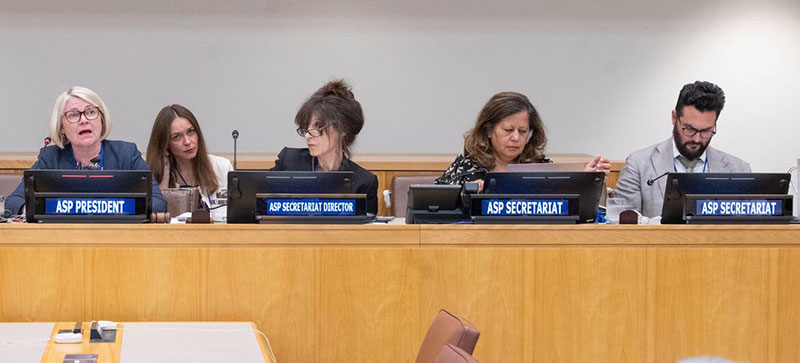
 US Secretary of State Marco Rubio’s warning to the International Criminal Court (ICC) was stark: ‘Either the ICC will end its threats, or we will end the ICC.’ It followed US central administration accusations that the court was unfairly targeting Americans on the basis of trumped-up war crimes charges.
However, a new plethora of sanctions has been clamped on the ICC by the US, which in turn has spurred accusations by sections of the world that the latter has unleashed an ‘assault’ on the international legal order.
What some of the sanctions would mean for the ICC was outlined by Rubio: ‘We will ban transactions with this rogue court, cutting off their resources and crippling their ability to operate against us.’
The ICC has shown consistency of purpose over the years. Despite some operational constraints it has indicted a large number of political strongmen from around the world, accused of war crimes and other governance excesses that come under its purview. Two such recent figures are: Russian President Vladimir Putin and Israeli Prime Minister Benjamin Netanyahu.
Rather than enjoy a mere nominal presence in the world community, the ICC has proved its effectiveness by detaining and bringing to justice scores of VIP politicians and others of their ilk who have been found guilty of human rights abuses and kindred excesses that come within the terms of reference of the ICC.
Accordingly, the international justice system would be stymied considerably as a result of the ICC being dis-empowered, particularly financially. Needless to say, potential and real perpetrators of the species of crime coming under the jurisdiction of the ICC would stand to gain most from such anarchic tendencies. That is, political repression globally would be enabled to enjoy a new lease of life.
A detailing of the types of crime coming under the purview of the ICC provides an idea of what it would cost the international community if the ICC’s operations are gravely hampered. They are mainly: genocide, war crimes, crimes against humanity and the crime of aggression.
That is, the part of the world to be worst affected would be the global South, since the latter is awash with the mentioned crimes. Needless to say, a chronically-disaffected South will sooner rather than later undermine the well being of the world dangerously. The world is already being put through these paces.
At the time of writing, ‘illegal migrants’ from the South, for example, are aggravating many a Western economy’s woes, besides creating for them acute law and order issues. The fact that these migrants’ presence goes on to become a virtual test of the migrant receiving states’ ability to forge domestic social inclusion in the face of jingoistic protests by mainly white supremacist groups is evidence of the latter. As is known, the US, to take just one example, has been up against this crisis for quite a while.
Accordingly, it will be in the best interests of the West if ‘illegal’ migrant arrivals on their shores are stemmed. If the socio-political and economic problems assailing the South are effectively managed through North-South collaborative, ‘trouble-shooting’ efforts the causes leading to ‘illegal’ migration and connected issues could be resolved at source as it were. For, it is the aggravation of the South’s material questions that lays the basis for the emergence of repressive and anti-democratic regimes in the hemisphere.
Until such time that the aforementioned issues in North-South relations are visited afresh and addressed urgently, a vibrantly functioning ICC would be needed. For, the latter would prove a deterrent to Southern political and military strongmen, highly prone to power abuse and like excesses, from coming into being in the wake of the South’s chronic material woes and the wars and conflicts that result from them.
It stands to reason then that the US would be acting in its own interests by enabling the ICC to perpetuate its mandate without hindrance. For a crop of issues that impinges negatively on internal law and order would be defused.
Meanwhile, there needs to be a meeting of minds among the rest of the West to put back in place a North-South dialogue process aimed at reducing some of the economic pressures that are weighing on the South.
Since economics usually drives politics it will be in the interests of the world community to scrutinizingly re-visit North-South issues of the past and put in place economic relief packages for Southern publics that would enable them to tide over their material hardships rather than permit the latter to aggravate into social disaffection and eventually armed militancy. It is the latter juncture that paves the way for the emergence of authoritarian rulers in the South who then go on to be a blight on their publics.
Accordingly, the Southern-based global development thinking of the past that envisaged a more equitable world economic order needs to be seen as an urgent need. That is, NAM’s international development paradigms need to be resuscitated to the extent possible.
It is unlikely that rightist governments of the West, such as the current Republican administration in the US, would find these projects feasible, but democratic states of Europe, led by perhaps the UK, are likely to think otherwise. For it would not be beneficial for the democratic world to be having on their hands repressive governments in the South who would be gravitating towards the major military and economic actors of the South, such as Iran and North Korea, who tend to be in constant power struggles with the West.
However, until such time that the mentioned, pro-people initiatives are given serious thought the ICC would need to be enabled by the international community to be in place comfortably and carry on with its mandate of bringing repressive rulers to book. Besides the ICC should pave the way for the peoples of the developing world to enjoy some substantial respite from the political repression and even terror which tend to be their lot.
Meanwhile, the wars of West Asia are relentlessly aggravating the economic hardships of people everywhere, driving the point home to enlightened sections that there is no alternative to peacemaking. A challenge is to convert the US under President Trump to this line of thinking.

 This week, I give you five simple, time-tested homemade remedies that help reduce the appearance of blemishes, control excess shine and leave your skin feeling softer and smoother.
The Honey and Lemon Brightening Dab:
For stubborn blemish marks, this is a classic. Mix one teaspoon of pure bee honey with three to four drops of fresh lemon juice. Apply gently, only on the affected spots, and leave for 10 minutes before rinsing with lukewarm water. While honey soothes and softens, lemon helps to brighten naturally. Use twice a week in the evening.
Besan and Rose Water Oil-Control Pack:
An ideal remedy to combat shine, especially on the T-zone. Take two teaspoons of besan (gram flour) and mix with sufficient rose water to form a smooth paste. Add a pinch of turmeric for its antiseptic goodness. Apply evenly, keep for 15 minutes and wash off. It absorbs excess oil without over-drying, leaving a beautiful matte finish.
Aloe Vera and Cucumber Ice Soother:
Blend fresh aloe vera gel with the juice of a grated cucumber and freeze the mixture in an ice tray. Each morning, wrap one cube in a soft muslin cloth and gently rub over a cleansed face for 30 seconds. It calms, tightens pores and imparts a baby-soft smoothness.
Oatmeal and Curd Gentle Polish:
Roughness and old blemish marks need gentle exfoliation. Combine one tablespoon of finely powdered oatmeal with one tablespoon of fresh curd (yoghurt). Massage very gently, in circular motions, for one minute, leave for five minutes and rinse. It removes dead cells and unveils softer, clearer skin.
Multani Mitti and Green Tea Magic Mask:
Brew some green tea and allow it to cool completely. Mix one and a half teaspoons of Multani Mitti (Fuller’s Earth) with the tea water to make a fine paste. Apply for 10 to 12 minutes – do not let it dry and crack completely – and wash off. It draws out impurities, fades blemishes and bestows a fresh, shine-free glow.
A Gentle Reminder:
As with any natural remedy, always do a patch test on your inner arm first. For those with oily or combination skin, avoid heavy coconut oil application and harsh scrubbing, as they tend to aggravate shine and blemishes.

 Dream of performing on a world stage? Well, here is your unique, golden opportunity!
The World Championships of Performing Arts (WCOPA) — the one and only official “Talent Olympics” — is the world’s premier global platform for aspiring singers, dancers, actors, models, instrumentalists, etc., to compete, shine and be discovered!
And, yes, this world stage is open to YOU, Sri Lankans living in Sri Lanka and overseas!
Held annually in glittering Las Vegas, WCOPA brings together over 70 countries, all competing for Gold, Silver and Bronze Medals, just like the traditional Olympics.

Lakisha Bernard: Will represent Team Sri Lanka at WCOPA 2027
Outstanding performers vie for the coveted titles of Junior and Senior Grand Champion Performer of the World, with winners and standout participants awarded over $500,000 in scholarships, cash awards and prizes to catapult their education and careers!
Sri Lanka is already making waves! At WCOPA 2026, Natharie Wickramasinghe, representing Team Sri Lanka, made the nation proud by winning a Bronze Medal in the Ethnic/Folklore Dance category!

Lakisha: Accomplished freelance Model and Fashion Design graduate
Recruitment for this prestigious competition is handled through a system of scouts and licensed National Directors — and this is where our very own Chris Rajendra, now based in Las Vegas, and National Director for Team Sri Lanka, comes into the scene.
If you are a singer, dancer, actor, model, instrumentalist — if you have talent burning inside you — contact Chris Rajendra today for registration and, who knows, you may find yourself in Las Vegas, and proudly draped in the Sri Lankan flag, at WCOPA 2027!
The contact address is: Chris Rajendra, wcopa.nationaldirector.sl@gmail.com
or chris.rajendra@gmail.com
Meanwhile, a star is born for 2027, in the form of Lakisha Bernard who is all set to represent Team Sri Lanka at WCOPA 2027.
Originally hailing from the sun-drenched coastal city of Colombo and now carving out her creative career in Canada, 22-year-old Lakisha is stepping into the international spotlight.
This accomplished freelance Model and Fashion Design graduate has officially been appointed as the Team Sri Lanka Promoter for Canada as she prepares to represent Team Sri Lanka at WCOPA in Las Vegas.
Lakisha brings a unique blend of high-fashion sensibility, captivating camera presence and expert garment design to the Team.
Having built her career, from local college shoots to high-glamour concepts, Lakisha’s inspiring journey embodies the true spirit of cultural bridge-building and creative resilience, bringing immense pride and recognition to Sri Lanka on the global stage.
WCOPA 2027 will be held at the legendary Westgate Hotel & Casino, Las Vegas, from 12th to 20th July – the very same iconic arena where the late, great Elvis Presley himself performed!
Your moment is now. Your stage is Las Vegas, so hurry and contact Chris Rajendra.

AgriConnect Sri Lanka’ to be launched on 30 October to Modernise the Agricultural Sector Through Digitalisation

57th Annual Saints’ Quadrangular Tournament on Saturday and Sunday

Showers or thundershowers will occur at most parts of the island

Prison rules to be revised over monks’ attire

AC President recuses himself from hearing prison attire case pertaining to Gnanasara Thera

Court orders steps to obtain INTERPOL Red Notice against Basil

‘Dates have the highest sugar content to fight Coronavirus’

Sunday Island 27 December – Headlines

#SundayIsland 17th December – Headlines

Sunday Island – 28th March

Sunday Island Headlines – 21 March

Sunday Island – 21st February – Headlines
-

 News7 days ago
NDB fraud Rs 60mn more than reported
-

 News7 days ago
Removing monk’s robes matter for Sangha to decide: Mahanayake Theras
-
 News6 days ago
NPP govt. reminded of its responsibilities as US warship leaves Colombo
-

 News5 days ago
Sri Lanka escalates anti-graft drive with Shiranthi’s jailing
-
 Latest News6 days ago
Farhan, Sadaqat help Pakistan ace 183 chase to go 1-0 up
-
 News7 days ago
BHC, Colombo: “LTTE remains a proscribed org. in the UK”
-

 Latest News4 days ago
Farhan and Sadaqat help Pakistan seal series in style
-

 News5 days ago
Iranian ships stranded, Lanka fears US sanctions