
Opinion
Deshamanya Cyril Herath – a peerless leader

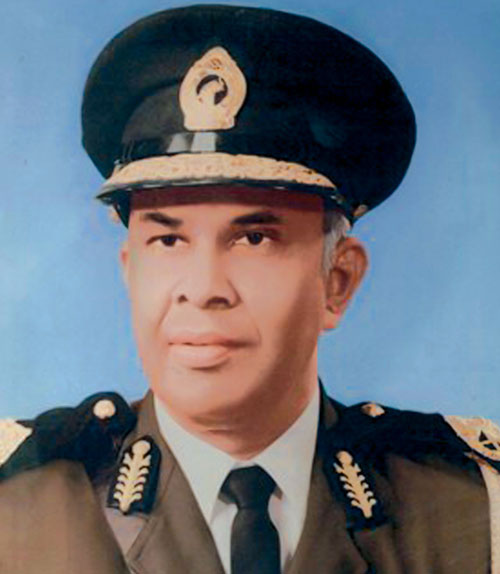
The 10th death anniversary of Deshamanya Cyril Herath falls on the 8th of September this year. It is my view that he was a peerless leader who deserves to be remembered, emulated, and revered.
I was the General Manager, Director, and Executive Director of the National Savings Bank, when Mr Herath was Chairman. While I am deeply grateful to Mr Herath for appointing me to these positions, I must say that it was the most rewarding, productive, and life-changing period of my banking career that gave me immense pleasure, satisfaction, and pride to work under a great leader of the calibre of Mr. Herath. Despite the fact that he was my boss and his eminent standing in this country, he was like an elder brother with whom I maintained a very intimate relationship until his death.
Deshamanya Cyril Herath studied at St. John’s College, Nugegoda and Royal College, and graduated from the University of Ceylon, Peradeniya. In 1957 he joined the Police service as an ASP and in 1985 he was appointed as Inspector General of Police. He was Chairman of National Savings Bank from, 1994 to 2002 and 2004 to 2005.
He also held the following positions: Director General of Directorate of Internal Intelligence (DII) at the Ministry of Defence, Defence Secretary, and National Security Advisor.
Most of the new generation in the Sri Lanka Police service and the banking sector may not know about this peerless leader who was responsible for the phenomenal transformation of NSB.
=He possessed leadership qualities such as integrity, humility, intellect, pragmatism, communication ability, and empathy. Above all, he walked the talk and was fearless; he was every inch a leader.
=Believe it or not, he queued up with other employees (including the lowest grade of employees) every morning and waited for his turn to enter the lift to proceed to his office which was on the sixth floor. This shows his humility, and it is unthinkable for Chairman, NSB, to do so.
=He was humble, approachable, and any employee could meet him on Wednesdays without an appointment to have their grievances redressed.
=He believed in empowering staff and gave them a great deal of freedom
=He never raised his voice when speaking to subordinates and was always conscious of their self-respect.
=At bank parties, he and his wife went round and spoke to each and every staff member and sang and danced with them.
=Ostentation, which is now the order of the day, was anathema to him. His official vehicle was an unostentatious car (Mitsubishi Lancer and later a Honda Civic). And when travelling abroad, he travelled Economy class (unless of course it was upgraded by the airline at no extra cost.)
=He could effectively communicate both in English and Sinhalese, and he always conducted himself with dignity and decorum.
=His humane qualities motivated the staff to contribute towards taking the bank forward. One good example is that he reinstated several employees who were unfairly dismissed or victimised as well as those who were deprived of their pensions. Like most other heads of organisations, he never washed his hands off saying that they happened before his tenure and therefore he was not responsible.
=He took up the challenge posed by the World Bank in their report to the Sri Lanka government in the mid-nineties stating that there is no justification for continuing the operations of NSB, and therefore its branches should be sold by auction to private and foreign banks. Mr Herath, the top management, and staff were infuriated by these unwarranted, imbecilic, and humiliating remarks. However, he with the support of the CEBU and the top management proved the World Bank wrong and transformed the bank as a stable, profitable, and customer-oriented modern bank. The secret was his singular leadership. (I wrote about this in detail in my tribute published in the newspapers on his 5th death anniversary)
Deshamanya Cyril Herath will therefore go down in history as the epitome of a great ` leader who was responsible for the dramatic and stupendous transformation of NSB. The only way I can describe him is by saying that he was a great, noble human being, and a peerless leader. This is not only my opinion but universal as you would see from a few sentences I quote from the The Retired Senior Police Officers Association in a statement issued following his death, with due acknowledgement.
“He was a role model for his honesty, and integrity. This was a valiant attempt, firing the first shot to maintain the independence of the Police and retired prematurely at the age 54 years and 10 months against undue political interference. He was known for clear thinking and a knack of presenting his ideas forcefully and convincingly and was fearless in expressing his opinion and most of all had a very strong backbone. He never feared to do what he thought was right and he never avoided or neglected his duty. He was also very forthright in his views and never hesitated to push them forward. He was quite open in trying stamp out corruption in any form. An absolute gentleman in all his dealings, he was an excellent brother officer and companion. No one could ask for a better friend, and to all others he was an officer and a Gentleman. He stood for justice and fair play and had the courage to stand by his convictions. He was a source of encouragement and inspiration to the offices and the subordinates. He was always held in high esteem among his superiors, peers, junior, and subordinates.”
I would also like to quote from a letter sent by Mr Tilak Fernando (I don’t know him) to a newspaper which endorses my views on Mr Herath
PROMPT ACTION BY NSB CHAIRMAN
A few days ago, I wrote to the Chairman, National Savings Bank (NSB) Cyril Herath to bring to his notice certain shortcomings at the NSB.
The letter was posted by me during the weekend and to my surprise on Tuesday morning around 9 a.m. I received a telephone call from Chairman Herath.
The Chairman thanked me for bringing the shortcomings to his notice which he said would be taken up with the senior managers. I am happy that there are persons such as Herath at the top of these government institutions. Usually when some shortcoming is pointed out the management either finds excuses or justifies what was done. I wish there are at least a few more officers such as Herath in the state and corporation sector.
Another point I wish to make is that the Chairman is at his desk by 9 a.m* whereas some heads of Corporations are having breakfast in their homes, at this time.
Tilak Fernando
Colombo 6
* With due respect to Mr Fernando, I need to correct the time as 8.30 am
I have no doubts that Mr Herath’s children, Arjuna, Sanjaya, Priyanthika, and Dishan will follow the footsteps of their beloved father. Furthermore, on behalf of the people of Sri Lanka, I wish to express our gratitude to former President, Madam Chandrika Bandaranaike Kumaratunga for appointing the ideal leader to head the National Savings Bank.
I think it is appropriate to mention about his beloved wife, Mrs Ranee Herath who passed away within one year of his death. She was a gracious and virtuous lady who made it possible for Mr Herath to fully concentrate on coping with challenges of his job. She graced all events and ceremonies of the bank, mixed with the staff who adored her. Her presence created a great deal of goodwill among staff that was a significant factor which made it possible for NSB to move to greater heights.
I am deeply grateful to you dear Sir, for your affection, the lessons I learnt from you, and for changing my life. Beloved Sir, on behalf of all the employees of NSB, past and present, I wish you and Mrs Herath peace and serenity in your sojourn in samsara.
NBSB Balalle


It is with profound sadness that we received the shocking news of untimely passing of our dear leader Lakshman Balasuriya.
I first met Lakshman Balasuriya in 1988 while working at John Keells, which had been awarded an IT contract to computerise Senkadagala Finance. Thereafter, in 1992, I joined the E. W. Balasuriya Group of Companies and Senkadagala Finance when the organisation decided to bring its computerisation in-house.
Lakshman Balasuriya obtained his BSc from the University of London and his MSc from the University of Lancaster. He was not only intellectually brilliant, but also a highly practical and pragmatic individual, often sitting beside me to share instructions and ideas, which I would then translate directly into the software through code.
My first major assignment was to computerise the printing press. At the time, the systems in place were outdated, and modernisation was a challenging task. However, with the guidance, strong support, and decisive leadership of our boss, we were able to successfully transform the printing press into a modern, state-of-the-art operation.
He was a farsighted visionary who understood the value and impact of information technology well ahead of his time. He possessed a deep knowledge of the subject, which was rare during those early years. For instance, in the 1990s, Balasuriya engaged a Canadian consultant to conduct a cybersecurity audit—an extraordinary initiative at a time when cybersecurity was scarcely spoken of and far from mainstream.
During that period, Senkadagala Finance’s head office was based in Kandy, with no branch network. When the decision was made to open the first branch in Colombo, our IT team faced the challenge of adapting the software to support branch operations. It was him who proposed the innovative idea of creating logical branches—a concept well ahead of its time in IT thinking. This simple yet powerful idea enabled the company to expand rapidly, allowing branches to be added seamlessly to the system. Today, after many upgrades and continuous modernisation, Senkadagala Finance operates over 400 locations across the country with real-time online connectivity—a testament to his original vision.
In September 2013, we faced a critical challenge with a key system that required the development of an entirely new solution. A proof of concept was prepared and reviewed by Lakshman Balasuriya, who gave the green light to proceed. During the development phase, he remained deeply involved, offering ideas, insights, and constructive feedback. Within just four months, the system was successfully developed and went live—another example of his hands-on leadership and unwavering support for innovation.
These are only a few examples among many of the IT initiatives that were encouraged, supported, and championed by him. Information technology has played a pivotal role in the growth and success of the E. W. Balasuriya Group of Companies, including Senkadagala Finance PLC, and much of that credit goes to his foresight, trust, and leadership.
On a deeply personal note, I was not only a witness to, but also a recipient of, the kindness, humility, and humanity of Lakshman Balasuriya. There were occasions when I lost my temper and made unreasonable demands, yet he always responded with firmness tempered by gentleness. He never lost his own composure, nor did he ever harbour grudges. He had the rare ability to recognise people’s shortcomings and genuinely tried to guide them toward self-improvement.
He was not merely our boss. To many of us, he was like a father and a brother.
I will miss him immensely. His passing has left a void that can never be filled. Of all the people I have known in my life, Mr. Lakshman Balasuriya stands apart as one of the finest human beings.
He leaves behind his beloved wife, Janine, his children Amanthi and Keshav, and the four grandchildren.
May he rest in eternal peace!
Timothy De Silva
(Information Systems Officer at Senkadagala Finance.)

A remarkable increase in marriage proposals in newspapers and the thriving matchmaking outfits in major cities indicate the difficulty in finding the perfect partners. Academics have done much research in interpersonal attraction or love. There was an era when young people were heavily influenced by romantic fiction. They learned how opposites attract and absence makes the heart grow fonder. There was, of course, an old adage: Out of sight out of mind.
Some people find it difficult to fall in love or they simply do not believe in love. They usually go for arranged marriages. Some of them think that love begins after marriage. There is an on-going debate whether love marriages are better than arranged marriages or vice versa. However, modern psychologists have shed some light on the science of love. By understanding it you might be able to find the ideal life partner.
To start with, do not believe that opposites attract. It is purely a myth. If you wish to fall in love, look for someone like you. You may not find them 100 per cent similar to you, but chances are that you will meet someone who is somewhat similar to you. We usually prefer partners who have similar backgrounds, interests, values and beliefs because they validate our own.
Common trait
It is a common trait that we gravitate towards those who are like us physically. The resemblance of spouses has been studied by scientists more than 100 years ago. According to them, physical resemblance is a key factor in falling in love. For instance, if you are a tall person, you are unlikely to fall in love with a short person. Similarly, overweight young people are attracted to similar types. As in everything in life, there may be exceptions. You may have seen some tall men in love with short women.
If you are interested in someone, declare your love in words or gestures. Some people have strong feelings about others but they never make them known. If you fancy someone, make it known. If you remain silent you will miss a great opportunity forever. In fact if someone loves you, you will feel good about yourself. Such feelings will strengthen love. If someone flatters you, be nice to them. It may be the beginning of a great love affair.
Some people like Romeo and Juliet fall in love at first sight. It has been scientifically confirmed that the longer a pair of prospective partners lock eyes upon their first meeting they are very likely to remain lovers. They say eyes have it. If you cannot stay without seeing your partner, you are in love! Whenever you meet your lover, look at their eyes with dilated pupils. Enlarged pupils signal intense arousal.
Body language
If you wish to fall in love, learn something about body language. There are many books written on the subject. The knowledge of body language will help you to understand non-verbal communication easily. It is quite obvious that lovers do not express their love in so many words. Women usually will not say ‘I love you’ except in films. They express their love tacitly with a shy smile or preening their hair in the presence of their lovers.
Allan Pease, author of The Definitive Guide to Body Language says, “What really turn men on are female submission gestures which include exposing vulnerable areas such as the wrists or neck.” Leg twine was something Princess Diana was good at. It involves crossing the legs hooking the upper leg’s foot behind the lower leg’s ankle. She was an expert in the art of love. Men have their own ways. In order to look more dominant than their partners they engage in crotch display with their thumbs hooked in pockets. Michael Jackson always did it.
If you are looking for a partner, be a good-looking guy. Dress well and behave sensibly. If your dress is unclean or crumpled, nobody will take any notice of you. According to sociologists, men usually prefer women with long hair and proper hip measurements. Similarly, women prefer taller and older men because they look nice and can be trusted to raise a family.
Proximity rule
You do not have to travel long distances to find your ideal partner. He or she may be living in your neighbourhood or working at the same office. The proximity rule ensures repeated exposure. Lovers should meet regularly in order to enrich their love. On most occasions we marry a girl or boy living next door. Never compare your partner with your favourite film star. Beauty lies in the eyes of the beholder. Therefore be content with your partner’s physical appearance. Each individual is unique. Never look for another Cleopatra or Romeo. Sometimes you may find that your neighbour’s wife is more beautiful than yours. On such occasions turn to the Bible which says, “Thou shalt not covet thy neighbour’s wife.”
There are many plain Janes and penniless men in society. How are they going to find their partners? If they are warm people, sociable, wise and popular, they too can find partners easily. Partners in a marriage need not be highly educated, but they must be intelligent enough to face life’s problems. Osho compared love to a river always flowing. The very movement is the life of the river. Once it stops it becomes stagnant. Then it is no longer a river. The very word river shows a process, the very sound of it gives you the feeling of movement.
Although we view love as a science today, it has been treated as an art in the past. In fact Erich Fromm wrote The Art of Loving. Science or art, love is a terrific feeling.
karunaratners@gmail.com
By R.S. Karunaratne


Rethinking climate prediction, disasters, and plantation economics in Sri Lanka
For decades, Sri Lanka has interpreted climate through a narrow lens. Rainfall totals, sunshine hours, and surface temperatures dominate forecasts, policy briefings, and disaster warnings. These indicators once served an agrarian island reasonably well. But in an era of intensifying extremes—flash floods, sudden landslides, prolonged dry spells within “normal” monsoons—the question can no longer be avoided: are we measuring the climate correctly, or merely measuring what is easiest to observe?
Across the world, climate science has quietly moved beyond a purely local view of weather. Researchers increasingly recognise that Earth’s climate system is not sealed off from the rest of the universe. Solar activity, upper-atmospheric dynamics, ocean–atmosphere coupling, and geomagnetic disturbances all influence how energy moves through the climate system. These forces do not create rain or drought by themselves, but they shape how weather behaves—its timing, intensity, and spatial concentration.
Sri Lanka’s forecasting framework, however, remains largely grounded in twentieth-century assumptions. It asks how much rain will fall, where it will fall, and over how many days. What it rarely asks is whether the rainfall will arrive as steady saturation or violent cloudbursts; whether soils are already at failure thresholds; or whether larger atmospheric energy patterns are priming the region for extremes. As a result, disasters are repeatedly described as “unexpected,” even when the conditions that produced them were slowly assembling.
This blind spot matters because Sri Lanka is unusually sensitive to climate volatility. The island sits at a crossroads of monsoon systems, bordered by the Indian Ocean and shaped by steep central highlands resting on deeply weathered soils. Its landscapes—especially in plantation regions—have been altered over centuries, reducing natural buffers against hydrological shock. In such a setting, small shifts in atmospheric behaviour can trigger outsized consequences. A few hours of intense rain can undo what months of average rainfall statistics suggest is “normal.”
Nowhere are these consequences more visible than in commercial perennial plantation agriculture. Tea, rubber, coconut, and spice crops are not annual ventures; they are long-term biological investments. A tea bush destroyed by a landslide cannot be replaced in a season. A rubber stand weakened by prolonged waterlogging or drought stress may take years to recover, if it recovers at all. Climate shocks therefore ripple through plantation economics long after floodwaters recede or drought declarations end.
From an investment perspective, this volatility directly undermines key financial metrics. Return on Investment (ROI) becomes unstable as yields fluctuate and recovery costs rise. Benefit–Cost Ratios (BCR) deteriorate when expenditures on drainage, replanting, disease control, and labour increase faster than output. Most critically, Internal Rates of Return (IRR) decline as cash flows become irregular and back-loaded, discouraging long-term capital and raising the cost of financing. Plantation agriculture begins to look less like a stable productive sector and more like a high-risk gamble.
The economic consequences do not stop at balance sheets. Plantation systems are labour-intensive by nature, and when financial margins tighten, wage pressure is the first stress point. Living wage commitments become framed as “unaffordable,” workdays are lost during climate disruptions, and productivity-linked wage models collapse under erratic output. In effect, climate misprediction translates into wage instability, quietly eroding livelihoods without ever appearing in meteorological reports.
This is not an argument for abandoning traditional climate indicators. Rainfall and sunshine still matter. But they are no longer sufficient on their own. Climate today is a system, not a statistic. It is shaped by interactions between the Sun, the atmosphere, the oceans, the land, and the ways humans have modified all three. Ignoring these interactions does not make them disappear; it simply shifts their costs onto farmers, workers, investors, and the public purse.
Sri Lanka’s repeated cycle of surprise disasters, post-event compensation, and stalled reform suggests a deeper problem than bad luck. It points to an outdated model of climate intelligence. Until forecasting frameworks expand beyond local rainfall totals to incorporate broader atmospheric and oceanic drivers—and until those insights are translated into agricultural and economic planning—plantation regions will remain exposed, and wage debates will remain disconnected from their true root causes.
The future of Sri Lanka’s plantations, and the dignity of the workforce that sustains them, depends on a simple shift in perspective: from measuring weather, to understanding systems. Climate is no longer just what falls from the sky. It is what moves through the universe, settles into soils, shapes returns on investment, and ultimately determines whether growth is shared or fragile.
The Way Forward
Sustaining plantation agriculture under today’s climate volatility demands an urgent policy reset. The government must mandate real-world investment appraisals—NPV, IRR, and BCR—through crop research institutes, replacing outdated historical assumptions with current climate, cost, and risk realities. Satellite-based, farm-specific real-time weather stations should be rapidly deployed across plantation regions and integrated with a central server at the Department of Meteorology, enabling precision forecasting, early warnings, and estate-level decision support. Globally proven-to-fail monocropping systems must be phased out through a time-bound transition, replacing them with diversified, mixed-root systems that combine deep-rooted and shallow-rooted species, improving soil structure, water buffering, slope stability, and resilience against prolonged droughts and extreme rainfall.
In parallel, a national plantation insurance framework, linked to green and climate-finance institutions and regulated by the Insurance Regulatory Commission, is essential to protect small and medium perennial growers from systemic climate risk. A Virtual Plantation Bank must be operationalized without delay to finance climate-resilient plantation designs, agroforestry transitions, and productivity gains aligned with national yield targets. The state should set minimum yield and profit benchmarks per hectare, formally recognize 10–50 acre growers as Proprietary Planters, and enable scale through long-term (up to 99-year) leases where state lands are sub-leased to proven operators. Finally, achieving a 4% GDP contribution from plantations requires making modern HRM practices mandatory across the sector, replacing outdated labour systems with people-centric, productivity-linked models that attract, retain, and fairly reward a skilled workforce—because sustainable competitive advantage begins with the right people.
by Dammike Kobbekaduwe
(www.vivonta.lk & www.planters.lk ✍️

58,454 International aircraft movements in Sri Lanka in first 11months of 2025 – Ministry of Ports and Civil Aviation

Lasith Malinga to work with the Sri Lanka Team in lead up to T20 World Cup

Highest revenue in 93-year history of Inland Revenue Department collected in 2025

Showers or thundershowers will occur at times in the Northern, Eastern, Central, North-central, North-western and Uva provinces

Israel to bar 37 aid groups from Gaza

Protests spread across Iran for third day after currency hits record low

‘Dates have the highest sugar content to fight Coronavirus’

Sunday Island 27 December – Headlines

#SundayIsland 17th December – Headlines

Sunday Island – 28th March

Sunday Island Headlines – 21 March

Sunday Island – 21st February – Headlines
-

 News7 days ago
British MP calls on Foreign Secretary to expand sanction package against ‘Sri Lankan war criminals’
-
 News6 days ago
Street vendors banned from Kandy City
-
 Sports7 days ago
Chief selector’s remarks disappointing says Mickey Arthur
-

 Opinion7 days ago
Disasters do not destroy nations; the refusal to change does
-

 Sports3 days ago
Gurusinha’s Boxing Day hundred celebrated in Melbourne
-

 News6 days ago
Lankan aircrew fly daring UN Medevac in hostile conditions in Africa
-

 Sports4 days ago
Time to close the Dickwella chapter
-
 Sports7 days ago
Royal record crushing innings win against Nalanda