
News
Dental surgeons to strike


The Government Dental Surgeons’ Association (GDSA) on Friday announced a countrywide token strike on 6 November 2025 in protest against administrative deficiencies in the Dental Services Division of the Ministry of Health.
The decision to resort to trade union action received unanimous approval of the GDSA Executive Committee after 18 months of unsuccessful efforts to resolve serious administrative failures through official channels, the association has said in a media statement.
The GDSA says that despite a continuous dialogue with the Minister of Health and ministry officials, no remedial action has been taken.
The association says it has been pursuing action on several key issues vital to the functioning of government dental services for over a year, but that all progress has been stalled due to administrative inaction.
The GDSA stressed that the planned token strike is not politically motivated and represents a collective effort to safeguard the future of government dental services and ensure accountability within the health administration.

Business
Trade, Investment and Tourism Cooperation Forum strengthens economic ties between Sri Lanka and Vietnam

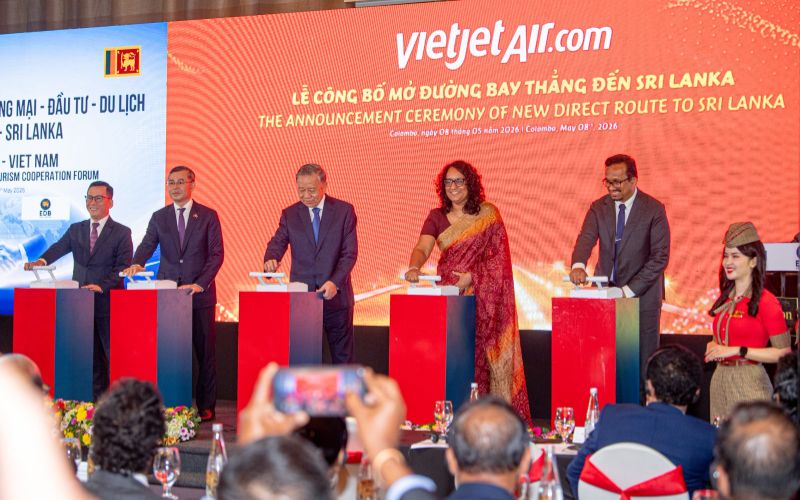
Marking a significant milestone in strengthening bilateral relations between Sri Lanka and Vietnam, the Sri Lanka– Vietnam Trade, Investment and Tourism Cooperation Forum was successfully held on Friday (08) at the Hilton Colombo.
The Forum, jointly organised by the Vietnam Chamber of Commerce and Industry and the Sri Lanka Export Development Board, was held in parallel with the State Visit of President Tô Lâm of the Socialist Republic of Vietnam and General Secretary of the Central Committee of the Communist Party of Vietnam. The event was attended by President Tô Lâm and Prime Minister Dr. Harini Amarasuriya.
The Forum underscored the importance of the longstanding bilateral relationship between the two countries and reflected the shared commitment to expanding economic cooperation.
The primary objective of the Forum was to further strengthen bilateral economic ties by focusing on key priorities including the expansion of trade, promotion of investment and enhancement of tourism cooperation. The event also provided an opportunity to explore new avenues of collaboration, strengthen business-to-business engagement and facilitate greater market access by bringing together senior government officials, entrepreneurs and industry leaders from both countries on a common platform.
During the Forum, direct air connectivity between Colombo and Ho Chi Minh City was officially launched. The new services, operated by Vietnam Airlines and VietJet Air, are expected to further strengthen relations between the two nations and their people.
Six Memoranda of Understanding covering key areas of cooperation were also signed during the Forum. In addition, a notable development was the establishment of the Sri Lanka–Vietnam Business Council under the Ceylon Chamber of Commerce.
Alongside the Forum, the Sri Lanka Export Development Board organised a business networking session, providing Sri Lankan and Vietnamese entrepreneurs with the opportunity to engage directly with one another. The event received strong participation from the private sectors of both countries, with businesses expressing keen interest in expanding trade and establishing resilient supply chains.
Representing Sri Lanka at the event were Minister of Industry and Entrepreneurship Development, Sunil Handunnetti, Minister of Environment , Dr. Dhammika Patabendi, Deputy Minister of Industry and Entrepreneurship Development ,Chathuranga Abeysinghe, Deputy Minister of Ports and Civil Aviation, Janitha Ruwan Kodithuwakku, Deputy Minister of Tourism Ruwan Ranasinghe, Secretary to the Ministry of Industry and Entrepreneurship Development, Thilaka Jayasundara, Secretary to the Ministry of Trade, Commerce, Food Security and Cooperative Development, K.A.Vimalenthirarajah, Chairman of the Export Development Board Mangala Wijesinghe along with several other dignitaries and officials.
Representing Vietnam were Politburo Member, Secretary of the Party Central Committee and Chairman of the Central Organisation Commission , Nguyen Duy Ngoc, Politburo Member, Secretary of the Party Central Committee and Chairman of the Central Commission for Policies and Strategies , Nguyen Thanh Nghi, Politburo Member, Deputy Prime Minister and Minister of National Defence, Phan Van Giang, Politburo Member and Minister of Public Security, Luong Tam Quang and Politburo Member and Minister of Foreign Affairs, Le Hoai Trung, among others.
(PMD)
News
Accelerate projects related to resolving the public’s drinking water issues – President Instructs Officials

President Anura Kumara Dissanayake has instructed officials to promptly identify and commence the projects required to resolve the drinking water issues that have become a major concern for the public.
The President also instructed officials to formulate plans with close attention to the current needs of the people, pointing out that the inability to ensure an adequate supply of drinking water has given rise to numerous problems affecting the public.
President Anura Kumara Dissanayake made these remarks during a discussion held on Friday (08) afternoon at the Presidential Secretariat with relevant officials to review the current status of national drinking water, community water supply and wastewater management projects, the progress and requirements of budget allocations, as well as future plans.
The President further instructed officials to submit a report indicating the projects that could be identified and commenced immediately, the required allocations and the expected completion dates. He stressed that financial constraints should not be treated as an obstacle and directed officials to prepare project plans and submit the necessary funding requests accordingly.
He also instructed that, rather than depending on foreign loans, greater attention should be given to completing projects as far as possible using domestic funds. In addition, he directed that staff required for project planning be recruited on contract basis.
The President also emphasised the importance of utilising capital expenditure allocations within the same year for the relevant projects. He pointed out that failure to do so would result in adverse consequences such as additional project costs, the loss of benefits from the funds already spent and the need to allocate capital provisions again in the following year for the same projects.
During the discussion, the President separately reviewed the projects being implemented and planned to resolve drinking water issues faced by people in the districts of Colombo, Gampaha, Kalutara, Galle, Matara, Monaragala, Kandy, Gampola, Anuradhapura, Vavuniya, Jaffna, Ampara, Batticaloa and Polonnaruwa, along with the progress achieved and the issues that had arisen in implementing them.
Officials also informed the President that deteriorating main water pipelines had resulted in insufficient water capacity being supplied to residents in the Colombo District. They further presented plans to address these issues, while the President highlighted the need for close coordination and systematic planning between the Road Development Authority and the National Water Supply and Drainage Board in carrying out these activities.
The President also instructed officials to take steps to commence the Weli Oya Reservoir Project next year in order to support flood control and meet drinking water requirements in the Colombo District.
Attention was also drawn to the North Central Main Canal and North Western Canal projects. Reviewing the progress of projects being implemented to address the severe drinking water shortage faced by people in the areas of Welikanda, Medirigiriya and Lankapura, the President instructed officials to expedite the completion of projects that would not incur significant costs by using domestic funds.
The President further pointed out the importance of implementing all projects in a highly systematic and organised manner and ensuring that their benefits are delivered to the public. Although certain projects had been suspended midway due to priority being given to essential projects, he stressed that all projects were aimed at addressing the needs of the people and should therefore be carried out in a planned and methodical manner.
Minister of Housing, Construction and Water Supply Dr Susil Ranasinghe, Deputy Minister of Transport and Highways Prasanna Gunasena, Deputy Minister of Housing, Construction and Water Supply T.B. Sarath, Deputy Minister of Cooperative Development, Upali Samarasinghe, Members of Parliament including Samantha Ranasinghe, Nishantha Samaraweera, Sunil Biyanwila, Manjula Suraweera Arachchi, Shantha Padmakumara Subasinghe, Wasantha Piyathissa, Roshan Akmeemana, Ilan Kumaran, M. Jegadeeswaran, and S. Thilakanadan and Kandasamy Prabhu, Secretary to the President Dr Nandika Sanath Kumanayake, Secretary to the Ministry of Housing, Construction and Water Supply L.B. Kumudulal, Director General of the Department of National Budget Jude Nilukshan, Chairman of the National Water Supply and Drainage Board Engineer A.M.P.C.P. Bandara, Chairman of the Water Resources Board R.M.S. Bandara, Director General of the Mahaweli Authority of Sri Lanka H.M.J.K. Herath and several other state officials were also present at the occasion.
(PMD)

Tô Lâm, President of the Socialist Republic of Vietnam and General Secretary of the Central Committee of the Communist Party of Vietnam and his delegation departed Sri Lanka on Friday (08) night from the Bandaranaike International Airport, Katunayake, successfully concluding the State visit undertaken at the invitation of President Anura Kumara Dissanayake.
The visit by the Vietnamese President and the accompanying delegation further strengthened the longstanding friendship and cooperation between Vietnam and Sri Lanka, while paving the way for numerous mutual benefits for the peoples of both countries.
This marked the first visit to Sri Lanka by a Vietnamese President in 15 years. The visit also comes at a significant moment as Sri Lanka continues its forward journey towards economic stability under the present Government.
Minister of Industry and Entrepreneurship Development, Sunil Handunnetti, was present at the airport to bid farewell to the Vietnamese President and the delegation.
President’s Media Division (PMD)

Trade, Investment and Tourism Cooperation Forum strengthens economic ties between Sri Lanka and Vietnam

Accelerate projects related to resolving the public’s drinking water issues – President Instructs Officials

President of Vietnam and delegation departs Sri Lanka

Trump announces three-day ceasefire in Russia-Ukraine war

Heat Index is likely to increase up to ‘Caution level’ at some places in the North-central and Eastern provinces and in Mannar, Vavuniya and Monaragala districts during the daytime

Finn Allen’s 47-ball ton powers Kolkata Knight Riders to huge win over Delhi Capitals

‘Dates have the highest sugar content to fight Coronavirus’

Sunday Island 27 December – Headlines

#SundayIsland 17th December – Headlines

Sunday Island – 28th March

Sunday Island Headlines – 21 March

Sunday Island – 21st February – Headlines
-
 News3 days ago
MIT expert warns of catastrophic consequences of USD 2.5 mn Treasury heist
-
 News5 days ago
CJ urged to inquire into AKD’s remarks on May 25 court verdict
-
 News6 days ago
USD 3.7 bn H’tota refinery: China won’t launch project without bigger local market share
-
 News7 days ago
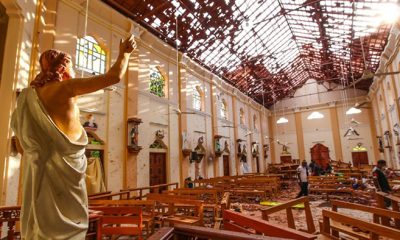
Easter Sunday Case: Ex-SIS Chief concealed intel, former Defence Secy tells court
-

 Business7 days ago
Dialog Surpasses 1,000 5G Sites, Strengthening Nationwide 5G Coverage
-

 Editorial3 days ago
Clean Sri Lanka and dirty politics
-

 Editorial6 days ago
Deliver or perish
-
 Opinion5 days ago
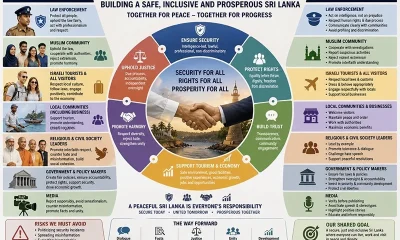
Security, perception, and trust: Sri Lanka’s delicate balancing act