
Features
Dengue epidemic 2026: lessons unlearnt

by Dr Pradeep Kariyawasam ✍️
Former Chief Medical Officer of Health,
Colombo.
Dengue outbreaks have been taking place in the country for 60 or more years, but the large-scale epidemics began only in the 21st century. There are basic understandings and actions that health officials must take if we wish not to see them taking place every year.
First, not all patients who get dengue fever are reported to the Health Authorities as some may get only a mild fever and, after a few days, the fever will go away. Secondly, the vast majority will get treatment from their General Practitioners, and they may not be reported to the area Medical Officer of Health. Thirdly, there is a structural failure in dengue control in this country. Sri Lanka has fought dengue with “ad hoc measures” for over 50 years, relying on periodic “Mosquito Weeks” instead of sustained, year-round surveillance, preventive and control action.
The success of Sri Lanka’s Malaria Control Programme was mainly due to the fact that it had dedicated staff throughout the country to eradicate the disease. Take for example the Epidemiology of Dengue Control Units of the Ministry of Health. They have no dedicated staff in the field to take measures needed to prevent the diseases spreading, especially in major urban centres run by Local Authorities. The issue of understaffing at the Local Authorities is an impediment that has not been addressed by the Ministry.
Dengue spreads to other parts of the country from Colombo through the transport system. Trains and buses operating from the bus stands in Fort and railway yards in Maradana and Fort areas took, not only the persons who contracted the disease, but also infected Aedes mosquitoes. Those state employees, or students from outstations, who get ill in urban areas, go home to rest, in the majority of cases. That is why Matara, Puttalam, Kurunegala, Anuradhapura, and Kandy became dengue hotspots years ago.
As the Chief Medical Officer of Health, I campaigned hard to have all field officer vacancies filled to carry out preventive measures, but the appeals fell on the deaf ears of the provincial and government officials. Colombo’s Public Health Department needed around 450 field officers (Public Health Inspectors, midwives, health instructors, mosquito control assistants) to inspect the city’s 80,000 premises but only had about 180 — leaving inspections badly under-resourced. There were budget constraints that prevented public education campaigns through television and newspaper advertisements. However, I must note that major NGOs and private firms helped me immensely and carried out educational programmes. The International award-winning Green Star programme was launched with their help. It was launched 25 years ago.
The first lesson we have forgotten is that social mobilisation is a must for dengue prevention and control. Unfortunately, hardly any residents have realised the need to keep their premises clean. We cannot expect that from them when garbage mounds are visible everywhere and roadsides are not kept clear of rank vegetation. The Green Star programme was created to motivate the residents to keep their premises mosquito free while the Council took measures to clear the areas of garbage and vegetation. To recognise the efforts of the residents we pasted a ‘Green Star’ sticker on their walls, and they were proud to have one. This programme replicated in areas outside Colombo, too.
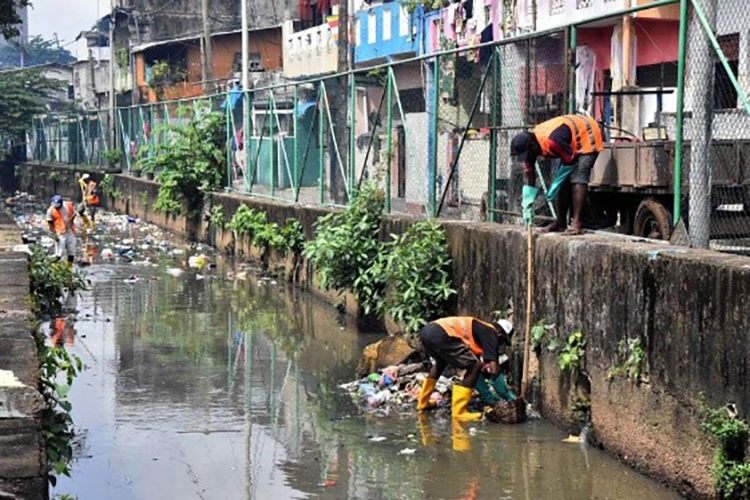
The second lesson we have forgotten is that timing of starting dengue prevention work is a key aspect of a successful programme. We have two rainy seasons, although the weather pattern has changed, and we find that sometimes it rains much harder at other times. But it is important to start dengue prevention programmes much before the beginning of the rainy seasons. We used to get information on rainfall from the Department of Meteorology. So, the authorities, local or central, must start programmes in the latter part of April and September and see that all possible rainwater collection sites, utensils, etc., are removed. Canals and drains should be cleaned, biochemicals should be sprayed into gabion walls. More than 10 years ago when the government took action to clear the canal system, and with this kind of spraying, we found that hardly anyone had dengue fever in those areas. Shramadana campaigns are unheard of today, but these must be restarted as the government, or the Municipal or Urban Councils, cannot do everything alone. Social mobilisation is again the key to all this.
It is said that the dengue virus has changed and the herd immunity cannot cope with the new type of virus. Years ago, a study was done in the eastern part of the city in the Wanathamulla area, where it was found that nearly 95% of the children in that area had dengue antibodies in their blood. Although that area was notorious for dengue, later only a few dengue patients were found there although I don’t believe that the mosquito density decreased. For dengue to spread, herd immunity should be low and mosquitoes should be abundant. But reducing mosquito numbers too effectively can lower community herd immunity, creating conditions for sudden major outbreaks as had been found in Singapore’s experience where reduced Aedes populations combined with imported dengue viruses which caused increased transmission. What should be remembered is that the number of Aedes mosquitoes that bite, the number of times they bite, and within which a particular period, determine how a person is infected.
A lot of people wait for a vaccine to be given to them rather than spending time outside their garden destroying mosquito breeding places to prevent them getting the disease. There is a single dose vaccine, named Butantan, which covers all four virus types and could be given in one dose. But it is a long way off from reaching this country so, therefore, every effort should be made to reduce the mosquito population first.
Fourth Lesson we have forgotten is that prevention is the best way to keep away hundreds entering hospitals with dengue fever. Source reduction, larvicide, repellents (DEET), insecticide-treated nets/strips, and remember that Aedes mosquitoes also transmit Chikungunya, Zika, and Yellow Fever — making vector control non-negotiable. What is needed is a formal partnership between public health officials and communities, as in the past. In Colombo, there were 300 Community Development Councils at the time of my retirement. Today only a handful are there. They provided hundreds of volunteers for our educational and preventive and control programmes. There was no cost to the Council as everything was looked after by the NGOs and CSR projects of the private sector firms. Schools willingly participated in most of our programmes and in return we taught them recycling and gave them bins to collect the stuff. All the departments in the Colombo Municipal Council helped even in a small way by sending their staff during a weekend for these programmes. These actions should be restarted. Staff members and volunteers were then appointed into Street Committees, which were given lots of 100 to 200 premises to check for breeding and create awareness. The inspections were carried out once a month. In the same manner they created Dengue Free Zones in housing schemes, settlements, schools and large land parcels in the areas allocated to them using the people living in and around these areas. Unfortunately, there was no continuation of such programmes.
A lot of people request fogging in their areas believing that it could get rid of the epidemic. I see a lot of fogging being done during the present epidemic, too. However, using one machine and carrying out these programmes is dangerous as such action could spread the disease into newer areas. As soon as the mosquitoes get the smell of the smoke they fly into neighbouring regions. I have been advocating that if we fog then use at least 4-5 machines and block out an area and fog from the periphery into the centre, usually into the infected area. That way it is difficult for the mosquitoes to escape.
Mapping is also a key aspect of dengue control. I used GIS mapping for this purpose 20 years ago and that helped us to investigate the reasons for the outbreaks, the direction of the spread and analyse the successes and failures of our programmes. I believe the Colombo Municipal Council is continuing with GIS mapping and we have a proper Epidemiologist now. But it is good if the officers come out and tell the public where the disease is and the direction of the spread as we did 20 years ago. At least then people will take an interest in cleaning up their premises.
The Wolbachia issue: The Wolbachia bacteria were released in 2018 in Colombo and Nugegoda areas and the programme went on for several years. That has been successful in many countries. There is an attempt to restart the programme again, and I believe it should be started in between monsoon periods to mop up the remaining infected mosquitoes. Even for this we need the help of the community to breed and release the Wolbachia infected mosquitoes to the environment.
Every year the epidemic is on the wane towards the end of July and that is a natural phenomenon. In the same manner every year in the May-July and November-January periods we either have smaller outbreaks or epidemics. Therefore, considering the past experience we can see that this epidemic will also go away in a few weeks. But the most important thing is to prepare for the next epidemic as all over the world the number of patients and epidemics is increasing.


by Viran Maddumage ✍️
Assistant Lecturer & PhD (Reading) Department of Human Geography and Migration,
Macquarie University,
Australia and Sanduni Rathnayake Lecturer (Probationary) Faculty of Law,
General Sir John Kotelawala Defence University
Can a scholarship programme help heal a divided society? At first glance, the idea seems ambitious. Yet one of Europe’s most celebrated educational initiatives was created with precisely that aspiration. Long before Erasmus+ became synonymous with international student exchanges, it represented something far more profound: a belief that education could bridge historical divisions, foster mutual understanding and lay the foundations for lasting peace. Nearly four decades later, that vision offers valuable lessons not only for Europe but also for countries like Sri Lanka, where the search for sustainable social cohesion remains unfinished.
Today, Erasmus+ is recognised as the European Union’s flagship programme for education, training, youth and sport. Since its launch in 1987, it has enabled millions of students, academics, educators and young professionals to study, teach, train and collaborate across borders. What began as an exchange programme, involving just 3,200 students from 11 European countries, has grown into one of the world’s largest educational mobility initiatives, benefiting more than nine million participants, while extending partnerships well beyond Europe.
Its success, however, cannot be measured simply by the number of scholarships awarded, or universities connected. To understand why Erasmus+ has become one of Europe’s greatest success stories, one must return to the continent that gave birth to it.
Europe, in the 20th century, was defined as much by division as by cooperation. Two World Wars devastated entire societies, leaving behind fractured economies, broken political relationships and generations shaped by conflict. Countries that now cooperate closely, within the European Union, had once fought devastating wars against one another. Germany itself became the most visible symbol of post-war division, split into East and West as ideological tensions hardened during the Cold War.
Rebuilding roads, industries and institutions was only part of Europe’s challenge. Rebuilding trust proved far more difficult. Political agreements could establish new alliances, but they could not erase decades of suspicion, or guarantee, that future generations would see one another as partners, rather than adversaries.
It was in this context that the idea of European integration steadily gained momentum, during the 1950s. Economic cooperation was recognised as essential for prosperity, but European leaders increasingly understood that lasting unity demanded something deeper. If peace was to endure, citizens, not merely governments, needed opportunities to learn from one another, engage across cultures and develop a shared sense of belonging.
Education emerged as one of the most effective instruments for achieving that vision.
Universities became spaces where young Europeans could encounter perspectives beyond their own national histories. Academic exchange was no longer viewed simply as an educational experience but as an investment in peace itself. Every student who crossed a border carried back more than academic knowledge; they returned with friendships, cultural understanding and a broader appreciation of Europe’s diversity.
Erasmus became one of the most enduring expressions of that philosophy. Rather than treating education as an isolated national endeavour, it positioned learning as a shared European project, capable of strengthening social cohesion, alongside economic development. The classroom, in many respects, became an arena where reconciliation could take root more naturally than through political negotiation alone.
Over the years, that vision expanded significantly. What began as a higher education exchange programme has evolved into Erasmus+, supporting vocational education and training, school education, adult learning, youth initiatives and sport. It facilitates not only student mobility but also research collaboration, professional development, volunteering and institutional partnerships that connect universities, civil society organisations, businesses and public institutions across national boundaries.
The programme’s ambitions extend well beyond academic achievement. At its core lies the conviction that lifelong learning contributes not only to individual advancement but also to stronger, more resilient societies. Education becomes a driver of innovation, economic opportunity, civic participation and social cohesion, creating benefits that extend far beyond university campuses.
Over the years, that vision expanded significantly. What began as a higher education exchange programme has evolved into Erasmus+, supporting vocational education and training, school education, adult learning, youth initiatives and sport. Today it enables millions of learners, educators and institutions to collaborate across national boundaries through academic exchanges, research partnerships, professional training and community engagement.
At its heart, however, Erasmus+ remains guided by a simple idea: that education can be a powerful instrument of social transformation. By encouraging mobility, fostering institutional cooperation and creating opportunities for people from different cultures and backgrounds to learn together, the programme has become one of the European Union’s most enduring investments in social cohesion. Its emphasis on inclusion, multilingualism, democratic values and international partnership reflects a broader understanding that education is about shaping societies as much as it is about educating individuals.
Europe’s experience offers an important insight. Lasting peace cannot rest solely on political agreements, or economic growth. It also depends on creating opportunities for people to meet, learn and build relationships across the boundaries that once divided them.
That insight resonates far beyond Europe. Sri Lanka’s history is different, but the challenge is strikingly familiar. Although we are a single island nation, we remain a society shaped by multiple and often overlapping divisions. Ethnic tensions, linguistic disputes, regional inequalities and uneven access to opportunity have all left lasting marks on the national consciousness. Decades of civil conflict claimed thousands of lives, displaced communities and interrupted generations of economic and social progress. While the guns have long fallen silent, building a genuinely cohesive society remains an unfinished task.
Much of Sri Lanka’s post-war discourse has understandably centred on constitutional reform, political settlements and economic recovery. These remain indispensable. Yet reconciliation cannot be legislated into existence. It must also be experienced. Trust is built through sustained interaction, shared experiences and opportunities for people to encounter one another beyond the identities that have historically separated them. This is where education can become more than a means of acquiring qualifications; it can become a means of rebuilding society itself.
An Erasmus-inspired model offers an important way of thinking about that possibility. Its greatest lesson is not that students should study abroad, but that educational mobility has the power to transform individuals and, over time, societies. When young people leave familiar environments, study alongside peers from different backgrounds and return with new perspectives, they bring back more than degrees. They return with networks, confidence and a greater appreciation of diversity. These are precisely the kinds of social capital that divided societies often struggle to cultivate.
For Sri Lanka, mobility should not be understood only in international terms. It should begin at home. Many young people, particularly those from rural and economically disadvantaged communities, have limited opportunities to study or train outside their immediate surroundings. A national scholarship and exchange programme could enable students from Jaffna to spend a semester in Matara, undergraduates from Monaragala to undertake research in Kandy, or vocational trainees from Batticaloa to work alongside institutions in Colombo. Such exchanges would expose students to different communities, cultures and lived realities within their own country before connecting them with opportunities overseas.
This is not merely an educational investment; it is an investment in social cohesion. Mobility broadens horizons, but it also improves employability by exposing students to new skills, institutions and professional networks. Erasmus+ has consistently demonstrated that graduates with international and intercultural experience are better prepared for an increasingly interconnected labour market. A Sri Lankan model could similarly strengthen both human capital and national integration, ensuring that access to opportunity is determined less by geography than by potential.
The same philosophy applies to institutional partnerships. One of the defining strengths of Erasmus+ lies in its ability to connect universities, schools, vocational institutes, businesses and civil society organisations through collaborative projects. Knowledge is not confined within institutional walls but shared across disciplines, sectors and borders. Sri Lanka’s universities have long produced talented graduates and important research, yet stronger collaboration between higher education institutions, industry, local communities and international partners could generate far greater social and economic impact. Educational cooperation should become a national strategy rather than a collection of isolated initiatives.
Equally significant is the programme’s commitment to inclusion. Sri Lanka’s inequalities are not confined to ethnicity alone. They are also geographical, economic and educational. Access to quality higher education and international opportunities remains uneven, with students from rural districts often facing barriers that extend well beyond academic ability. An Erasmus-inspired initiative would, therefore, need to place inclusion at its centre, ensuring that students from historically underrepresented communities are not merely invited to participate but actively supported to do so. Excellence and equity should not be competing priorities; each strengthens the other.
Language presents another compelling lesson. Sri Lanka’s own history reminds us that language is never simply a means of communication; it can also become a marker of identity, opportunity and exclusion. The language question has occupied a central place in the country’s political history, shaping relationships between communities for decades. Erasmus+, by contrast, treats multilingualism as one of Europe’s greatest strengths. It promotes the idea that linguistic diversity should connect rather than divide societies. Sri Lanka’s continued investment in Sinhala, Tamil and English education should, therefore, be viewed not only as an educational objective but also as a nation-building project. A multilingual citizen is often better equipped to understand perspectives beyond their own community, reducing barriers that have historically fuelled misunderstanding.
Perhaps the most important lesson, however, lies in the values that underpin the programme itself. Erasmus+ is built upon respect for human dignity, equality, inclusion and the rights of minorities. These principles are not peripheral to the programme; they define it. Sri Lanka’s future, likewise, depends upon nurturing a national identity that complements rather than competes with cultural, religious and ethnic identities. Educational exchange can help cultivate that shared civic identity by creating spaces where diversity is encountered as an everyday reality rather than an abstract ideal.
Looking beyond our own borders, such a programme could also redefine Sri Lanka’s place within the region. South Asia continues to grapple with many of the same challenges that Europe once faced, historical grievances, political tensions, social inequalities and limited educational mobility across borders. Sri Lanka is well positioned to lead conversations on regional educational cooperation by establishing an exchange and scholarship model that welcomes students from neighbouring countries, while creating opportunities for Sri Lankan students to study throughout Asia and beyond. In doing so, the country could position itself as a regional hub for higher education, research collaboration and intercultural dialogue.
Such an initiative would strengthen not only universities but also Sri Lanka’s international standing. Educational diplomacy has become an increasingly important component of foreign policy across the world. Countries that attract students, foster academic partnerships and invest in knowledge exchange often build influence that extends well beyond conventional diplomacy. For Sri Lanka, investing in educational mobility would, therefore, represent an investment in both domestic reconciliation and international engagement.
Europe’s experience offers no blueprint that can simply be transplanted to another society. History, politics and culture differ too greatly for simple imitation. But the principles that shaped Erasmus+, mobility, inclusion, cooperation, multilingualism and respect for diversity, are remarkably adaptable. They speak to universal challenges faced by societies seeking to transform historical divisions into shared futures.
Sri Lanka has long recognised education as a pathway to social mobility. The next step is to recognise its potential as a pathway to social cohesion. If Europe could use educational exchange to help overcome the divisions left by war, Sri Lanka can draw inspiration from that experience to imagine its own model, one rooted in our history, responsive to our realities and ambitious enough to invest not only in better graduates, but in a stronger, more united nation. (Views expressed in this article are personal.)
Features
Soaring Pada Yatra numbers spark alarm over mounting ecological damage in Yala-Kumana parks
By Ifham Nizam ✍️
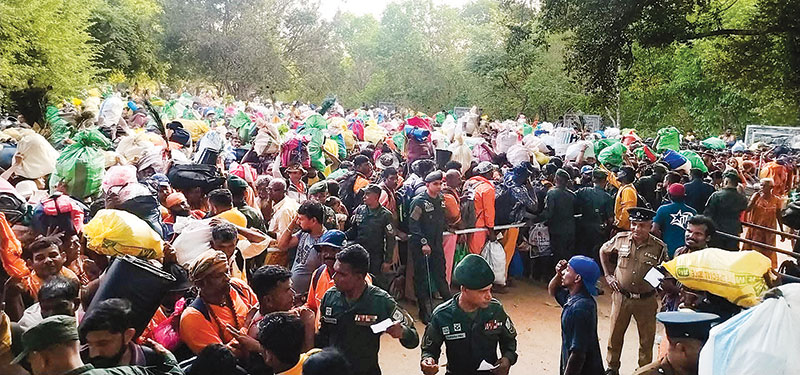
The rapid expansion of the annual Kataragama Pada Yatra is placing unprecedented pressure on Sri Lanka’s most sensitive protected ecosystems, with conservationists warning that the centuries-old spiritual pilgrimage is increasingly being transformed into a large-scale public event at the expense of wildlife and biodiversity.
Conservationist and researcher Supun Lahiru Prakash has urged the Government and the Department of Wildlife Conservation (DWC) to introduce urgent reforms to protect the Yala-Kumana protected area complex, warning that the country’s natural heritage is “paying the price” for the uncontrolled growth of the pilgrimage.
The 2026 Pada Yatra officially concluded on July 24 after entry to the Kumana National Park was closed at 3.00 p.m.
According to figures cited by Supun, a record 41,077 pilgrims entered through the Kumana National Park, between July 10 and July 24, before proceeding through the Kumana-Yala protected area, to Kataragama.
The figures reveal a steep upward trend. Pilgrim numbers rose from 28,838 in 2022 to 34,604 in 2025 before climbing to 41,077 this year—an increase of more than 42 percent, over four years, and nearly 19 percent, compared with last year alone.
“The Pada Yatra is one of Sri Lanka’s oldest religious traditions, symbolising sacrifice, devotion and endurance,” Prakash said. “However, its spiritual character is steadily being overshadowed by a carnival-like atmosphere that is inflicting increasing damage on two of the country’s most important wildlife reserves.”
He warned that the annual movement of tens of thousands of people through Yala and Kumana National Parks causes severe disturbance to wildlife, while placing enormous strain on fragile ecosystems.
One of the most pressing concerns is waste management.
Despite efforts by Wildlife officials, Supun alleged that authorities this year resorted to burying non-biodegradable waste in pits at locations, including Madametota and Kumana Villuwa, raising fears of long-term soil and groundwater contamination.
“As participant numbers continue to rise, the volume of waste, demand for water, and overall ecological disturbance inevitably increase,” he said.
He also claimed that several unauthorised activities continued inside the protected areas, with little effective control.
These included alleged night-time vehicle movements by security personnel, medical teams and alms-giving groups, the use of powerful lighting that disrupts nocturnal wildlife, operation of generators and loudspeakers, large-scale collection of firewood using tractors, and the disposal of waste from gully bowsers within park boundaries.
He said many of these activities occur beyond the effective control of the Department of Wildlife Conservation, further weakening conservation efforts.
Supun also expressed concern that the pilgrimage has become an attraction for groups whose interests extend beyond religious devotion.
“Alongside genuine pilgrims, the event increasingly attracts adventure tourists, commercial operators, self-proclaimed environmentalists and wildlife photographers, seeking free access to the national parks,” he said.
He further alleged that some senior district administrators have prioritised making the pilgrimage more convenient and sophisticated rather than safeguarding the ecological integrity of the protected areas.
According to Supun, this approach has contributed to regulatory neglect and undermined conservation objectives.
He called on the Government to introduce a comprehensive management framework that would limit participant numbers, strictly enforce laws against unauthorised commercial activities and environmental offences, establish effective solid waste management systems, strengthen the authority and operational capacity of Wildlife officers, and restore the Pada Yatra to its original spiritual and ascetic character.
“The future of both this sacred religious tradition and one of Sri Lanka’s most valuable wildlife landscapes depends on immediate, accountable and conservation-focused intervention,” Supun stressed.
Environmentalists have long cautioned that Yala and Kumana National Parks represent internationally significant biodiversity hotspots supporting elephants, leopards, sloth bears, crocodiles, migratory birds and numerous endemic species, making careful management of human activities within these protected areas essential for their long-term survival.
by Dr. D. M. S. B. Dissanayaka ✍️
Senior Lecturer
Department of Crop Science
Faculty of Agriculture
University of Peradeniya
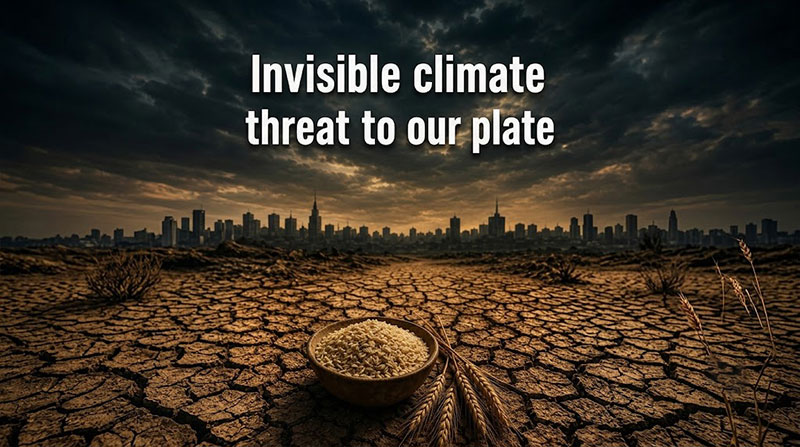
When people think about climate change, they usually picture scorching heatwaves, devastating floods, prolonged droughts, or failing harvests. These dramatic events dominate headlines because their impacts are immediate and visible. But another consequence of climate change is unfolding much more quietly, one that reaches our plates every day.
Agriculture is the foundation of our food system, providing the crops and livestock that nourish billions of people every day. Climate change is not only reducing the amount of food agriculture can produce but also changing the nutritional quality of the food we eat.
A bowl of rice, a serving of vegetables, or a plate of beans may look no different from those consumed decades ago. Growing evidence indicates that many staple foods now contain lower amounts of protein, iron, zinc, and several essential vitamins because of changing climatic conditions. In other words, we may be eating enough food while receiving fewer of the nutrients our bodies need.
This silent transformation has profound implications for public health, particularly in developing countries where millions of people rely on a limited number of staple crops for their daily nutrition.
Feeding People Is No Longer Enough
For much of the last century, agriculture had one overriding goal: produce more food. With the world’s population growing rapidly, increasing crop yields was essential, and scientific advances helped farmers achieve remarkable gains in productivity.
Today, however, success can no longer be measured by yield alone.
Scientists now emphasise the concept of nutrition security, ensuring that people receive not just enough calories to satisfy hunger, but also adequate amounts of proteins, vitamins, and essential minerals needed for healthy growth, strong immunity, and disease prevention. Climate change is making this objective increasingly difficult to achieve.
How Climate Change Is Changing Nutritional Value of Crops
Plants depend on a delicate balance of sunlight, water, carbon dioxide, healthy soils, and essential nutrients. Climate change disrupts all of these factors simultaneously.
Rising temperatures speed up plant growth, shortening the time available for grains and seeds to accumulate proteins and minerals. Longer droughts reduce the movement of nutrients from the soil into plant roots, while intense rainfall and flooding wash valuable nutrients out of agricultural soils and damage root systems.
Perhaps the most surprising effect comes from rising levels of atmospheric carbon dioxide (CO₂). Higher CO₂ often stimulates plant growth, allowing crops to produce more leaves, stems, or grains. At first glance, this seems like good news.
However, much of this additional growth comes from the accumulation of carbohydrates rather than essential nutrients. As a result, crops may become larger, but the concentration of proteins, vitamins, and minerals in the edible parts declines, a phenomenon known as the nutrient dilution effect.
Simply put, bigger harvests do not always mean more nutritious food.
The Nutrients We Are Losing
Research from around the world shows that the levels of several nutrients in food crops that are essential for human health are becoming increasingly vulnerable to the effects of climate change.
Proteins, which are essential for growth, muscle development, and tissue repair, often decline in cereal grains. Iron and zinc, two minerals already lacking in the diets of billions of people, also decline under elevated CO₂ levels and heat stress. Magnesium, which supports hundreds of important biochemical processes in the human body, may also be reduced.
Scientists have also reported declines in several B vitamins in staple cereals, while fruits and vegetables exposed to environmental stress frequently contain lower levels of vitamin C and natural antioxidants. These compounds play key roles in strengthening the immune system and protecting the body against disease.
Such changes have been observed in many important food crops, including rice, wheat, maize, legumes, potatoes, and numerous vegetables.
The Hidden Hunger Crisis
The greatest concern is that these nutritional changes are contributing to a growing problem known as hidden hunger.
Unlike conventional hunger, hidden hunger occurs when people consume enough food to meet their energy needs but still lack essential vitamins and minerals. A plate full of rice may provide sufficient calories, yet contain less iron, zinc, or protein than expect.
Worldwide, billions of people already suffer from micronutrient deficiencies. Climate change threatens to worsen this problem, especially in countries where diets depend heavily on staple cereals. Children, pregnant women, older adults, and low-income households are particularly vulnerable because their nutritional needs are greater and dietary choices are often limited.
Science Is Responding
Fortunately, scientists are not standing still.
Plant breeders are developing crop varieties that maintain higher levels of iron, zinc, and other essential nutrients even under heat and drought stress. One of the most promising approaches is biofortification, which uses conventional plant breeding to naturally increase the nutritional value of staple crops. These improved varieties are already helping millions of people obtain healthier diets in many parts of the world.
At the farm level, balanced fertiliser use, efficient irrigation, conservation agriculture, and climate-smart farming practices can help protect both crop yields and food quality.
Meanwhile, advances in precision agriculture, such as satellite monitoring, drones, soil sensors, and artificial intelligence, are helping farmers manage water and nutrients more efficiently while reducing losses to the environment. Researchers are also exploring improved fertiliser formulations and beneficial soil microorganisms that naturally improve nutrient uptake, providing environmentally sustainable solutions for the future.
Looking Beyond Bigger Harvests
For generations, agricultural success has been measured by the size of the harvest. In a changing climate, that measure is no longer enough.
The more important question is not simply how much food we produce, but how well that food nourishes the people who eat it.
The gradual decline in the nutritional quality of crop is one of climate change’s least visible yet most important consequences. Addressing it will require collaboration among scientists, farmers, policymakers, health professionals, and consumers.
Climate change is reshaping our food system in ways that extend far beyond crop failures and rising food prices. It is quietly changing what is on our plates and what is missing from them.
Ensuring that tomorrow’s food remains rich in the nutrients people need is just as important as producing enough food to feed the world’s population. The ultimate measure of agricultural success is not merely filling plates, but nourishing lives.
The writer can be contacted at samanthad@agri.pdn.ac.lk

Sooryavanshi the star as India complete 3-0 sweep

US and Iran hit pause on strikes for second day

Showers will occur in the Western, Sabaragamuwa and North-western provinces and in Galle, Matara, Kandy and Nuwara-Eliya districts

Chamika, Colambage help Galle Gallants consolidate top spot

BASL challenges NPP MP to repeat false claims outside Parliament

Judges’ retirement age row: Govt.-BASL powwow on the cards

‘Dates have the highest sugar content to fight Coronavirus’

Sunday Island 27 December – Headlines

#SundayIsland 17th December – Headlines

Sunday Island – 28th March

Sunday Island Headlines – 21 March

Sunday Island – 21st February – Headlines
-
 Features1 day ago
MBS: The Man of the Last Laugh
-
 Features1 day ago
A Landmark Gathering of Minds: The Ceylon Journal Roundtable Revives the Spirit of Intellectual Dialogue
-
 Midweek Review5 days ago
Three high-profile alleged suicides shaping key investigations
-
 Latest News1 day ago
Develop a programme to allocate underutilised state land for investment by returning migrant workers – President
-
 Life style1 day ago
A proud Sri Lankan voice in Australian Parliament
-

 News2 days ago
Fort Magistrate orders arrest of MP Archchuna
-

 Editorial1 day ago
‘Cockroaches’ tame a mighty regime
-

 Editorial2 days ago
An indictment of all parties