
Business
Customs posts record Rs. 2.26 tn revenue, accelerates digital overhaul

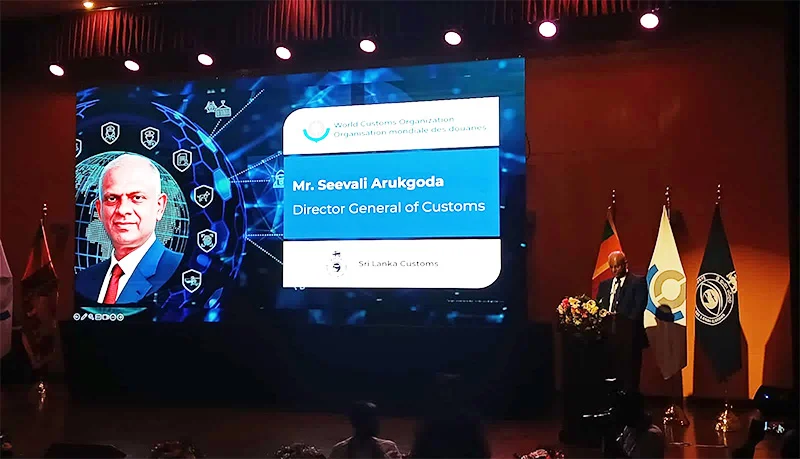
Sri Lanka Customs delivered its strongest performance in institutional history in 2025, exceeding national revenue targets while fast-tracking deep structural reforms to protect revenue, secure borders and lower trade friction, Customs Director General Seevali Arukgoda said at the International Customs Day celebrations 2026 in Colombo.
Addressing officials, diplomats and private-sector stakeholders under the global theme “Customs Protecting Society through Vigilance and Commitment,” Arukgoda said Customs collected Rs. 2,257 billion, surpassing the Rs. 2,231 billion target, and demonstrating the Department’s expanding role as both a revenue authority and trade facilitator.
“This is not a one-off outcome. It is the result of sustained reforms, disciplined enforcement and a clear strategic focus on protecting revenue while facilitating legitimate trade,” Arukgoda said.
While motor vehicles remained the single largest contributor, general cargo revenue rose 18 percent, signalling improved compliance and higher trade throughput. Enforcement-driven revenue reached Rs. 32 billion, up 10 percent year-on-year, underscoring the growing impact of intelligence-led controls.
“Every rupee secured through enforcement represents revenue protected for the State and confidence restored in the system,” the Director General said.
Beyond revenue, Arukgoda stressed Customs’ frontline role in protecting society, citing interdictions of narcotics, gold, foreign currency, substandard imports and illegal wildlife movements, coupled with firm penalties on non-compliant traders.
A major institutional breakthrough was the data-sharing MoU signed this month with the Inland Revenue Department, enabling parallel audits and coordinated investigations.
“Undervaluation and overvaluation will no longer be low-risk options. This integration closes a long-standing gap in revenue protection,” Arukgoda said.
On trade facilitation, he said Customs has moved decisively toward digital, rules-based clearance, expanding the Authorized Economic Operator (AEO) programme to MSMEs and rolling out platforms such as ‘Track My CusDec’ and Motor Vehicle Verification.
Advance Rulings have also been expanded to cover classification, valuation and rules of origin, fully aligning Sri Lanka with WTO Trade Facilitation Agreement obligations.
Looking ahead, Arukgoda said Sri Lanka Customs has been assigned a Rs. 2,207 billion revenue target for 2026, which the Department is confident of delivering amid continued reform momentum.
He added:”Our priority for 2026 is total digitalisation of remaining manual processes. This is about speed, transparency and eliminating discretion where it does not belong.”
Among the flagship projects is a state-of-the-art cargo examination yard at Kerawalapitiya, scheduled for completion by 2027, expected to reduce physical examinations from 40 percent to 10 percent, easing congestion and supporting higher trade volumes.
Other 2026 initiatives include Pre-Arrival Clearance, fully paperless cargo processing, an Automated Risk Management System, an Electronic Cargo Tracking System, and an electronic auction platform for goods disposal.
Customs will also expand AEO status to SMEs, freight forwarders and Customs House Agents, reducing compliance costs for trusted operators.
Arukgoda also announced the release of Time Release Study 2025, conducted in line with World Customs Organization guidelines, providing data-driven insights to remove bottlenecks across the clearance chain.
In a major governance reform, Sri Lanka Customs will issue a Code of Ethics and Conduct this week, developed with technical assistance from the IMF, WCO, World Bank, UNDP, Presidential Secretariat and CIABOC, and cleared by the Attorney General.
“Integrity is not optional. This Code institutionalises accountability and sets clear standards for every officer,” Arukgoda said.
The event was attended by Minister of Labour and Deputy Minister of Finance Dr. Anil Jayantha Fernando, Deputy Minister of Economic Development Nishantha Jayaweera, senior government officials, diplomats, development partners and retired senior Customs officers.
By Ifham Nizam



11 March 2026; Colombo – SriLankan Airlines is set to increase its weekly service between Colombo and Melbourne to 10 flights, effective from 2 August 2026, with the addition of three more scheduled flights in response to growing demand and evolving market dynamics. The expansion reinforces the airline’s commitment to strengthening its footprint in Australia, recently identified as one of the fastest-growing inbound tourism markets to Sri Lanka, driven by leisure travel and a rising volume of visits by family and friends.
The newly added flights will operate every Tuesday, Thursday and Sunday, departing Colombo as UL608 at 14:10 hrs and arriving in Melbourne at 04:30 hrs the following day. The return service, UL609, will depart Melbourne every Wednesday, Friday and Monday at 06:00 hrs, arriving in Colombo at 12:15 hrs the same day, offering convenient onward connections across the airline’s network. The schedule is designed to maximise time spent in Sri Lanka for leisure travellers while enhancing connectivity for passengers travelling onwards to India via Colombo.
In addition to the new frequencies, the airline will continue operating its daily service, UL604, departing Colombo at 00:20 hrs and arriving in Melbourne at 14:40 hrs, with the return service UL605 departing Melbourne at 16:10 hrs and arriving in Colombo at 22:25 hrs. These services provide seamless connectivity to key destinations across India and beyond.
This addition of flights will provide Sri Lankans with better options when choosing flights between the two countries and enable them to plan their travel more conveniently. The increased frequency will be especially beneficial for the Sri Lankan diaspora living in Australia, providing greater flexibility to visit family and friends while maintaining strong connections with their homeland.
Additionally, Sri Lankan students studying in Australia will find these enhanced services advantageous, as the expanded schedule accommodates academic calendars and holiday breaks, making it easier to travel home and return to their studies. Overall, improved connectivity supports both the expatriate community and students by offering more convenient and accessible travel options tailored to their needs.
The increased frequencies will further strengthen Colombo’s role as a regional hub, enabling Indian travellers to seamlessly connect via Sri Lanka to Melbourne, with convenient schedules and efficient onward connections. For more information and bookings, visit www.srilankan.com or follow us on our social media.
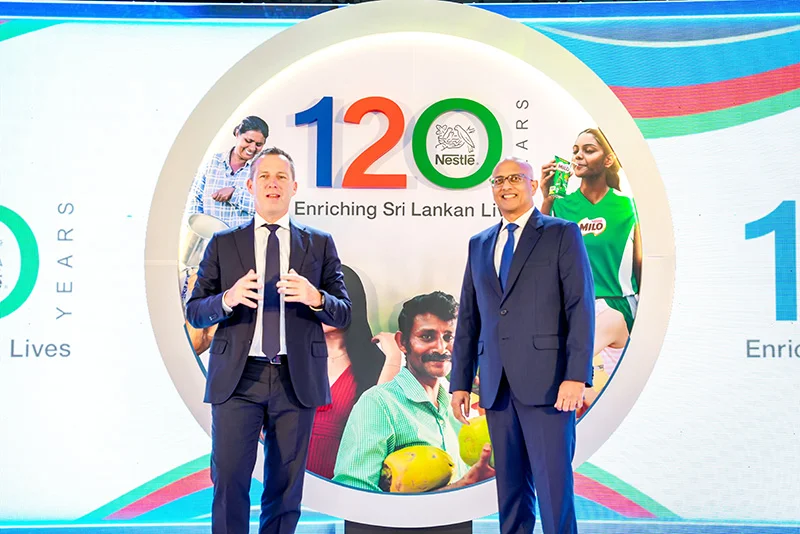
Nestlé Lanka Limited this year marks 120 years of operations in Sri Lanka, highlighting a century-long presence that has extended beyond food manufacturing to supporting farmers, communities, youth employment and environmental sustainability.
Established in 1906, the company has grown into one of Sri Lanka’s leading food and beverage manufacturers, today producing more than 90% of the products it sells locally. Over the decades, Nestlé Lanka has built a strong domestic footprint through local sourcing, long-term farmer partnerships and continued investment in manufacturing.
Through widely recognised brands such as Nestomalt, Milo and Maggi, the company has become a familiar presence in Sri Lankan households, offering products designed to meet local nutritional needs. Many of its products are fortified with micronutrients aimed at improving dietary intake, while brands such as Milo and Nestomalt have also supported youth sports and active lifestyles in the country.
Nestlé Lanka’s engagement with local agriculture has also played a role in strengthening rural livelihoods. The company works closely with dairy and coconut farmers, providing technical assistance, skills development and reliable market access as part of its responsible sourcing efforts.
The company has also expanded programmes aimed at improving youth employability. Through the “Nestlé Needs YOUth” initiative, young Sri Lankans are provided with access to training, learning and career opportunities. Partnerships with organisations such as BConnected have also helped promote inclusive employment opportunities for people with disabilities.
Sustainability has become an increasingly central focus of the company’s operations. Nestlé Lanka’s manufacturing facility in Kurunegala operates on 100% renewable electricity, while a biomass boiler commissioned in 2024 has helped reduce carbon emissions from manufacturing. The company aims to achieve net-zero carbon emissions by 2050.
Efforts to reduce environmental impact have also extended to packaging. Nestlé Lanka pioneered the shift from plastic to paper straws in aseptic beverage cartons in 2019 and supported the establishment of Sri Lanka’s first recycling plant for such cartons. The company aims to become fully plastic neutral by 2026.
Chairman and Managing Director Bernie Stefan said the milestone reflects the long-standing trust Sri Lankan consumers have placed in the company and the partnerships it has built across the country over generations.
By Sanath Nanayakkare
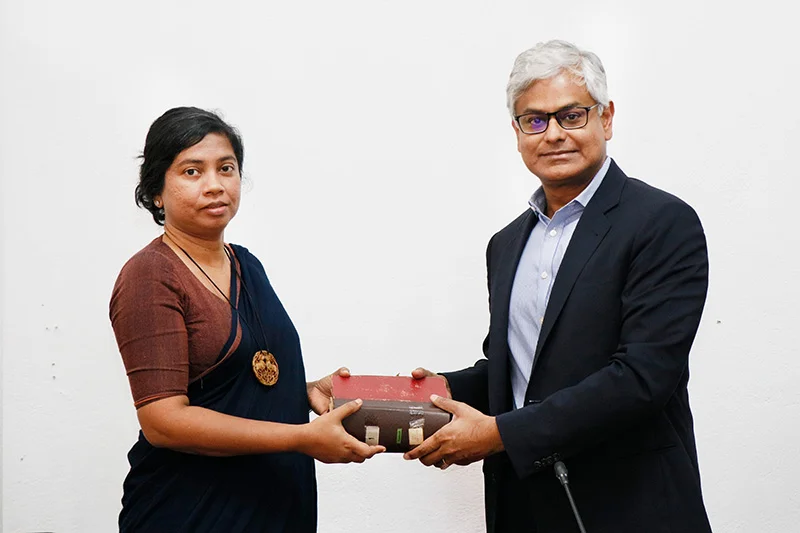
The Ceylon Chamber of Commerce has formally handed over its historical records to the National Archives Department of Sri Lanka, placing over a century of the nation’s commercial history into the care of the country’s official custodians of heritage.
The historical archive being handed over spans from the Chamber’s founding in 1839 to 1973, and includes correspondence, meeting minutes, reports, ledgers, and publications that chronicle the development of trade, enterprise, and industry in Sri Lanka. Together, these records provide a rare and detailed account of how the island’s economy evolved and how its business community helped shape national progress.
The Ceylon Chamber of Commerce was established on 25 March 1839 on the principle that the interests of commerce and trade are best advanced when merchants unite and cooperate in matters affecting the common good. At the time, Ceylon was among the earliest regions in Asia to establish a chamber of commerce, alongside counterparts in Bengal, Bombay, Madras, Canton, Penang, and Singapore.
From its earliest years, the Chamber played a central role in organising and guiding trade. It played a central role in establishing and growing the export economy built on commodities such as coffee, cinnamon, coconut oil, tea, and rubber, and hosted the island’s renowned tea and rubber auctions. It also developed rules and standards for trading practices, helping create an environment of trust and reliability that enabled Sri Lanka’s commerce to thrive.

Advisory for Severe Lightning issued to the Western and Sabaragamuwa provinces and Galle and Matara districts

Jemimah Rodrigues, Harmanpreet Kaur, Mitchell Starc and Kuldeep Yadav among ESPNcricinfo award winners for 2025

China approves ‘ethnic unity’ law requiring minorities to learn Mandarin

Nasa spacecraft weighing 1,300lb due to re-enter Earth’s atmosphere

Chinese national arrested over attempt to smuggle 2,000 queen ants from Kenya

Attacks reported on three more cargo ships in Gulf, with oil price back near $100

‘Dates have the highest sugar content to fight Coronavirus’

Sunday Island 27 December – Headlines

#SundayIsland 17th December – Headlines

Sunday Island – 28th March

Sunday Island Headlines – 21 March

Sunday Island – 21st February – Headlines
-

 News7 days ago
University of Wolverhampton confirms Ranil was officially invited
-

 News7 days ago
Female lawyer given 12 years RI for preparing forged deeds for Borella land
-

 News6 days ago
Peradeniya Uni issues alert over leopards in its premises
-

 News4 days ago
Repatriation of Iranian naval personnel Sri Lanka’s call: Washington
-
 News7 days ago
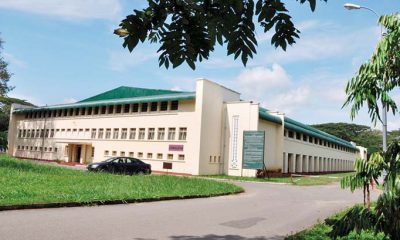
Library crisis hits Pera university
-

 News6 days ago
Wife raises alarm over Sallay’s detention under PTA
-

 News7 days ago
‘IRIS Dena was Indian Navy guest, hit without warning’, Iran warns US of bitter regret
-
 Latest News7 days ago
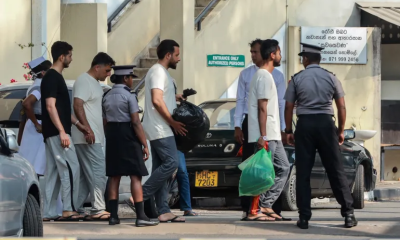
Sri Lanka evacuates crew of second Iranian vessel after US sunk IRIS Dena