
Business
CSE continues its effort to disseminate greater knowledge of financial markets


The Colombo Stock Exchange (CSE) recognised students of the Advanced Diploma in Financial Markets (ADFM) at a ceremony which was held on 9th February 2022 at the Victorian Hall, Kingsburry Hotel.
The event marks a milestone in the CSE’s efforts to foster financial literacy and education in the capital market as it is the first educational qualification to be awarded by the Stock Exchange. The Chairman of the CSE, Dumith Fernando, was the Chief Guest of the occasion, whilst the Keynote address of the ceremony was delivered by Co-founder and Chief Investment Officer of Lynear Wealth Management, Dr. Naveen Gunawardane. CSE management, lecturers, students, and their guests also participated in the awards ceremony.
The ADFM was implemented in response to a growing demand for an entry-level academic qualification to be awarded by the CSE to enable greater knowledge of financial markets, particularly with a specific focus on capital market operations and investment.
ADFM features 10 modules and was completed over a period of 9 months, covering areas such as capital market regulations, investment analysis, portfolio management, macro-economics, and other related subject matters. Course content featured a combination of theory and practical aspects of financial markets and included the management of a model portfolio by the students, integrating real-world expertise with practical skills. The modules were conducted by an eminent panel of lecturers, consisting of respected local university lecturers and capital market experts. 48 students completed the course and out of which 39 students from Sri Lanka were recognized at the ceremony.
The ADFM is recognized by the Chartered Institute of Management Accountants (CIMA) and the Institute of Certified Management Accountants of Sri Lanka (CMA), which provide ADFM completed students an accelerated route to obtain a qualification in management accounting.

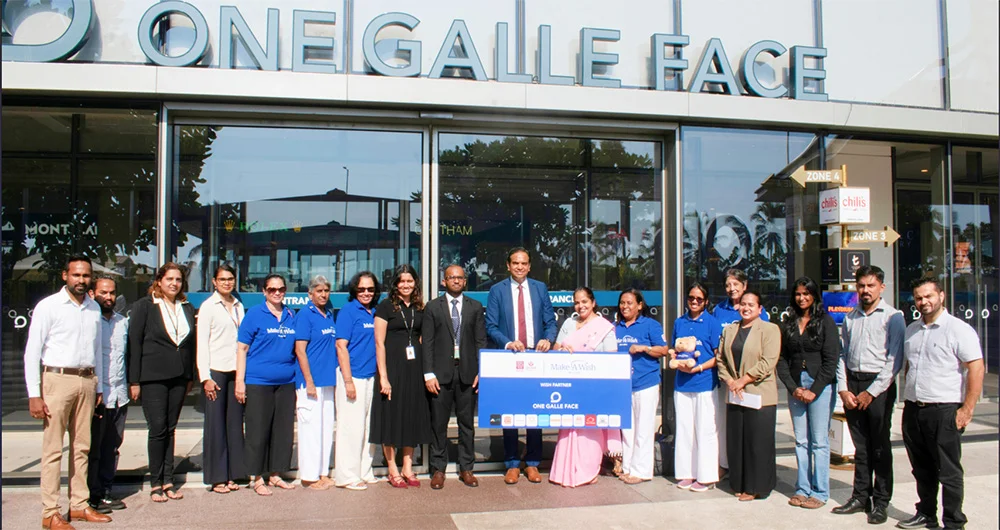
One Galle Face has partnered with the Indira Cancer Trust (ICT) and Make-A-Wish Sri Lanka to create meaningful and memorable “Wish Experiences” for children with critical illnesses in line with Children’s Day.
As a leading lifestyle and retail destination, One Galle Face recognizes the importance of creating experiences that extend beyond shopping and entertainment. Through this partnership, the mall will host special Wish Experiences, welcoming a child and their family for a specially curated day at One Galle Face Mall. During each visit, the children will have the chance to enjoy personalized shopping, exciting entertainment, and different lifestyle experiences designed to bring their heartfelt wishes to life in a joyful, immersive, and dignified setting, thereby creating meaningful moments of happiness, connection, and lasting memories for the child and their loved ones.
One Galle Face partnered with selected tenants including Burger King, Delifrance, Popeyes, Playdium, Yah Empyrean, Tea Tang, Toytopia, Food Studio, Nolimit, Red N Pink and AVR to contribute discounts, gifts, donations, or unique experiences. This partnership with ICT will allow for children with critical Illnesses to enjoy these offerings with their families.
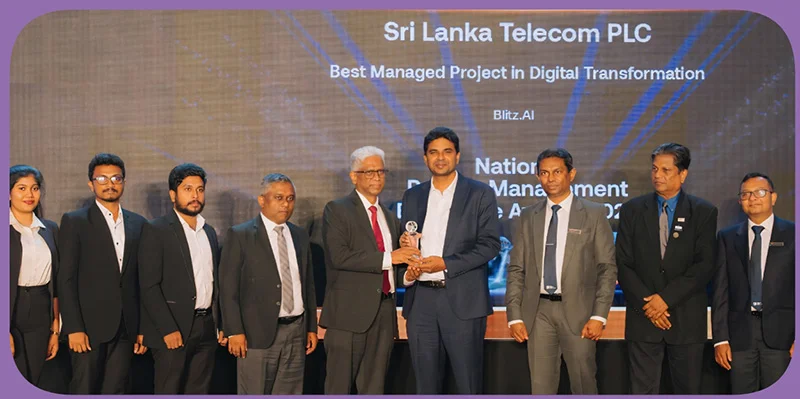
In recognition for turning ideas into impactful solutions, delivering tangible benefit, and resolving real-world challenges into results that will shape a smarter, more connected future, SLT-MOBITEL, the National ICT Solutions Provider, received multiple accolades at the National Project Management Excellence Awards 2026 (NPME Awards).
At the recently held ceremony, SLT‑MOBITEL emerged as a leading award winner, receiving accolades from across a wide range of categories including AI, digitisation, infrastructure, and industry sectors, reflecting the breadth of its expertise in project leadership.
SLT-MOBITEL secured the Gold Award for Best Managed Project in ICT Infrastructure for the Construction of the Equipment Building for the SEA‑ME‑WE 6 Cable Landing Station, Browns Hill, Matara.
Business
Digital Economy Secretary Waruna Sri Dhanapala at RCSS Strategic Dialogue: ‘Maritime Security and the Digital Economy should no longer be treated as separate policy areas’
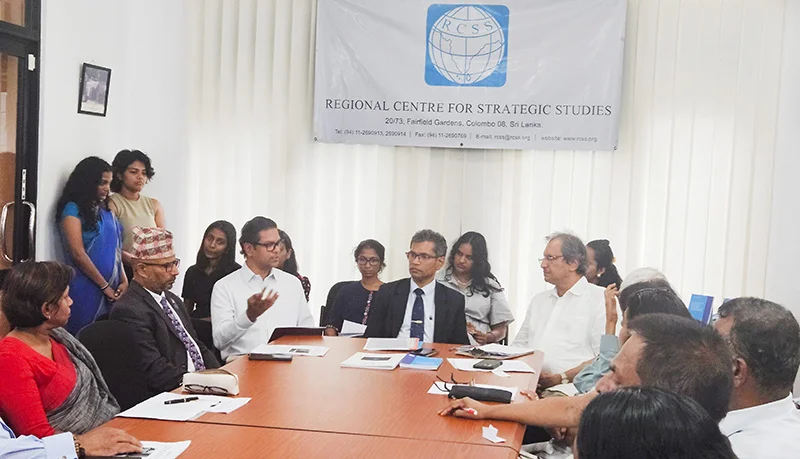
Secretary of the Ministry of Digital Economy Mr. Waruna Sri Dhanapala has observed that maritime security and the digital economy should no longer be treated as separate policy areas, but as interconnected components of national stability, economic resilience and technological sovereignty.
He made this observation when he delivered the keynote address at ‘RCSS Strategic Dialogue -6’ on the theme ‘Navigating the Digital and Maritime Nexus: Technology, Sovereignty, and Security’ and held at the Regional Centre for Strategic Studies (RCSS) on 8 September 2026. The dialogue was a sequel to the recently completed RCSS Policy Study “Non-Traditional Security in the Bay of Bengal: Maritime Threats, Corrective Measures, and Technological Innovations’, which highlighted emerging non-traditional maritime security challenges and the role of emerging technologies. The Dialogue provided an opportunity to extend this work through a broader cross-sectoral discussion on maritime security and technological capabilities.
Secretary Dhanapala who observed that the digital economy remains anchored in the physical world and for island and coastal states that the physical environment is overwhelmingly maritime, highlighted several areas where Sri Lanka’s maritime and technological interests intersect. These included seabed resources, offshore energy, shipbuilding and repair, and submarine communications infrastructure. He stressed the importance of developing domestic technological capabilities while engaging international partners in ways that protect national interests and environmental safeguards. In his capacity as Chairman of the Telecommunications Regulatory Commission of Sri Lanka (TRCSL), he also emphasized the strategic importance of submarine fibre-optic cables to Sri Lanka’s digital economy and called for their protection and monitoring to be incorporated into the country’s maritime security framework. He further underscored the importance of technology in addressing environmental security challenges, including maritime pollution and oil spills.
Also recalling his diplomatic role in the UN system being the Vice Chair for the UN General Assembly Committee on Economic Finance as well as a contributor for the formation of Sustainable Development Goals, stressed the importance of active collaboration of coastal and island states in the wake of the unprecedented climate scenarios. He also acknowledged the important roles played by former Permanent Representatives to the UN in New York – Ambassador Shirley Hamilton Amarasinghe and Dr. Palitha Kohona for their remarkable contribution to the international maritime laws in the adoption of the UN Convention on the Law of the Sea (UNCLOS) and the Agreement on Marine Biological Diversity of Areas beyond National Jurisdiction (BBNJ Agreement) respectively.
Chaired by Executive Director of RCSS, Ambassador (Retd.) Ravinatha Aryasinha, and featuring a presentation by RCSS Research/Programme Officer Shayan Peris, it brought together serving and retired senior public officials, diplomats, members of the security forces, academics, researchers, technology and maritime practitioners, civil society representatives and other stakeholders to examine the changing technological dimensions of maritime security and their implications for Sri Lanka.
At the outset, Ambassador Aryasinha welcoming Acting Ambassador of Nepal to Sri Lanka, Vijay Kumar Raut, noted the difficult circumstances under which he participated in the dialogue following the recent flood-related tragedy in Nepal. Participants observed a one-minute silence in remembrance of those who lost their lives. Ambassador Raut subsequently briefed participants on the situation in Nepal, including the loss of life, displacement and ongoing rescue and recovery efforts, while noting the wider regional implications of environmental and climatic developments in the Himalayan region for countries including Sri Lanka and Maldives.
Country Representative of The Asia Foundation, Johann Rebert, reaffirmed TAF’s support for RCSS’s work on maritime security and technology. He highlighted the importance of translating research and policy dialogue into practical action, including through engagement with coastal communities.
In his presentation, Shayan Peris examined how emerging technologies are simultaneously strengthening maritime security capabilities while creating new vulnerabilities and dependencies. He highlighted the evolution of Maritime Domain Awareness (MDA) from conventional vessel tracking towards the integration of AIS, radar, satellite imagery and artificial intelligence to identify anomalous activity and support more targeted responses. He also examined the growing convergence between maritime and digital security, including risks to ports and other critical infrastructure arising from cyber vulnerabilities, the resilience of submarine cable networks, and the expanding use of unmanned and autonomous systems for surveillance, fisheries monitoring, pollution response and search and rescue. Peris emphasized that for resource-constrained states such as Sri Lanka, the central challenge is not simply acquiring more advanced technologies, but developing the institutional capacity to integrate information, retain expertise and act upon it. He noted that technological resilience therefore depends on operational cyber security, resilient connectivity, effective information-sharing and appropriate governance frameworks for artificial intelligence and autonomous systems.
An open discussion followed which considered the practical challenges of translating technological systems into effective maritime security capabilities. Participants highlighted gaps in the sustainability of surveillance and information-sharing systems, the high cost of some externally provided platforms, and the difficulty of retaining trained personnel and institutional knowledge within agencies. Further examined were the opportunities and limitations of regional cooperation and information-sharing, particularly in addressing transnational maritime threats, as well as the need to balance sophisticated technological solutions with affordable and locally appropriate approaches. Participants also considered the role of the private sector, technology transfer, maritime industries and capacity building in strengthening Sri Lanka’s position as an Indian Ocean maritime hub. The discussion highlighted the importance of bringing together perspectives from government, maritime agencies, technology, academia, industry and civil society in addressing emerging maritime security challenges. He noted that the issues raised during the dialogue would be reflected in RCSS’s continuing work on the subject, providing a basis for further research and policy engagement.

Samash cracks quick fire knock as Josephians cruise to victory

One Galle Face marks Children’s Day

SLT-MOBITEL shines for Project Excellence at NPME Awards 2026

Digital Economy Secretary Waruna Sri Dhanapala at RCSS Strategic Dialogue: ‘Maritime Security and the Digital Economy should no longer be treated as separate policy areas’

INSEE honours suppliers and partners at Supplier Excellence Awards 2026

Former first lady Shiranthi Rajapaksa arrested by CIABOC

‘Dates have the highest sugar content to fight Coronavirus’

Sunday Island 27 December – Headlines

#SundayIsland 17th December – Headlines

Sunday Island – 28th March

Sunday Island Headlines – 21 March

Sunday Island – 21st February – Headlines
-

 News7 days ago
US-assisted ‘Ice’ detection: NPC to examine IGP’s move to transfer drug-busting team
-

 Editorial6 days ago
Colombo Port drug bust: The plot thickens
-

 Editorial7 days ago
Drug busting, transfers and trust deficit
-

 Features4 days ago
The first woman in the foreign service or Ceylon Overseas Service it was then called
-

 Editorial5 days ago
Fuelling discontent and protest
-

 News3 days ago
Geneva takes up Sallay’s case and govt. ignores opportunity to answer accusations
-

 Latest News5 days ago
Tharindu Rathnayake, bowlers secure Asian Games Bronze for Sri Lanka
-

 Foreign News5 days ago
Ten injured after car crashes into rugby supporters in Australia