Connect with us

News

Covid-19 jab controversy: GMOA questions creation of new category

Published

on

Namal promises countrywide inoculation of 20-30 group soon

By Shamindra Ferdinando

The Government Medical Officers’ Association (GMOA) has questioned the rationale behind vaccinating those between 20-30 years of age and the prioritisation of districts, contrary to a consensus reached with President Gotabaya Rajapaksa.

Assistant Secretary, GMOA, Dr. Naveen de Zoysa, on Thursday (2), accused the Epidemiology Unit of following a politically motivated agenda inimical to the government’s overall response to the raging Covid-19 pandemic.

Dr. Samitha Ginige is the Chief Epidemiologist.who replaced Dr. Sudath Samaraweera in June this year.

Dr. de Zoysa alleged that Health Secretary Maj. Gen. Dr. Sanjeewa Munasinghe has backed the Epidemiology unit strategy, thereby placing the Director General of Health Services (DGHS) Dr. Asela Gunawardena and the Deputy Director General of Health Services (Public Health Services) Dr. Mahendra Arnold in an extremely difficult and embarrassing position.

Dr. de Zoysa alleged that they had lost control of the vaccination drive.

The GMOA fired a salvo in the wake of the Sports and Youth Affairs Ministry announcement of the launch of vaccination drive in the Hambantota district meant to inoculate those in the 20-30 age group.

It quoted Sports and Youth Affairs Ministry Namal Rajapaksa as having said the inoculation of that particular group was now taking place in the Hambantota district and would soon be implemented countrywide.

 Having visited the vaccination centres at Ambalantota, Ranna and Tissamaharama in the Hambantota district, young Minister Rajapaksa emphasized that health sector specialists approved the vaccination of this particular category. He declared that the vaccination drive targeting 20 to 30 group was being implemented with the blessings of the President, the Prime Minister and the Health Minister.

However, GMOA spokesperson Dr de Zoysa questioned the criterion under which those districts were being chosen ahead of others for vaccination and also the particular vaccine allocated on district/age group basis. Dr. de Zoysa declared they were in the dark as regards the latest controversial decision.

The GMOA spokesperson asked why only the military was tasked with inoculating the public with Pfizer vaccine. “Why isn’t the health sector given that opportunity? If we are capable of inoculating the public with Sinopharm, Moderna and Sputnik why not Pfizer,” Dr. De Zoysa asked, urging those in authority to provide a plausible explanation.

Dr. de Zoysa said that irrational decisions had placed the entire Covid-19 fighting process in jeopardy with those responsible taking contradictory stands on the vaccination drive.

In spite of a decision taken with the participation of President Gotabaya Rajapaksa to release sufficient stocks of Covid-19 vaccines to the health sector, the military continued to receive ample supplies whereas hospitals and other centres managed by civilian staff were in jeopardy. The situation was so bad that civilian managed vaccination could cause quite a serious spread of the disease, Dr. de Zoysa said, pointing out the crisis caused by an ill-informed decision to ask the public to get the first dose from any vaccination centre.

The GMOA urged newly appointed health minister Keheliya Rambukwella to follow the strategy they agreed on. Rambukwella recently succeeded Pavitradevi Wanniarachchi who publicly lamented what she called her unceremonious exit from the health ministry.

Dr. De Zoysa urged the government to take a realistic view of the developing situation and implement a scientifically sound strategy meant to bring down the daily deaths under control by Oct-Nov this year.

Meanwhile, the Health Ministry in a statement issued following a meeting Minister Rambukwella had with a health sector delegation led by Ven. Muruththettuwe Ananda on Sept 2, stated that the vaccination of 18-30 year category got underway at district basis on Sept 2.

The former Media Minister Rambukwella said that the inoculation of those 30 and above could be completed within two – three weeks and 20 –30 category vaccinated before end of October. According to lawmaker Rambukwella, 20-30 category comprised about 3.7 mn persons.

 The minister explained that in line with the government decision to inoculate frontline health workers, those engaged in essential services as well as those in the garment trade, a substantial number who came within 20-30 category had been inoculated.

 The health ministry statement, however, didn’t refer to the launch of the vaccination programme in the Hambantota district. Subsequently, the health ministry, in another statement, revised the vaccinated category from 18-30 to 20-30.

Well informed sources said that the government should have vaccinated those in the 18-30 category as planned and then inoculate the 15-18 group. Sources pointed out that the vaccination of those in Advance Level classes as well as students sitting the 2021 AL examination had been denied the protection they deserved.

Sources said that the creation of 20-30 category should be examined against the earlier declaration made by President Rajapaksa that the health administration should recommend whether to give a third dose to those who had been vaccinated or vaccinate the category under 30. The President dealt with the issue at a recent meeting of the Covid Prevention Task Force at the Presidential Secretariat.

Sources at Export Processing Zones (EPZs) said that the government took tangible measures to have those working in manufacturing plants within the zones and outside inoculated. Sources said that the intervention made by Minister Namal Rajapaksa in that regard was quite helpful.


News

PUCSL and Treasury under IMF spotlight as CEB seeks 11.5% power tariff hike

Published

on

The Public Utilities Commission of Sri Lanka (PUCSL) and the Treasury are facing heightened scrutiny as the Ceylon Electricity Board (CEB) presses for an 11.5 percent electricity tariff increase, a move closely tied to IMF-driven state-owned enterprise (SOE) reforms aimed at curbing losses and easing fiscal pressure on the State.

The proposed hike comes as the Treasury intensifies efforts to reduce the budgetary burden of loss-making SOEs under Sri Lanka’s IMF programme, which places strong emphasis on cost-reflective pricing, improved governance and the elimination of quasi-fiscal deficits.

Power sector sources said the PUCSL has completed its technical evaluation of the CEB proposal and is expected to announce its determination shortly.

The decision is being closely watched not only as a test of regulatory independence, but also as an indicator of how Treasury-backed fiscal discipline is being enforced through independent regulators.Under the IMF agreement, Sri Lanka has committed to restructuring key SOEs, such as, the CEB to prevent recurring losses from spilling over into public finances.

Treasury officials have repeatedly warned that continued operational losses at the utility could ultimately require state intervention, undermining fiscal consolidation targets agreed with the IMF.

The CEB has justified the proposed 11.5 percent hike by citing high generation costs, foreign currency loan repayments and accumulated legacy losses, arguing that further tariff adjustments are necessary to stabilise finances and avoid a return to Treasury support.

However, critics argue that IMF-aligned reforms should not translate into routine tariff hikes without meaningful improvements in efficiency, cost controls and governance within the utility.

Trade unions and consumer groups have urged the PUCSL to resist pressure from both the CEB and fiscal authorities to simply pass costs on to consumers.

They also note that improved hydropower availability should reduce dependence on expensive thermal generation, easing cost pressures and giving the regulator room to moderate any tariff increase.

Energy analysts say the PUCSL’s ruling will reflect how effectively the Treasury’s fiscal objectives are being balanced against the regulator’s statutory duty to protect consumers, warning that over-reliance on tariff increases could erode public support for IMF-backed reforms.

Business chambers have cautioned that another electricity price hike could weaken industrial competitiveness and slow economic recovery, particularly in export-oriented and energy-intensive sectors already grappling with elevated costs.

Electricity tariffs remain one of the most politically sensitive aspects of IMF-linked restructuring, with previous hikes triggering widespread public discontent and raising concerns over social impact.

The PUCSL is expected to outline the basis of its decision, including whether the proposed 11.5 percent increase will be approved in full, scaled down, or restructured through slab-based mechanisms to cushion low-income households.

An energy expert stressed that Sri Lanka navigates IMF-mandated fiscal and SOE reforms, the forthcoming ruling is widely seen as a defining moment—testing not only the independence of the regulator, but also the Treasury’s ability to pursue reform without deepening the burden on consumers.

By Ifham Nizam ✍️

Continue Reading

News

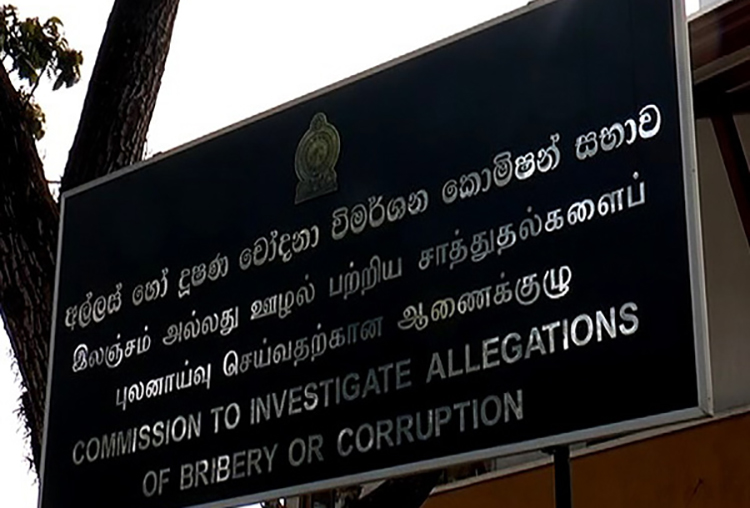
Bellana says Rs 900 mn fraud at NHSL cannot be suppressed by moving CID against him

Published

on

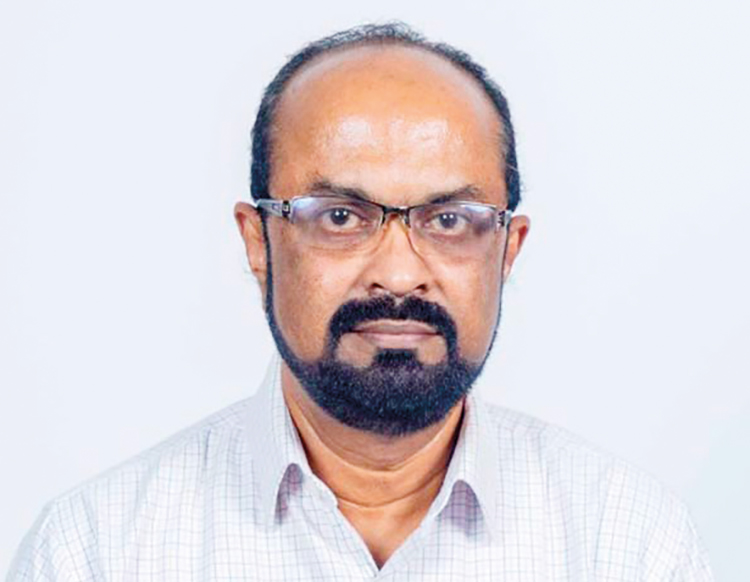
Dr. Bellana

Massive waste, corruption, irregularities and mismanagement at laboratories of the country’s premier hospital, revealed by the National Audit Office (NAO), couldn’t be suppressed by sacking or accusing him of issuing death threats to Health Secretary Dr. Anil Jasinghe, recently sacked Director of the National Hospital of Sri Lanka (NHSL) Dr. Rukshan Bellana told The Island.

Dr. Bellana said so responding to Dr. Jasinghe’s request for police protection claiming that he (Bellana) was directly responsible for threatening him.

The NPP government owed an explanation without further delay as the queries raised by NAO pertained to Rs 900 mn fraud/loss caused as a result of procurement of chemical reagents for the 2022 to 2024 period remained unanswered, Dr. Bellana said, pointing out that NAO raised the issue in June last year.

Having accused all other political parties of corruption at all levels, the NPP couldn’t under any circumstances remain mum on NAO’s audit query, DR. Bellana said, claiming that he heard of attempts by certain interested parties to settle the matter outside legal procedures.

The former GMOA official said that the NPP’s reputation was at stake. Perhaps President Anura Kumara Dissanayake should look into this matter and ensure proper investigation. Dr. Bellana alleged that those who had been implicated in the NAO inquiry were making an attempt to depict procurement of shelf time expired chemical reagents as a minor matter.

By Shamindra Ferdinando ✍️

Continue Reading

News

First harvest of rice offered to Dalada Maligawa

Published

on

Ven. Thibbatuwawe Sri Medhankara Thera, a member of the Thevava (officiating clergy) of the Sacred Tooth Relic, and Diyawadana Nilame Pradeep Nilanga Dela, participate in the Aluth Sahal Mangallaya ritual

Continuing a centuries-old tradition, dating back to the era of ancient kings, the annual ‘Aluth Sahal Mangalya’—the offering of alms prepared from the maiden harvest of rice—was ceremonially observed at the Sri Dalada Maligawa on Duruthu Full Moon Poya Day, 03rd January.

The religious observances were conducted with the participation of Ven. Thibbatuwawe Sri Medhankara Thera, a member of the Thevava (officiating clergy) of the Sacred Tooth Relic, and Diyawadana Nilame Pradeep Nilanga Dela.

In keeping with long-established customs, paddy harvested from lands belonging to the Sri Dalada Maligawa was brought from the Atuwa (granary) in Pallekele. The newly harvested rice was subsequently prepared and offered as Buddha Pooja to the Sacred Tooth Relic.

Text and Pic by SK Samarnayake ✍️

Continue Reading

Trending