
Latest News
Conway 178* and Latham 137 grind West Indies to dust in Mount Maunganui

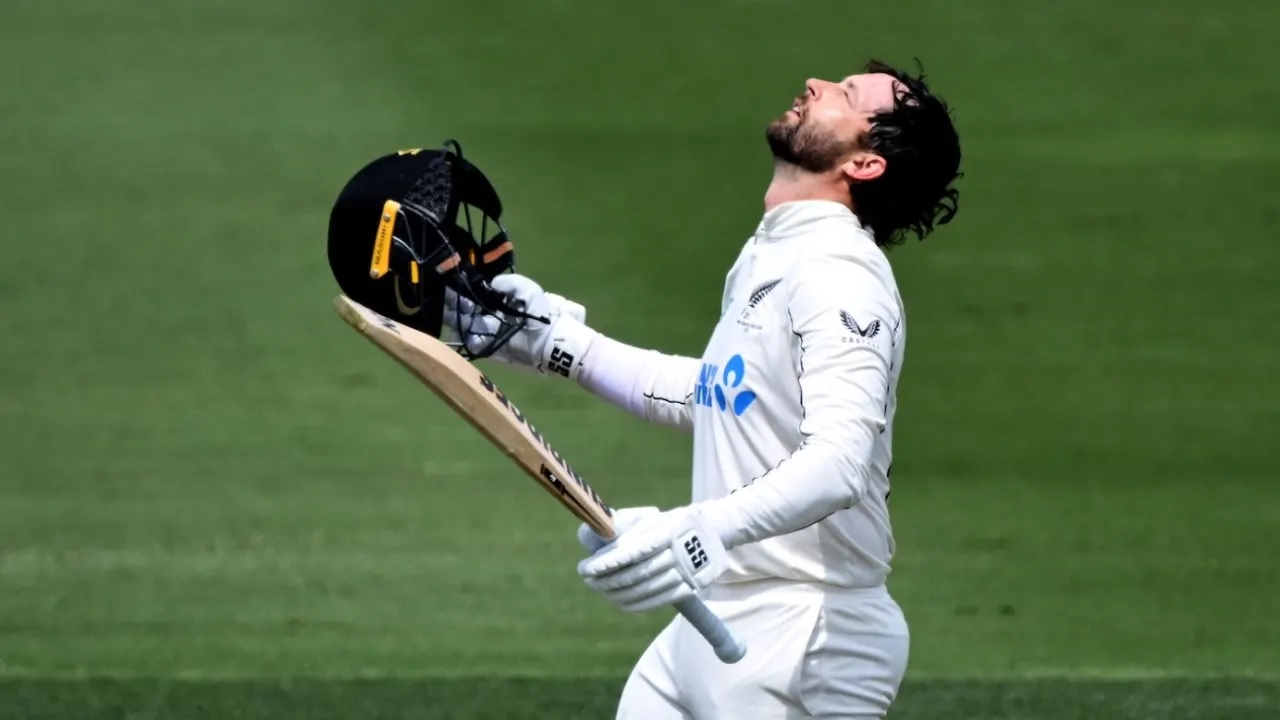
The Bay of Plenty lived up to its name but only for New Zealand. Devon Conway and Tom Latham harvested a century each and by that time they were having so much fun they would barely let anybody else play.
West Indies could argue that was a bit rude. They were in Mount Maunganui looking for rich bounty as well. A first Test win on these shores for 30 years, which if secured would hand them a share of this series’ spoils. All of that cast them in the role of a protagonist at the start of the day. But as time wore on and records – both trivial and tumultuous – came to pass, Roston Chase and his men faded into the background.
Each of the five previous Test matches at this ground have yielded a wicket in its first session. This one didn’t. Kane Williamson, so used to an early start at the office, had to wait the longest he ever has to clock in. So restless had he grown that at the start of the final session, he was seen wearing all his gear barring the helmet practicing a rapid-fire series of leaves and blocks. There will be reels. Split-screens with Latham and Conway facing real cricket balls out in the middle and this guy just pretending to do so with a caption of who did it better. The answer is actually Terry Jarvis and Glenn Turner.
Latham had a big part in the history he helped make. Over 25 home Tests, dating all the way back to March 2012, New Zealand have only ever chosen to bowl after winning the toss. Here, he had a hunch about putting runs on the board. Outside of that one bold move, everything else he did was basic. Playing close to the body. Knowing exactly where his off stump was. Frustrating the bowlers to target his pads. Manufacturing easy put-aways. Latham’s 15th Test century – where he went past 6000 runs as an opener – was proof that fairy tales aren’t the only things that can come to life. Textbooks do too. It took all the way to 6.30pm for Latham to fall on 137. Test cricket was so close to having a fifth opening pair lasting the entire first day.
Conway played himself into form. Twenty-six of his last 39 innings were cut short at or below the 30-run mark, which isn’t ideal considering his role at the top of the order is to set the whole team up. Given he was walking out onto a pitch with an unusual amount of grass – 13mm, normally it’s around 7-10mm – there was cause for concern. He put them all to bed, weathering an initial period where West Indies were willing to give up only 11 runs in eight overs. He instigated the first period of New Zealand dominance, the six overs to morning drinks where they scored a-run-a-ball. He went on to bat for longer than he has ever done since his double-century on debut at Lord’s four years ago.
The only way any of this could have been worse for West Indies was if they had brought it all on themselves, and only the finest line separated that from what actually happened. Because they got what they wanted at the toss. First use of a surface that looked like it had been left in the care of a kindergartener with a green crayon. The bowlers, though, didn’t make the best use of it.
Their third seamer Anderson Phillip, started with a spell of 3-0-25-0, and as hard as he tried to improve – creating a rare wicket-taking opportunity when Latham nicked one behind to the keeper on 104 and was dropped – he still went to stumps with 14-2-71-0. It was symptomatic of a bowling attack that still produced jaffas – and might feel aggrieved none of them yielded any joy – but didn’t have it in them to back it up; to hit the good length spot consistently, test the batter’s discipline and search for vulnerability.
Indeed, at the start of the second session, New Zealand had a harder time not scoring boundaries, five of them coming their way in the space of 12 balls. A small spell of rain offered West Indies the chance to regroup and they appeared willing to take it, Jayden Seales adopting the method of local hero Neil Wagner and going short for a concerted period of time. Conway wore one on the left hand, needed medical attention, and at the start of the 52nd over, he was overheard on the stump mic asking the umpire about the time for tea. He was in need of reprieve. Seconds later, Chase lobbed up a long hop that he pulled away for four. West Indies kept undoing their own good work. Often immediately.
This was no batting paradise. Nor was it ever a fast bowler’s dream. Spinners took two-thirds of the wickets in the mostrecent first class game in Mount Maunganui. It is with that in mind that New Zealand brought Ajaz Patel into the XI and backed themselves to put up a big total.
Conway has led them there – batting through cramp, batting one-handed and eventually hitting that rarefied place where he was just batting on instinct, reacting perfectly even to things like extra and low bounce – but things could have been so different if West Indies had shown a little more discipline. Now their batters have to pick up the slack.
Brief scores: [Day 1 stumps]
New Zealand 334 for 1 in 90 overs (Tom Latham 137, Devon Conway, 178*; Kemar Roach 1-63) vs West Indies
[Cricinfo]


United States President Donald Trump has said the plan for the Iran war initially “projected four to five weeks”, adding the US military has the “capability to go far longer than that”.
Speaking on Monday from the White House, Trump outlined his administration’s justification for going to war against Iran alongside Israel, saying that Iran posed “grave threats” to the US, even as he again claimed that US strikes on Iran in June of last year led to the “obliteration of Iran’s nuclear programme”.
Trump also said that Iran’s ballistic missile programme was “growing rapidly and dramatically, and this posed a very clear, colossal threat to America and our forces stationed overseas”.
“The regime already had missiles capable of hitting Europe and our bases, both local and overseas, and would soon have had missiles capable of reaching our beautiful America,” Trump said, repeating a claim his administration has repeatedly made in the run-up to Saturday’s attack, for which US government officials have not provided any evidence.
The statements were significant, with Trump appearing to pivot from claims that Iran posed an immediate threat to the US. Instead, he characterised the Iranian government as potentially posing a longer-term threat.
“The purpose of this fast-growing missile programme was to shield their nuclear weapon development and make it extraordinarily difficult for anyone to stop them from making these – highly forbidden by us – nuclear weapons,” Trump said.
“An Iranian regime armed with long-range missiles and nuclear weapons would be an intolerable threat to the Middle East, but also to the American people,” Trump said.
“Our country itself would be under threat, and it was very nearly under threat,” Trump said.
Under both US domestic law and international law, attacks on a foreign country must be in response to an immediate threat. Under the US Constitution, only Congress can declare war, while the president can act unilaterally in response to an imminent threat.
Trump has released two video speeches since the US and Israel began their attacks, including saying in a recorded message released yesterday that Iran had waged a “war against civilisation”.
He also predicted there would likely be more US military personnel deaths after the Pentagon confirmed the first three members of the military killed in the Middle East on Sunday.
To date, at least 555 people have been killed in Iran, 13 have been killed in Lebanon, 10 killed in Israel, three killed in the United Arab Emirates, and two killed in Iraq, with Oman, Bahrain and Kuwait each reporting one death amid Iranian retaliations in the region.
On Monday, shortly after the Pentagon confirmed a fourth member of the US military had died, Trump did not give a clear timeline for the operations.
He said “Right from the beginning, we projected four to five weeks, but we have capability to go far longer than that.”
Trump added that the military had originally projected four weeks to “terminate the military leadership” of Iran.
To date, Iran’s Supreme Leader Ali Khamenei and several other top officials, including the head of Iran’s Islamic Revolutionary Guard Corps (IRGC), have been confirmed killed in US-Israeli strikes.
“We’re ahead of schedule there by a lot,” Trump said.
Trump spoke shortly after Pentagon chief Pete Hegseth took questions from reporters for the first time since the attacks began.
Hegseth appeared to respond to concerns from Trump’s own “Make America Great Again” (MAGA) movement about entering into a prolonged war.
Trump had vowed to end US interventionism during his presidential campaign, promising to focus on domestic needs over adventurism abroad.
“This is not Iraq. This is not endless,” Hegseth said.
“This operation is a clear, devastating, decisive mission. Destroy the missile threat, destroy the navy, no nukes,” he said.
“Israel has clear missions as well, for which we are grateful, capable partners,” he said, without defining Israel’s mission.
Israeli Prime Minister Benjamin Netanyahu has long called for the toppling of Iran’s government
Hegseth further vowed to fight the war “all on our terms, with maximum authorities, no stupid rules of engagement, no nation-building quagmire, no democracy building exercise, no politically correct wars”.
[Aljazeera]

Qatar’s air force has “successfully shot down” two Iranian fighter aircraft, the country’s government says, as the fallout from the United States and Israeli attacks on Iran, and Iranian retaliation, grows across the wider Middle East.
The Qatari Defence Ministry said in a statement on Monday that the air force downed two SU-24 aircraft while seven ballistic missiles and five drones fired by Iran were also intercepted.
“The threat was addressed immediately upon detection, in accordance with the operational plan, as all missiles were shot down before reaching their targets,” the ministry said.
The Gulf country had condemned Iran for its “reckless and irresponsible” targeting of Qatari territory in response to US-Israeli attacks that have killed hundreds of people across Iran since Saturday.
Iran has launched a series of retaliatory strikes on targets in Qatar, Kuwait, the United Arab Emirates, Saudi Arabia and other countries in recent days.
[Aljazeera]
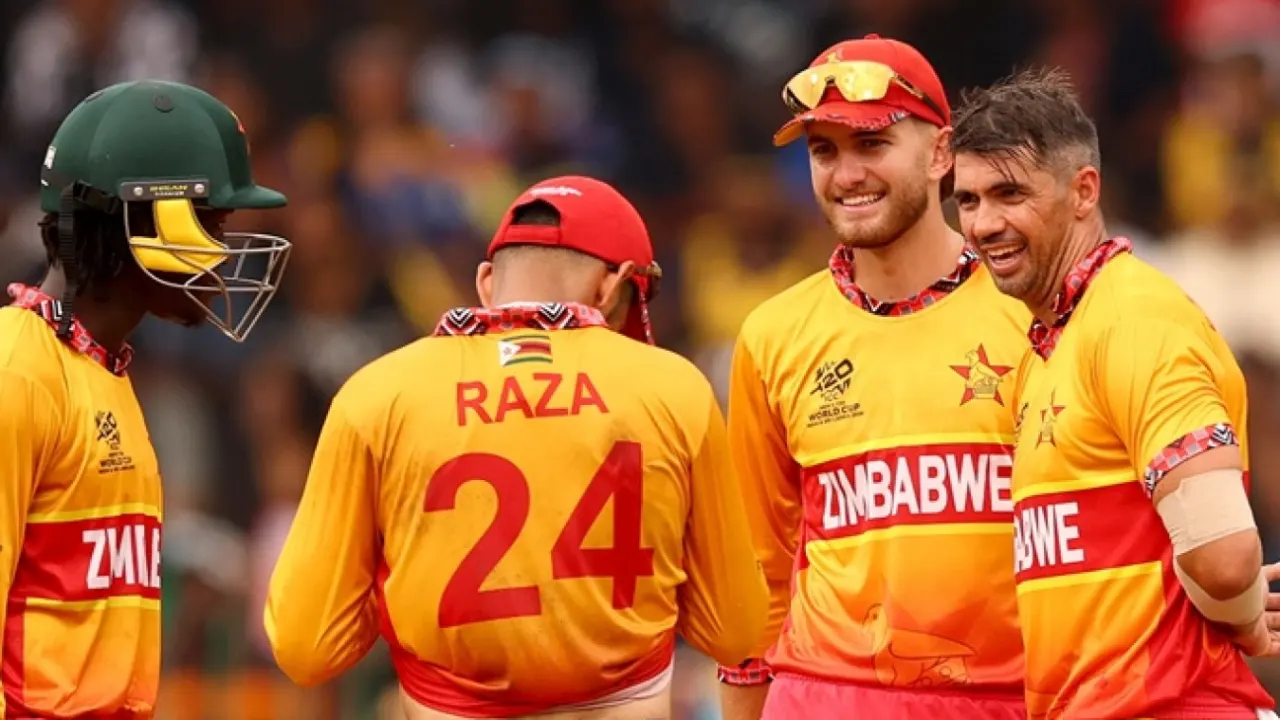
Zimbabwe have become the first team at the T20 World Cup to be affected by the closure of air spaces in West Asia, and will remain in India for the foreseeable future after their final match against South Africa on Sunday.
West Indies have also been forced to delay their departure from India*, due to “security threats posed by military action in the Gulf region”, CWI announced on Monday.
“CWI is working closely with the ICC, relevant governmental authorities and airline partners to secure the earliest possible safe travel arrangements for the squad and support staff,” the board said in a release. “The safety and wellbeing of our players, coaches, and officials remain our highest priority.
“The team is currently accommodated in India and remains safe and well. We continue to monitor the situation closely and will provide further updates as confirmed travel arrangements are finalised.”
Tournament organisers have been exploring alternative routes to get teams home as they finish their campaigns at the T20 World Cup in India and Sri Lanka. ESPNcricinfo understands that the Zimbabwe contingent was due to return home in batches, with some leaving as early as 4.30am on Monday morning and the rest to follow later in the day. They were booked on Emirates flights, which would take them from Delhi to Dubai and then on to Harare.
While it is understood that other airlines and routes are being considered, Zimbabwe are booked to stay at their Delhi hotel until March 4.
“No, not that I’ve heard of,” Zimbabwe’s coach Justin Sammons said when asked if there was clarity over the team’s travel plans. “When we started the game there wasn’t anything. And now we’ve just been focused on the game, so I’ve not heard anything since.”
Pakistan, who played their final Super Eight game on Saturday and were knocked out of the tournament, have returned to Lahore from Colombo via a Sri Lankan airlines flight.
On Saturday morning, the USA and Israel exchanged missile strikes with Iran, leading to the closure of airspace over several countries in West Asia, disrupting air travel to the region and also internationally, with several airlines having to cancel flights or change routes.
The ICC, in a statement on Saturday, said it had been monitoring the evolving situation and had “activated comprehensive contingency plans to safeguard the travel, logistics and well-being of all stakeholders” at the 2026 T20 World Cup.
“While the crisis in the Middle East has no direct bearing on the conduct of the tournament, the ICC acknowledges that a significant number of personnel – including players, team management, match officials, broadcast teams, and event staff – rely on Gulf hub airports, particularly Dubai (DXB), as key transit points for onward travel to their home countries upon concluding their commitments at the event,” the ICC said in a statement.
“The ICC Travel and Logistics team is actively working with major international carriers to identify and secure alternative routing options, including connections through European, South Asian and South-East Asian hubs. The ICC security consultants are liaising with relevant authorities and will provide real-time advisories as the situation develops. A dedicated ICC Travel Support Desk has also been activated.”
[Cricinfo]

Trump says Iran war projected to last 4 to 5 weeks, could go ‘far longer’

Qatar downs two Iranian fighter jets as conflict widens

Jammu and Kashmir’s long road to India cricketing glory

Rembrandt painting worth millions rediscovered after 65 years

Zimbabwe, West Indies delayed from returning home following West Asia airspace closure

Dry weather will prevail in most parts of the island

‘Dates have the highest sugar content to fight Coronavirus’

Sunday Island 27 December – Headlines

#SundayIsland 17th December – Headlines

Sunday Island – 28th March

Sunday Island Headlines – 21 March

Sunday Island – 21st February – Headlines
-

 Opinion4 days ago
Jamming and re-setting the world: What is the role of Donald Trump?
-

 Features4 days ago
An innocent bystander or a passive onlooker?
-

 Features5 days ago
Ratmalana Airport: The Truth, The Whole Truth, And Nothing But The Truth
-

 Features6 days ago
Building on Sand: The Indian market trap
-

 Opinion6 days ago
Future must be won
-

 Business6 days ago
Dialog partners with Xiaomi to introduce Redmi Note 15 5G Series in Sri Lanka
-

 Business5 days ago
IRCSL transforms Sri Lanka’s insurance industry with first-ever Centralized Insurance Data Repository
-

 Opinion1 day ago
Sri Lanka – world’s worst facilities for cricket fans