
Business
Construction industry offers blueprint for Sri Lanka’s recovery

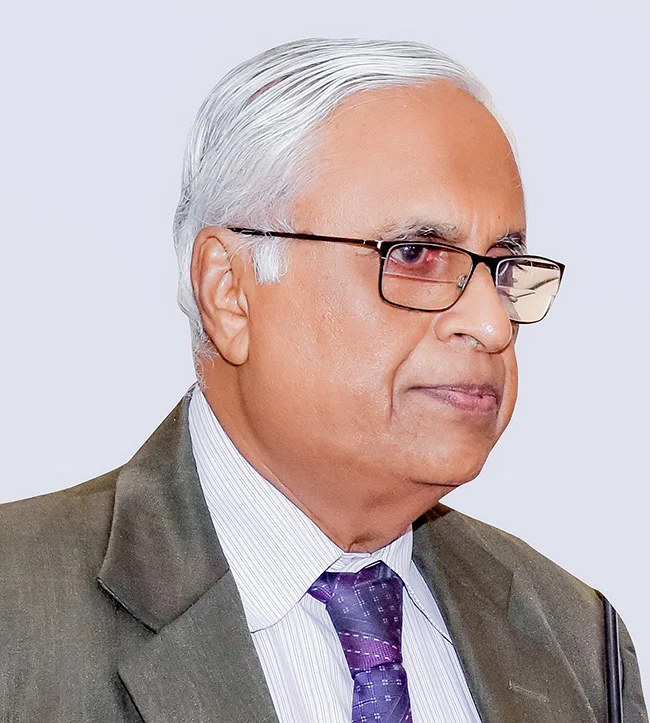
The dawn of 2026 represents a time for critical recalibration, not just ceremony, for the nation’s vital construction sector, says Eng Nissanka N Wijeratne, Secretary General/CEO of the Chamber of Construction Industry (CCI).
In a New Year message, Wijeratne reframes the annual greeting as a strategic call to action. “For Sri Lanka’s construction industry – the true backbone of our economy – the turning of the calendar is an ideal moment for a realistic and forward-looking assessment,” he states.
His vision sketches a practical blueprint where the unprecedented challenges of the recent past become the foundation for a smarter, more sustainable future.
The industry, long considered a barometer of national prosperity, has weathered severe headwinds: economic volatility and spiraling material costs. “These were not mere business cycles, but unprecedented tests,” Wijeratne notes, acknowledging the severe strain on firms and professionals. Yet, the sector’s response, he observes, has been “nothing short of remarkable,” showcasing a deeply ingrained resilience.
The Chamber’s chosen theme for the year, “Resilience through Innovation,” signals a pivotal shift from enduring hardship to actively engineering progress.
The pathway forward, Wijeratne outlines, is built on three interdependent pillars.
First is the revitalization of Infrastructure. “This is not a simple call for new projects,” he clarifies, “but a strategic push to reactivate stalled ventures and initiate sustainable developments in concert with the government and international agencies.” He emphasises that construction activity is intrinsically linked to the broader economy’s pulse, where resuming projects catalyses employment, energises supply chains, and restores public confidence.
The second pillar, technological Integration, addresses the urgent need to modernise the sector’s core. Advocacy for Building Information Modeling (BIM), green building practices, and digital project management is a direct answer to past inefficiencies. “It is a commitment to ensuring Sri Lankan construction is not just rebuilt, but upgraded becoming more competitive, cost-effective, and environmentally responsible,” Wijeratne says. ” Innovation must move from slogan to practice, transforming how the nation conceives, builds, and maintains its infrastructure,” he notes.
The third pillar, consistent policy advocacy, underpins all efforts. The Chamber positions itself as a vital intermediary, fighting for fair pricing mechanisms, streamlined regulations, and a protective framework for local contractors. Wijeratne stresses that the best-laid plans of engineers can falter without a conducive policy environment, calling for a strengthened partnership with the state to create a level playing field where skill and enterprise determine success.
Ultimately, Wijeratne’s message is a powerful reminder of the industry’s profound legacy. “When we build, the nation grows,” he states, elevating construction from a commercial activity to a national mission. The structures that rise from the ground are more than concrete and steel; they are the schools, hospitals, roads, and homes that shape the nation’s future.
As Sri Lanka steps into 2026, the construction industry’s message is clear: it is ready to transform resilience from a trait of survival into a dynamic force for innovation.
The past challenges, according to Wijeratne, have been met with grit. Now, the future must be built with vision.
By Sanath Nanayakkare

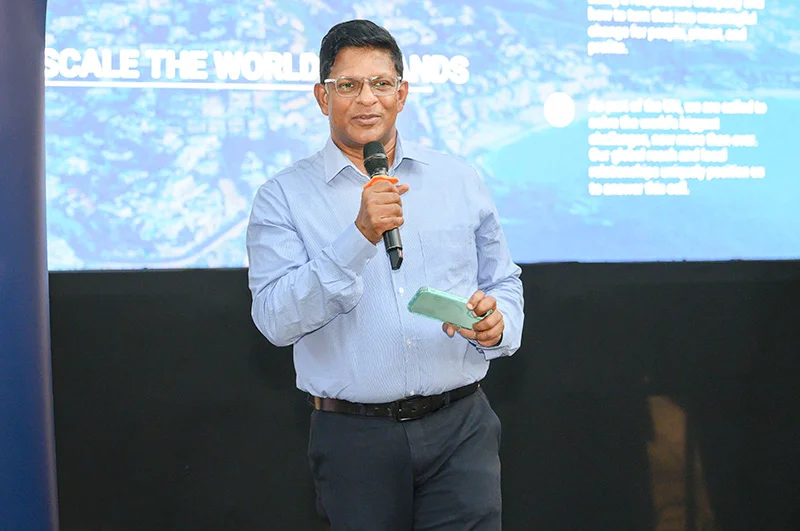
At its 2026 Social Sustainability Programme Kick-Off, the UN Global Compact Network Sri Lanka convened business leaders to advance the translation of global ambition into practical corporate action on inclusion, integrity and human rights.
On 24 February 2026, the UN Global Compact Network Sri Lanka (Network Sri Lanka) convened business leaders at Barefoot Garden Café for its 2026 Social Sustainability Programme Kick-Off, delivered in collaboration with Good Life X.
The gathering did more than introduce a calendar of events. It positioned Sri Lanka’s corporate community within the broader direction of the UN Global Compact’s 2026–2030 global strategy — a strategy anchored in three imperatives: equipping companies to act, catalyzing collective action, and advancing the business case for responsible leadership.
At its core, the 2026 Social Sustainability agenda is designed to move companies from commitment to capability.
Within the Diversity & Inclusion Working Group, this means building practical pathways toward equal pay for equal work and strengthening male allyship as a governance issue rather than a cultural afterthought. It means examining sexual and reproductive health, disability inclusion, and mental health not as employee benefits, but as structural determinants of productivity and retention. It means sharpening strategic communications so inclusion is embedded in brand integrity. It also means applying science-based behavioural change approaches to shift organizational culture in measurable ways.
Across the Business & Human Rights Working Group, equipping companies takes the form of deepened engagement on decent work and living wage implementation, strengthening human rights due diligence processes, and addressing emerging risk areas such as AI and digital rights. It extends to reinforcing business integrity and anti-corruption frameworks, understanding the social dimensions of a just transition, and recognizing the link between child rights, nutrition, and workforce productivity.
Union Bank of Colombo PLC announced its proposed Debenture Issue 2026, a strategic move aimed at raising up to LKR 3 billion. This issue is designed to bolster the Bank’s Tier II capital base and provide a robust financial foundation for its upcoming growth initiatives.
The offering consists of Basel III compliant, listed, rated, unsecured, subordinated, redeemable high-yield debentures with Non-Viability Conversion. The instrument has been assigned a rating of BB (lka) by Fitch Ratings (Lanka) Ltd, reflecting the bank’s creditworthiness and the structured nature of the subordinated debt.
Investors can choose from three distinct interest structures starting from a high-yield 13% fixed rate per annum (Type A). This option is paid annually, while Type B offers a 12.5% fixed rate paid semi-annually (12.89% AER). For those seeking market-linked returns, Type C provides a floating rate of the 182-days Treasury Bill rate plus a 400-basis point margin, also paid semi-annually.
The debentures are priced at LKR 100 per unit with a 5-year tenure (2026–2031). The initial issue size is set at 20,000,000 debentures with an option to raise 10,000,000 at the discretion of the Bank and is scheduled to open on 10 March 2026.
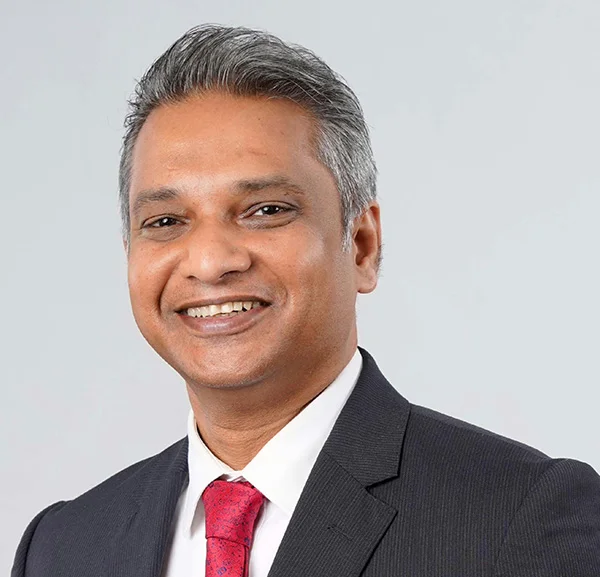
Shanka Abeywardene, Chief Financial Officer of Union Bank stated “This debenture issue marks a significant step in the Bank’s journey towards enhanced financial stability. By strengthening its capital adequacy, Union Bank is well-positioned to navigate evolving market conditions while fuelling its long-term strategic objectives for sustainable growth”
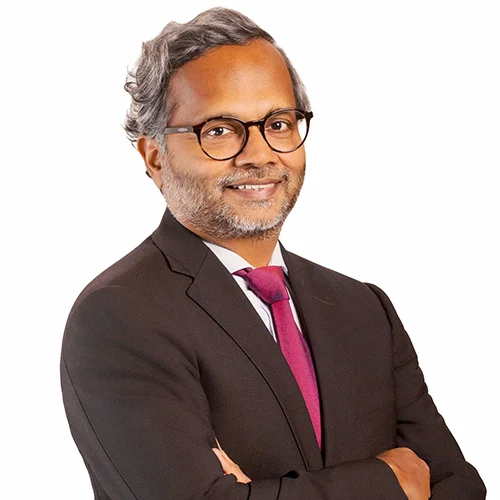
WindForce PLC announced the appointment of Sanjay Kulatunga as an Independent, Non-Executive Director to its Board with effect from 03rd March 2026, following the resignation of Dilshan Hettiaratchi. The appointment further strengthens the Company’s governance framework, strategic oversight, and long-term decision-making capabilities.
Kulatunga brings an established track record as a founder, entrepreneur, and senior executive across financial services and export-oriented industries. He is the Chief Executive Officer and Co-Founder of LYNEAR Wealth Management, a boutique investment firm established in 2013, which has since grown to become one of Sri Lanka’s largest private wealth management institutions, serving high-net-worth individuals as well as local and international institutional clients.
Prior to founding LYNEAR, Kulatunga played a pivotal role in the establishment of Amba Research, an investment research offshoring firm rooted in Sri Lanka and now operating as part of Acuity Analytics.
Over the years, he has contributed extensively to several key national institutions. His previous appointments include serving on the Financial Sector Stability Consultative Committee of the Central Bank of Sri Lanka, as well as the Board of Investment of Sri Lanka and the Securities and Exchange Commission of Sri Lanka.

England elect to field first at Wankhede

Iran denies its drones hit airport in Azerbaijan’s exclave as war widens

Daren Sammy issues plea as West Indies remain stuck in Kolkata hotel

Nepal election 2026: When will we get the results?

‘It’s so good to be home’ – passengers on Dubai-Dublin flight

India’s momentum meets Wankhede’s memory in big semifinal bout

‘Dates have the highest sugar content to fight Coronavirus’

Sunday Island 27 December – Headlines

#SundayIsland 17th December – Headlines

Sunday Island – 28th March

Sunday Island Headlines – 21 March

Sunday Island – 21st February – Headlines
-
 Features4 days ago
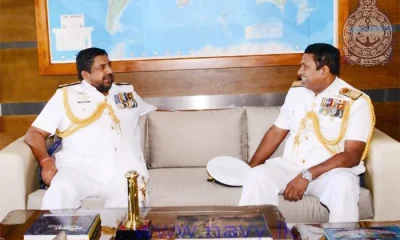
Brilliant Navy officer no more
-

 Opinion7 days ago
Jamming and re-setting the world: What is the role of Donald Trump?
-

 Features7 days ago
An innocent bystander or a passive onlooker?
-

 Opinion4 days ago
Sri Lanka – world’s worst facilities for cricket fans
-

 Business7 days ago
An efficacious strategy to boost exports of Sri Lanka in medium term
-

 Business1 day ago
Cabinet nod for the removal of Cess tax imposed on imported good
-

 Features5 days ago
Overseas visits to drum up foreign assistance for Sri Lanka
-

 Features4 days ago
A life in colour and song: Rajika Gamage’s new bird guide captures Sri Lanka’s avian soul