
Features
Comparative study of Boeing and Airbus – Part I

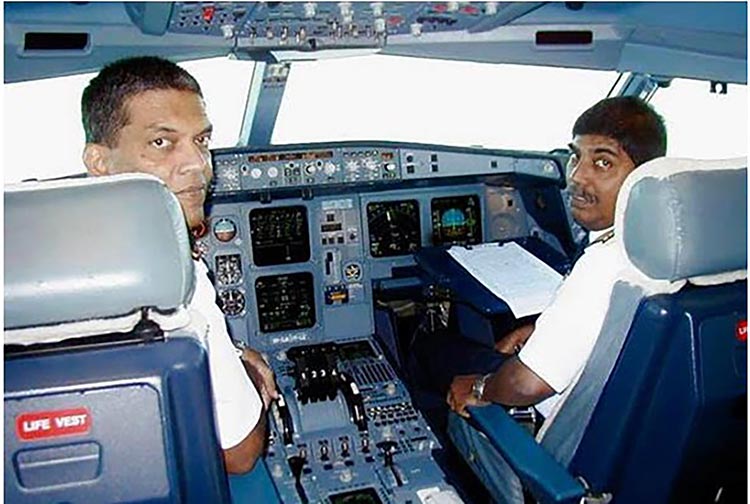
With the tragic accident of Air India Flight 171 at Ahmedabad on June 12, 2025, the focus has fallen on safety and reliability of jet aircraft in general, and the Boeing 787 Dreamliner specifically. Other aspects of that event aside, there is a probably little-known nexus between Air India and Boeing aircraft: In 1962 India’s flag-carrier became not only the world’s first all-jet airline but also the first jet-equipped airline in Asia when it began operating a fleet of Boeing 707-420 aircraft
Today, Boeing and Airbus are the world’s two leading manufacturers of commercial airplanes. But those companies’ histories are diverse in terms of their origins – in Boeing’s case spanning nearly 110 years – and evolution. This article seeks to explore those manufacturers’ stories and products in some detail
Introduction
William E. Boeing was born in Detroit, Michigan, in 1881, to an Austrian mother, Marie Ortmann, and German father, Wilhelm Böing. When his father died in 1890, nine-year-old William moved to Europe with his mother and sister. After the widowed Marie remarried, she returned to the USA with her son (now known as William Boeing) and daughter.
Having enrolled in Yale University’s Sheffield Scientific School in 1898, William Boeing dropped out in 1903 to enter the lumber business in the Pacific Northwest of Washington state, an industry in which his father had made a modest fortune. Not to be outdone, the younger Boeing also prospered on the strength of a construction boom, shipping lumber to the USA’s east coast, via the newly-built Panama Canal.

However, in 1914, William and a friend, Conrad Westervelt, became interested in flying machines. A joy flight with an itinerant barnstormer pilot in 1915 inspired them to build their own airplane. But before constructing an aircraft they had to learn to fly. So the pair took flying lessons at the Glenn L. Martin flying school in Los Angeles, California, and bought their first flying machine, a Martin seaplane.
Back home in Washington, following a flying accident that necessitated repairs to their seaplane, Boeing and Westervelt discovered that Martin, the manufacturer, was unable to supply the spare parts required in a timely manner. Not content to wait, they decided to start building their own parts. Their original company, called B & W, consisted essentially of a boathouse on the edge of Lake Union, near downtown Seattle. But with the advent of World War I, Westervelt was mobilised by the US Navy and moved out. Left to his own devices, Boeing hired a highly-recommended and -qualified Chinese engineer named Wong Tsu (a.k.a. T. Wong).
With Wong’s assistance, the first B & W seaplane, designated Boeing Model 1, was ready to be test-flown by June 1916. There were already 21 workers on the payroll, and in July that year the company was incorporated as the Pacific Aero Products Company, with William ‘Bill’ Boeing as its President.
Eventually, the Boeing Aircraft Company, as it was later renamed, procured an order from the US Navy for 50 Model C trainer seaplanes. The company even exported two B & W seaplanes to the New Zealand government, thus recording Boeing’s first overseas order for his products.
More success followed in 1918 with a sub-contract for Boeing to build 25 flying boats for the US Navy. These aircraft were, however, designed by the Curtiss Aeroplane & Motor Company, and designated as HS-2L patrol flying boats. Bill Boeing was so impressed with this design that he improved on it and produced the C 700 aircraft, to carry mail from Vancouver, Canada, to Seattle. This was the first international airmail to the USA, on March 3, 1919.

Meanwhile, in Britain, another aircraft manufacturer, who would achieve worldwide fame, was beginning to make his mark. The company he founded in 1920 would be instrumental in the formation, much later, of the giant European aerospace conglomerate that is known today as ‘Airbus Industrie, or simply ‘Airbus’. That British aviation pioneer was Geoffrey de Havilland, who, after working for the Wolseley and Austin motor car companies, designed and built his first aircraft in 1909 while teaching himself to fly.
Joining the Royal Aircraft Factory at Farnborough as a designer, where much of the emphasis was on kites and balloons, de Havilland succeeded in selling experimental aircraft of his own design to the factory. But a turning point in de Havilland’s fortunes occurred when, a year before WWI, he joined a company called Airco, where he designed many types of aircraft for the Great War, including a bomber named the D.H.4. Although dubbed the ‘flaming coffin’ by pilots, the D.H.4 was de Havilland’s first major success, and by 1917 the company was manufacturing 300 Airco D.H.4s per month. From a total production figure of 6,295 aircraft, nearly 4,900 were built under licence in the USA, many of which were used on airmail services in that country.
For its part, Boeing in the USA suffered setbacks for want of customers after the Great War, but managed to keep producing new models on an average of two types per year, supplying demand from the military and airlines such as Pan Am and TWA.
Remaining with Airco after the war, Geoffrey de Havilland, a prolific and innovative engineer, was responsible for more than 20 new designs, with type numbers from D.H.1 to D.H.21, although some were never built. Among the successful types were a D.H.9 converted to carry four passengers, and the eight-passenger D.H.18 in 1920. That was also then when Geoffrey de Havilland left Airco to establish his own de Havilland Aircraft Company.
The period between the two World Wars came to be known as the ‘Golden Age’ of aviation on both sides of the Atlantic. In what was a ‘technological push’ de Havilland sought to make aviation attractive and affordable to the general public for military and civil transportation within Europe.
Boeing, on the other hand, concentrated most of its energies on building military airplanes. With the advent of World War II, large numbers of Boeing B-17 Flying Fortress and B-29 Superfortress bombers were built. On the other side of the Atlantic, de Havilland, too, was involved in the war effort. The D.H.82 Tiger Moth became the basic trainer of the Royal Air Force, while the twin-engine D.H.98 Mosquito, constructed mostly of wood – thus earning the nickname ‘Wooden Wonder’ – proved formidable in a variety of roles, especially as a fighter-bomber.
After WW II, as in the wake of WW I, both Boeing and de Havilland (DH) suffered a drop in business. Despite Boeing having to discontinue the services of more than 70,000 employees, and in keeping with the agreement dictated by ‘world powers’ on the distribution of limited military orders after the war, the US company, along with other American manufacturers, concentrated on building large bombers and troop carriers. Meanwhile the British focused their attention on small fighters.
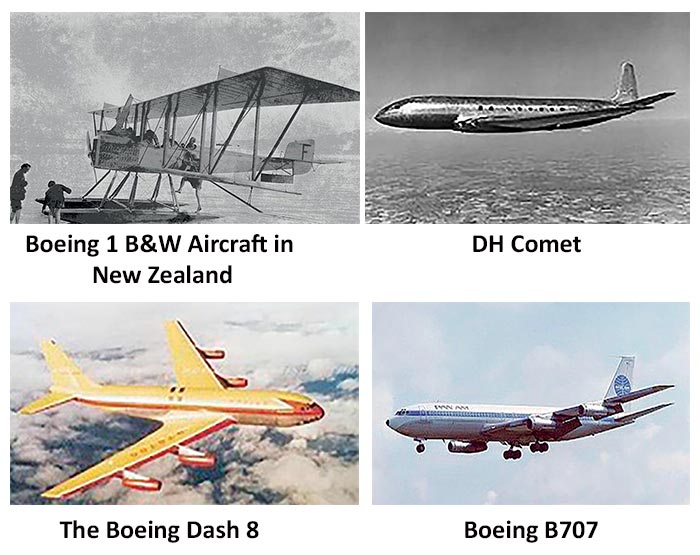
But Boeing was also notable for producing the Model 377 Stratocruiser double-decked intercontinental airliner, a civil version of the C-97 Stratofreighter military transport and its airborne refuelling tanker derivative, the KC-97 Stratotanker, all derived from the basic design of the B-29 bomber.
But while nearly all Boeing aircraft manufactured thus far were powered by ‘old-fashioned’ piston-engines, the British had acquired more experience and some success with jet engines. So, in its need to compete with the Americans in commercial aviation, in 1942, the British government instituted the Brabazon Committee, named after former Minister of Aircraft Production, Lord Brabazon, to explore and design new types of transport aircraft, including jet-propelled airliners.
Into the Jet age
With experience gained from its successful D.H.100 Vampire fighter jet, which first flew in 1943, de Havilland proceeded with development of what would become the world’s first jetliner, the D.H.106 Comet.
With its revolutionary new airplane cleared for passenger services in May 1952, de Havilland was nevertheless still treading uncharted technological territory by venturing into high-speed, high-altitude, pressurised flight. Indeed, as the unchallenged, first-to-market, technological leader, the Comet was still not a fully tried and tested product. Unfortunately, that lead didn’t last long, because during the first year of Comet service, with Colombo, Ceylon, as one of its destinations, there were three serious crashes.
After preliminary investigation, the type was cleared to fly again, only for another serious and fatal crash to occur in 1954, following which all Comets were grounded indefinitely.
Earlier, the then President of Boeing, William ‘Bill’ Allen, and a company designer Maynard Pennell, had watched with interest when the Comet prototype was shown off at the 1950 Farnborough Air show in 1950. Having conceded leadership in the ‘jet race’ to de Havilland and the UK, Boeing decided to improve on the de Havilland design in producing its own, first passenger jetliner.
With the grounding of the Comets, Boeing were afforded some breathing space. Benefitting from experience with its B-47 Stratojet, a six-engine bomber, and the eight-engine B-52 Stratofortress, Boeing began design and production of a four-jet military transport, the prototype of which was designated the Model 367-80, or ‘Dash 80’ for short. That successful design led eventually to the Boeing 707 jetliner.
Following design revisions and lessons learned from the disastrous de Havilland Comet 1 crashes of 1953 and 1954, the much-improved, sleeker Comet 4 emerged in 1958, in time to earn the distinction of operating the world’s first trans-Atlantic jetliner service. But the Comet 4 carried a relatively small number of passengers, and was designed to operate mainly to remnants of the already dwindling British Empire with their short runways in ‘hot-high and-humid’ climatic conditions.
On the other hand, the Boeing 707 had a larger passenger payload, and soon overtook the Comet on the Atlantic run, proving much more popular and even economical to operate than its British competitor. The 707’s success was even more remarkable in the face of competition from other new US-built jetliners, such as the Douglas (later McDonnell Douglas) DC-8 and Convair 880 and 990 Coronado. Much later, when Air Lanka was founded in 1979, its first two airplanes were Boeing 707s, procured from Singapore Airlines.
Meanwhile, services to those other African and South Asian destinations with runway and climate limitations, as well as to shorter runways in the USA, had to wait until airports extended their runways and improved facilities to accommodate the new generation of ‘big jets’. To counter some of the challenges at home, Boeing built a shorter version of the 707, the 720, to operate shorter regional flights from shorter runways. As expected, the 720 proved popular with many US ‘majors’, such as United Airlines, American Airlines, Braniff International Airways, Continental Airlines, Western Airlines, etc.
As ‘big-jets’ spread far and wide as the choice of long-distance airliner for major and not-so-major airlines all over the world, a need arose for shorter-range jet airplanes to serve regional and even domestic routes in large countries like the USA and Canada, as well as Europe.
Thus were born airliners such as the Caravelle twin-jet, from the Sud Aviation conglomerate in France, the three-engined de Havilland D.H.121 Trident, later known as the Hawker Siddeley 121 Trident (Air Ceylon operated a single Trident bought brand-new in 1969), and from the drawing boards of Boeing another hugely successful type, the Boeing 727 tri-jet.
In Europe, the British government encouraged the consolidation of its many aircraft builders, resulting in the formation, in 1960, of the British Aircraft Corporation (BAC), with a later incarnation of the ‘old’ de Havilland company as one of its components. This company later merged with Sud Aviation in 1962 to design and produce the supersonic Concorde airliner.
Despite the publicity attached to the Concorde then and even today, it was not the first aircraft built to fly faster than the speed of sound in public service. That distinction goes to the Soviet-built Tupolev Tu-144, an almost lookalike (copy?) of the Concorde that was dubbed ‘Concordski’ in the West. The latter aircraft began operating scheduled passenger and freight services in 1975, followed by Concorde only in 1976. (To be continued)
by Capt. G. A. Fernando ✍️
gafplane@sltnet.lk
RCyAF/ SLAF, Air Ceylon, Air Lanka, Singapore Airlines Ltd and SriLankan Airlines.
Types Flown: DH Tiger Moth, DH Dove, HS 748, Boeing B707, B737, B747, Lockheed L1011, Airbus A320, A340 and A330


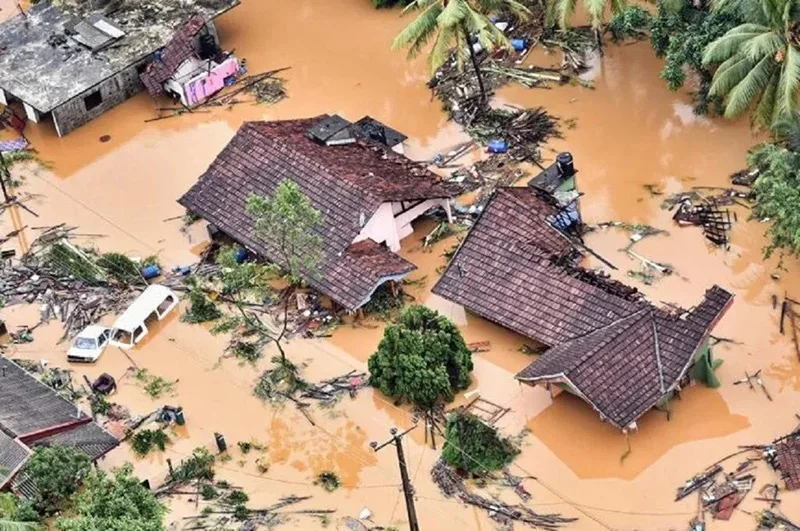
The manner in which the government succeeded in mobilising support from the international community, immediately after the devastating impact of Cyclone Ditwah, may have surprised many people of this country, particularly because our Opposition politicians were ridiculing our “inexperienced” government, in the recent past, for its inability to deal with the international community effectively. However, by now it is evident that the government, with the assistance of the international community and local nongovernmental actors, like major media organisations, has successfully managed the recovery efforts. So, let me begin by thanking them for what they have done so far.
Yet, some may argue that it is not difficult to mobilise the support for recovery efforts from the international community, immediately after any major disaster, and the real challenge is to sustain that support through the next few weeks, months and years. Because the recovery process, more specifically the post-recovery reconstruction process, requires long-term support. So, the government agencies should start immediately to focus on, in addition to initial disaster relief, a longer-term strategy for reconstruction. This is important because in a few weeks’ time, the focus of the global community may shift elsewhere … to another crisis in another corner of the world. Before that happens, the government should take initiatives to get the support from development partners on appropriate policy measures, including exceptional trade preferences, to help Sri Lanka in the recovery efforts through the medium and the long term.
Use of Trade Preferences to support recovery and reconstruction
In the past, the United States and the European Union used exceptional enhanced trade preferences as part of the assistance packages when countries were devastated by natural disasters, similar to Cyclone Ditwah. For example:
- After the devastating floods in Pakistan, in July 2010, the EU granted temporary, exceptional trade preferences to Pakistan (autonomous trade preferences) to aid economic recovery. This measure was a de facto waiver on the standard EU GSP (Generalised Scheme of Preferences) rules. The preferences, which were proposed in October 2010 and were applied until the end of 2013, effectively suspended import duties on 75 types of goods, including textiles and apparel items. The available studies on this waiver indicate that though a significant export hike occurred within a few months after the waiver became effective it did not significantly depress exports by competing countries. Subsequently, Pakistan was granted GSP+ status in 2014.
- Similarly, after the 2015 earthquakes in Nepal, the United States supported Nepal through an extension of unilateral additional preferences, the Nepal Trade Preferences Programme (NTPP). This was a 10-year initiative to grant duty-free access for up to 77 specific Nepali products to aid economic recovery after the 2015 earthquakes. This was also a de facto waiver on the standard US GSP rules.
- Earlier, after Hurricanes Mitch and Georges caused massive devastation across the Caribbean Basin nations, in 1998, severely impacting their economies, the United States proposed a long-term strategy for rebuilding the region that focused on trade enhancement. This resulted in the establishment of the US Caribbean Basin Trade Partnership Act (CBTPA), which was signed into law on 05 October, 2000, as Title II of the Trade and Development Act of 2000. This was a more comprehensive facility than those which were granted to Pakistan and Nepal.

What type of concession should Sri Lanka request from our development partners?
Given these precedents, it is appropriate for Sri Lanka to seek specific trade concessions from the European Union and the United States.
In the European Union, Sri Lanka already benefits from the GSP+ scheme. Under this arrangement Sri Lanka’s exports (theoretically) receive duty-free access into the EU markets. However, in 2023, Sri Lanka’s preference utilisation rate, that is, the ratio of preferential imports to GSP+ eligible imports, stood at 59%. This was significantly below the average utilisation of other GSP beneficiary countries. For example, in 2023, preference utilisation rates for Bangladesh and Pakistan were 90% and 88%, respectively. The main reason for the low utilisation rate of GSP by Sri Lanka is the very strict Rules of Origin requirements for the apparel exports from Sri Lanka. For example, to get GSP benefits, a woven garment from Sri Lanka must be made from fabric that itself had undergone a transformation from yarn to fabric in Sri Lanka or in another qualifying country. However, a similar garment from Bangladesh only requires a single-stage processing (that is, fabric to garment) qualifies for GSP. As a result, less than half of Sri Lanka’s apparel exports to the EU were ineligible for the preferences in 2023.
Sri Lanka should request a relaxation of this strict rule of origin to help economic recovery. As such a concession only covers GSP Rules of Origin only it would impact multilateral trade rules and would not require WTO approval. Hence could be granted immediately by the EU.
United States
Sri Lanka should submit a request to the United States for (a) temporary suspension of the recently introduced 20% additional ad valorem duty and (b) for a programme similar to the Nepal Trade Preferences Programme (NTPP), but designed specifically for Sri Lanka’s needs. As NTPP didn’t require WTO approval, similar concessions also can be granted without difficulty.
Similarly, country-specific requests should be carefully designed and submitted to Japan and other major trading partners.
(The writer is a retired public servant and can be reached at senadhiragomi@gmail.com)
by Gomi Senadhira
Novelists, poets, short story writers, lyricists, politicians and columnists use words for different purposes. While some of them use words to inform and elevate us, others use them to bolster their ego. If there was no such thing called words, we cannot even imagine what will happen to us. Whether you like it or not everything rests on words. If the Penal Code does not define a crime and prescribe a punishment, judges will not be able to convict criminals. Even the Constitution of our country is a printed document.
A mother’s lullaby contains snatches of sweet and healing words. The effect is immediate. The baby falls asleep within seconds. A lover’s soft and alluring words go right into his or her beloved. An army commander’s words encourage soldiers to go forward without fear. The British wartime Prime Minister Winston Churchill’s words still ring in our ears: “… we shall defend our Island, whatever the cost may be, we shall fight on the beaches, we shall fight on the landing grounds, we shall fight in the fields and in the streets, we shall fight in the hills; we shall never surrender …”
Writers wax eloquent on love. English novelist John Galsworthy wrote: “Love is no hot-house flower, but a wild plant, born of a wet night, born of an hour of sunshine; sprung from wild seed, blown along the road by a wild wind. A wild plant that, when it blooms by chance within the hedge of our gardens, we call a flower; and when it blooms outside we call a weed; but flower or weed, whose scent and colour are always wild.” While living in a world dominated by technology, we often hear a bunch of words that is colourless and often cut to verbal ribbons – “How R U” or “Luv U.” Such words seem to squeeze the life out of language.
Changing medium
Language is a constantly changing medium. New words and forms arrive and old ones die out. Whoever thought that the following Sinhala words would find a place in the Oxford English Dictionary? “Asweddumize, Avurudu, Baila, Kiribath, Kottu Roti, Mallung, Osari, Papare, Walawwa and Watalappan.” With all such borrowed words the English language is expanding and remains beautiful. The language helps us to express subtle ideas clearly and convincingly.
You are judged by the words you use. If you constantly use meaningless little phrases, you will be considered a worthless person. When you read a well-written piece of writing you will note how words jump and laugh on the paper or screen. Some of them wag their tails while others stand back like shy village belles. However, they serve a useful purpose. Words help us to write essays, poems, short stories and novels. If not for the beauty of the language, nobody will read what you write.
If you look at the words meaningfully, you will see some of them tap dancing while others stand to rigid attention. Big or small, all the words you pen form part of the action or part of the narrative. The words you write make your writing readable and exciting. That is why we read our favourite authors again and again.
Editorials
If a marriage is to succeed, partners should respect and love each other. Similarly, if you love words, they will help you to use them intelligently and forcefully. A recent survey in the United States has revealed that only eight per cent of people read the editorial. This is because most editorials are not readable. However, there are some editorials which compel us to read them. Some readers collect such editorials to be read later.
Only a lover of words would notice how some words run smoothly without making a noise. Other words appear to be dancing on the floor. Some words of certain writers are soothing while others set your blood pounding. There is a young monk who is preaching using simple words very effectively. He has a large following of young people addicted to drugs. After listening to his preaching, most of them have given up using illegal drugs. The message is loud and clear. If there is no demand for drugs, nobody will smuggle them into the country.
Some politicians use words so rounded at the edges and softened by wear that they are no longer interesting. The sounds they make are meaningless and listeners get more and more confused. Their expressions are full of expletives the meaning of which is often soiled with careless use of words.
Weather-making
Some words, whether written or spoken, stick like superglue. You will never forget them. William Vergara in his short essay on weather-making says, “Cloud-seeding has touched off one of the most baffling controversies in meteorological history. It has been blamed for or credited with practically all kinds of weather. Some scientists claim seeding can produce floods and hail. Others insist it creates droughts and dissipates clouds. Still others staunchly maintain it has no effect at all. The battle is far from over, but at last one clear conclusion is beginning to emerge: man can change the weather, and he is getting better at it.”
There are words that nurse the ego and heal the heart. The following short paragraph is a good example. S. Radhakrishnan says, “In every religion today we have small minorities who see beyond the horizon of their particular faith, not through religious fellowship is possible, not through the imposition of any one way on the whole but through an all-inclusive recognition that we are all searchers for the truth, pilgrims on the road, that we all aim at the same ethical and spiritual standard.”
There are some words joined together in common phrases. They are so beautiful that they elevate the human race. In the phrase ‘beyond a shadow of doubt’, ‘a shadow’ connotes a dark area covering light. ‘A doubt’ refers to hesitancy in belief. We use such phrases blithely because they are exquisitely beautiful in their structure. The English language is a repository of such miracles of expression that lead to deeper understanding or emphasis.
Social media
Social media use words powerfully. Sometimes they invent new words. Through the social media you can reach millions of viewers without the intervention of the government. Their opinion can stop wars and destroy tyrants. If you use the right words, you can even eliminate poverty to a great extent.
The choice of using powerful words is yours. However, before opening your mouth, tap the computer, unclip a pen, write a lyric or poem, think twice of the effect of your writing. When you talk with a purpose or write with pleasure, you enrich listeners and readers with your marvellous language skills. If you have a command of the language, you will put across your point of view that counts. Always try to find the right words and change the world for a better place for us to live.
By R. S. Karunaratne
karunaratners@gmail.com
Eighteen Years of Delay:
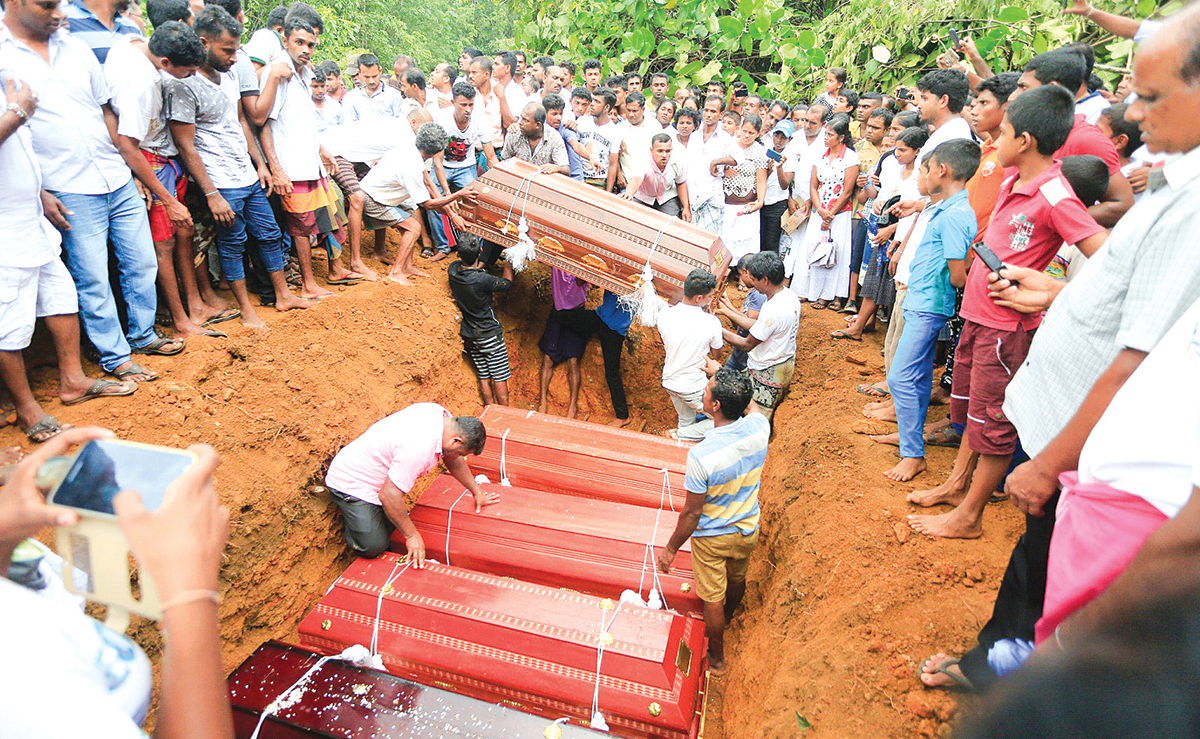
Cyclone Ditwah has come and gone, leaving a trail of extensive damage to the country’s infrastructure, including buildings, roads, bridges, and 70% of the railway network. Thousands of hectares of farming land have been destroyed. Last but not least, nearly 1,000 people have lost their lives, and more than two million people have been displaced. The visuals uploaded to social media platforms graphically convey the widespread destruction Cyclone Ditwah has caused in our country.
The purpose of my article is to highlight, for the benefit of readers and the general public, how a project to establish a Doppler Weather Radar system, conceived in 2007, remains incomplete after 18 years. Despite multiple governments, shifting national priorities, and repeated natural disasters, the project remains incomplete.
Over the years, the National Audit Office, the Committee on Public Accounts (COPA), and several print and electronic media outlets have highlighted this failure. The last was an excellent five-minute broadcast by Maharaja Television Network on their News First broadcast in October 2024 under a series “What Happened to Sri Lanka”
The Agreement Between the Government of Sri Lanka and the World Meteorological Organisation in 2007.
The first formal attempt to establish a Doppler Radar system dates back to a Trust Fund agreement signed on 24 May 2007 between the Government of Sri Lanka (GoSL) and the World Meteorological Organisation (WMO). This agreement intended to modernize Sri Lanka’s meteorological infrastructure and bring the country on par with global early-warning standards.
The World Meteorological Organisation (WMO) is a specialized agency of the United Nations established on March 23, 1950. There are 193 member countries of the WMO, including Sri Lanka. Its primary role is to promote the establishment of a worldwide meteorological observation system and to serve as the authoritative voice on the state and behaviour of the Earth’s atmosphere, its interaction with the oceans, and the resulting climate and water resources.
According to the 2018 Performance Audit Report compiled by the National Audit Office, the GoSL entered into a trust fund agreement with the WMO to install a Doppler Radar System. The report states that USD 2,884,274 was deposited into the WMO bank account in Geneva, from which the Department of Metrology received USD 95,108 and an additional USD 113,046 in deposit interest. There is no mention as to who actually provided the funds. Based on available information, WMO does not fund projects of this magnitude.
The WMO was responsible for procuring the radar equipment, which it awarded on 18th June 2009 to an American company for USD 1,681,017. According to the audit report, a copy of the purchase contract was not available.
Monitoring the agreement’s implementation was assigned to the Ministry of Disaster Management, a signatory to the trust fund agreement. The audit report details the members of the steering committee appointed by designation to oversee the project. It consisted of personnel from the Ministry of Disaster Management, the Departments of Metrology, National Budget, External Resources and the Disaster Management Centre.
The Audit Report highlights failures in the core responsibilities that can be summarized as follows:
· Procurement irregularities—including flawed tender processes and inadequate technical evaluations.
· Poor site selection
—proposed radar sites did not meet elevation or clearance requirements.
· Civil works delays
—towers were incomplete or structurally unsuitable.
· Equipment left unused
—in some cases for years, exposing sensitive components to deterioration.
· Lack of inter-agency coordination
—between the Meteorology Department, Disaster Management Centre, and line ministries.
Some of the mistakes highlighted are incomprehensible. There is a mention that no soil test was carried out before the commencement of the construction of the tower. This led to construction halting after poor soil conditions were identified, requiring a shift of 10 to 15 meters from the original site. This resulted in further delays and cost overruns.
The equipment supplier had identified that construction work undertaken by a local contractor was not of acceptable quality for housing sensitive electronic equipment. No action had been taken to rectify these deficiencies. The audit report states, “It was observed that the delay in constructing the tower and the lack of proper quality were one of the main reasons for the failure of the project”.
In October 2012, when the supplier commenced installation, the work was soon abandoned after the vehicle carrying the heavy crane required to lift the radar equipment crashed down the mountain. The next attempt was made in October 2013, one year later. Although the equipment was installed, the system could not be operationalised because electronic connectivity was not provided (as stated in the audit report).
In 2015, following a UNOPS (United Nations Office for Project Services) inspection, it was determined that the equipment needed to be returned to the supplier because some sensitive electronic devices had been damaged due to long-term disuse, and a further 1.5 years had elapsed by 2017, when the equipment was finally returned to the supplier. In March 2018, the estimated repair cost was USD 1,095,935, which was deemed excessive, and the project was abandoned.
COPA proceedings
The Committee on Public Accounts (COPA) discussed the radar project on August 10, 2023, and several press reports state that the GOSL incurred a loss of Rs. 78 million due to the project’s failure. This, I believe, is the cost of constructing the Tower. It is mentioned that Rs. 402 million had been spent on the radar system, of which Rs. 323 million was drawn from the trust fund established with WMO. It was also highlighted that approximately Rs. 8 million worth of equipment had been stolen and that the Police and the Bribery and Corruption Commission were investigating the matter.
JICA support and project stagnation
Despite the project’s failure with WMO, the Japan International Cooperation Agency (JICA) entered into an agreement with GOSL on June 30, 2017 to install two Doppler Radar Systems in Puttalam and Pottuvil. JICA has pledged 2.5 billion Japanese yen (LKR 3.4 billion at the time) as a grant. It was envisaged that the project would be completed in 2021.
Once again, the perennial delays that afflict the GOSL and bureaucracy have resulted in the groundbreaking ceremony being held only in December 2024. The delay is attributed to the COVID-19 pandemic and Sri Lanka’s economic crisis.
The seven-year delay between the signing of the agreement and project commencement has led to significant cost increases, forcing JICA to limit the project to installing only one Doppler Radar system in Puttalam.
Impact of the missing radar during Ditwah
As I am not a meteorologist and do not wish to make a judgment on this, I have decided to include the statement issued by JICA after the groundbreaking ceremony on December 24, 2024.
“In partnership with the Department of Meteorology (DoM), JICA is spearheading the establishment of the Doppler Weather Radar Network in the Puttalam district, which can realize accurate weather observation and weather prediction based on the collected data by the radar. This initiative is a significant step in strengthening Sri Lanka’s improving its climate resilience including not only reducing risks of floods, landslides, and drought but also agriculture and fishery“.
Based on online research, a Doppler Weather Radar system is designed to observe weather systems in real time. While the technical details are complex, the system essentially provides localized, uptotheminute information on rainfall patterns, storm movements, and approaching severe weather. Countries worldwide rely on such systems to issue timely alerts for monsoons, tropical depressions, and cyclones. It is reported that India has invested in 30 Doppler radar systems, which have helped minimize the loss of life.
Without radar, Sri Lanka must rely primarily on satellite imagery and foreign meteorological centres, which cannot capture the finescale, rapidly changing weather patterns that often cause localized disasters here.
The general consensus is that, while no single system can prevent natural disasters, an operational Doppler Radar almost certainly would have strengthened Sri Lanka’s preparedness and reduced the extent of damage and loss.
Conclusion
Sri Lanka’s inability to commission a Doppler Radar system, despite nearly two decades of attempts, represents one of the most significant governance failures in the country’s disastermanagement history.
Audit findings, parliamentary oversight proceedings, and donor records all confirm the same troubling truth: Sri Lanka has spent public money, signed international agreements, received foreign assistance, and still has no operational radar. This raises a critical question: should those responsible for this prolonged failure be held legally accountable?
Now may not be the time to determine the extent to which the current government and bureaucrats failed the people. I believe an independent commission comprising foreign experts in disaster management from India and Japan should be appointed, maybe in six months, to identify failures in managing Cyclone Ditwah.
However, those who governed the country from 2007 to 2024 should be held accountable for their failures, and legal action should be pursued against the politicians and bureaucrats responsible for disaster management for their failure to implement the 2007 project with the WMO successfully.
Sri Lanka cannot afford another 18 years of delay. The time for action, transparency, and responsibility has arrived.
(The views and opinions expressed in this article are solely those of the author and do not necessarily reflect the policy or position of any organization or institution with which the author is affiliated).
By Sanjeewa Jayaweera

Bondi Beach gunmen who killed 15 after targeting Jewish celebration were father and son, police say

Govt. urged to take action against deputy minister

India sends stock of life-saving medicines

George Keyt Foundation contributes to national disaster relief efforts

New Ambassador to South Korea appreciates job opportunities for Lankans

When crisis comes to classroom:

‘Dates have the highest sugar content to fight Coronavirus’

Sunday Island 27 December – Headlines

#SundayIsland 17th December – Headlines

Sunday Island – 28th March

Sunday Island Headlines – 21 March

Sunday Island – 21st February – Headlines
-

 Features5 days ago
Finally, Mahinda Yapa sets the record straight
-

 News6 days ago
Cyclone Ditwah leaves Sri Lanka’s biodiversity in ruins: Top scientist warns of unseen ecological disaster
-
 Features5 days ago
Handunnetti and Colonial Shackles of English in Sri Lanka
-

 Business4 days ago
Cabinet approves establishment of two 50 MW wind power stations in Mullikulum, Mannar region
-

 News7 days ago
Jetstar to launch Australia’s only low-cost direct flights to Sri Lanka, with fares from just $315^
-
 News4 days ago
Gota ordered to give court evidence of life threats
-

 Features6 days ago
An awakening: Revisiting education policy after Cyclone Ditwah
-

 Features4 days ago
Cliff and Hank recreate golden era of ‘The Young Ones’