
News
Commercial importers ordered to register 25 percent of vehicles within six months of receiving shipment

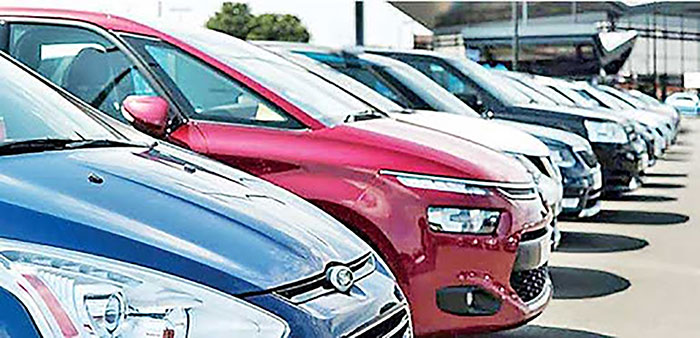
The Ministry of Finance has ordered importers to register at least 25% of the total number of vehicles they import within a six-month period. Failure to adhere to this requirement will result in the suspension of the importer’s import permit, according to an official statement from the Ministry.
This new measure has been introduced to protect the country’s foreign exchange reserves, curb excessive vehicle imports, and prevent the unnecessary accumulation of motor vehicles. However, the regulations do not apply to individuals importing vehicles for personal use, as they are permitted to import only one vehicle, the Ministry clarified.
The regulations were discussed during a recent meeting of the Committee on Public Finance (COPF) regarding vehicle imports. At the meeting, Controller General of Imports and Exports, Upulmali Premathilaka, provided further details on the new rules.
“In 2020, vehicle imports were temporarily suspended. Following a Cabinet decision and observations made by the Central Bank, a gazette notification was issued to lift this suspension. As a result, the gazette has now been published, allowing vehicle imports into Sri Lanka under HS Code 8703,” she explained.
Premathilaka also highlighted that imported vehicles must be registered within 90 days. Failure to do so will incur a fine of 3% of the CIF (Cost, Insurance, and Freight) value, with the penalty capped at a maximum of 45% of the CIF value.
“Furthermore, if importers fail to register 25% of their imported vehicles within six months, their import permits will be suspended. The permission granted for vehicle imports under these conditions will also be revoked,” she added. The new regulations aim to strike a balance between facilitating necessary vehicle imports and safeguarding the country’s economic stability by preventing the over-importation of vehicles.


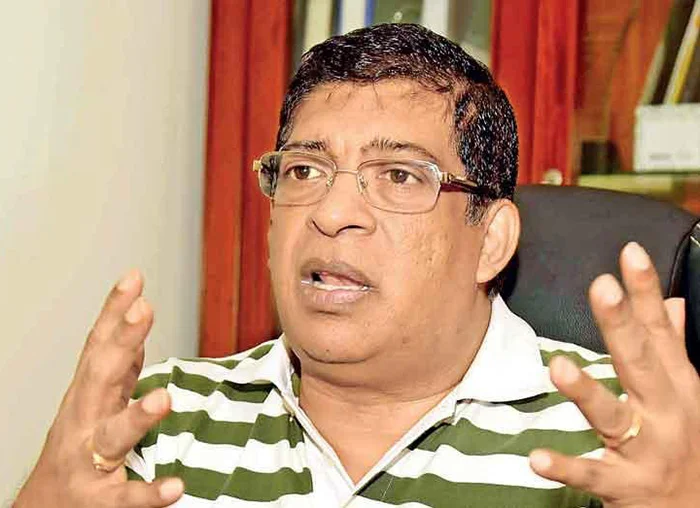
Returned cheques, delayed payments and unresolved insurance claims dominated Parliament on Tuesday as National Democratic Front (NDF) MP Ravi Karunanayake asked the government to make statement on compensation and restoration following Cyclone Ditwah.
Raising the matter under Standing Order 27(2), Karunanayake said thousands of citizens, affected by the 28 November, 2025 cyclone, were still waiting for relief, despite a presidential directive that all compensation and restoration work be completed by 31 December, 2025.
Karunanayake told the House that affected communities were reporting “crippling delays, non-payment, returned cheques and unresolved insurance claims,” warning that the situation had left tens of thousands displaced more than a month after the deadline. “These delays raise grave concerns about transparency, administrative capacity and accountability,” he said.
Cyclone Ditwah caused widespread destruction across several districts, claiming lives and damaging homes, infrastructure, agriculture, fisheries and small and medium-sized enterprises. Karunanayake said reports indicated that around 48,000 people were still unable to return to their homes, underscoring the scale of the humanitarian and economic impact.
Full text of Karunayake’s statement: I rise under Standing Order 27(2) for an urgent Government statement on compensation and restoration after Cyclone Ditwah of 28 November 2025, which caused severe loss of life, destruction, and widespread damage. Despite a Presidential directive for completion by 31 December 2025, affected citizens report crippling delays, non-payment, returned cheques, and unresolved insurance claims. Reports suggest tens of thousands remain displaced, raising grave concerns.
For transparency, I seek clarification on:
1. Has the Disaster Management Centre formally approved a consolidated national loss and damage assessment? What is the total estimated loss and approval date?
2. What is the total restoration cost, disaggregated by housing, infrastructure, agriculture, fisheries and SMEs?
3. What is the total affected population? Provide a district-wise breakdown of casualties, displaced families, and destroyed/damaged houses. Is it correct that 48,000 persons cannot return home?
4. What compensation categories, eligibility criteria, and payment rates were approved for households, the deceased, farmers, SMEs, and others and under what authority?
5. As of 31 December 2025 and now, how many payments and total amounts have been disbursed for each band (e.g., Rs. 25,000; Rs. 50,000; Rs.1Mn for deceased; housing bands up to Rs. 10Mn), plus farmer and SME payments, by district?
6. How many eligible beneficiaries remain unpaid, by category and district and what are the principal causes (verification, documentation, banking, funding)?
7. Why have compensation Cheques been returned, how many cases exist and what remedial measures are in place?
8. What steps ensure Insurance Companies settle claims? How many claims and what value remain unpaid?
9. What donor funds (grants, loans, aid) have been received? How much has been spent on compensation vs. infrastructure and when will the International donor conference be held?
I request the Government table its response with annexed district-wise tables on assessments, allocations, disbursements, returned cheques, insurance status and unpaid balances.”
Deputy Defence Minister Major General (retd) Aruna Jayasekara said that the government needs two weeks to respond to the queries raised by MP Karunanayake.
by Saman Indrajith
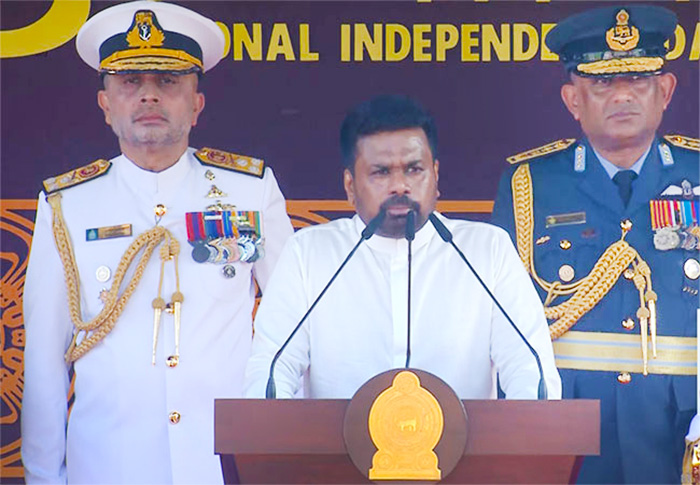
President Anura Kumara Dissanayake yesterday called for unity, beyond petty differences, to build an economically strong Sri Lanka, declaring that the country’s greatest asset was its human resource and warning that there would be no place for racism or extremism in the nation’s future.
Addressing the 78th National Independence Day celebrations, at Independence Square, in Colombo, the President said Sri Lanka must embark on a path of rebuilding, rooted in its sovereignty, history and values, while embracing reform and progress. The national celebrations, held under the theme, ‘Rebuilding Sri Lanka’, commenced at around 7.30 a.m., paying tribute to those who sacrificed much to secure independence from British rule in 1948.
More than 4,500 personnel from the tri-forces and Police took part in the ceremony, alongside around 400 invited guests, including foreign diplomats. A special security and traffic management plan was also in effect, with over 2,000 Police officers deployed across Colombo to ensure public safety and smooth traffic flow.
In his address to the nation, President Dissanayake paid tribute to past generations who fought for the countrys freedom, describing them as heroic patriots whose sacrifices formed the foundation of the nation.
The land on which we stand today is drenched with the blood and tears of our ancestors, he said, adding that it was the duty of present and future generations to honour that legacy.
The President stressed that rebuilding Sri Lanka required drawing strength from the country’s proud history while rejecting harmful practices of the recent past. Economic development, he said, must not erode the foundations of the nation but instead be firmly rooted in the soul of the land and its people.
Emphasising the importance of human capital, the President said Sri Lanka must transform its human resources into a competitive force capable of standing alongside developed nations. He underscored the need to prioritise knowledge, unity and progress over ignorance, prejudice and division, and announced that the Government was ready to implement the most far-reaching education reforms in the country’s history to achieve this goal.
We are prepared to initiate a transformative era in education, he said, pledging to overcome resistance from outdated thinking, and expressing confidence that the people would support the reform process.
The President also highlighted the centrality of the rule of law, national unity and healthy international relations in rebuilding the country. True freedom, he said, could only be achieved through economic strength, supported by good governance and social cohesion.
Reaffirming his commitment to national unity, President Dissanayake said racism and extremism would not be tolerated, warning that both only weakened the nation. He called on all segments of society, including the Government, Opposition, public service and religious leaders, to unite with determination to rebuild Sri Lanka in every sphere.

Prime Minister and Education Minister Dr Harini Amarasuriya told Parliament on Tuesday (3) that none of the modules introduced for Grade 6 under the proposed education reforms had been withdrawn.
Responding to a question by SJB Kurunegala District MP Nalin Bandara Jayamaha, the Prime Minister said the government was planning to implement reforms from 2027.
“Only the modules for the first term of Grade 6 have been printed so far. None of these modules has been rejected or withdrawn. They will be used when the reforms are implemented. No decision has been taken to discard them or to take any action that would result in a financial loss,” she said.
The PM said distribution of the printed Grade 6 textbooks, which had been stored in warehouses, had already commenced and that the government expected to complete the distribution of them by mid-February.
“The teaching process has already begun. As the existing syllabus remains in force, teachers are continuing instruction under the current curriculum,” the Prime Minister said.
MP Jayamaha said there had been controversy surrounding a particular Grade 6 module and sought clarification as to whether it would be withdrawn.
In response, the Prime Minister reiterated that no modules had been removed, due administrative action had been taken with regard to the relevant Grade 6 module and that the matter would be addressed appropriately.
By Saman Indrajith

Showers above 75 mm are likely at some places in the Uva province and in Batticaloa, Ampara, Hambantota and Nuwara-Eliya districts

Parliament: Govt. questioned on returned cheques, delayed payments for disaster victims

President urges shedding of petty differences to achieve an economically strong Sri Lanka

PM: No withdrawal of modules introduced for Grade 6 under proposed education reforms

Lion flags flutter in Vavuniya as black flags mark Independence Day in Kilinochchi

From Gut Feel to GPS: Why Sri Lankan brands must own their AI intelligence

‘Dates have the highest sugar content to fight Coronavirus’

Sunday Island 27 December – Headlines

#SundayIsland 17th December – Headlines

Sunday Island – 28th March

Sunday Island Headlines – 21 March

Sunday Island – 21st February – Headlines
-
 Opinion6 days ago
Sri Lanka, the Stars,and statesmen
-

 Business5 days ago
Hayleys Mobility ushering in a new era of premium sustainable mobility
-

 Business2 days ago
SLIM-Kantar People’s Awards 2026 to recognise Sri Lanka’s most trusted brands and personalities
-
 Business5 days ago
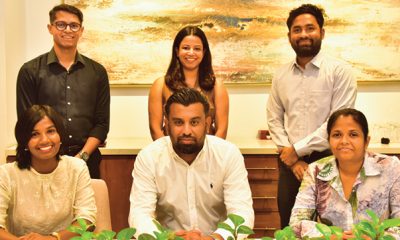
Advice Lab unveils new 13,000+ sqft office, marking major expansion in financial services BPO to Australia
-
 Business5 days ago
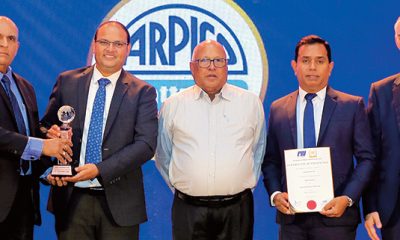
Arpico NextGen Mattress gains recognition for innovation
-
 Business4 days ago
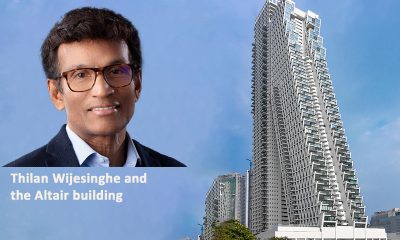
Altair issues over 100+ title deeds post ownership change
-

 Business4 days ago
Sri Lanka opens first country pavilion at London exhibition
-

 Editorial5 days ago
Govt. provoking TUs