
Features
Commemorating the ‘Saint of the Gutters’


by Bryan Nicholas
Much has been written about Mother Teresa who has been a controversial figure both during her life and after her death, Widely admired by many for her charitable works, she was also praised and criticized for her anti-abortion views.
The year was 1910, the day August 26, in a little town in Skopje, (the current Capital of the Republic of Macedonia), a girl who was named Agnes Gonhxa Bojaxhiu was born to Albanian parents. She was the girl who was later to become the “Saviour of the Poorest of the Poor” – the woman who has been variously addressed as – ‘The Mother of Mercy” – “India’s Angel of the slums” – “Saint of the Gutters”. Whatever one would refer to her as, she was a woman who experienced God’s call in such an intense and personal way that she took a path that gave up the creature comforts most of us crave for.
At the age of 18 she submitted to the call of God and entered Loretto Convent in Dublin, Ireland. She took her first profession in 1931 and was to be known as Sister Teresa, after her patroness, St. Therese of Lisieux.
As the majority of the Loretto Nuns in Ireland served in India, she too got a teaching assignment in Loretto Convent, Calcutta, and having taken her final profession on May 24, 1937 where she was to be known as Mother Teresa, following Loretto custom.
However, it was on September 10, 1946, on a train journey from Calcutta to Darjeeling, Mother Teresa received the “call within a call” which was to give rise to the Order of the Missionaries of Charity. After two years of servicing on the streets of Calcutta, Mother Teresa requested and received Vatican permission to start a diocesan congregation which would officially be erected as a religious institute on October 7, 1950.
She was a living model of humility and love. When she picked up her first inmate on a Calcutta Street, her face half eaten by ants and rats, Mother Teresa said, “it would be like touching the abandoned Christ.”
Honour after honour were showered upon her for her humanitarian services and among the Awards she received was the “Padma Shri” (Lord of the Lotus) conferred in 1962 by the Indian Government, for her commitment to the poor of the slums in Calcutta. This was the first instance this award was given to a non-Indian national.
That same year she was awarded the “Ramon Magsaysay Award” for Peace & International Understanding. This is an annual award made to Asian individuals achieving excellence in their respective fields, and was established to perpetuate former Philippine President Ramon Magsaysay’s ‘s example of integrity in governance, courageous service to the people, and pragmatic idealism within a democratic society In commemoration of the 1963 encyclical letter Pacem in terris (Peace on Earth) of Pope John XXIII, the “Pacem in Terris Peace and Freedom Award” was given to Mother Teresa in 1976, to honor her achievements in peace and justice in the world.
In 1969 the Indian Government bestowed on her the “Jawarhalal Nehru Award” for ‘Dedicated Service to Humanity’ and in January 1971 Pope Paul VI awarded her the first “International Pope John XXIII Peace Prize.”
Established in 1972, the Templeton Foundation awarded her the inaugural “Templeton Prize” in 1973 for her extraordinary efforts to help the homeless and neglected children of Calcutta, work which inspired millions of others around the world. This was six years before she received the Nobel Peace Prize in 1979. The prize is awarded to an individual for outstanding contributions in affirming life’s spiritual dimension, whether through insight, discovery, or practical works, based on the decision of a panel of distinguished judges from various academic disciplines and religious traditions – Hindus, Christians, Jews, Buddhists, Muslims and atheists.
In 1978 she was the recipient of the “Balzan Prize” for Humanity, Peace and Fraternity among People’s, awarded by the International Balzan Prize Foundation, and in 1979 received the “Patronal Medal ” awarded jointly by The Catholic University of America and the Basilica of the National Shrine of the Immaculate Conception for her distinguished service in the advancement of Marian devotion, theology, and general appreciation of the place of the Most Blessed Virgin Mary in the life of the Catholic Church.”[
It was in 1979 that Mother Teresa became a household name throughout the world when she was awarded the “Nobel Peace Prize” for her respect for the individual human being, for his or her dignity and innate value. However, she sent word to the organizers that her acceptance of the prize was on the condition that every cent would be spent on the poorest of the poor. She refused the conventional ceremonial banquet given to laureates, and asked that the cost be diverted to the poor in Calcutta.
She raised eyebrows at the Awards Ceremony held on the December 10, 1979 when she started her acceptance speech with the words – let us pray the prayer of Saint Francis of Assisi. She had made sure that a copy of the prayer was placed on the seat of all those present. In fact, her Sisters say this prayer every morning before breakfast. On receiving the Nobel Peace Prize Mother Teresa was asked – “what can we do to promote world peace?” Her answer was simple – “Go home and love your family”

The very next year, in 1980, she was awarded the highest Indian Award – ‘The Bharat Ratna’ and in 1982 conferred with the “Companion of the Order of Australia” which is the highest general award of Australia. In 1983 Her Majesty Queen Elizabeth II invested her with the highest British Award, the prestigious “Order of Merit”.
The Presidential Medal of Freedom awarded by the President of the United States of America for especially meritorious contribution to world peace was made to Mother Teresa in 1985 by President Ronald Reagan. The award is made to individuals selected by the President or recommended to him by the Distinguished Civilian Service Awards Board.
In 1995 she was invested by the Republic of Croatia with “The Grand Order of Queen Jelena“. The Order is named for Croatian Queen Jelena, who ruled during the tenth century and is known as the Mother of the Croatian Kingdom, the Poor and Widowed Mothers.
She was once again honoured by the United States of America in 1997 when she was awarded with the “U.S. Congress Gold Medal” in recognition of her outstanding and enduring contributions through humanitarian and charitable activities, Recipient of the “John F. Kennedy Award” for her untiring and dedicated work towards humanity in 1971, and the “12th UNESCO Education for Peace Prize” in 1992, and in 1993 received the First “Rajiv Gandhi National Sadbhavana Award“.
When I met this ‘Mother of Mercy’ when she visited Sri Lanka – the few words exchanged with that wrinkled faced individual known as the ‘Angel of the Slums’ inspired and awed me. Her self determination, her trust in the unfailing providence of God for her work. Awards and publicity meant nothing to her as her parting words to me was – “we don’t’ work for glory or for money, we work for GOD.”
Her work knew no caste, creed, religion, politics or language. It was a complete surrender and dedication to the sole cause of caring for the unwanted, unloved and uncared for in society – the poorest of the poor, as could be witnessed from some incidents in her life which have been overlooked.In 1982, Mother Teresa persuaded Israelis and Palestinians, who were in the midst of a skirmish, to cease fire long enough to rescue 37 mentally handicapped patients from a besieged hospital in Beirut.
When the walls of Eastern Europe collapsed, she expanded her efforts to communist countries that had rejected her, embarking on dozens of projects. Mother Teresa also traveled to help the hungry in Ethiopia, radiation victims at Chernobyl, and earthquake victims in Armenia. In 1991, Mother Teresa returned for the first time to her native region and opened a Missionaries of Charity Brothers home in Tirana, Albania.
During her lifetime and even after her death, Mother Teresa was consistently listed by Gallup’s List of Widely Admired People to be the single most widely admired person. In 1999, she was ranked as the “most admired person of the 20th century.” Notably, Mother Teresa out-polled all other volunteered answers by a wide margin, and was in first place in all major demographic categories except the very young.
Former U.N. Secretary-General Javier Pérez de Cuéllar once said: “She is the United Nations. She is peace in the world.” Nawaz Sharif, former Prime Minister of Pakistan said that Mother Teresa was “A rare and unique individual who lived long for higher purposes. Her life-long devotion to the care of the poor, the sick, and the disadvantaged was one of the highest examples of service to humanity.”
The process of documenting the life and virtues of a holy man or woman cannot begin until five years after death. This waiting period ensures that the person has an enduring reputation for sanctity among the faithful. However, Pope John Paul II put Mother Teresa on the fast track for Sainthood when he permitted the beatification examination process to begin just two years after her 1997 death, and in 2003, beatified her after the Vatican recognized the healing miracle of an Indian woman’s prayers to Mother Teresa, which caused her brain tumors to disappear.
As we celebrate the life that touched so many hearts of the downtrodden, the sick, the suffering, the destitute, the heart broken – the life of Mother Teresa who returned to her Creator on September 5, 1997 – let us say the prayer of peace that St. Fancis of Assis prayed, the opening prayer of Mother Teresa when she accepted the Nobel Peace Prize on December 10, 1979, in the Aula of the University of Oslo in Norway :
“Lord, make me a channel of your peace, that where there is hatred, I may bring love; that where there is wrong, I may bring the spirit of forgiveness; that where there is discord, I may bring harmony; that where there is error, I may bring truth; that where there is doubt, I may bring faith; that where there is despair, I may bring hope; that where there are shadows, I may bring light; that where there is sadness, I may bring joy.
Lord, grant that I may seek rather to comfort than to be comforted; to understand, than to be understood; to love, than to be loved. For it is by forgetting self, that one finds. It is by forgiving that one is forgiven. It is by dying, that one awakens to eternal life. Amen.”


by Prof. Ranjith Bandara,
Emeritus Professor, University of Colombo
This article examines why community exclusion, excessive bureaucratic control, unequal distribution of conservation benefits, weak institutional accountability, and short-sighted political leadership continue to undermine wildlife conservation in Sri Lanka.
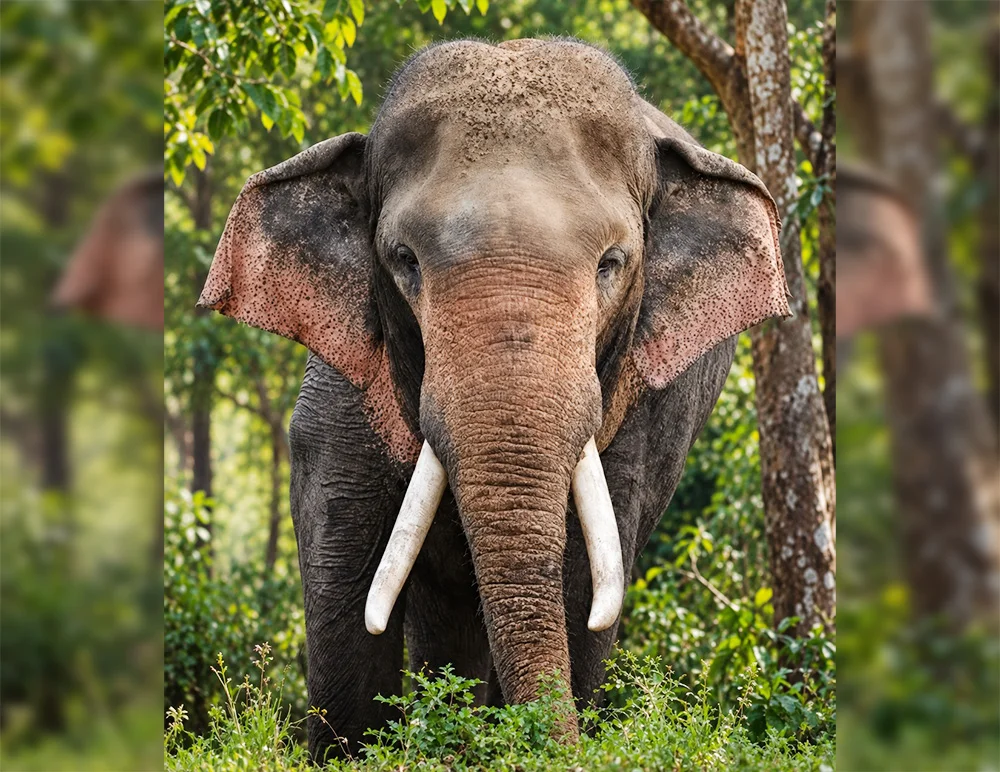
The death of Tusker Kavantissa is more than the loss of one of Sri Lanka’s most remarkable wild elephants. It exposes uncomfortable questions about how we protect our natural heritage, how conservation decisions are made, and why repeated warnings have failed to produce meaningful reforms. His death should compel us to examine not only what happened to one extraordinary animal, but also the deeper weaknesses in our wildlife conservation system.
Tusker Kavantissa, one of Sri Lanka’s most prominent wild tuskers, died on 16 October, 2026, after receiving veterinary treatment for an injury, reportedly caused by gunfire. Although the wound had shown some improvement, his health subsequently deteriorated. The precise cause of death requires confirmation through a proper post-mortem examination. Nevertheless, the circumstances raise serious questions about preventive protection, wildlife management, and institutional preparedness.
The wider picture is equally disturbing. According to recently reported figures, Sri Lanka has lost an average of approximately 402 elephants and 138 people annually, since 2019, due to human–elephant conflict. These figures reflect a continuing national tragedy affecting both wildlife and rural communities.
What Sri Lanka faces today is not merely a wildlife conservation problem. It is also a crisis of environmental governance, shaped by institutional weaknesses, political decisions, and the failure to recognise the economic and social realities of conservation.
Conservation without communities
One of the fundamental weaknesses of our conservation approach is that local communities are often treated as subjects of regulation rather than partners in conservation. They are expected to bear the risks, respect restrictions, and cooperate with government programmes, yet their influence over decisions affecting their lives remains limited.
For rural families living alongside wild elephants, conservation is not an abstract environmental objective. It directly affects their safety, agricultural income, property, and everyday lives.
Farmers frequently possess valuable knowledge about elephant movements, vulnerable locations, seasonal changes, and practical protection measures. Yet conservation interventions are sometimes designed without adequately considering this experience.
When decisions are imposed from above, communities may feel excluded from programmes they are expected to support. This weakens trust, reduces cooperation, and ultimately undermines conservation outcomes.
We must recognise that protecting elephants and protecting farmers are not conflicting objectives. Both are essential. A conservation policy that safeguards wildlife while neglecting human security cannot be considered successful.
The real challenge is to replace conservation imposed on communities with conservation undertaken alongside them. Meaningful participation requires more than consultation meetings. Communities must have a genuine role in planning, implementing, monitoring, and evaluating conservation activities.
Bureaucratic authority versus public accountability
Wildlife conservation requires strong institutions, professional expertise, and effective regulations. However, excessive bureaucratic control can become an obstacle when administrative authority takes precedence over practical outcomes.
Decision-making in Sri Lanka’s conservation system remains heavily dependent on central institutions. Administrative procedures, overlapping responsibilities, and limited coordination can delay responses to urgent problems.
More importantly, excessive centralisation can discourage local innovation and prevent communities from contributing practical solutions.
When administrative authority becomes more important than results, conservation risks becoming an exercise in controlling people rather than protecting nature.
This criticism should not be confused with questioning the dedication of frontline wildlife officers and veterinarians. Many work under difficult conditions with limited resources. The efforts undertaken to save Tusker Kavantissa deserve recognition.
However, individual commitment cannot compensate indefinitely for institutional weaknesses.
We must ask whether our conservation institutions have the capacity to identify risks early, protect vulnerable animals, coordinate emergency responses, and evaluate the effectiveness of their interventions.
Public accountability should, therefore, extend beyond compliance with administrative procedures to measurable conservation outcomes.
Who bears costs, and who receives benefits?
Perhaps the most neglected dimension of wildlife conservation in Sri Lanka is the unequal distribution of its economic costs and benefits.
Wild elephants contribute substantially to tourism, biodiversity, cultural heritage, and the country’s international image. Their conservation generates benefits enjoyed by society as a whole.
Yet the financial and personal costs are concentrated among rural communities living within elephant habitats.
A study published in 2023, involving 300 farming households in southern Sri Lanka, revealed a striking imbalance. Although these households lived near two national parks, none received economic benefits from tourism. Meanwhile, 57 percent had experienced elephant-related crop damage.
The findings raise a fundamental economic question: if the entire country benefits from elephant conservation, why should a relatively small and vulnerable section of society bear a disproportionate share of its costs?
Conservation cannot remain economically sustainable when its benefits are widely enjoyed but its costs are concentrated among those least able to bear them.
A separate study, published in 2024, involving 439 affected farming households, examined the possibility of financing compensation through tourism revenue. It demonstrated the potential for tourism-based financial mechanisms to support human–elephant coexistence.
The policy implications are significant
A proportion of wildlife tourism revenue could be directed towards affected communities through transparent benefit-sharing arrangements. Such measures could support compensation, village protection, local employment, community enterprises, and agricultural improvements.
However, financial compensation alone is insufficient. The 2023 study also indicated that fear of elephants and concerns about crop damage strongly influenced community attitudes. People must feel safe in their homes and farms, not merely receive payment after suffering losses.
Equitable benefit-sharing is, therefore, more than an act of generosity. It is an economic and social requirement for sustainable conservation.
Political decisions and absence of long-term vision
The weaknesses in wildlife conservation cannot be attributed solely to public officials. Political leadership must accept its share of responsibility.
Poor land-use planning, habitat fragmentation, obstruction of elephant movement corridors, and development decisions that inadequately consider environmental consequences have contributed to human–elephant conflict.
Political decisions made for immediate gains can create environmental and economic costs lasting for decades.
Another weakness is the preference for visible, short-term interventions.
Constructing electric fences, relocating elephants, and launching emergency operations can attract considerable publicity. However, such interventions should be evaluated according to their effectiveness, not their visibility.
Political leadership should be judged not by the number of conservation programmes announced, but by the lives protected, conflicts prevented, and long-term improvements achieved.
There is also a serious problem of policy continuity. Conservation cannot be governed according to electoral cycles or changing political priorities.
Elephant habitats, migration patterns, and ecological processes do not change with governments. Successful conservation, therefore, requires consistent national commitments extending beyond individual political administrations.
Without such continuity, public investment may be wasted while the underlying problems remain unresolved.
Problem is not always a lack of policy
Sri Lanka’s conservation crisis cannot be explained simply by a shortage of scientific knowledge or policy recommendations.
In many instances, the greater challenge lies in translating available knowledge into coordinated, adequately funded, and politically supported action.
The National Action Plan for the Mitigation of Human–Elephant Conflict, prepared in 2020, proposed a science-based approach that emphasised community participation, protection of villages and agricultural land, and more effective conflict-management strategies.
Yet an important question remains: how much of this plan has been implemented successfully?
Have implementation difficulties arisen from inadequate resources, weak institutional coordination, administrative resistance, or insufficient political commitment?
An independent assessment of the plan’s implementation would help identify these obstacles and establish clear responsibilities.
We must also recognise that a substantial proportion of Sri Lanka’s wild elephants live outside protected areas. Attempting to confine all elephants within national parks and forest reserves is, therefore, neither realistic nor sustainable.
Effective conservation requires land-use policies informed by elephant ecology, settlement patterns, agricultural needs, and the practical realities of human–wildlife coexistence.
A sound policy that remains largely unimplemented offers little protection to either elephants or people.
Towards more responsible conservation system
Sri Lanka needs a fundamental change in how wildlife conservation is governed.
Four priorities deserve immediate attention.
First, local communities must become genuine partners in conservation management, with meaningful responsibilities and decision-making opportunities.
Second, conservation benefits must be distributed more fairly. Wildlife tourism should contribute directly to protecting the livelihoods and safety of communities that bear conservation costs.
Third, existing national conservation plans should be independently reviewed to identify implementation gaps and establish a realistic timetable for corrective action.
Fourth, conservation institutions must become more accountable for measurable outcomes, including reductions in human deaths, elephant mortality, crop losses, and property damage.
These reforms require cooperation among wildlife, forestry, agriculture, land, irrigation, and local government institutions.
They also demand political leadership willing to prioritise long-term results over short-term publicity.
For exceptional animals, such as Tusker Kavantissa, improved risk monitoring, preventive protection, and timely veterinary responses are particularly important. However, conservation should not be limited to protecting a few well-known animals.
Every wild elephant has ecological value, just as every person living alongside elephants has an equal right to safety.
The objective must be a system that protects both.
Lesson tusker Kavantissa leaves behind
The death of Tusker Kavantissa should not become another moment of national sorrow that gradually fades from public memory. It should mark a turning point in how Sri Lanka approaches wildlife conservation.
A proper investigation into his death is essential. Equally important is an honest examination of the conservation system within which such tragedies continue to occur.
The real challenge is not choosing between people and elephants. It is creating a system in which both can coexist safely, and where the responsibilities, costs, and benefits of conservation are shared fairly.
This requires more than scientific expertise and stronger regulations. It demands accountable institutions, meaningful community participation, economic fairness, and political leadership guided by a clear long-term vision.
Our greatest failure would not be the loss of Tusker Kavantissa alone. It would be allowing the same weaknesses in our conservation system to claim more lives while we continue to avoid the reforms that could prevent them.

by Jehan Perera
The government appears set to overcome the first major challenge to one of its foundational principles. It has faced down demands from sections of the Buddhist clergy and opposition parties to release Ven. Galagodaatte Gnanasara from his prison sentence for contempt of court.
Ven Gnanasara is best known as the general secretary of the Bodu Bala Sena, a nationalist Sinhala grouping. The government seemed unfazed by a protest march organised by Buddhist monks and the opposition parties and its supporters organised an even bigger march to support the government’s position. It is notable that the general population did not get involved in either march in any substantial number. The issue has now become a test of whether the government will uphold its commitment to apply the law equally, irrespective of a person’s position or status, even when doing so brings it into conflict with a powerful constituency.
The case has a specific legal history. Ven. Gnanasara was sentenced to six years’ imprisonment by the Court of Appeal in 2018 for contempt of court in a case involving former military personnel where he disrupted the proceedings. The Supreme Court rejected his appeal in 2018. Former President Maithripala Sirisena subsequently granted him a presidential pardon in 2019. Last month, the Supreme Court invalidated that pardon. The initial demand by Buddhist monks and their lay supporters was that Ven. Gnanasara should be permitted to wear his Buddhist robes when appearing in public before the courts. The government has indicated its willingness to examine the procedures governing the treatment of Buddhist monks in prison, in consultation with the relevant religious authorities. However, the initial demand has now been escalated into a demand for a presidential pardon.
One of the central promises of the National People’s Power (NPP) during its election campaign two years ago was to apply the law equally to all. This commitment has shaped the government’s approach to allegations of corruption and criminality involving individuals who previously wielded political power. The NPP government was swept into power on a wave of antipathy towards those in previous governments who were perceived to have abused their positions for private gain. The economic collapse Sri Lanka experienced in 2022, and the hardships endured across society, remain vivid in the public memory. The past two years have seen the government pursuing those accused of corruption and other offences. Several high-ranking members of previous governments have faced arrest and legal proceedings and been sentenced to jail.
Religious Concerns
The ability of opposition parties to mobilise widespread resistance against proceedings involving their leaders has been limited, as much of the general population continues to favour accountability for past financial crimes. However, the case of Ven. Gnanasara is different. It does not concern allegations of financial corruption, but the relationship between religious authority, the courts and the law of the land. This is where the distinction between respecting religious traditions and upholding the law becomes crucial. There is a sense among sections of the general population that Buddhist monks should not be treated on a par with others and that requiring Ven. Gnanasara to appear in court without his robes was unjust and contrary to the national ethos. Such sentiments reflect the special place Buddhism occupies in Sri Lanka’s history and society. Sinhala Buddhist nationalism has been a potent political force throughout the country’s history, drawing on a heritage that extends back more than two millennia. The question is whether respect for Buddhism needs to also entail the exemption of individual monks from the ordinary requirements of the law and thereby treat them differently.
The challenge would be to accommodate legitimate religious concerns through rational and lawful procedures without allowing religious status to become a source of legal privilege. The government has been amenable to addressing the issue of monastic robes, but has so far resisted the demand to release Ven. Gnanasara through a new pardon. President Anura Kumara Dissanayake and government members have made it clear that the government would not bend the law to accommodate any individual. They have taken the position that any shortcomings in existing rules should be addressed by changing the rules through proper procedures, rather than by making an exception for a particular individual. If the government holds its position, it will demonstrate that its commitment to the rule of law extends even to constituencies that have historically enjoyed considerable political influence.
This is important not only for the country’s democratic institutions but also for its economic future. Sri Lanka is seeking to recover from its economic collapse and establish the foundations for sustained growth. The International Monetary Fund’s analysis of Sri Lanka’s governance weaknesses has repeatedly emphasised the economic costs of corruption and institutional deficiencies. Its 2024 analysis of governance and growth concluded that comprehensive and coherent reforms could bring significant macroeconomic benefits. The IMF’s 2025 assessment also highlighted the importance of sustained governance reforms in unlocking the country’s growth potential. Investors, both domestic and foreign, need confidence that public institutions function according to predictable rules, that contracts and property rights are protected, and that political connections or social status will not determine how the law is applied.
Sensitive Issue
Sri Lanka has long sought the leap towards prosperity that has proved elusive under successive governments. Economic reform alone will not achieve it. The connection between the rule of law and economic prosperity is direct. Businesses are more likely to invest when they can expect disputes to be resolved fairly, public resources to be managed transparently and regulatory decisions to be made on rational grounds. No country can achieve a durable economic take-off if its institutions are perceived to operate according to political favour, inherited privilege or communal pressure. Sri Lanka cannot afford to return to a political culture in which powerful interests are shielded from accountability while ordinary citizens bear the costs.
Changing a political culture that has evolved over the decades if not centuries is a difficult undertaking, particularly in a country where political leaders have long relied on religious and communal identities to consolidate their support. It requires not only firmness but also sensitivity, dialogue and a willingness to reform laws and institutions where genuine deficiencies exist. The present controversy offers an opportunity to demonstrate that these objectives need not be in conflict. The government can respect the Buddhist clergy’s concerns about the treatment of monks in prison while refusing to grant an individual an exemption from a judicial sentence. It can recognise the importance of Buddhism to the country while maintaining that no religious or political authority stands above the law.
The question is whether national traditions and ethos are interpreted in ways that strengthen justice, responsibility and social harmony, or invoked to defend privileges that undermine them. The country needs a transformation in public expectations from privilege to accountability, from communal claims to equal citizenship, and from personal discretion to institutions governed by law.
The government’s handling of the case involving Ven. Gnanasara is therefore about more than one monk or one sentence. This particular case will determine whether the government can build a system in which no government, religious authority or politically influential individuals can place themselves beyond the law. A just society must be able to honour both its traditions and its commitment to equality before the law.
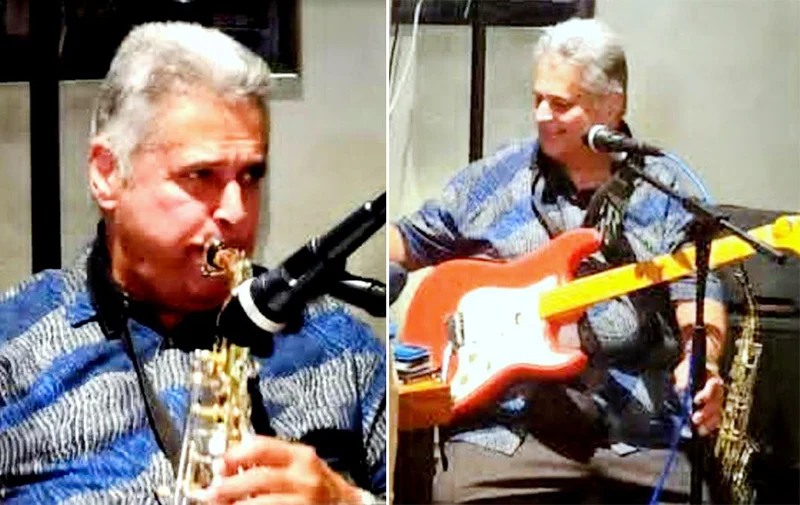
 Lanka was his homeland, and now it’s Australia, based in Sydney. But for legendary performer Roger Menezes, the lure of his old hometown is just too hard to resist — and he keeps coming this way, ever so often!
Roger is in town at the moment — his fourth trip for this year alone! In fact, for the last few years, he has been checking out Sri Lanka on a very frequent basis.
This time, he says, he will be here for just two weeks, as he has heavy commitments, Down Under, as a performer.
On the 24th of this month, he will be seen in action at Broadway Dehiwela, celebrating their second anniversary. It’s a homecoming of sorts, as he was the very first artiste to perform live at this venue, on their opening night!
He goes back to Sydney in November for an early Christmas party, and will be back, in Colombo, in December, for more performances, with a pre-New Year’s Eve party at the Broadway, on 30th December.
Roger says he also takes the opportunity, whenever he visits Sri Lanka, to soak in the beauty of our country, especially the serene scenes away from the hustle and bustle of Colombo!

Roger Menezes: Fourth trip for this year
Roger Menezes is truly a remarkable talent, and it is always a sheer pleasure to look into the careers of musicians who have left such a lasting, indelible mark on Sri Lanka’s rich musical heritage.
Known for his signature “hits and memories” performance style — a nostalgic, heart-warming blend of jazz, pop, and classic rock — he remains a foundational figure of Sri Lanka’s golden era of music.
He was deeply integrated into Colombo’s swinging 1960s and 70s music scene.
He played drums for iconic groups like The Savages, Thunderbirds, and Fireflies, played guitar for Sam the Man, and joined the legendary band The Jetliners as their keyboardist, saxophonist, and guitarist (additionally recording bass guitar tracks). He also fronted his own much-loved ensemble, Roger and the Webs.
He migrated to Sydney, Australia, in the early ’70s and the legend only grew.
In Australia, he founded the highly successful corporate and event bands Eastern Spice and Stay Tuned (alongside his wife Cheryl and family). Under his leadership, Stay Tuned was heavily involved in providing entertainment for corporate functions, organised by the Sydney 2000 Olympic Committee. The group also headlined the New Year’s Eve festivities at Sydney’s iconic Centrepoint Tower for five consecutive years!
Today, he is widely celebrated as a highly adaptive one-man band, simultaneously navigating vocals, keyboards, guitar, saxophone, and drums — a one-man orchestra who truly does it all!

Import and Export (Control) Regulations No. 08 of 2026
Draft Bill of the Public Private Partnership Enterprises Act to be gazzetted
Amendment of the Ayurvedha Act No. 31 of 1961

Cabinet nod to amend the Sri Lanka Development Administration Institute Act No. 9 of 1982
Establishment of the National Higher Performance Centre
State patronage for the cremation ceremony of the late deputy prelate (Anu Nayaka Thero) of the Sri Laka Ramangya Maha Nikaya, Gatambe Rajopawanramadhipatha, Siri Chandawimala Wanshalankara, Chandrakeerthi Sri Amarawansha, Sadhdharmawageeshwara, Shasanashobhanna Most Venerable Keppetiyagoda Siriwimalabhidhana Thero

‘Dates have the highest sugar content to fight Coronavirus’

Sunday Island 27 December – Headlines

#SundayIsland 17th December – Headlines

Sunday Island – 28th March

Sunday Island Headlines – 21 March

Sunday Island – 21st February – Headlines
-

 Features3 days ago
Kotahena:A Small Enclave, An Extraordinary Legacy
-

 News7 days ago
Sri Lanka, India caught in US-Iran ship crisis
-
 News4 days ago
Asgiri Mahanayake calls for immediate release of Gnanasara Thera
-

 Latest News7 days ago
Missiles intercepted near Riyadh after Saudi coalition hits Yemen fuel depot
-

 Latest News7 days ago
Kusal Mendis’ unbeaten 87 hands Sri Lanka consolation win
-

 News3 days ago
Record 1,600 students take Russian Classical Ballet examination in Sri Lanka
-
 News6 days ago
AC President recuses himself from hearing prison attire case pertaining to Gnanasara Thera
-

 Latest News7 days ago
Heavy showers above 100 mm are likely at some places in the Western, Sabaragamuwa, Southern, Central, and North-western provinces and in Anuradhapura district.