
Business
ComBank undertakes to reforest 100 hectares in Kandegama, Polonnaruwa


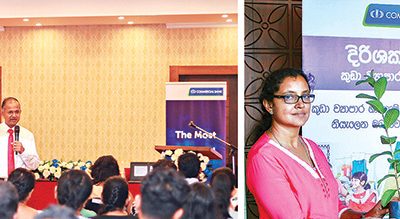
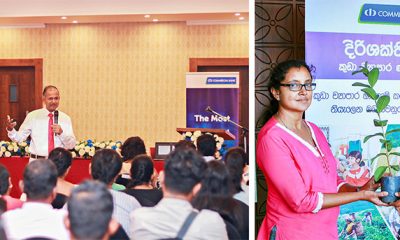
A 100-hectare swath of degraded habitat belonging to the Kandegama forest in the Dimbulagala range of the Polonnaruwa District is to be reforested by the Commercial Bank of Ceylon under the latest environment-linked commitment of Sri Lanka’s benchmark private bank.The area, which is home to elephants, leopards, deer, and porcupine and is also climatically significant, is to be restored under this project in collaboration with the Forest Department.
Forests in the North-East area of the country have a catalytic effect on the North-East monsoon and the reforestation of Kandegama is expected to improve rainfall stability in the region in addition to paving the way for other environmental benefits including climate change mitigation, biodiversity conservation, and habitat improvement, the Bank said.
“We are determined to ensure that the current economic challenges do not side-track our commitments to chosen nationally-important causes,” Commercial Bank Managing Director/CEO Sanath Manatunge said. “As the only Bank in Sri Lanka to achieve 100% carbon neutral status and as a Bank which is committed to preserve the environment, Commercial Bank is very pleased to join hands with Forests Department for this reforestation project. With this project, Commercial Bank continues its support to Sri Lanka’s efforts to increase its forest cover and conserve habitats.”
He noted that Sri Lanka has pledged to increase its forest cover up to 32% by 2030 under the 2015 Paris Agreement of the United Nations and the country also plans to restore 200,000 hectares of deforested and degraded forest by 2030 in response to the Bonn Challenge which seeks to bring 350 million hectares of landscapes into restoration, globally.
The Kandegama forest occupies an area of 600 hectares. The dominant vegetation of the forest is scrub and bushes such as ‘Hinguru’ and ‘Babila’ and invasive plants. Scattered stands of large trees such as ‘Madan,’‘Mayila’ and ‘Kon’ offer refuge to its wildlife.
The reforestation project funded by the Bank envisages the planting and maintaining of 62,500 seedlings of local species and extends to reducing the danger of forest fires by 95% by removing invasive flora such as ‘Mana’ and ‘Illuk’ grass that hinder the growth of other plants and are susceptible to forest fires during the dry season. This will also aid natural regeneration and control cattle grazing.
Funds provided by Commercial Bank will be used to conduct a land survey and map out the 100 ha of forest under the purview of the project, a study of its vegetation to understand the effects of other activities on species composition and density, the clearing of strips to the width of 5m and planting of seedlings, establishment of fire lines for fire control by removing ground vegetation up to a 10m strip around the plantation area to avoid external fires spreading to the forest land, fertilising and watering during prolonged drought periods, maintaining and monitoring the forest land and fire belt for a period of three years, and the performance of annual sample surveys.
The Bank’s CSR Trust also focuses on marine conservation under its environmental initiatives. Recent such initiatives of the Bank include support to the Koggala Mangrove Restoration and Conservation Project. The Bank has funded the planting of a belt of 2,000 mangrove plants and 750 mangrove associates around a little island in the Koggala Lake, along with 500 terrestrial plants on the island. Commercial Bank has also provided financial assistance to plant 1,000 mangrove trees along the Mannar coastal belt and to clean-up the beach area.
Sri Lanka’s first 100% carbon neutral bank, the first Sri Lankan bank to be listed among the Top 1000 Banks of the World and the only Sri Lankan bank to be so listed for 12 years consecutively, Commercial Bank operates a network of 268 branches and 940 automated machines in Sri Lanka. Commercial Bank is the largest lender to Sri Lanka’s SME sector and is a leader in digital innovation in the country’s Banking sector. The Bank’s overseas operations encompass Bangladesh, where the Bank operates 19 outlets; Myanmar, where it has a Microfinance company in Nay Pyi Taw; and the Maldives, where the Bank has a fully-fledged Tier I Bank with a majority stake.










In a significant breakthrough for Sri Lanka’s trade and logistics sector, authorities have agreed to halve the number of containers subjected to Customs examination at the Colombo Port—an intervention expected to dramatically reduce congestion and costly delays that have plagued importers and exporters for months.
The decision emerged following high-level discussions between the Ceylon United Business Alliance (CUBA), senior Customs officials, and representatives from the Finance and Industries Ministries.
The business delegation, led by Ms. Tania Abeysundara, included representatives of the Customs House Agents and Traders Association, among them Ghouse Arfin, Jawfer, and Mohamed Niyas. They met with Deputy Minister of Finance Prof. Anil Jayantha and Deputy Minister of Industries Chathuranga Abeysinghe, alongside top Customs officials.
Sri Lanka Customs Director General Seevali Arukgoda, addressing the concerns of the trade, assured that container examination selectivity would be reduced in line with International Monetary Fund (IMF) recommendations.
At present, nearly 800 containers—amounting to around 40 percent of daily throughput—are flagged for physical examination at key yards, including Grayline 1, Grayline 2, and Rank Container Terminal. This high rate has been widely blamed for severe bottlenecks within the Colombo Port and associated examination yards.
However, under the revised framework, the number of containers selected for inspection will be reduced to approximately 400 per day, bringing the examination rate down to 20 percent.
Senior Customs officials, including Additional Director General (Revenue and Services) S. Loganathan, acknowledged that the current levels of inspections had contributed to mounting congestion, extended clearance times, and increased costs for traders.
Industry stakeholders have long argued that excessive physical inspections—often duplicative and risk-averse—undermine Sri Lanka’s competitiveness as a regional maritime hub.
“This is a vital step towards improving trade facilitation and reducing the cost of doing business in Sri Lanka, the Alliance team told The Island Financial Review.
By Ifham Nizam

Sri Lanka’s economic growth is expected to moderate to 4.0% in 2026 and climb to 4.2% in 2027, following two consecutive years of strong 5.0% growth.
This forecast is based on an early stabilization scenario for the Middle East conflict, according to the Asian Development Outlook (ADO) April 2026, Asian Development Bank’s (ADB) flagship economic publication. Sri Lanka’s recovery held firm in 2025 despite the late-year disruption of Cyclone Ditwah. Private consumption surged amid low inflation and easing interest rates, while remittances hit a record high, as did the primary budget surplus. The current account posted a third consecutive surplus, and official reserves climbed to their strongest level in years.
The outlook for 2026 is increasingly shaped by the conflict in the Middle East, even as post-Ditwah reconstruction spending provides some support for growth. Private consumption will remain the main growth driver, though higher inflation will temper household spending power, and private investment is expected to recover only gradually amid heightened uncertainty.
Higher energy costs, potentially weaker remittance inflows, and disruptions to trade and tourism will weigh on household incomes and external buffers and drag on economic growth. Inflation is projected to accelerate sharply to 5.2% in 2026, driven largely by the Middle East conflict.
“Sri Lanka has come a long way since the recent economic crisis, and its economic performance over the last two years is a major achievement,” said ADB Country Director for Sri Lanka Shannon Cowlin. “However, the risks ahead are real and significant. This is not the moment to ease up on reforms. Fiscal discipline must be maintained and resilience must be strengthened against the external shocks that will keep testing this economy. At the same time, scaling up and executing public investment will be essential to sustaining the recovery.”
ADB is a leading multilateral development bank supporting sustainable, inclusive, and resilient growth across Asia and the Pacific. Working with its members and partners to solve complex challenges together, ADB harnesses innovative financial tools and strategic partnerships to transform lives, build quality infrastructure, and safeguard our planet. Founded in 1966, ADB is owned by 69 members—50 from the region.(ADB)

This Avurudu season, Hameedia introduces its latest campaign, “Threads of Culture,” celebrating the traditions that connect generations while embracing a more conscious and forward-thinking approach to fashion.
Rooted in the spirit of Sinhala and Hindu New Year, the campaign highlights the importance of preserving culture while evolving with modern values. This year, Hameedia places a strong emphasis on ethical and sustainable fashion, encouraging customers to move away from fast and imitation fashion towards quality, authenticity, and responsible choices.
As part of this shift, Hameedia presents a refreshed festive collection crafted using lightweight cotton and linen fabrics, designed specifically for Sri Lanka’s climate. The collection focuses on breathability, comfort, and timeless style, offering customers clothing that is both practical and refined for the season.
Commenting on the campaign, Fouzul Hameed, Managing Director of Hameedia, stated, “Avurudu is a time of renewal, reflection, and meaningful connection. With ‘Threads of Culture,’ we wanted to go beyond celebration and inspire a shift in mindset, encouraging Sri Lankans to choose authenticity over imitation, quality over quantity, and responsibility over convenience. As a homegrown brand, we take pride in upholding craftsmanship and ethical practices, and we believe fashion should not only look good but also do good.”
Marking a key milestone in its expansion, Hameedia is also set to open its newest outlet in Galle, further strengthening its presence across the island and making its signature craftsmanship more accessible to customers in the southern region.

Sooryavanshi blitz, Jurel 81* help Rajasthan Royals take down Royal Challengers Bengaluru with ease

Sun directly overhead Pomparippu, Anuradhapura, Mihinthale, Galenbindunuwewa, Agbopura and Serunuwara about 12:11 noon today (11)

Showers expected in the Western, Sabaragamuwa, North-western , Southern and Uva provinces and in Anuradhapura, Mannar, Kandy and Nuwara-Eliya districts after 2.00 p.m.

Opposition NCM against Energy Minister defeated

Chinese Ambassador assures Lanka China will not allow a fuel crisis to develop here

Minister Jayatissa blames administrations since 2010 for not following proper procedures when procuring coal

‘Dates have the highest sugar content to fight Coronavirus’

Sunday Island 27 December – Headlines

#SundayIsland 17th December – Headlines

Sunday Island – 28th March

Sunday Island Headlines – 21 March

Sunday Island – 21st February – Headlines
-

 Features6 days ago
Ranjith Siyambalapitiya turns custodian of a rare living collection
-

 News6 days ago
Global ‘Walk for Peace’ to be held in Lanka
-

 News4 days ago
Lankan-origin actress Subashini found dead in India
-

 Business1 day ago
Israeli attack on Lebanon triggers local stock market volatility
-

 News2 days ago
AG: Coal procurement full of irregularities
-

 Features6 days ago
Beyond the Blue Skies: A Tribute to Captain Elmo Jayawardena
-

 Features6 days ago
Aspects of Ceylon/Sri Lanka Foreign Relations – 1948 to 1976
-

 Business2 days ago
Hayleys Mobility introduces Premium OMODA C9 PHEV