
News
ComBank honoured with six awards by Indian Chamber of Commerce


The Indian Chamber of Commerce (ICC) recently honoured the Commercial Bank of Ceylon with six prestigious awards, two in respect of Sri Lanka and four for the Bank’s Bangladesh operation, joining the many international bodies that have recognised the country’s leading private sector bank with accolades this year.
The ICC recognised Commercial Bank as the ‘Best Bank in Sri Lanka’ and for ‘Best Performance on Risk Management’ among Sri Lankan banks, and presented Commercial Bank Bangladesh the awards for ‘Best Performance on Asset Quality,’ ‘Best Performance on Growth,’ ‘Best Performance on Risk Management’ and ‘Best Performance on Profitability.’
These awards were presented at the ICC’s Emerging Asia Banking Conclave and Awards in Goa, India in July, to recognise and reward banks in the seven countries that belong to the Bay of Bengal Initiative for Multi-Sectoral Technical and Economic Cooperation (BIMSTEC) for extraordinary steps in the growth and spread of emerging Asian banking. The awards were presented on the basis of applications assessed by PricewaterhouseCoopers (PWC). Commercial Bank was the only Sri Lankan Bank to be honored at the awards ceremony.
Commenting on the recognition accorded to Commercial Bank by the Indian Chamber of Commerce, the Bank’s Chief Operating Officer S. Prabagar said: “The challenges faced by banks in the BIMSTEC countries as well as the expectations of customers and regulators, are fairly similar. Being assessed by a panel of eminent banking industry personalities from the region is therefore of particular value, and we are extremely pleased to win the award for Best Bank in Sri Lanka as well as five Best Performance awards for our operations in Sri Lanka and Bangladesh.”
Focusing on the stellar role played by banks in promoting economic growth and using monetary policy as an engine of growth during the times of the pandemic and the post-pandemic war in Europe, the awards considered the best practices and innovative steps taken by banks to overcome the myriad challenges they faced in their operations. Innovation in payment systems, digital asset management, anti-money laundering, big data analytics, cyber compliance and regulatory compliance, empathy, financial health and guidance of their clientele were among the aspects assessed for the awards.
The awards jury comprised of stalwarts from the banking industry, and some of the quantitative factors considered for the awards presented to Commercial Bank included key financial indicators such as Total assets, Gross and net advances, Deposits, Total investments, Total interest earned, Profits, Operating expenses, Gross non-performing assets, Yield on investments, Liquidity coverage ratio and Capital adequacy ratio. Other aspects such as advances made towards renewable energy projects, energy efficiency improvement projects, pollution control projects, water conservation and treatment projects, waste management projects and forest regeneration projects, and CSR expenditure were also assessed.
Founded in 1925 and headquartered in Kolkata, the Indian Chamber of Commerce is one of the most proactive and forward-looking Chambers in India today. Its membership spans some of the most prominent and major industrial groups in India. Set up by a group of pioneering industrialists led by Mr G. D. Birla, the Indian Chamber of Commerce was closely associated with the Indian freedom movement, as the first organised voice of indigenous Indian industry.
Sri Lanka’s first 100% carbon neutral bank, the first Sri Lankan bank to be listed among the Top 1000 Banks of the World and the only Sri Lankan bank to be so listed for 12 years consecutively, Commercial Bank operates a network of 271 branches and 957 automated machines in Sri Lanka. Commercial Bank is the largest lender to Sri Lanka’s SME sector and is a leader in digital innovation in the country’s Banking sector. The Bank’s overseas operations encompass Bangladesh, where the Bank operates 20 outlets; Myanmar, where it has a Microfinance company in Nay Pyi Taw; and the Maldives, where the Bank has a fully-fledged Tier I Bank with a majority stake.










Samagi Jana Balawegaya (SJB) MP Dr. Kavinda Jayawardana has expressed his gratitude to US President Donald Trump for his commitment to safeguarding persecuted Christian communities in Nigeria.
In a letter addressed to President Trump, SJB MP Kavinda Jayawardana said the US President’s decisive intervention to address the violence, murders, and assassinations targeting Catholics and other Christians in Nigeria demonstrates exceptional moral leadership on the global stage.
“By standing firmly against the terrorist elements perpetrating these heinous crimes, you have given voice to the voiceless and hope to those living in fear. As a representative of the Catholic community in Sri Lanka, I am deeply moved by your administration’s efforts to bring international attention to these atrocities and to work toward meaningful solutions. Your actions reflect a recognition that the protection of religious minorities and the preservation of human dignity transcend borders and political considerations,” he said.
Dr. Jayawardana said, “The world you envision, one where people of all races, ethnicities, and religions can coexist in harmony and peace, resonates deeply with the values we hold dear in Sri Lanka, a nation that has itself experienced the devastating consequences of religious and ethnic conflict.”
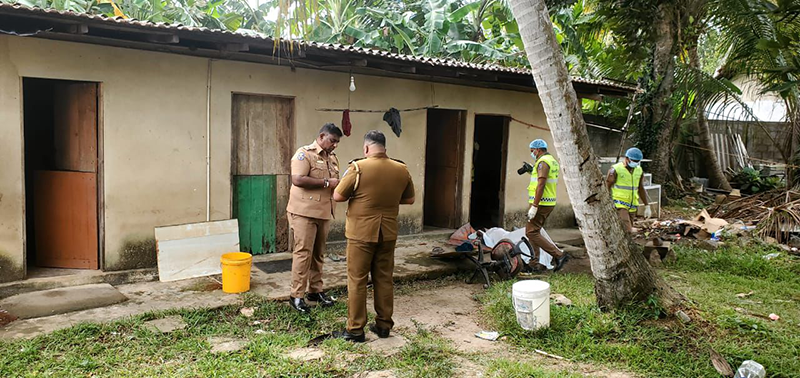
Alcohol consumption, particularly the rising use of illicit liquor, has emerged as a major public health and economic crisis in Sri Lanka, with experts warning of devastating consequences if urgent action is not taken.
Surveys have confirmed that nearly 37 percent of alcohol users in the country consume illicit liquor, according to Chamil Muthukuda, Secretary of the Sri Lanka Public Health Inspectors’ Association. He warned that alcohol abuse has already begun to create a severe burden on both the national economy and the public health system.
Citing World Health Organization (WHO) data, Muthukuda said illicit alcohol consumption in Sri Lanka has increased by more than 300 percent, while global reports indicate that overall alcohol consumption around the world has risen by about 95 percent. Illicit alcohol now accounts for more than a third of total alcohol use in the country.
Alcohol abuse is a major driver of non-communicable diseases (NCDs), Muthukuda said, noting that toxic substances commonly found in illicit liquor such as methyl alcohol and heavy metals cause extensive damage to internal organs. He explained that long-term alcohol use leads to memory impairment, liver cirrhosis, kidney failure, cancers and other serious health conditions, while also contributing to mental stress, family conflicts and social breakdown.
According to data from the WHO and relevant ministries, alcohol consumption directly or indirectly causes between 15,000 and 20,000 deaths annually in Sri Lanka equivalent to 40 to 50 deaths per day. Statistics further show that around 20 percent of fatal accidents are linked to alcohol use. Muthukuda added that 85 percent of deaths related to alcohol and drug use are caused by non-communicable diseases, and that one in every four deaths nationwide is attributed to alcohol consumption. The resulting damage to the country’s health and economic systems is estimated at around Rs. 237 billion each year.
Meanwhile, rising alcohol and drug abuse among young people has been identified as one of Sri Lanka’s most serious social threats, undermining education, employment prospects and the country’s future human capital, the Alcohol and Drug Information Centre (ADIC) warned yesterday.
ADIC Executive Director Sampath de Seram said an increasing number of adolescents and young adults are being drawn into substance abuse at an early age—often before completing their schooling—with long-term consequences for families and the national economy.
“We are witnessing a dangerous shift where alcohol and drugs are becoming normalised among youth. This is eroding their health, decision-making ability and chances of becoming productive citizens,” De Seram told The Island.
He warned that aggressive alcohol marketing, easy availability of alcohol outlets near schools and universities, and weak enforcement of age restrictions are accelerating the trend, while prevention programmes remain critically under-funded.
“When young people fall into addiction, the damage extends far beyond the individual. It affects parents, siblings, workplaces and ultimately the country’s development,” he said.
De Seram stressed that substance abuse among youth is closely linked to road accidents, violence, mental health issues and school dropout rate increase, creating a vicious cycle of poverty and social instability.
Calling for urgent state intervention, he urged authorities to tighten controls on alcohol sales and advertising, strengthen school-based prevention programmes, and expand access to youth-friendly treatment and counselling services.
“If we fail to act now, we risk losing an entire generation. Protecting our youth must be treated as a national priority, not a side issue,” he emphasised.
By Ifham Nizam ✍️

The Central Provincial Council on Tuesday (6) launched a new mobile application, Hari Gamana, aimed at facilitating public transport services in the Central Province.
The launch took place under the patronage of Central Province Governor Prof. Sarath Abayakoon, with the participation of senior provincial officials.
The application is intended to connect users with registered transport services, including three-wheelers, with the objective of improving accessibility and efficiency in local transport. Operations of the service are administered by the Hari Gamana Transport Multi-Purpose Cooperative Society, which is registered under the Central Provincial Council.
Addressing the event, Chairman of the Hari Gamana Cooperative Society A.S. Kumara said the service includes safety measures for passengers, competitive fare structures, insurance coverage for users during travel, and continuous 24-hour operation.
He stated that the initiative is designed to function as a state-supported transport service while providing an alternative to existing private ride-hailing platforms and supporting local transport operators.
A number of senior officials representing the Central Provincial Council were present at the launch ceremony.
Text and Pic By S.K. Samaranayake ✍️

Reform imbroglio

Salesforce Startup Program targets Sri Lanka’s high-growth tech sector

Kavinda lauds US President Trump’s actions to protect Christians in Nigeria

Rising alcohol consumption a major health crisis

CPC launches mobile app to facilitate public transport

Beyond the beauty: Hidden risks at waterfalls

‘Dates have the highest sugar content to fight Coronavirus’

Sunday Island 27 December – Headlines

#SundayIsland 17th December – Headlines

Sunday Island – 28th March

Sunday Island Headlines – 21 March

Sunday Island – 21st February – Headlines
-

 News3 days ago
Interception of SL fishing craft by Seychelles: Trawler owners demand international investigation
-
 News3 days ago
Broad support emerges for Faiszer’s sweeping proposals on long- delayed divorce and personal law reforms
-

 News4 days ago
Private airline crew member nabbed with contraband gold
-

 News2 days ago
Prez seeks Harsha’s help to address CC’s concerns over appointment of AG
-

 News2 days ago
Govt. exploring possibility of converting EPF benefits into private sector pensions
-

 Features3 days ago
Educational reforms under the NPP government
-

 News6 days ago
Health Minister sends letter of demand for one billion rupees in damages
-

 Features4 days ago
Pharmaceuticals, deaths, and work ethics