
Business
ComBank and Mastercard launch Sri Lanka’s first Dynamic Currency Conversion for online payments


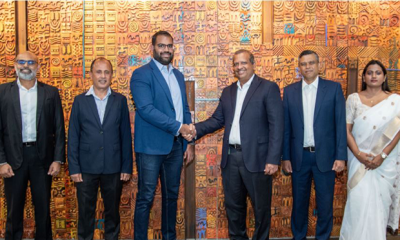
As part of Commercial Bank of Ceylon’s sustained efforts to strengthen tourism-related businesses and improve convenience for foreign travellers, the Bank has partnered with Mastercard to introduce Sri Lanka’s first Dynamic Currency Conversion (DCC) capability for online payments, marking a significant milestone in the country’s digital payments landscape.
Enabled via the Mastercard Payment Gateway Services (MPGS) platform, the new DCC feature allows international cardholders making online purchases from Sri Lankan merchants and to pay in their home currency at checkout.
This first-of-its-kind capability for online payments in Sri Lanka is designed to help local merchants grow their business by making it easier for foreign travellers to book and pay online with confidence. By enabling Mastercard Payment Gateway Services (MPGS) with Dynamic Currency Conversion (DCC), Sri Lankan merchants, particularly in travel, hospitality and leisure can offer overseas customers a more transparent checkout experience when making reservations for flights, accommodation and related services.
DCC offers foreign cardholders the option to view and confirm the final transaction amount in their home currency before completing an online purchase, rather than being charged in Sri Lankan Rupees. The exchange rate and any associated fees are displayed upfront and processed in real time, removing uncertainty caused by fluctuating exchange rates or unexpected charges after the transaction is completed.
The solution is delivered in collaboration with global DCC provider FEXCO, with Euronet Worldwide providing the advanced switching and processing infrastructure that supports real-time currency conversion, transaction processing, clearing and settlement. Together, the partners enable a seamless, transparent and secure payment experience for cross-border online transactions, extending a capability that Commercial Bank has successfully offered for point-of-sale and in-store payments since 2019, into the fast-growing e-commerce space.
Commenting on this latest milestone, Sanath Manatunge, Managing Director/CEO of Commercial Bank said: “We have always been at the forefront of digital innovation, and introducing Sri Lanka’s first Dynamic Currency Conversion service for the Mastercard Payment Gateway is a testament to our commitment to merchants and the national economy. This collaboration with Mastercard enables us to offer our merchant base a competitive advantage, a new revenue stream, and a world-class payment experience that is transparent and convenient for every international shopper. This is a crucial step in supporting Sri Lanka’s drive to attract more digital foreign revenue and promote tourism.”
Sandun Hapugoda, Country Manager, Sri Lanka and Maldives at Mastercard, said: “Mastercard congratulates Commercial Bank of Ceylon for pioneering this milestone. The introduction of DCC brings global payment best practices to Sri Lanka, empowering international cardholders with choice and transparency when making payments. The bank has fully leveraged MPGS capabilities, including advanced features like Transaction Risk Management (TRM). MPGS serves as a versatile solution for merchants of all sizes, from small businesses to complex models such as payment aggregators and facilitators. This achievement is the result of seamless collaboration and technology integration with partners like FEXCO and Euronet, making this much-needed solution a reality for the market.”
The launch of DCC for online payments further reinforces Commercial Bank’s leadership in digital payments. The Bank was the first local bank to introduce MPGS in Sri Lanka in 2007 and today supports a large and diverse merchant base with the ability to accept online payments globally. Commercial Bank currently facilitates multi-currency transactions in more than 10 international currencies and provides built-in fraud monitoring within MPGS to ensure high standards of security and trust for merchants and customers alike.
By extending DCC to online payments, the Bank enables Sri Lankan merchants to deliver a world-class checkout experience comparable to global e-commerce standards, while giving international customers clarity over costs and greater control over how they pay.
The first Sri Lankan bank with a market capitalisation exceeding US$ 1 Bn., Commercial Bank was also the first bank in the country to be listed among the Top 1000 Banks of the World, and has the highest Tier I capital base among all Sri Lankan banks. The Bank is the largest private sector lender in Sri Lanka and the largest lender to the country’s SME sector. Commercial Bank is also a leader in digital innovation and is Sri Lanka’s first 100% carbon-neutral bank.
Commercial Bank operates a network of strategically located branches and automated machines island-wide, and has the widest international footprint among Sri Lankan banks, with 20 branches in Bangladesh, a fully-fledged Tier I Bank with a majority stake in the Maldives, a microfinance company in Myanmar, and a representative office in the Dubai International Financial Centre (DIFC). The Bank’s fully owned subsidiaries, CBC Finance Ltd. and Commercial Insurance Brokers (Pvt) Limited, also deliver a range of financial services via their own branch networks.


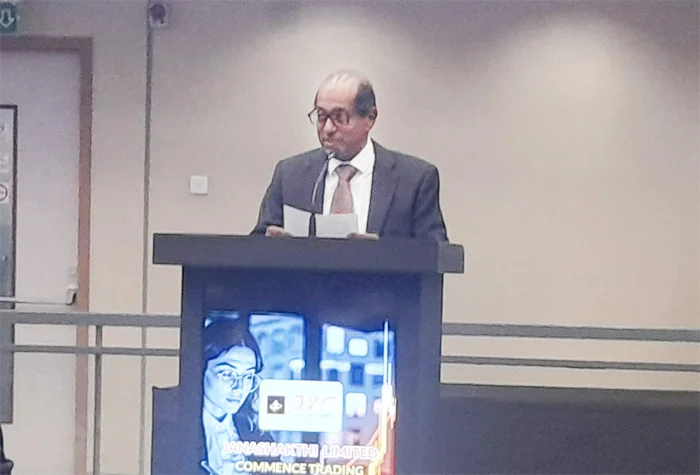
A Janashakthi Group (JXG) IPO was a landmark event for the local capital market, valued at over Rs. 5 billion, making it the largest IPO on the CSE in the last 14 years.
‘The company emphasises that the success of the issue was critical not only for the firm but also for the broader market sentiment, said Group Chairman Chandan de Silva.
Senior Group leadership along with Founder and Chairman Emeritus Chandra Shafter rang the opening bell of the CSE, marking the successful conclusion of the IPO listing. The event was held recently at the CSE head office at the WTC building.
De Silva making the keynote address said that market conditions were “hugely positive” when the IPO was initially approved in early February.
He also said that this IPO was thrice oversubscribed and has more than 20000 shareholders throughout the country.
However, a “drastic shift” in market sentiment occurred following the finalisation of the IPO, primarily driven by ongoing events in the Middle East, which created significant concerns regarding the offering’s success.
To mitigate these risks, Janashakthi Limited engaged in proactive pre-marketing of the issue to both local and foreign investors. These investors provided firm commitments for substantial subscriptions, provided they were given reasonable assurances of receiving allocations based on their pre-commitments.
The company stated that these preferential allotments were made based on practical considerations to ensure the IPO’s success while remaining within the Listing Rules of the CSE.
By Hiran H Senewiratne

HNB Life recently hosted its first Sales Convention at the ITC Ratnadipa, following the launch of its new brand identity, bringing together its advisor distribution force to celebrate a year of exceptional performance and continued momentum.
The event marked a significant milestone for the company, highlighting the strength and consistency of its advisor channel, which has delivered steady growth over the past five years. In 2025, the channel recorded an impressive 28% growth in Gross Written Premium (GWP) and a 25% increase in New Business Premium (NBP), reaffirming its critical role in driving the company’s success.
A total of 622 awards were presented during the evening, recognizing the dedication, and outstanding achievements of HNB Life’s advisors across the island.
Further highlighting the channel’s excellence, HNB Life recorded its highest-ever number of MDRT qualifiers for the advisor channel, reaching 132, a 51% growth over last year, which also includes 1 Top of the Table (TOT) and 5 Court of the Table (COT) members.
The convention also served as a platform to unveil several key initiatives aimed at empowering advisors and strengthening their journey as trusted Life Planners under the new HNB Life identity.
Speaking at the convention, Lasitha Wimalaratne, Executive Director / Chief Executive Officer of HNB Life stated, “This convention is not just a celebration of numbers, but a celebration of consistency, commitment, and the spirit of our people. As we step into this new chapter as HNB Life, it is inspiring to see our advisor force continue to raise the bar year after year. Their dedication is what drives our growth and strengthens the trust our customers place in us. My sincere congratulations to all our winners for their outstanding achievements, and my appreciation to every member of our Advisor Distribution Management for their continued efforts. It is this collective strength that will power us forward as we aim for even greater milestones in the years ahead.”
Harindra Ramasinghe, Executive Vice President / CBO – Advisor Distribution Channel of HNB Life added, “Our advisor distribution channel has once again demonstrated its strength. The growth we are witnessing is not by chance, it is built on discipline, capability, and a deep understanding of customer needs. I would like to extend my sincere appreciation to the entire Distribution Management Team including our SBU Heads, Regional Managers, Zonal Managers, Branch Managers and our dedicated training teams who continuously guide and push this team to be their very best. Their role behind the scenes plays a vital role in shaping the success we celebrate today. With the new initiatives introduced, and many more exciting developments in the pipeline, we are confident that we will continue to reach even greater heights and redefine what excellence looks like in the years ahead.”
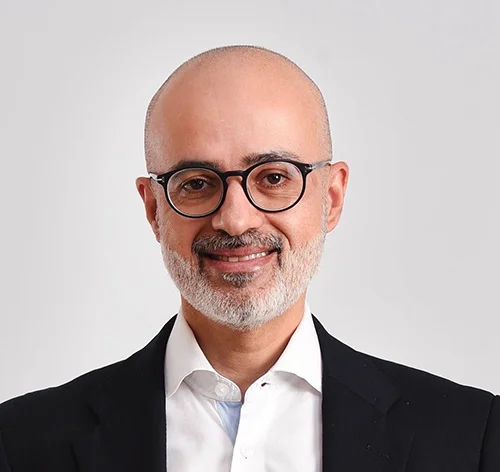
Sri Lanka: Visa (NYSE: V), a global leader in digital payments, announced that Suresh Sethi has been appointed Group Country Manager for India and South Asia. In this role, Suresh will lead Visa’s strategy and operations across India, Bangladesh, Sri Lanka, Nepal, Maldives and Bhutan.
Suresh succeeds Sandeep Ghosh, who is leaving Visa for other opportunities. Based in Mumbai, Suresh will report to Stephen Karpin, Regional President, Asia Pacific, Visa.
Stephen Karpin, Regional President, Asia Pacific, Visa, said, “India and South Asia region continues to be among Visa’s most dynamic and strategically important markets. Suresh brings expertise and knowledge that will accelerate Visa’s aspiration to be the best way to pay and be paid. I am confident he will build on Visa’s strong foundations in the region, alongside clients, partners and policymakers to advance digital payments.”
He added, “I thank Sandeep for his leadership over the last four years, and for facilitating the smooth transition of the business to Suresh.”
Suresh Sethi, Group Country Manager, India and South Asia, Visa, stated, “I am pleased to join Visa at a defining moment for digital payments in India and South Asia. The next phase of growth will be driven by scale, trust, and innovation across an increasingly diverse payments ecosystem. Visa’s global capabilities, strong partnerships, and technology leadership provide a powerful platform to accelerate adoption, deepen acceptance, and deliver secure, inclusive, and high-impact payment solutions.

Food Security is vital to ensuring a Nation’s Sovereignty and National Security – Prime Minister

Showers or thundershowers will occur in the most parts of the island after 1.00 pm

Explanation sought from AKD on ‘Russian energy supplies’

US reiterates its commitment to enhancing relations with Northern Sri Lanka

Rooftop Solar at Crossroads as Sri Lanka Shifts to Distributed Energy Future

Indonesia-SL agreement on Visa Exemption for Diplomatic and Official passports soon

‘Dates have the highest sugar content to fight Coronavirus’

Sunday Island 27 December – Headlines

#SundayIsland 17th December – Headlines

Sunday Island – 28th March

Sunday Island Headlines – 21 March

Sunday Island – 21st February – Headlines
-
 News7 days ago
Whistleblowers ask Treasury Chief to resign over theft of USD 2.5 mn
-

 News7 days ago
No cyber hack: Fintech expert exposes shocking legacy flaws that led to $2.5 million theft
-

 News4 days ago
BIA drug bust: 25 monks including three masterminds arrested
-

 Business5 days ago
Nestlé Lanka Announces Change in Leadership
-

 News2 days ago
Treasury chief’s citizenship details sought from Australia
-

 News4 days ago
Banks alert customers to phishing attacks
-
 News5 days ago
Hackers steal $3.2 Mn from Finance Ministry
-
 Business7 days ago
Dialog Enterprise partners Star Garments: Pioneering 5G innovation in Sri Lanka’s apparel industry