
News
Colombo Literary Festival to open new chapter in Sri Lanka’s cultural renaissance

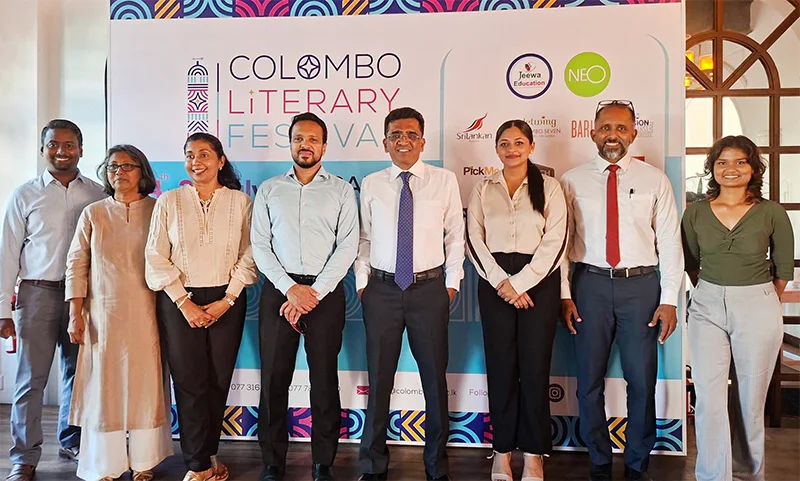
Book lovers in Sri Lanka are preparing to write a new chapter in its cultural history with the launch of the country’s first-ever Colombo Literary Festival, an ambitious six-day celebration of books, ideas, history, cinema and creative dialogue that organisers believe will, eventually, stand alongside some of the world’s most respected literary festivals.
From July 24 to 29, the historic Arcade Independence Square will transform into a vibrant meeting place for readers, writers, publishers, scholars and artists as the inaugural festival welcomes 180 authors, academics and literary personalities, 60 panel discussions, 25 new book launches, six masterclasses for writers, children’s programmes, poetry readings, cultural performances and an international film festival, inspired by classic literary works.
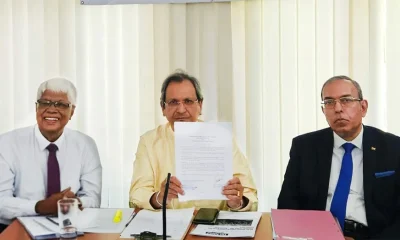
Addressing the media at the official launch, at the Arcade, Independence Square, in Colombo, Festival Director Pradeep Samaranayake described literature as one of humanity’s greatest instruments for preserving history, challenging conventions and connecting societies across cultural boundaries.
“Our vision, from the beginning, was to create a literary festival that truly belongs to Sri Lanka. We wanted it to be accessible, affordable and inclusive so that every reader, every aspiring writer, every student, every teacher and every lover of literature feels welcome.”
Unlike many international literary festivals where access can be expensive, organisers have deliberately designed the Colombo Literary Festival to be open to a wider audience while celebrating Sinhala, Tamil and English literature on one common platform.
“We believe these literary traditions deserve to meet each other rather than exist separately. This festival celebrates Sri Lankan literature in all its diversity, while opening our doors to distinguished voices from around the world,” Samaranayake said.
One of the biggest attractions will be the participation of internationally-acclaimed Indian parliamentarian, diplomat and bestselling author Dr. Shashi Tharoor, who will headline the opening ceremony before appearing in two exclusive public discussions during his visit to Sri Lanka.
The festival will also feature internationally recognised writers from India, Bangladesh, Türkiye and several other countries, alongside many of Sri Lanka’s leading novelists, historians, poets, journalists and academics.
Festival Chairman Janaka Inimankada said the inaugural event would be unprecedented in scale.
“We have 180 authors and writers and academics taking part in the festival in all three languages. We have 40 moderators, 60 panel discussions, 25 new book launches, activities for children and six workshops for writers.”
He noted that the festival would also host a unique international film festival, showcasing celebrated literary works adapted for the cinema.
The film programme, to be held at the Goethe-Institut, includes award-winning productions from Germany, France, Bangladesh, India, Türkiye and Sri Lanka, highlighting how literature continues to inspire filmmakers across the globe. Screenings include Transit, The Fourth Wall, Kodai Irul, Lalsalu, Dictionary, Soldadu Unnehe and Orson Welles’ classic adaptation of Franz Kafka’s The Trial.
A key objective of the organisers is to distinguish the Colombo Literary Festival from a conventional book exhibition.
Explaining the concept, Amendra Gunawardana Haputhanthri, Director of Sarasavi Publishers and Sarasavi Bookshop, said visitors would encounter a carefully curated literary experience.
“In a literary festival we only bring books written by authors participating in the panel discussions. That is the biggest difference between a literary festival and an ordinary book fair. Readers will have the opportunity to meet the writers whose books they are purchasing.”
To encourage reading, organisers have announced a 15 percent discount on imported books and a 20 percent discount on locally published titles available during the festival.
However, Haputhanthri expressed concern that taxation continues to make books increasingly expensive.
“As publishers and booksellers, we want as many people as possible to read books.
“Unfortunately, the introduction of VAT has significantly increased book prices. We have continuously appealed to the Government because our objective is to make reading affordable.”
Responding to questions from The Island, Samaranayake confirmed that discussions with the Government, regarding VAT relief, remain ongoing.
“We have approached the authorities and our concerns have even been raised in Parliament. We are still awaiting a response.”
He also observed that technological change has transformed reading patterns worldwide.
“Higher education has increasingly shifted towards digital resources and e-books, but readers continue to purchase general literature. Reading habits are changing globally, and publishers must adapt accordingly.”
Haputhanthri stressed that literature remains one of society’s strongest unifying forces.
“The most beautiful thing about this festival is that it brings together Sri Lanka’s diversity. Literature provides a common platform where people of every race, religion and language can meet, exchange ideas and celebrate creativity.”
Festival Curator Anoma Rajakaruna said the programme had been designed to appeal to every generation.
“There are 25 new book launches and programmes for children, youth and adults in all three languages. We also have a special session marking the 50th anniversary of Martin Wickramasinghe’s passing.”
She invited the media to make full use of the festival’s extensive line-up of authors.
“If you wish to interview any of the visiting writers, or participating authors, please let us know in advance. We will be happy to arrange meetings and facilitate interviews.”
The festival will also feature discussions on history, politics, archaeology, science, translation, journalism, architecture, cinema, Buddhism, women’s writing, publishing, South Asian affairs and environmental storytelling, reflecting the broad intellectual landscape of contemporary literature.
Ticket prices have been kept affordable, with daily admission costing Rs. 250 and a six-day pass priced at Rs. 1,200. Students will enjoy free access to panel discussions, while masterclasses will cost Rs. 1,000. The special sessions, featuring Dr. Shashi Tharoor, will be separately ticketed at Rs. 3,500 because of anticipated demand.
Looking beyond the inaugural edition, Samaranayake said organisers envision the festival becoming a permanent fixture on Sri Lanka’s cultural calendar.
“Our aspiration extends beyond organising a successful first festival. We want the Colombo Literary Festival to become an annual event that attracts international literary talent, supports Sri Lanka’s publishing industry and strengthens Colombo’s reputation as a regional cultural destination.”
He said the organisers also plan year-round outreach programmes in partnership with the Colombo Municipal Council and the Colombo Public Library, taking books, storytelling, writing workshops and author visits to underprivileged children across the country.
“We believe every child deserves the opportunity to discover the transformative power of books. If this festival inspires even one child to dream bigger, think more deeply or discover a voice they never knew they had, then we have achieved something truly meaningful.”
Organisers expect between 45,000 and 50,000 visitors during the six-day event, making it one of the largest literary gatherings ever staged in Sri Lanka.
By Ifham Nizam



by Norman Palihawadane
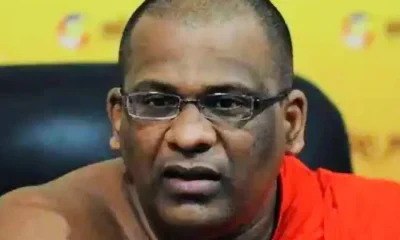
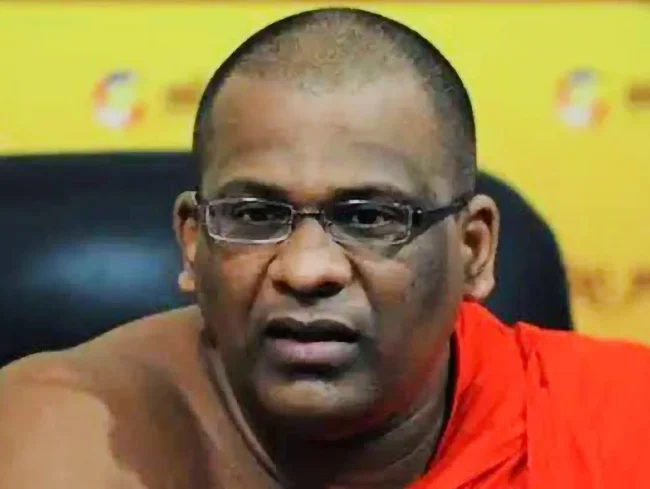
Bodu Bala Sena (BBS) General Secretary Ven. Galagoda Aththe Gnanasara Thera’s whereabouts have remained unknown since the Supreme Court, on Monday, annulled a presidential pardon granted to him in 2019.
Prison officers visited the Thera’s temple in Nawala, Rajagiriya, to take steps to return him to prison to serve the unexpired portion of his six-year sentence. However, monks at the temple had reportedly informed the officials that they were unaware of his whereabouts.
Police spokesman ASP F.U. Wootler said a separate court order was required for the police to trace the Thera, or assist in taking him into prison custody. No such order had been issued so far, he claimed.
Meanwhile, sources close to Gnanasara Thera said he was expected to attend a book launch in Colombo tomorrow (17),
The development follows the Supreme Court declaring the 2019 presidential pardon granted to Gnanasara Thera, by then President Maithripala Sirisena, null and void.
A three-member Supreme Court bench held that the pardon had been granted arbitrarily and violated public trust and principles of natural justice.
Gnanasara Thera had been serving a six-year prison sentence for contempt of court when the then President Sirisena granted him the pardon, in May, 2019. He had served only about nine months of the sentence at the time.
With the pardon annulled, the original sentence remains in force and the Thera is now required to serve the balance of his six-year term.
The Supreme Court ruling has raised questions over the procedure to be followed to return him to prison, with police and prison authorities yet to take custody of him.
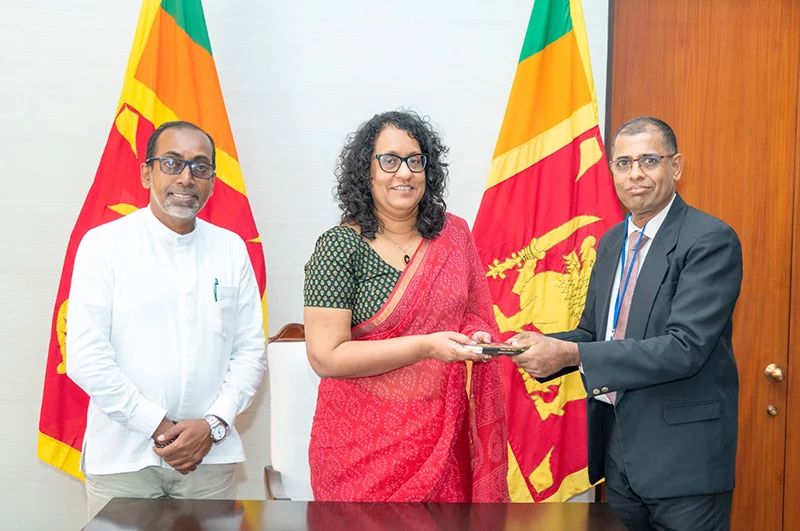
Russian citizens residing or temporarily visiting Sri Lanka will have the opportunity to cast their ballots in the elections to the State Duma of the Federal Assembly of the Russian Federation on September 20.
The Embassy of the Russian Federation in Sri Lanka said polling would be held at polling station No. 8338 at the Russian Embassy, 404, Bauddhaloka Mawatha, Colombo 07.
The polling station will be open from 8 a.m. to 8 p.m. on September 20, according to the Embassy.
Russian citizens aged 18 and above, including those permanently residing in Sri Lanka and those temporarily visiting the country, are eligible to vote, the Embassy said.
Voters are required to visit the polling station during its operating hours and produce documents certifying their Russian citizenship.
The Embassy said prior registration was not required to participate in the voting.
The election will be held to elect deputies to the ninth convocation of the State Duma, the lower house of Russia’s Federal Assembly.
Plastic waste is a growing challenge for Sri Lanka’s food sector, yet important gaps remain in understanding where and how single-use plastics are used, how they move through food value chains, and where interventions could have the greatest impact.
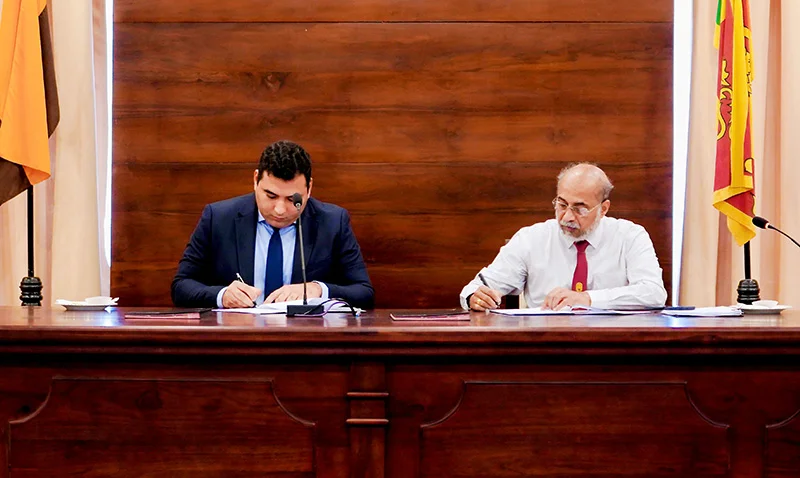
Through the European Union-funded CIRCULAR project, new research will help address these gaps by generating evidence to inform policy, business practices and more sustainable choices. Three research grants, totalling €Euro 110,000, will support university-led studies by research teams from the Faculty of Agriculture at the University of Ruhuna, and the Faculty of Medicine and Faculty of Computing at the University of Kelaniya.
Together, the studies will examine the use, flow and impacts of single-use plastics (SUPs) across selected food and beverage value chains in the Colombo and Galle Districts. The research will also seek to identify practical opportunities to reduce plastic use, promote more sustainable alternatives and strengthen circular economy practices.
At present, available data on plastic waste in Sri Lanka, particularly single-use plastics, do not provide sufficient detail on the sectors, sources and types of plastics involved. This limits the ability of policymakers, businesses and other stakeholders to pinpoint where plastic use can be reduced most effectively and to assess which interventions could deliver the greatest impact. The new research will help provide a more detailed understanding of these patterns, supporting more targeted and evidence-based action.
The three research teams will use a combination of data collection, waste-flow mapping, environmental and public health assessments, and life-cycle approaches to examine these challenges from different perspectives. The findings are expected to help identify opportunities to reduce plastic use, improve resource efficiency and promote more sustainable packaging and waste management practices.
The research grants are part of the CIRCULAR project’s broader efforts to support Sri Lanka’s transition towards more sustainable production and consumption in the food sector. Alongside research and evidence generation, the project works to raise awareness, encourage behaviour change and support approaches that move away from the traditional “take, make and dispose” model towards a more circular economy.
Circular Economy in the Food Sector (CIRCULAR) project is a three-year initiative focused on reducing food loss and food waste (FLW) and Single-use plastic (SUP) waste in the Food Sector in Sri Lanka. Funded by the European Union, and partially co-funded by the German Federal Ministry for Economic Cooperation and Development (BMZ), the project is jointly implemented by Expertise France (EF), the Food and Agriculture Organisation (FAO) and Deutsche Gesellschaft für Internationale Zusammenarbeit (GIZ) GmbH.
By strengthening the evidence base on single-use plastics, the research is expected to provide a stronger foundation for practical action, helping decision-makers, businesses and other stakeholders better understand where change is needed and how more sustainable solutions can be put into practice.

Showers about 75 mm are likely at some places in the Western, Sabaragamuwa, Central and Southern provinces

Brook, Buttler, Baker star as Sri Lanka slump to 119-run rout

Where is Gnanasara Thera?Police pass buck to court

Russian citizens in Lanka to vote in State Duma elections

Euro 110,000 research drive to tackle plastic waste in food sector

New SAU-RCSS pact to boost South Asian dialogue

‘Dates have the highest sugar content to fight Coronavirus’

Sunday Island 27 December – Headlines

#SundayIsland 17th December – Headlines

Sunday Island – 28th March

Sunday Island Headlines – 21 March

Sunday Island – 21st February – Headlines
-

 Sports5 days ago
DDS set to lose Test captaincy
-

 News5 days ago
Sri Lanka faces new grid challenge as rooftop solar surges: former CEB GM
-
 Latest News5 days ago
Shafali, Deepti power India into sixth T20 Asia Cup final
-

 Latest News4 days ago
Sri Lanka thwart Fatima Sana challenge to secure Asia Cup final spot
-

 News3 days ago
Gnanasara Thero absconding after SC ruling
-
 Features6 days ago
Lost for 90 years: Rare Goby resurfaces in Jaffna
-

 News4 days ago
Ammunition cache found in old Kandy bungalow
-
 Latest News7 days ago
Italian Naval Vessel ‘ITS Giuseppe Garibaldi’ arrives in Colombo