
News
Chinese Sinopharm jab under fire over ‘safety and efficacy’ concerns


Expert panel warns against using the unproven vaccine in SL
by Suresh Perera`
In the backdrop of an independent panel of medical experts cautioning against administering the controversial Chinese manufactured Covid-19 Sinopharm jab over “safety and efficacy” concerns, a key body of eminent medical specialists last week warned of the adverse fallout of using an unproven vaccine in Sri Lanka.
In what was described as a “strong warning”, the Association of Medical Specialists (AMS) drove home the point that adopting the roll out of any vaccine that’s unproven could reflect adversely on the fight against the pandemic.
“As the expert medical panel concluded there was insufficient data provided to make a determination on the safety, efficacy and immunogenicity of the Sinopharm vaccine, it was accordingly concluded that this vaccine should not be used in Sri Lanka under the present circumstances”, Dr. Lalantha Ranasinghe, the president of the prestigious body of medical professionals, said.
“Scientific evidence by experts should form the basis of any move to curb the pandemic”, the powerful Government Medical Officers’ Association (GMOA) stressed.
Despite this clear recommendation of a properly-constituted independent expert advisory panel, we are concerned about reports that a newly reconstituted Board of the NMRA appears to have taken an unprecedented step to disregard the expert panel opinion and allowed the import of the vaccine to be used in Sri Lankans”, Dr. Ranasinghe said.
The independent advisory panel appointed by the National Medicines Regulatory Authority (NMRA) on candidate vaccines for use in Sri Lanka, comprised Dr. Rajiva de Silva, Prof. Neelika Malavige, Prof. Arunasalam Pathmeswaran, Dr. Ananda Wijewickrema, Dr. Kanthi Nanayakkara, Prof. Channa Ranasinhe, Dr. Hasitha Tissera and Dr. LakKumar Fernando.
In its ‘conclusion’ in relation to Sinopharm based on data forwarded to the NMRA on 01.03.2021 and 15.03.2021 by the vaccine manufacturer, the expert panel was of the opinion that the data submitted was not sufficient to decide on immunogenicity, safety and efficacy of this vaccine at present and therefore recommends not to use the vaccine until more information is made available and evaluated.
The panel submitted the review report titled “SARS-CoV2 vaccine (vero cell) inactivated manufactured by Beijing Institute of Biological Products” to Dr. Kamal Jayasinghe, NMRA’s Chief Executive Officer on March 17, 2021.
The panel found clarifications provided with regard to regulatory and administrative information to be satisfactory. However, important clinical information that has not yet been provided and their significance for easy reference, the report said.
Saying that it is deeply perturbed over conflicting statements by government sources, the NMRA and the media regarding the Chinese manufactured Sinopharm vaccine, the AMS noted that the panel, after reviewing all the data made available by the manufacturer of Sinopharm, concluded that there is insufficient data provided to make a determination on the safety, efficacy and immunogenicity of the vaccine.
It was accordingly concluded that the Sinopharm vaccine should not be used in Sri Lanka under the present circumstances, the AMS said in a statement.
“We also note with great anxiety and dismay of certain arbitrary appointments and removals being made to the NMRA Board. We strongly believe such moves as an attempt to undermine the scientific basis of vaccine approval and hence it’s safety, efficacy and acceptance by the general public”, it noted.
“As specialists doctors working in the frontline, we do understand the pressing need for safe and effective vaccine against Covid-19 However, we do recognize that any decision on the suitability of a Covid-19 vaccine must be taken on sound scientific evidence in line with practices of stringent regulatory authorities and the World Health Organization”, it stressed.
With Sri Lanka having an enviable record in the uptake of immunization, one should be mindful of any action deleteriously impact the confidence and acceptance of vaccines, the professional body of specialists further said.
The AMS is a strong advocate for a careful, timely and transparent review of candidate vaccines by the NMRA with the support of relevant experts. The first step towards this is to ensure the independence of the National Medicines Regulator is maintained, it added.
“Any decision on controlling, mitigating or eradicating a public health emergency should be taken on a scientific, evidence based methodology by experts”, says Dr. Sumith Ananda, GMOA spokesman.
Adopting a vaccine, whether it’s Chinese, Indian or from whatever country, should not be based on political or commercial interests as it’s a health-related issue. Experts should determine the outcome, not laymen, he noted.
Apart from evaluating a manufacturer’s guidelines, it’s imperative to ascertain whether a vaccine has been approved by the WHO and evidence of its use locally and internationally, he explained.
“We should look at the pandemic not from a Sri Lankan viewpoint but from a global perspective”, he added.
Asked for comment, an official knowledgeable on the developments, said the opinion of NMRA’s Advisory Committee on Communicable Diseases was not to administer the jab as the data provided was insufficient.
None of the eleven stringent regulatory authorities recommended by the WHO has given the green light to use the vaccine. Neither has the WHO itself approved it, the official, who asked not be named, asserted.
“It is no secret that there’s geopolitics and vaccine diplomacy involved in these matters. However, as it stands the Sinopharm jab cannot be used in Sri Lanka due to critical safety and efficacy concerns”, the official explained.
The panel of experts looked at evidence, but there was no adequate data received for an indepth scientific evaluation to give the go ahead for the jab, he said.
Chinese nationals living in Sri Lanka will be given priority for the Sinopharm vaccine donated by Beijing last week.






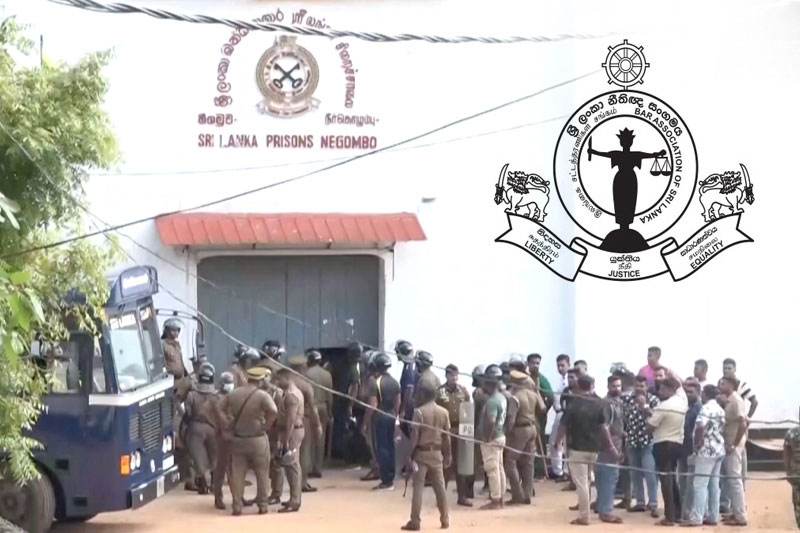
The Bar Association of Sri Lanka (BASL) has welcomed the government’s decision to appoint an independent committee headed by a retired Supreme Court Judge to investigate the recent violence at Negombo Prison, but it has stressed that public confidence would depend on the inquiry being conducted independently, impartially, transparently and without delay.
Issuing a statement signed by BASL President Rajeev Amarasuriya and Secretary Nalin De Silva, the Association said the investigation must establish the complete sequence of events that led to the prison violence, determine whether any unlawful acts or omissions contributed to the tragedy, identify failures in prison administration, security or oversight, and recommend institutional reforms to prevent similar incidents in the future.
“The true measure of accountability will lie not only in identifying responsibility for what has occurred, but also in ensuring that the conditions which gave rise to this tragedy are comprehensively addressed so that such incidents do not recur,” the BASL has said.
Full text of the statement: The Bar Association of Sri Lanka (BASL) expresses its profound concern regarding the tragic incidents that occurred at Negombo Prison between 5th and 7th July 2026, which reportedly resulted in the loss of 27 lives, including 7 prison officers, and with over 100 persons injured.
The BASL unequivocally condemns all acts of violence, irrespective of the source from which they arise. Violence within places of detention undermines the Rule of Law, threatens public confidence in the administration of justice, and places at risk the lives of prisoners, prison officers and all others entrusted with the management of correctional institutions.
It has also been reported that tense situations have also arisen in several other prisons. Therefore, the relevant stakeholders must take all necessary measures to ensure the safety and security of both prison officers and inmates in all prisons.
In the immediate aftermath of this tragedy, when emotions are understandably heightened, it is the duty of the State to take all necessary precautions and positive measures to ensure the safety, security and well-being of both prisoners and prison officers, to prevent any further violence, and to ensure that all detention facilities continue to be managed in accordance with the Rule of Law and with full respect for the dignity and rights of every person.
There have also been reports regarding difficulties encountered by statutory oversight bodies in carrying out their lawful functions. These matters, if established, raise serious concerns and should form part of the independent investigation.
The BASL notes the Government’s decision to appoint an independent committee headed by a retired Judge of the Supreme Court to inquire into these incidents. While this is a welcome step, public confidence will ultimately depend upon the inquiry being conducted independently, impartially, transparently and expeditiously. It should establish the full sequence of events, determine whether any unlawful acts or omissions contributed to the tragedy, identify any failures in prison administration, security or oversight, and make recommendations aimed not only at fixing responsibility but also at preventing the recurrence of similar incidents through meaningful institutional reform.
The findings of the inquiry should be made public, subject only to such limitations as may be necessary in the interests of justice or national security.
Any person found to have engaged in criminal conduct or official misconduct, whether a prisoner, prison officer or any other person, must be held accountable in accordance with the law and afforded due process.
Equally, those who have been injured must receive prompt and adequate medical care, and appropriate support should be extended to the families of those who lost their lives.
This tragedy must not be viewed as an isolated incident. Rather, it is symptomatic of longstanding structural deficiencies within Sri Lanka’s prison system and the broader administration of criminal justice.
The BASL reiterates that persons deprived of their liberty do not forfeit their fundamental rights or their inherent dignity. Many persons presently held in remand custody have not been convicted of any offence and continue to enjoy the presumption of innocence until proven guilty by a court of law.
At the same time, and importantly, prison officers perform an essential public function under extremely difficult circumstances and are entitled to safe working conditions, adequate resources, facilities and institutional support.
The State bears the responsibility of ensuring the safety, security and welfare of both prisoners and prison officers alike, while ensuring that all persons in custody are treated in accordance with the Constitution and Sri Lanka’s legal obligations.
The events at Negombo also serve as a reminder of the urgent need to address chronic prison overcrowding which requires more than expanding prison capacity. It calls for a broader review of remand practices, the timely disposal of criminal cases, the appropriate use of bail, greater reliance on non-custodial sentencing where suitable, strengthened rehabilitation programmes, improved prison infrastructure, adequate staffing, and modern prison management.
The BASL therefore calls upon the relevant authorities to ensure a credible and transparent investigation into these incidents, to hold all those responsible accountable in accordance with the law, and to treat this tragedy as a catalyst to implement meaningful and lasting reforms to Sri Lanka’s prison and criminal justice systems.
The true measure of accountability will lie not only in identifying responsibility for what has occurred, but also in ensuring that the conditions which gave rise to this tragedy are comprehensively addressed so that such incidents do not recur.
The BASL extends its deepest condolences to the families of all those who lost their lives and wishes a full and speedy recovery to those who were injured. The BASL remains committed to supporting measures that strengthen the Rule of Law, protect human dignity, and promote a fair, humane and effective system of justice.

A book authored by Rt. Rev. Dr. Valance Mendis, Bishop of Kandy, will be launched at The Grand Maitland in Colombo on Saturday, 11 July, at 4.30 p.m.
Titled Out of the Depths, the book chronicles a spiritual journey and is intended to inspire members of the Catholic faithful.
A distinguished alumnus of St. Sebastian’s College, Moratuwa, Bishop Valance is regarded as one of the Catholic Church’s leading intellectuals in Sri Lanka. He pursued his higher studies at the University of Peradeniya before joining its academic staff as a lecturer. He later earned his doctorate in Rome.
Much of his priestly ministry was devoted to formation, where he guided and mentored generations of seminarians at the National Seminary in Kandy. He eventually became Rector of the National Seminary before being appointed Bishop of Chilaw by Pope John Paul II in 2005.
After serving the Diocese of Chilaw for 16 years, Bishop Valance was appointed Bishop of Kandy in 2021 by Pope Francis.
Latest News
Cabinet Subcommittee on the Development of 25 Technical and Vocational Colleges meets under the Chairmanship of the Prime Minister

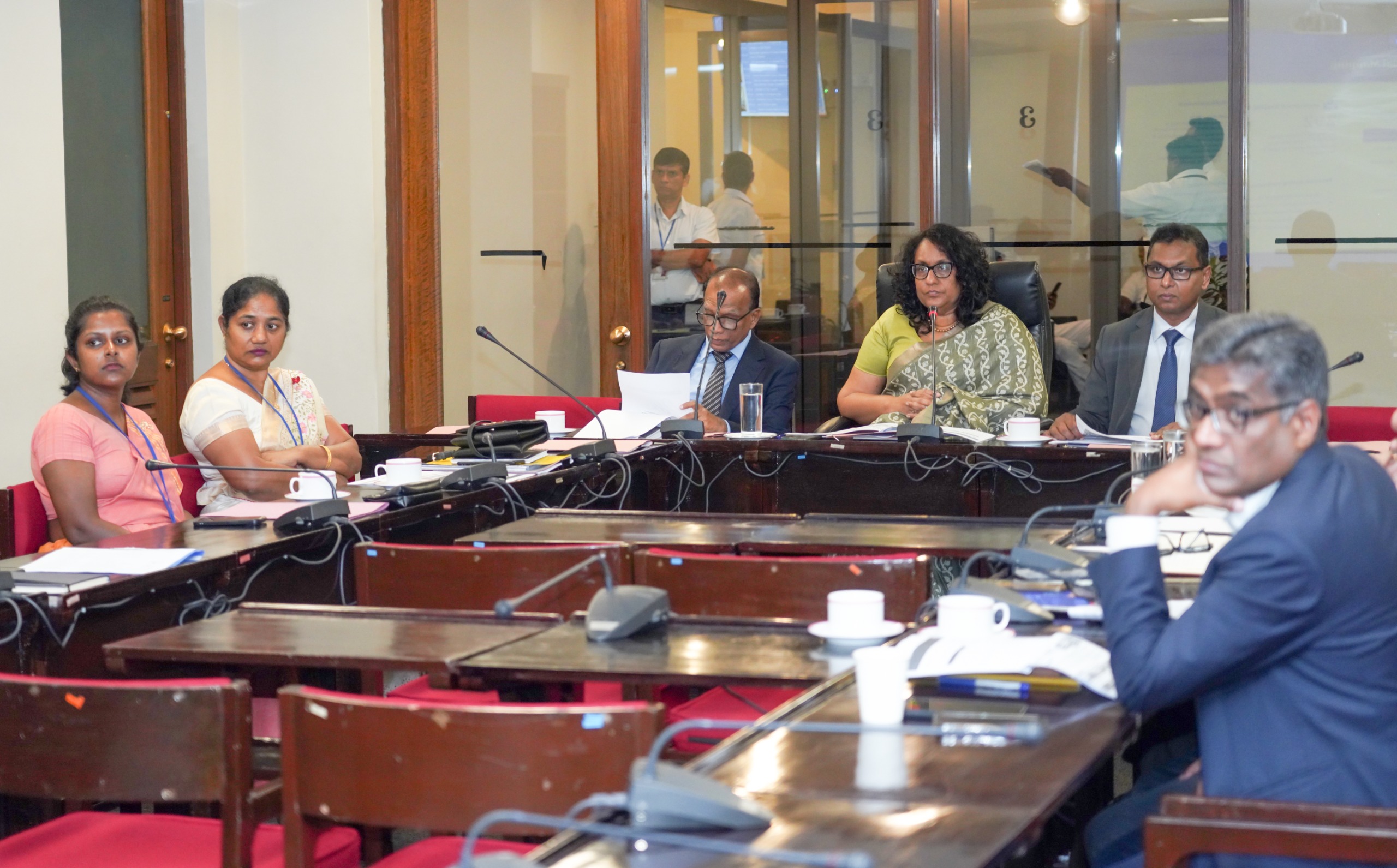
The third meeting of the Cabinet Subcommittee appointed to oversee the development of 25 Technical and Vocational Colleges under the Department of Technical Education and Training was held today (09) at the Parliament Complex under the chairmanship of Prime Minister Dr. Harini Amarasuriya.
The meeting focused on the proposed development programme for the 25 Technical and Vocational Colleges as a key step towards expanding access to vocational education, implementing plans to strengthen infrastructure, and creating new pathways for technical and vocational education in Sri Lanka. Members held detailed discussions on the measures required to advance these objectives.
The meeting was attended by the Minister of Ports, Civil Aviation and Energy, Anura Karunathilaka,the Minister of Labour and Deputy Minister of Economic Planning, Dr. Anil Jayantha, the Minister of Rural Development, Social Security and Community Empowerment, Dr. Upali Pannilage, as well as senior officials from the Ministries of Education, Higher Education, and Vocational Education.
[Prime Minister’s Media Division]

Punishment in hellholes

Prisoners are human beings

‘Lanka Tractors returns with a historic Colombo 11 showroom’

The Hallmarked Man

Beyond one-night stand: Reimagining Colombo’s tourism landscape

THE TEA ACADEMY: A NATIONAL BLUEPRINT TO REINVENT CEYLON TEA FOR THE FUTURE

‘Dates have the highest sugar content to fight Coronavirus’

Sunday Island 27 December – Headlines

#SundayIsland 17th December – Headlines

Sunday Island – 28th March

Sunday Island Headlines – 21 March

Sunday Island – 21st February – Headlines
-

 News5 days ago
Singapore-based Buddhist monk marks nearly four decades of humanitarian service
-

 News7 days ago
CIABOC to question Harak Kata on Rs. 200 mn bribery allegation
-

 News6 days ago
Freedom 250: US Embassy celebrates America’s 250th Independence Day through magic of American cinema
-
 News7 days ago
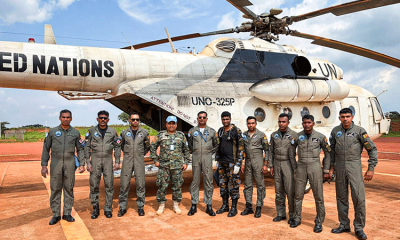
SLAF conducts successful rescue mission under UN command in Central African Republic
-

 News4 days ago
AI concerned over proposed SL military deployment in Haiti
-
 News7 days ago
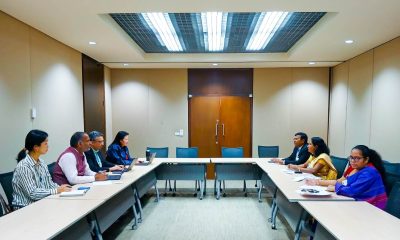
UNEP support pledged to strengthen Sri Lanka’s Environmental Priorities
-

 Midweek Review2 days ago
Unexpected focus on ‘pieces of tin’ worn by military men
-

 Features5 days ago
The NPP’s New Challenge: Balancing Easter Lawfare and Economic Welfare