
Business
Ceylon Shipping Corporation turns tables on its financial performance

Reports loss reduction of Rs. 1.15 billion in two years
Posts Rs. 636 million profit in fist 8 months of FY 2021/22
If CSC’s fleet size is increased, country can save millions of dollars spent on ship chartering, says chairman
by Sanath Nanayakkare
The Ceylon Shipping Corporation (CSC) has made an impressive turnaround in its fortunes from a loss-making State Owned Enterprise (SOE) to a profit making SOE within two years.
In the Financial Year 2020/21, CSC has posted a profit of Rs. 636 million in the first eight months of financial year 2021/22 , changing the situation completely different from the losses it made in 2018/19 (Rs. 1,523 million) and in 2019/20 (Rs. 1,085 million) which had caused problems for them.
 CSC Chairman, Wineendra S. Weeraman, told The Island Financial Review that the profit curve of CSC was a well thought out one.
“When I assumed duties as chairman of CSC in December 2019, nobody was interested in taking over the helm at the CSC under such dismal financial circumstances,” he said.
Weeraman said that he first gave priority to settling a loan of USD 75 million taken from the People’s Bank by the previous management for purchasing two ships.
“This loan was on a Treasury guarantee and I decided to clear all arrears because I didn’t want to carry it forward paying a huge interest on the loan capital. In the accounts, I saw that we had an outstanding payment amounting to Rs.1,400 million which had to be collected from Lanka Coal Company – the procurement entity of the CEB. Through an official process, I was able to recover these funds and use it to repay that loan. Whatever I had to pay I paid and I took the decision to charter out our ships at the opportune moment despite the threat of Covid-19. Those were the key decisions I took and that is how we are making profits now,” he said.
Further speaking he said:
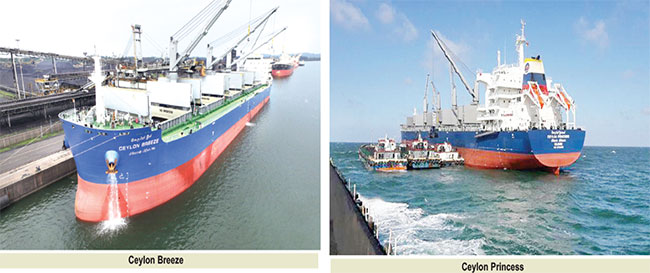
“Currently the main business of CSC is delivering coal to Norochcholai power plant. In this connection, CSC deals with Lanka Coal Company and the Ceylon Electricity Board (CEB). The CEB charters our two bulk carriers ‘Ceylon Breeze’ and ‘Ceylon Princess’ each with 62,000 deadweight tonnage, to bring in coal to Sri Lanka from South Africa. The CEB pays us in Sri Lankan rupees when they charter our vessels, but when they charter foreign vessels for the purpose, they pay in US dollars.”
“CSC brings in one third of the total coal requirement for Norochcholai Power Plant. We can help save a massive amount of US dollar payments made as ship chartering costs if CSC has its own fleet to deliver the entire requirement of coal.”
“At the height of Covid-19, despite concerns among experts that we should keep the two ships at anchorage, upon verifying of IMO regulations and the advice of Harbour Master and Medical Officer of the Sri Lanka Ports Authority, I decided to send our ships to sea and bring in much needed foreign currency to the country, without leaving the ships idling at sea incurring losses for six months. With that operation, we were able to bring in 3 million USD within about 6 months.”
“When we charter a ship to transport coal to Norochcholai Plant, procured through Lanka Coal Company, the charter hire alone costs between US$ 1.3 million and 2.0 million on top of other costs for each charter. If we have another four vessels in our fleet, we can prevent this foreign currency outflow happening time after time.”
“If we bring the fleet up to six vessels with a tanker or two, we can bring in the entire supply of coal, rice, sugar and even petroleum products without chartering international vessels over an infinite number of years. How many millions do we pay for transportation of fuel and other commodities? Being the purchaser of these products, we should be able to dictate the terms of their transportation. We can ask them to use our vessels. If the government says all fuel imports to Sri Lanka needs to be carried on CSC vessels, then we can save a lot of millions of dollars.”
“The policymakers of the government should support us in this regard. They should support key government organisations such as CSC and put some muscle into its capacity to make it more productive in its operations and empower it to support the economy of the country in a more robust way. We have made requests to policymakers pertaining to this objective including the former chairman of CSC who could assist us in fund arrangement,” he said.
“CSC’s annual turnover is about Rs. 3.8-4.0 billion whereas Sri Lanka Port’s Authority’s annual turnover is about Rs. 55 billion. Comparatively speaking, CSC is also contributing to the economy in a notable way with the limited resources it has. The CSC has great potential for growth if it gets the necessary policy support.”
“CSC employs 125 staff in-house. On each vessel we have about 22-23 crew members – that’s about 46 on both vessels and we have a reserve pool of crew for crew changes. Our salary structure is very competitive with that of international shipping lines. We pay a ship master about USD 8,500- 9000 per month. We have to pay such salaries to ensure deployment of qualified and skilled people on board our vessels. However, the upside here is that the entire crew is Sri Lankan”.
“Before Covid when we chartered out our ships to international parties during the off-season, we earned USD 8000-13,000 per day per ship. With the spread of initial Covid wave, these prices came down to USD 6,500-7,500. After the second wave of Covid, the freight rates skyrocketed to about USD 35,000-40,000. So this is the best period for the global shipping industry and we should make the best out of this situation for CSC.”
“The greatest difficulty we have with the CEB is that we fight with them to get priority to us in charter services and they also prefer to give it to outsiders upon finding one single fault that could easily be rectified. And even after providing the services for them, they take months and years to pay our dues. Then we can’t operate maintaining a positive balance sheet.”
“I would like to urge the policymakers and top officials to take bold policy decisions to beef up the fleet of CSC.”
Talking about his future plans he said:
“There are several projects which I intend to start here. There were negotiations in 2017 – with Bangladesh Shipping Corporation to operate a feeder service here. If you take Port of Colombo, its capacity is 7 million TEUs. In Bangladesh it is 3.5 million. Twenty percent of their cargo is coming to Colombo. That is about 700,000 TEUs. Bangladesh ports are very congested. Ship owners don’t like to go there because it takes days to reach a terminal. If we sign this bilateral agreement, they are going to save on the number of days spent on transportation of their cargo. If we can sign it, CSC will be able to earn about USD 2 million per year. The SLPA also will earn from it when TEUs are brought to the Port of Colombo. It will be a win-win-win situation for all parties.”
“Bunker prices are very high here compared to Singapore. Sometimes we don’t get the bunkering business unless the prices fluctuate in a competitive manner to ship operators. If we supply them bunker off-shore or out of the port, they will prefer to get oil at a lesser price. I have submitted a proposal for a floating bunker as well.”
“And then the ferry service between Colombo and Tuticorin which was started in 2011. I am planning to resume this service. Not only Tuticorin, we can try various other ports in India.”
“Going further, I have a plan to arrange medium size cruise vessels between Colombo, Male and Goa. If we arrange these tours then everybody will find them exciting and enjoy these tours bringing us revenue.”
“CSC wants to get involved in passenger transportation as well. I have signed an agreement with Sail Lanka Yachting Group, a global company that builds yachts in Sri Lanka. They are already operating from the Colombo Port City Marina. They have agreed to manufacture bigger ships to partner with CSC’s plans for passenger transportation.”
“These are plans for the future and I have submitted them to the policymakers. If we want to make a maritime hub here, these things should be facilitated.”
“Ship repairing is another area. I also wait in queue to get CSC ships repaired. In addition to Colombo Dockyard, we need to build another dockyard, ideally in Trincomalee.”
“Finally, We need to be mindful of Sagarmala Programme which is underway in India targeted to culminate by 2035. It is designed across areas of port modernisation, new port development, port connectivity enhancement and port-linked industrialisation. One day it is going to affect us. So we need to equip all critical installations here to stay in the business and thrive in the new maritime sector emerging in the region. I appeal to the policymakers and top officials of the government to support CSC with bold policy-making for its exponential growth, bolstering key business verticals of the industry at the same time.”






Business
India pledges $450 million for cyclone recovery while Sri Lanka’s top financial watchdog seat remains vacant

India extended a powerful hand of friendship on December 23, pledging $450 million to help Sri Lanka rebuild from Cyclone Ditwah. The aid, announced by Indian External Affairs Minister Dr. S. Jaishankar, is a lifeline for critical infrastructure, housing and agriculture.
Yet, even as this commitment was made, a crucial question hung in the air: Who will watch the money?
Sri Lanka has operated without a permanent Auditor General for eight months, an independent observer told The Island Financial Review.
“Since April 2025, the constitutional body meant to be the independent guardian of public spending has been led by temporary appointees. This isn’t just bureaucratic delay; it is a self-inflicted wound on democratic accountability,” he said.
He explained that the Auditor General, mandated by the Constitutional Council, is the linchpin that ensures public funds are used with integrity.
“In a nation still recovering from a devastating economic crisis, the AG’s role is the bedrock of trust. This office audits everything from social safety nets to state-owned enterprise losses and, critically, emergency expenditures,” he noted.
“The delay undermines public trust and robust oversight at a time when these are urgently needed. With no permanent AG, the oversight of billions in cyclone relief funds – including India’s generous package – can be fundamentally weakened.”
India’s decision to provide funds despite this oversight vacuum is a profound act of goodwill, the observer said.
“But the question now shifts squarely to the Sri Lankan government: How will it honour that faith? The $450 million is a mirror held up to Sri Lanka’s governance,” he stated.
He urged the Constitutional Council to act decisively to appoint a competent, independent Auditor General through a transparent process.
“This is the cornerstone of ensuring that disaster recovery builds not just physical infrastructure, but also public trust,” he concluded.
By Sanath Nanayakkare
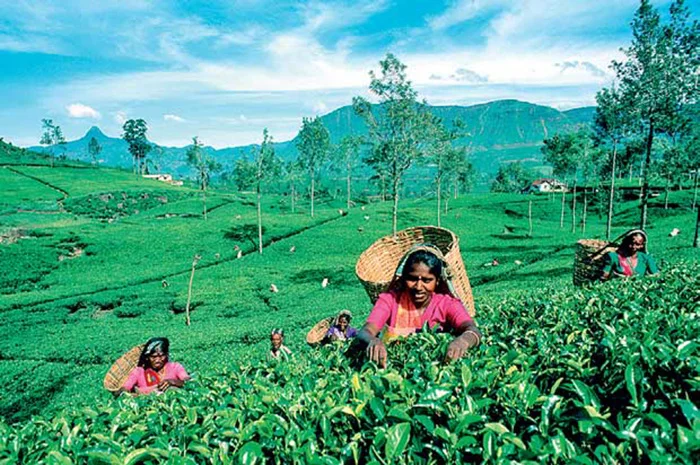
Ceylon Tea exports have demonstrated notable volume growth for the first eleven months of 2025, reaching a cumulative total of 239.57 million kilograms. This figure represents a solid increase of 16.35 million kilograms compared to the corresponding period in 2024, signalling robust overseas demand for Sri Lanka’s premier commodity.
The broader trend, however, reveals a dynamic reshuffling among the nation’s key export markets, painting a picture of both promising diversification and shifting global trade currents.
A striking development is the continued ascendancy of Iraq as the single largest importer of Ceylon Tea. During the January to November period, Iraq purchased 36.77 million kilograms, marking a substantial 21% year-on-year increase and firmly securing its top position. In contrast, the traditional powerhouse market of Russia, while holding second place with 19.94 million kilograms, recorded a 13% decline in volume. Other markets show significant movement; Türkiye follows closely in third place, while Libya has emerged as a high-growth destination, witnessing a remarkable 115% surge in imports to claim fourth position. This evolving landscape underscores a strategic shift, where gains in emerging and regional markets are actively counterbalancing softer demand in some established ones.
Categories such as Instant Tea and Tea Bags have recorded encouraging gains in both volume and foreign exchange earnings, indicating a positive consumer trend towards convenience and value-added products. This gradual move up the value chain is crucial for enhancing the sector’s resilience and profitability.

Sri Lanka is poised to enter the regional cultural spotlight as the host of South Asia’s first-ever reggae music festival. “ONE LOVE 2026 – A Tribute to Bob Marley” will be held from 27 to 29 March 2026 on the beaches of Bentota, marking an unprecedented celebration of global reggae music within the Asia-Pacific region.
The landmark announcement was made at a press conference hosted by the ultra-luxury property, NUWA- City of Dreams in Colombo.
The festival represents a significant cultural and tourism initiative, featuring an unprecedented assembly of international reggae talent for the region. The confirmed lineup includes six globally acclaimed acts: Maxi Priest, The Wailers, Julian Marley & Ky-Mani Marley, Inner Circle and Big Mountain.
Organised by One In A Million Entertainment Ltd.—a Sri Lankan-owned firm with headquarters in Europe and Colombo – in strategic collaboration with Caribbean Entertainment, the event builds upon a proven track record of delivering major international entertainment to Sri Lanka. The festival is anticipated to attract thousands of attendees, including local enthusiasts and visitors from key markets such as India, the Maldives, and Bangladesh, as well as Western tourists seeking a tropical retreat.
Aligning with the commemoration of Bob Marley’s 81st birthday, the event carries profound cultural resonance. It also incorporates a charitable component, with a portion of proceeds dedicated to a children’s orphanage water purification project managed by the Indian Cultural Association in Sri Lanka, and to supporting the charitable activities of the Bob and Rita Marley Foundation in Jamaica.
The festival’s international delegation will be accommodated at NUWA Sri Lanka, the flagship ultra-luxury destination of Melco Resorts & Entertainment in Colombo.
Ticket Information: Daily General Admission: LKR 10,000, Daily VIP Admission: LKR 50,000, Early Bird Three-Day Festival Pass (Limited Offer):, General Admission: LKR 25,000, VIP Access: LKR 125,000 Tickets are available via the PickMe Events platform.

CoPF Chief steps up pressure on Prez to appoint AG

Indian HC and Consulates extend humanitarian assistance to families affected by Cyclone Ditwah

Sri Lanka prepares to deploy fresh military contingent under UN command

New measures to protect environmentally sensitive Sri Pada region

Chief selector’s remarks disappointing says Mickey Arthur

Christmas spirit, relief and pledges

‘Dates have the highest sugar content to fight Coronavirus’

Sunday Island 27 December – Headlines

#SundayIsland 17th December – Headlines

Sunday Island – 28th March

Sunday Island Headlines – 21 March

Sunday Island – 21st February – Headlines
-

 News2 days ago
Members of Lankan Community in Washington D.C. donates to ‘Rebuilding Sri Lanka’ Flood Relief Fund
-

 Business6 days ago
Unlocking Sri Lanka’s hidden wealth: A $2 billion mineral opportunity awaits
-

 News6 days ago
Army engineers set up new Nayaru emergency bridge
-
 News6 days ago
TISL, civil society flay NPP govt. for holding up Auditor General’s appointment
-

 Latest News5 days ago
Landslide early warnings issued to the districts of Badulla, Kandy, Kurunegala, Matale and Nuwara-Eliya extended till 8AM on Sunday (21)
-

 Opinion6 days ago
The Maha Jana Handa at Nugegoda, cyclone destruction, and contenders positioning for power in post-NPP Sri Lanka – II
-

 Latest News6 days ago
Tannane goal from own half sets Morocco on way to FIFA Arab Cup 2025 title
-
 News6 days ago
Sri Lankans rescued from cybercrime centers in Myanmar repatriated