
Life style
Ceylon Cinnamon : The ancient elixir with modern power


“There is nothing greater that humans have—for this century, and for this consumer.” So says Dilhan C. Fernando, CEO and Chairman of Dilmah Tea, whose vision for Sri Lanka’s heritage crops goes far beyond commerce. In his impassioned voice, one hears not only the call of a tea planter but also that of a cultural custodian—protecting, promoting, and preserving the sanctity of Sri Lanka’s most prized export: Ceylon cinnamon.
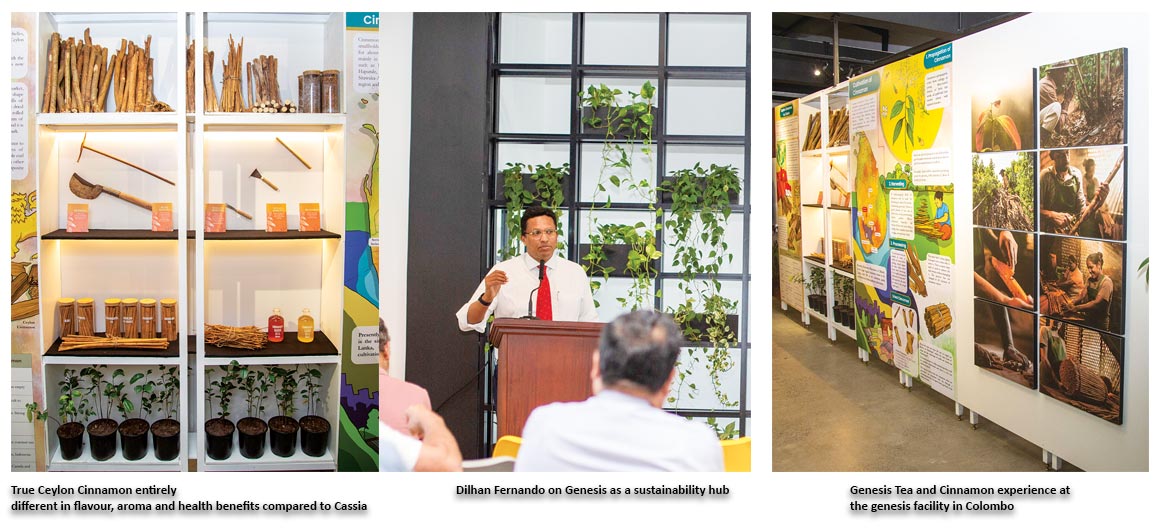
For centuries, cinnamon has seduced the world. But not all cinnamon is created equal. Cassia, the cheap cousin of true Ceylon cinnamon, dominates supermarket shelves globally. Yet it is Sri Lanka’s soft, sweet, and health-rich Cinnamomum verum—once worth more than gold in ancient Rome—that is now making a strong case for a comeback.
“Ceylon cinnamon prevents the initiation and development of cancer in the human body,” says Dilhan Fernando. “That’s with the tea. Strong sedatives. Anti-cancer. Anti-stroke. Anti-stress. It’s a pharmacy in a cup.”
And therein lies the story of value. Not just economic value, but the deeper value of health, sustainability, and cultural authenticity. Ceylon cinnamon has been subjected to centuries of conquest, commodification, and confusion. Today, it stands at the crossroads once more—either to be sold as a cheap commodity or celebrated as the superfood it truly is.
A Heritage Crop with Healing Power
Modern research increasingly confirms what ancient civilizations intuitively knew: true cinnamon holds remarkable health properties. Ceylon cinnamon is rich in cinnamaldehyde, a compound shown to reduce inflammation, improve heart health, lower cholesterol, and even support neuroprotection. “Anti-cancer, anti-dementia—yes, absolutely. It’s amazing,” Fernando says.
He paints the picture with numbers. “Cinnamon per serving, for all these health benefits, is going to be about USD 0.20 per cup. Reducing cholesterol, preventing dementia, reducing cancer risk—that’s phenomenal value.”
Yet, ironically, the global market seems more eager to chase “cheapage,” as Fernando calls it.
“Cheap is easy. Unfortunately, cheap is also the last refuge of the unimaginable. We need to be more creative and understand value.”
The statistics are startling. Ceylon cinnamon fetches a premium—exported at Rs. 10,000–11,000 per kilogram—but the average Sri Lankan export sits at Rs. 2,800–3,000, barely above the cost of production. “Why waste time trying to sell it cheap?” Fernando asks. “We should be proud about what we have and say, ‘Sorry, this is the most expensive’—and with reason.”
This isn’t arrogance; it’s wisdom. After all, Sri Lanka is home to true cinnamon—a distinction few countries can claim. In markets abroad, Ceylon cinnamon is often marketed as “true cinnamon,” while the more pungent, cheaper cassia is misleadingly labelled as just “cinnamon.”
From Nero to Now: A Spice with a Story
The legacy of cinnamon stretches back into antiquity. Its mystique captivated emperors, poets, and priests alike. “Roman Emperor Nero burnt a year’s supply of cinnamon on the funeral pyre of his wife—whom he had murdered,” Fernando recalls with a mixture of irony and awe. “He was very caring about the ceremony.”
In those days, 325 grams of cinnamon cost as much as a year’s salary for a Roman worker. “Because it came from faraway lands, especially from Sri Lanka,” he adds. But the traders—Phoenicians and Arabs—kept the origin a secret. “They told stories of serpents guarding mystical cinnamon groves. One tale says it came from the garden of the Roman god of wine and orgy.”
If cinnamon was once shrouded in mythology, it is now obscured by economics. That’s what Fernando is trying to change—by demystifying the truth and reasserting the value of what Sri Lanka truly owns.
Cinnamon and Colonialism
Sri Lanka’s cinnamon journey took a dramatic turn when European powers began to fight over it. The Portuguese, then the Dutch, and later the British monopolised the spice trade. What began as a cottage industry transformed into a global commodity—controlled by foreign powers but sourced from Sri Lankan soil.
Fernando is quick to connect that colonial past to today’s market behavior. “The British eventually shifted to coffee after slavery was abolished and West Indian coffee became unviable. But cinnamon remained essential—in food, cosmetics, and medicine. It is the most written about spice in history.”
Even ancient texts dating back to the 5th century BC praise cinnamon’s flavour and fragrance. Its presence in religious rituals, embalming, love potions, and healing tinctures shows just how culturally integrated the spice has been across civilizations.
Rediscovering the Roots
In today’s wellness-obsessed world, where every ingredient is scrutinized for its health benefits, Ceylon cinnamon is poised for resurgence. And yet, it must fight against a tide of misinformation and cheap alternatives.
That’s why Fernando calls for a revolution—not just in branding, but in mindset.
“We need to stop selling to the world’s middle class. Stop falling over ourselves to be the cheapest. Instead, we must understand value, and that is the first step to value creation.”
It’s not just about price, he insists. It’s about pride. Just as his father Merrill J. Fernando launched Dilmah Tea four decades ago with the audacious claim that “Sri Lanka has the finest tea on earth,” so too must the country now reclaim its cinnamon crown.
“How can I make you cheap?” Fernando echoes his father’s voice. “We have the best. We should be proud of it.”
A Future in Every Cup
Today, at the intersection of history, health, and commerce, cinnamon offers Sri Lanka a rare opportunity. As global consumers grow more health-conscious and sustainability-aware, they are beginning to look for authenticity, provenance, and natural power.
Sri Lanka can—and must—rise to meet that demand. With its unique agro-climatic zones, skilled peelers, and centuries of tradition, the island remains the undisputed home of true cinnamon.
“Let’s talk about cinnamon in Sri Lanka,” Fernando concludes. “We have so much beyond. This is the story that the world needs to hear.”
And perhaps, in each cup of cinnamon-infused tea, there lies not only relief from disease but a rediscovery of heritage, health, and hope.
By Ifham Nizam ✍️

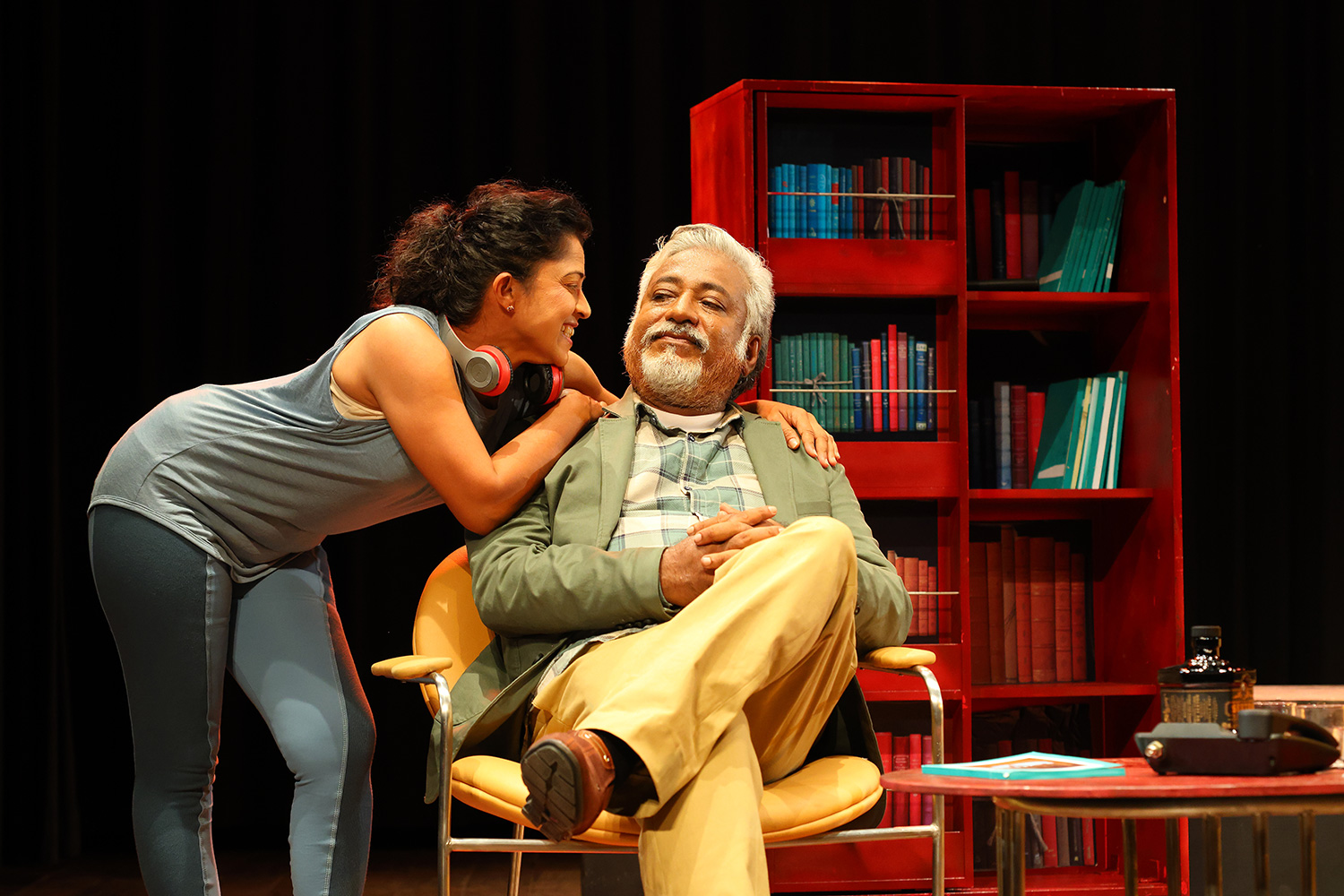
EMD Upali, a familiar name in both the Colombo Bar and the Sinhala stage, is gearing up to unveil his latest theatrical venture, Pavul Kana Minihek, the Sinhala adaptation of Iris Murdoch’s acclaimed novel The Black Prince. The play goes on board on December 6 at 7 pm at the open-air theatre of the Sudarshi Hall, Colombo.
Though not physically tall, he stands tall in fame. Upali’s open, friendly nature and ever-present smile make him a respected figure in both legal and theatrical circles. The veteran director is also remembered for introducing the late Jackson Anthony to the stage through his 1983 hit Methanin Maruwenu, a production that went on to win national acclaim.
But his journey began much earlier. As an undergraduate at the University of Colombo, he created Methanin Maruwenu for an inter-faculty drama competition in 1981 and walked away with the Best Director award. The reworked version won him another Best Director title at the 1983 State Drama Festival. Two years later, he repeated the feat with Piyambana Assaya.
Academic commitments kept him away from the stage until 1995, when he returned with Eva Balawa, a Sinhala adaptation of J.B. Priestley’s An Inspector Calls.
“Lucien de Zoysa first staged the English version at the Lionel Wendt in memory of his son Richard,” Upali recalls. “I adapted it into Sinhala using the script by my guru and friend, Upali Attanayake. Eva Balawa went on to win four State Awards, including Best Director (Adaptation).”

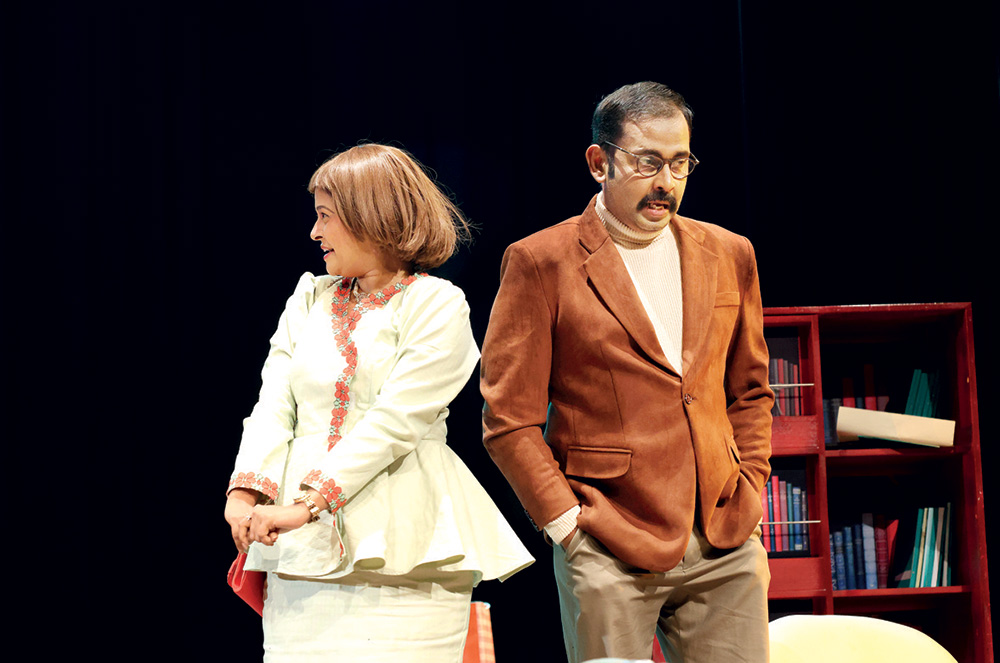
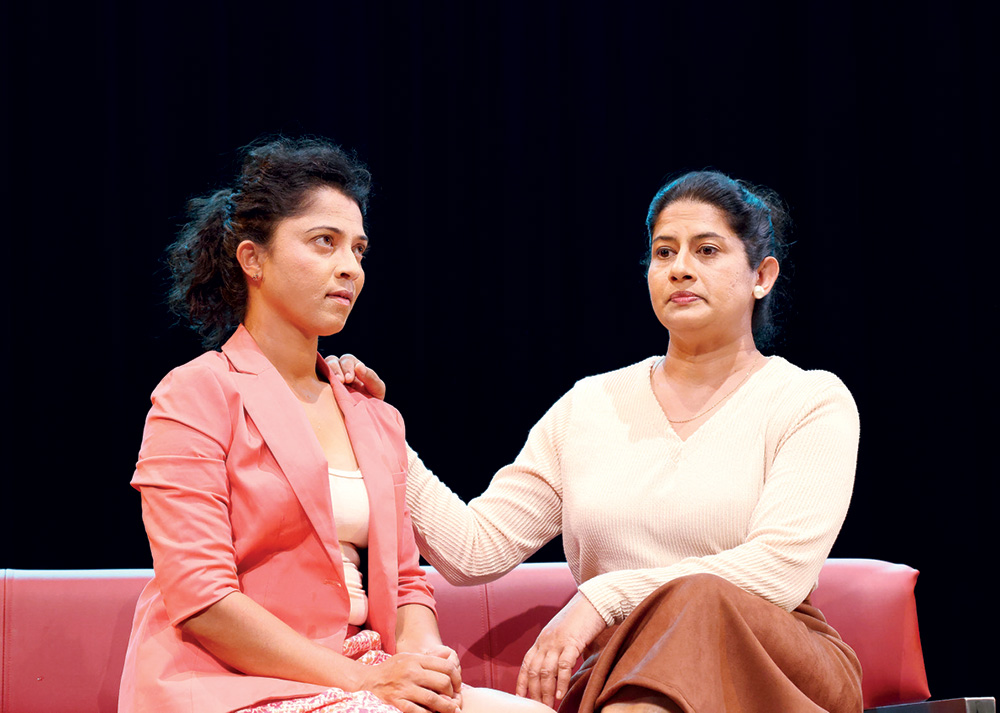
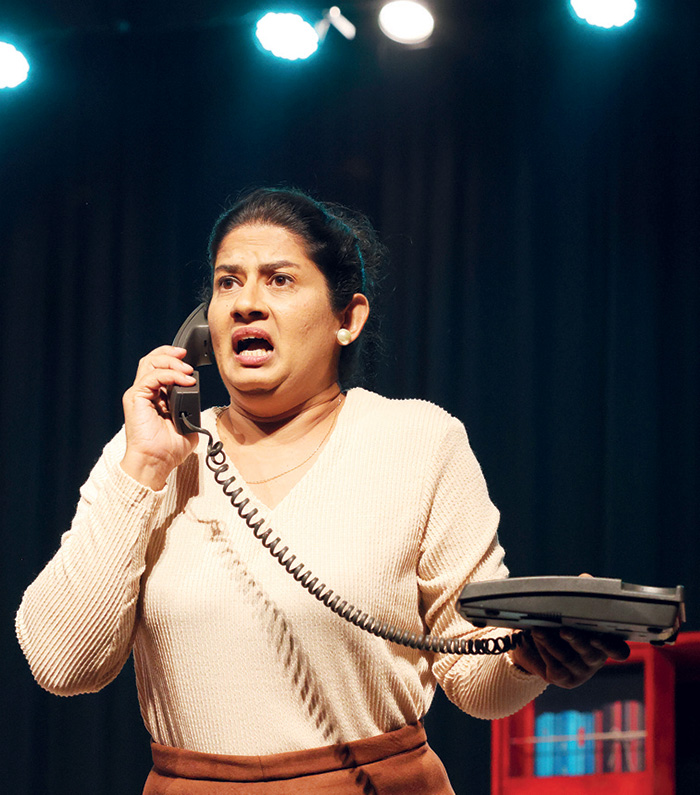
He followed this success with Chara Purusha (2000), adapted from Gogol’s The Government Inspector; Wana Tharavi, his staging of Ibsen’s The Wild Duck during the Ibsen Centenary celebrations; and Chekhov’s The Cherry Orchard as Idamedi Wikine in 2014.
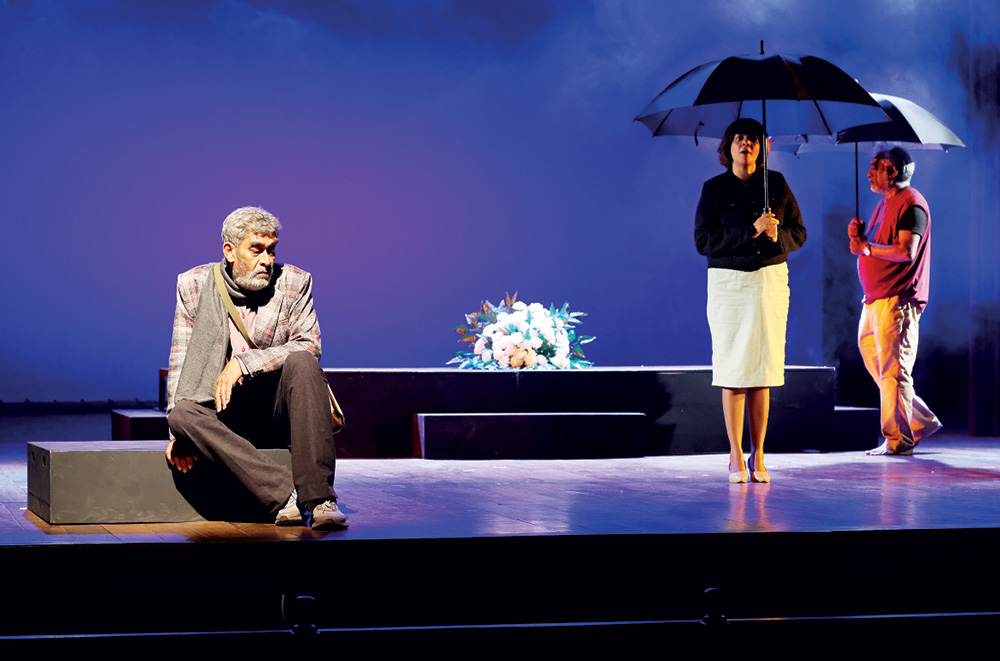
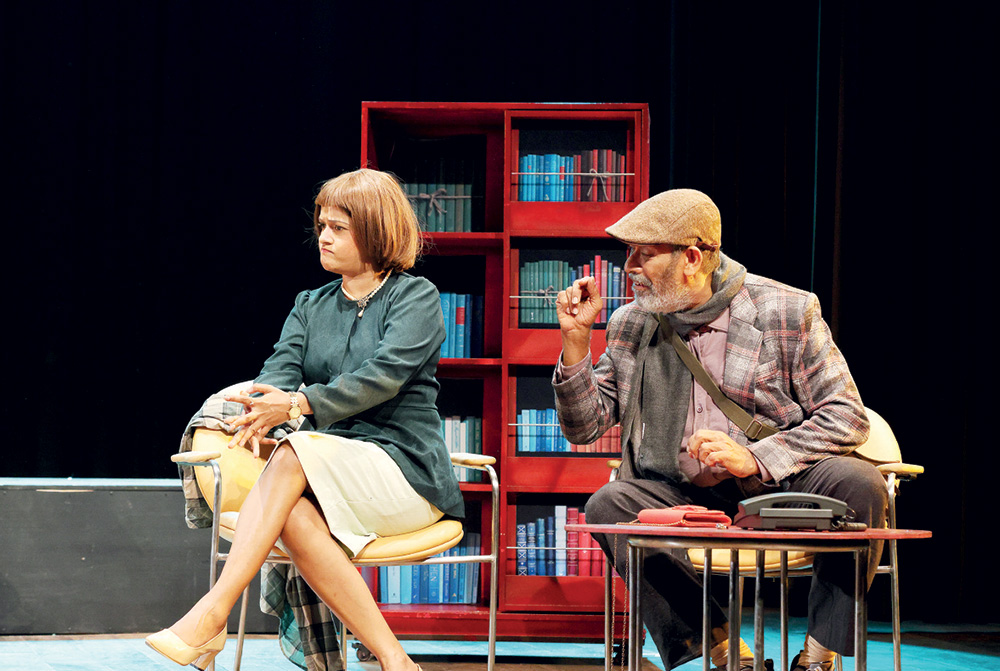
Pavul Kana Minihek is Murdoch’s philosophical and psychologically charged masterwork, adapted from Prof. J.A.P. Jayasinghe’s Sinhala translation. Produced by Jude Srimal, the play features Sampath Perera as Bradley Pearson alongside theatre stalwarts Lakshman Mendis, Nilmini Sigera, Madani Malwage, Jayanath Bandara, Mihiri Priyangani and Chanu Disanayake. Music is by Theja Buddika Rodrigo.
Behind the curtain sits an equally seasoned crew: production designer Pradeep Chandrasiri, costume designer Ama Wijesekara, lighting designer Ranga Kariyawasam, make-up artist Sumedha Hewavitharana and stage manager Lakmal Ranaraja.
Murdoch’s philosophical depth, Upali notes, is central to both the novel and the play.
“Murdoch’s background in philosophy flows through the narrative,” he says. “The Black Prince grapples with the pursuit of truth, through erotic love, through art, through suffering. She was a Platonist, and that worldview shapes the protagonist Bradley Pearson’s journey.”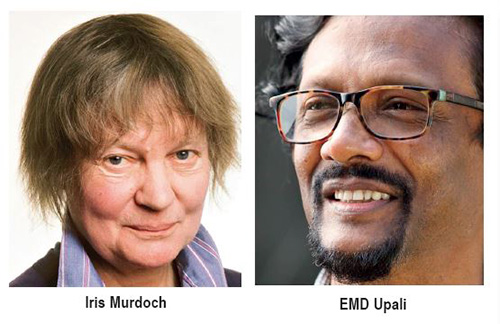
Murdoch’s novel, published in 1973, won the James Tait Black Memorial Prize and was shortlisted for the Booker Prize before being adapted for the stage in 1989.
“We condensed the play into a sharp, two-hour production,” Upali says. “With Pradeep Chandrasiri’s design, we recreated both Bradley’s and Arnold Baffin’s homes on stage. Our approach was minimalistic, but every decision was grounded in careful experimentation.”
Upali is candid about the realities surrounding Sinhala theatre especially when adapting world-class works.
“The biggest challenge is funding,” he says. “A proper production costs at least five million rupees. Institutions like the British Council or Goethe-Institut help occasionally, but not enough.”
He points to recent successes such as Nuga Gahak, Kanchuka Dharmasena’s Sinhala adaptation of Tim Crouch’s The Oak Tree, staged with the help of the British Council, and Rajitha Dissanayake’s Ape Gedarata Gini Thiyaida, supported by the Sunera Foundation.
“We must be happy some people get sponsorships. It’s rare. But if we create good theatre, audiences still come.”
The director laments Sri Lanka’s lack of proper theatrical infrastructure.
“In Sri Lanka, theatre is treated as a ahikuntika kalawa, a gypsy art,” he says. “Actors and crew load a bus with props, travel, perform once and return. In developed countries, theatres run the same play for months, sometimes years.”
Venues remain limited and expensive. Lionel Wendt is booked out months ahead; most other halls lack even basic acoustics.
“Many places are just meeting halls. Audiences beyond the middle rows can’t hear the actors. These shortcomings drain the cultural life of the nation.”
With auditorium rentals running between Rs. 75,000 and Rs. 100,000 a day, directors often wait months for dates.
“A play must be staged at least once a month to stay alive,” he remarks. “Theatre isn’t something you can store on a chip.”
Sri Lanka also lacks full-time theatre companies. “Our actors must juggle movies, teledramas, TV ads, political stages, news anchoring — everything,” Upali notes. “They have to. There’s no other income.”
Hiring them for a single performance can cost Rs. 300,000. Full production ranges from Rs. 2 million to Rs. 5 million.
“When we began, even films didn’t cost this much.”
Meanwhile, audiences are shrinking. “We are living in a TikTok world,” he says with a wry smile. “People want instant gratification. Sitting through a two-hour play is becoming harder and harder.”
Yet despite the odds, Upali remains committed to the stage and to bringing global literature to Sinhala audiences.
“I believe in theatre,” he says simply. “And I believe our audiences still care, even in a distracted world.”
Pavul Kana Minihek
opens this week and promises to remind us of that serious theatre still has a place, and a voice, in Sri Lanka.
(Pix by Hemantha Chandrasiri)
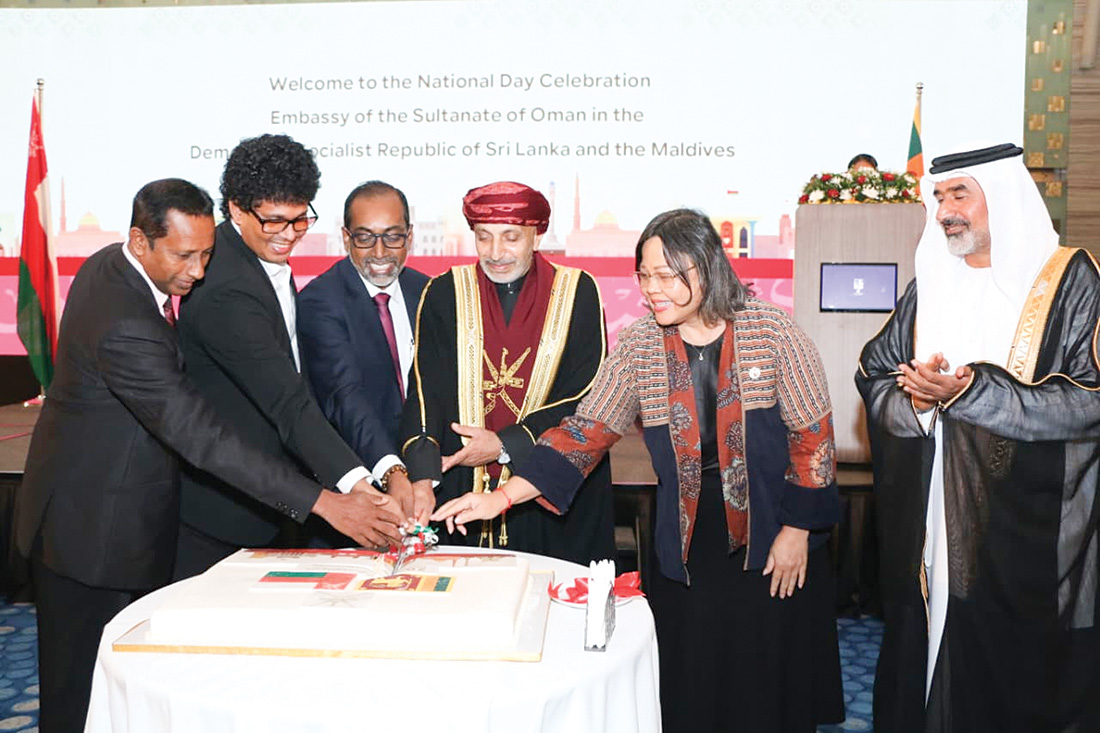
The celebration of the National Day of the Sultanate of Oman unfolded with distinguished elegance, as diplomats, dignitaries and invited guests gathered to honour the rich heritage and modern achievements of the Sultanate of Oman, under the leadership of Sultan Hatham bin Tarik.
The Ambassador of Oman in Sri Lanka Ahamed Ali Said Al Rashdi delivered a gracious and heart-felt address reflecting on the deep-rooted ties between Sri Lanka and the Sultanate of Oman.
He spoke of the region’s shared maritime history, centuries of cultural exchanges and the growing partnerships that continue to strengthen bilateral friendships between Sri Lanka and with the Sultanate of Oman.
-
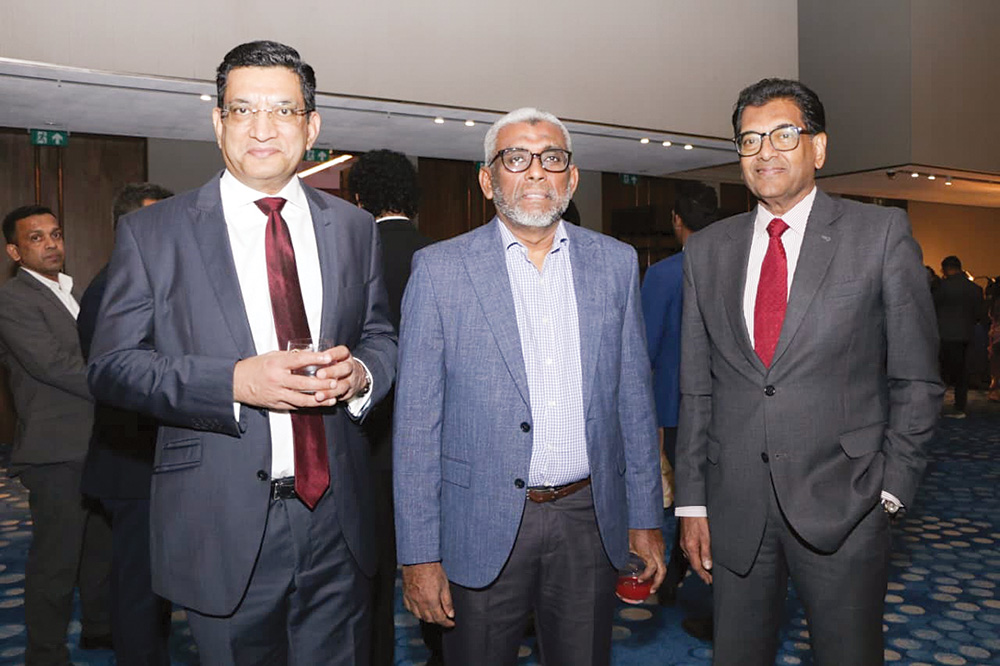
- Former Foreign Minister Al Sabry with other guests
-
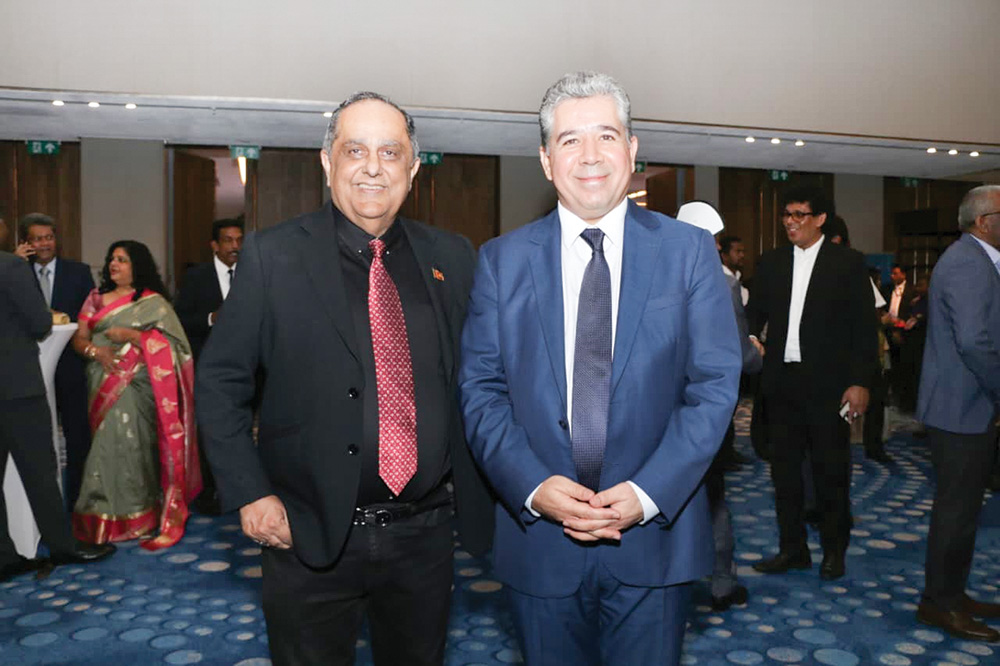
- The Ambassador of Turkiye Semih Lutfu Turgot with Governor of Western province Hanif Yusuf
-

- Gracious welcome from the Ambassador of Oman, Ahamad Ali Said Al Rashid
The Ambassador also highlighted Oman’s progress under the visionary leadership of the Sultanate, celebrating the nation’s advances in economic and regional co-operation, values that align closely with Sri Lanka’s aspirations.
One of the evening’s best highlights was the culinary journey, specially curated to offer guests an authentic taste of Omani hospitality.
The buffet unfolded a tapestry of flavours, fragrant Omani biryani, slow cooked meats, grilled seafood and an array of vibrant desserts like delicacies especially Omani dates, offering a sweet finale while the aroma of Omani coffee lingered like a gentle cultural embrace.
It was an evening that did far more than celebrate a National Day. It unfolded as a journey into the soul of Oman, wrapped in sophistication and unforgettable charm.
The glamour of the evening was heightened by the graceful flow of distinguished guests in elegant allure, warm diplomatic exchanges and the subtle rhythm of traditional Omani melody.

Rainco’s touch of couture
It was a dazzling evening that merged fashion, function and fine design, as Rainco Sri Lanka’s homegrown brand synonymous with quality and craftsmanship – unveiled its new umbrella collection ‘Be my Rainco’ at Cinnamon Life setting a new standard for stylish innovation.

Chic,sleek,and storm ready
This event graced by a distinguished guest list of fashion connoisseurs, influencers and design enthusiasts was more than a product launch. It was a celebration of form and artistry. The highlight of the evening was a fashion showcase curated by acclaimed designer Brian Kerkovan who brought his international flair to Rainco’s refined aesthetic. Models glided down the runaway carrying striking umbrellas, their balanced elegance and engineering transforming a daily essential into statement of luxury.
Bathed in soft lighting and accompanied by an evocative musical score, the ambience exuded sophistication. The collection crafted with meticulous attention in detail, featured bold silhouettes, luxe finished and innovative textures, echoing the brand’s philosophy of merging practicality with panache.
Speaking at the launch, Rainco’s General Manager marketing and innovation, Awarna Ventures (Ltd)Gayani Gunawardena said with pride his milestone collaboration, noting how the brand’s evolution from a household essential to a symbol of contemporary lifestyle.
The evening concluded with a toast to creativity – a fitting finale for a brand that continues to inspire confidence and styles ,rain or sunshine.
(ZC)
-
 News6 days ago
Weather disasters: Sri Lanka flooded by policy blunders, weak enforcement and environmental crime – Climate Expert
-
 Latest News6 days ago
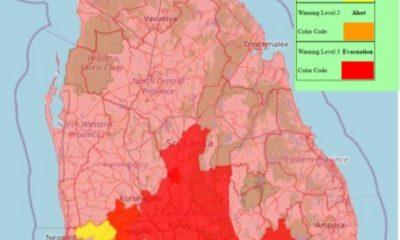
Level I landslide RED warnings issued to the districts of Badulla, Colombo, Gampaha, Kalutara, Kandy, Kegalle, Kurnegala, Natale, Monaragala, Nuwara Eliya and Ratnapura
-

 Latest News6 days ago
INS VIKRANT deploys helicopters for disaster relief operations
-
News3 days ago
Lunuwila tragedy not caused by those videoing Bell 212: SLAF
-

 Latest News7 days ago
Department of Irrigation issues Critical flood warning to the Kelani river basin
-
 Latest News4 days ago
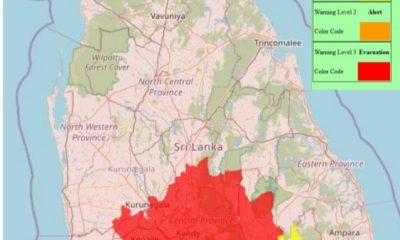
Level III landslide early warnings issued to the districts of Badulla, Kandy, Kegalle, Kurunegala, Matale and Nuwara-Eliya
-
 News2 days ago
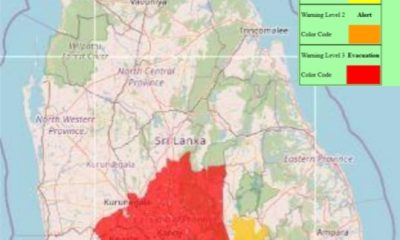
Level III landslide early warning continue to be in force in the districts of Kandy, Kegalle, Kurunegala and Matale
-

 Editorial7 days ago
Needed: Action not rhetoric