
News
CEJ warns of danger to health from lead in paints

By Ifham Nizam
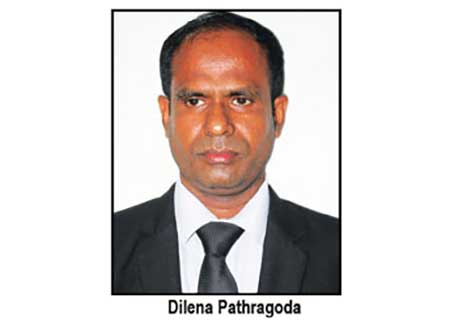
The Centre for Environmental Justice (CEJ) yesterday urged the public to be vigilant about the lead content in consumer items. Dilena Pathragoda, CEJ Managing Director said that most old buildings still had old paint with high lead levels.
Addressing the media at an event to mark the International Lead Poisoning Prevention Week of Action he said that some Sri Lankan companies dump lead contaminated liquid waste into our water ways without following the proper procedures.
CEJ Executive Director Hemantha Withanage said: “In Sri Lanka, lead concentration in paint has been limited by the Consumer Affairs Authority as a result of a case filed by the CEJ in 2011. Accordingly, enamel and floor paints can have only 600ppm of lead while the limit is 90 ppm for emulsion and paints used on children’s products. This law came into effect from January 1, 2013. It is also mandatory to declare on the label if the paint is lead safe.”
Withanage added that it was the consumer’s duty to check for the lead level before purchasing paint. He added that many countries in the region had now reduced the maximum permissible lead level to 90 ppm in all types of paints. It was time to introduce more stringent standards for Sri Lankan paints, he said.
Lead is a toxic heavy metal that can cause permanent and irreversible brain damage in children, resulting in reduced Intelligence quotient (IQ), reduced attention span, impaired learning ability and increased risk of behavioral problems.
In adults it can affect reproduction, endocrine or the hormone system and the cardiovascular system. Research shows that the main source of lead poisoning is paint. The oil-based paints that are commonly known as enamel paint, floor paint, anti corrosive and lacquer contain high lead levels. These paints are commonly found on walls of preschools and childcare facilities, children play areas, furniture, baby cots and some toys.
In addition, researchers have revealed that lead is found in some imported plastic and rubber toys, stationery, paints on porcelain, cosmetics and artificial jewelry. People working in; e-waste recycling plants, lead-acid battery/ car battery recycling plants, metal smelting, construction and demolition work are highly vulnerable to lead exposure.



Trade unions of the Ceylon Electricity Board (CEB), backed by the powerful Ceylon Electricity Board Engineers’ Union, have warned of accelerated trade union action following the collapse of crucial discussions held on Monday (16) with the CEB Chairman, who also serves as Secretary to the Ministry of Power and Energy.
The issue is expected to take centre stage at today’s press conference, with unions signalling that a token strike, possibly a 12-hour countrywide action, could be staged next week unless authorities urgently intervene.
The meeting earlier this week ended without what union representatives described as any “positive or constructive outcome.”
Trade union leaders expressed disappointment that their key concerns had not been substantively addressed during discussions with the Chairman.
At the heart of the dispute is the unions’ demand for a collective agreement in accordance with Section 18(j) of the Sri Lanka Electricity Act No. 36 of 2024. Trade union representatives maintain that the law provides for structured engagement between management and employees and that a formal collective agreement is necessary to ensure transparency and industrial stability within the institution.
The unions also submitted what they termed a reasonable proposal to safeguard the CEB Employees’ Provident Fund (EPF), voicing concerns over the long-term security of workers’ retirement benefits.
However, according to trade union sources, those proposals were not adequately taken up during the discussions.
A senior electrical engineer told The Island that further internal consultations were being held to decide the next course of action. “There is growing frustration among employees. The issues raised are fundamental and relate directly to statutory compliance and the financial security of staff,” he said.
The Island learns that unless there is meaningful engagement from the authorities, the proposed token strike could mark the beginning of more stringent industrial action.
Energy sector observers warn that any escalation of trade union unrest at the CEB could have serious implications for the country’s power sector stability at a critical time.Further developments are expected following today’s media briefing.
By Ifham Nizam

Prime Minister Dr. Harini Amarasuriya yesterday (19) revealed allowances and benefits provided to Members of Parliament at present.She did so while responding to a question raised by Samagi Jana Balawegaya MP Chaminda Wijesiri.
According to the disclosure:
An MP receives a monthly allowance of Rs. 54,285, with an entertainment allowance of Rs. 1,000 per month.
Driver allowance is Rs. 3,500 per month; however, if the MP is provided with a driver by the Ministry of Public Security and Parliamentary Affairs, no driver allowance is paid.
Telephone allowance is Rs. 50,000, while transport allowance is Rs. 15,000 per month.
Office allowance amounts to Rs. 100,000.
MPs attending parliamentary sessions receive Rs. 2,500 per day, while Rs. 2,500 per day are given for MPs attending committee meetings on non-sitting days.
Meanwhile, Members of Parliament also receive a fuel allowance based on the distance from their elected district to Parliament.
For national list MPs, this is calculated as 419.76 liters of diesel per month, paid at the approved market rate on the first day of each month.Dr. Amarasuriya also emphasised that these allowances are structured to cover official duties and transportation costs.

Former OIC of the Cyber Crime Investigation and Intelligence Analysis Unit of the CID, M.M.U. Subhasinghe, yesterday expressed his regret in writing to civil activist and comedian Natasha Edirisooriya at the Supreme Court regarding her arrest under the International Covenant on Civil and Political Rights (ICCPR) Act.
The Attorney General’s Department, appearing on behalf of the respondents, informed the court that the IGP would issue a set of guidelines via a circular to all police officers to prevent unlawful arrests under this Act in the future. It was further noted that the circular would be issued within two weeks, and the petitioner, Natasha Edirisooriya, has examined and agreed to these guidelines.
These submissions were made yesterday before a three-judge bench of the Supreme Court, led by Chief Justice Preethi Padman Surasena, during the hearing of the Fundamental Rights (FR) petition filed by Edirisooriya challenging her unlawful arrest.
Following these developments, the court ordered the respondents to inform the court via a motion within two weeks of issuing the IGP’s circular and ordered the conclusion of the case proceedings.
Natasha Edirisooriya was present in open court yesterday. Addressing her, Chief Justice Surasena stated that the court appreciates the manner in which the legal proceedings were brought to a conclusion.
The letter expressing regret stated: “As the arresting officer, considering the totality of circumstances, I wish to express deep regret to you for the arrest on 27th May 2023 and your incarceration in remand custody till 5th July 2023 consequent thereto. I also extend my deep regret regarding the damage that may have been caused to your reputation and dignity, and mental and emotional trauma caused by the arrest and incarceration.”
The respondents agreed to express this regret and issue the circular based on the specific conditions put forward by Edirisooriya in consultation with her counsel Suren Fernando and the legal team.
By AJA Abeynayake

Fairly heavy showers likely in the Eastern province and in Matale, Badulla, Mullaitivu and Polonnaruwa districts

CEB trade unions hint at stringent industrial action after talks fail

PM reveals allowances and perks available to MPs

CID expresses regret to Natasha; IGP to issue guidelines on ICCPR arrests

Construction begins on country’s largest solar power project in Hambantota

Lanka silent as 85 countries rebuke Israel at UN

‘Dates have the highest sugar content to fight Coronavirus’

Sunday Island 27 December – Headlines

#SundayIsland 17th December – Headlines

Sunday Island – 28th March

Sunday Island Headlines – 21 March

Sunday Island – 21st February – Headlines
-

 Life style5 days ago
Marriot new GM Suranga
-

 Business4 days ago
Ministry of Brands to launch Sri Lanka’s first off-price retail destination
-

 Features5 days ago
Monks’ march, in America and Sri Lanka
-

 Features5 days ago
The Rise of Takaichi
-

 Features5 days ago
Wetlands of Sri Lanka:
-

 News5 days ago
Thailand to recruit 10,000 Lankans under new labour pact
-

 News5 days ago
Massive Sangha confab to address alleged injustices against monks
-

 News3 days ago
IMF MD here