
News
CEB trying to recover loss of Rs 32 bn during drought by increasing electricity tariffs


By Rathindra Kuruwita
The Ceylon Electricity Board (CEB) wants to recover about 32 billion that the institution lost through the year, within the next three months, with a tariff hike, K.A. Noel Priyantha, Deputy General Manager (Business & Operational Strategy) said in a televised interview.
“On 15 February, 2023, we got a tariff increase. So for 45 days in 2023, we only got the 2022 tariffs. In June 2023, we proposed a three percent reduction of the tariff, but the Public Utilities Commission of Sri Lanka (PUCSL) recommended a 14 percent cut. We lost about 32 billion rupees in expected revenue because of these two reasons,” he said.
Priyantha said that the CEB had issues with PUCSL in the recent past and that it is only now that the relationship between the two institutions has improved.
“We expected rains, but there was a dry patch, and we had to release water from Samanalawewa for agriculture. We could produce less electricity from hydropower than we expected. We now need to produce electricity using fossil fuels. That costs more, and we can’t borrow now, so we need to go for a tariff increase. The IMF has insisted on cost-reflective pricing. We are trying to recover the 32 billion we have lost with the tariff hike,” he said.
The DGM said that the CEB only has three months to achieve its revenue targets. If PUCSL had only approved a three percent tariff reduction, there would have been no need to increase tariffs by a significant percentage.
“The CEB spends 2.80 rupees to produce a unit of electricity, using hydropower. The CEB is allowed to revise tariffs once every six months, but diesel prices are revised once a month. The average cost of a unit of electricity now is about 44 rupees,” he said.
Priyantha said they have forwarded two proposals to the CEB. One suggestion is to increase the tariff for a unit of electricity by eight rupees for all consumers. The other is a 22 percent tariff hike across the board, he said.
A few years ago, the CEB could have purchased a unit of electricity, generated by renewable sources, for around 22 rupees, he said. Unfortunately, some elements at the CEB were against local businessmen making money, and the solar power industry is now on the verge of collapse, Priyantha said.
“Moreover, we have not paid renewable energy producers in eight months. I always bring this issue up and some progress has been made. We are making some big investments. In Mannar, a 500 megawatt wind plant is coming up,” he said.
The CEB is also making space for a 200 megawatt solar power park. One of the main problems with renewable energy is the need to establish extremely costly transmission lines, he said.
“It doesn’t make sense to have a 10-megawatt renewable energy project. At least 100 megawatts need to be produced to make the cost of the transmission line profitable,” he said.
All solar farms connect to a specific point on the electrical grid, and that point is called the “point of interconnection,” or POI. The POI is different for utility-scale versus community solar scale projects, he said.
A community solar project is smaller than a utility-scale project. The project size is measured in terms of capacity. Community solar projects are typically 10 MW or smaller. These projects almost always connect to a three-phased distribution line. A distribution line is conceptually the same as a transmission line but moves electricity at a much lower voltage. A distribution line must be within about 1.6 kilometers of your property (or preferably much less) to make interconnection cost-effective.
Utility-scale projects connect by either connecting directly to a substation or tapping a transmission line (69 kV or higher).
Unless the solar farm is right next to a transmission line or substation, a dedicated transmission line called a generation tie (“gen-tie”) will need to be built. These gen-ties cost approximately one million dollars per 1.6 kilometers to construct, he said.
CEB Senior Engineers’ Association (CEBSEA) Spokesperson Engineer Nandika Pathirage said that reservoirs are receiving rain. On average, the water levels are at about 43 percent, and about 25 giga watt hours of electricity can be produced, he said.
“We only use about 11 gigawatt-hours of electricity. Now we only produce 40 percent of our electricity needs using fossil fuels,” he said.
Pathirage, however, denied claims that the PUCSL has recommended a 14 percent tariff reduction when the CEB has demanded only three.
“PUCSL decided based on the CEB data. When we asked PUCSL, they said that they, in fact, only gave what the CEB asked for. However, it is obvious that there is a cash flow issue now, and the CEB has now asked for a 22 percent tariff hike,” he said.
Pathirage said that the CEB management is of the view that they will not revise tariffs once the PUCSL approves the 22 percent tariff hike.
“We have received less rain fall than expected. The lowest probably since 2018. However, we expect that in the coming months, the north-eastern monsoon will fill up the reservoirs,” he said.








Latest News
Construction of Accident and Emergency unit at Mannar District General Hospital begins under President’s patronage

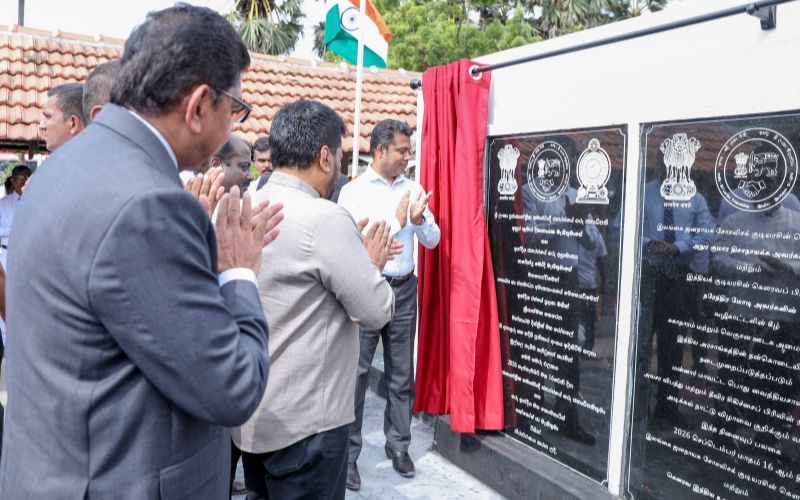
Construction work on the Accident and Emergency Unit at the Mannar District General Hospital commenced this morning (16) under the patronage of President Anura Kumara Dissanayake.
The Accident and Emergency Unit, which is being constructed at a cost of Rs. 600 million with a grant from the Government of India, will be equipped with all modern facilities and will further expand healthcare services for the people of Mannar. Construction is scheduled to be completed in the first quarter of 2028.
Upon completion of the project, the people of Mannar will be able to receive emergency trauma care and other specialised healthcare services without having to travel to Colombo or other major cities. At the same time, the Government has taken steps to provide the Mannar District General Hospital with the medical equipment and staff required to support these services.
President Anura Kumara Dissanayake, who attended the commencement of construction work on the Accident and Emergency Unit, also engaged in a cordial conversation with members of the hospital staff.
Addressing the ceremony held thereafter, Minister of Health and Mass Media Dr. Nalinda Jayatissa said that as the Mannar area, which is expected to make an important contribution to the national economy, develops, this project will help ensure quality healthcare services for its people. The Minister further emphasised that, in creating a “A Thriving Nation – A Beautiful Life”, the Government is committed to ensuring healthy and disease-free lives for all 21.7 million citizens of the country.
Further remarks by Minister of Health and Mass Media Dr. Nalinda Jayatissa
“The Mannar District is an area that is expected to make an important contribution to our national economy. A large number of local and foreign tourists will visit this area both now and in the future.
With the development of transport facilities, Mannar will experience further economic growth. In such a context, upgrading the services of the Mannar hospital will be important in ensuring quality healthcare services for the people of this area as well as those who visit the region.
Accordingly, construction of this Accident and Emergency Unit will be completed and the facility will be made available to the public in the first quarter of 2028. In addition, staff quarters for doctors at the Mannar District General Hospital are being constructed in a four-storey building at a cost of Rs. 243 million. These construction activities are also expected to be completed within one and a half years. Construction of the new Paediatric Unit, being built at a cost of Rs. 230 million, is also expected to commence within this year.
Similarly, the CT scanner that you have been continuously requesting will be provided to you by around February next year. It is worth approximately Rs. 250 million. While these building facilities are being developed, we will also provide the staff required by the hospital. You have also received intern medical officers for the first time in the history of this hospital. Several more intern medical officers will be assigned to you this October. At the same time, steps are currently being taken to address the shortage of specialist medical officers.
On 31 October, we will recruit 2,600 new nurses, and a portion of them will be assigned to this hospital. Personnel required for the allied health professions are also currently undergoing training. Once their training is completed, the services of several of them will be made available to this hospital. In addition, we will recruit 1,100 Public Health Midwives, a portion of whom will also be assigned to this area.
This Government is taking numerous measures to provide people with healthy lives. Through these initiatives, we hope to improve the health and quality of life of the people in this area.
More than Rs. 600 billion has been allocated to the Ministry of Health over the past two years, and the President continuously monitors all its projects. Going beyond that, I am deeply grateful to the President for joining us today.
We have received the support of the Government of India for this project. I extend my special appreciation to the Government of India, including the Prime Minister, and its people, as well as to the High Commissioner of India and his staff, who have been committed to coordinating these activities and ensuring the success of this project.
Among district hospitals, the Mannar hospital is one with very limited facilities. Despite these shortcomings, I appreciate the dedication of all members of the staff, including the doctors, who remain committed to providing the best possible service to the people. I also consider the President’s visit to be a recognition of your service.
Two years ago, on 21 September 2024, the people of this country gave a clear mandate to create a “A Thriving Nation – A Beautiful Life”. That mandate was further strengthened in November 2024. Under the mandate to create a “A Thriving Nation – A Beautiful Life”, we have been entrusted with the responsibility of ensuring healthy and disease-free lives for all citizens of this country.
Your area of residence, profession, wealth or ethnicity is of no relevance to us in this regard. The Government’s objective is to create a beautiful life through healthy and disease-free living for all 21.7 million citizens of Sri Lanka.”
High Commissioner of India Santosh Jha:
“The agreements for the emergency unit in Mannar and the medical ward complex in Mullaitivu were signed under President Dissanayake’s leadership. I am happy to see these commitments transitioning smoothly into swift implementation.
His Excellency the Prime Minister of India, Shri Narendra Modi, has said that the development assistance extended by India to Sri Lanka comes with a deep sense of responsibility, a duty that one naturally feels for one’s family member.
We remain firmly committed to working closely with the Government of Sri Lanka and the people of Sri Lanka for the well-being and prosperity of all communities across the island. As neighboring countries and close partners, we will continue to walk together this shared path toward lasting progress and development of our peoples.”
Secretary to the Ministry of Health and Mass Media Dr. Anil Jasinghe
“For several decades, injuries and accidents have been the leading cause of hospital admissions in Sri Lanka. As Mannar is geographically somewhat isolated, it is extremely important for the district to have access to quality, free healthcare services without delay.
The assignment of intern medical officers to this hospital commenced this year. Arrangements are also currently underway to purchase a CT scanner for the Mannar District General Hospital. The hospital is expected to receive improved radiology facilities by the end of this year or the beginning of next year.
I must say that, during my 36 years in public service, last year was the only period during which I did not face any financial difficulties in carrying out my duties. The prudent macroeconomic management of the current Government, including President Anura Kumara Dissanayake, has created the fiscal space required to develop the country’s health services.”
Mannar District Bishop Rt. Rev. Gnanapragasam Anthonipillai, Northern Province Governor Nagalingam Vethanayahan, Members of Parliament representing the Mannar District, Secretary to the Ministry of Defence, Air Vice Marshal Sampath Thuyacontha (Retd), Chiefs of the Defence Services, officials of the Ministry of Health, officials of the High Commission of India in Sri Lanka, Consul General of India in Jaffna Sai Murali S. and officials of the Indian Consulate in Jaffna, among others, attended the occasion.
[President’s Media Division]
News
Special Cabinet Subcommittee and Officials’ Committee appointed to address El Niño Climate Impact meet

The Special Cabinet Subcommittee and Officials’ Committee appointed to take necessary measures to address the impact of the El Niño climate phenomenon met for the fifth time at the Presidential Secretariat on Monday (14) afternoon , under the chairmanship of Minister of Environment Dr Dhammika Patabendi.
As the El Niño climate impact is expected to transition from the current dry conditions to wetter weather over the next two months, the committees held an extensive discussion on measures to address the anticipated change in weather conditions.
The committees decided to raise public awareness on potential disasters, including floods and landslides that could occur due to increased rainfall. Attention was also given to conducting disaster preparedness drills to familiarise the public with the appropriate measures to be taken in the event of such emergencies.
It was instructed that initial preparedness drills be conducted in the districts of Kandy, Badulla, Matale and Nuwara Eliya, which are considered vulnerable to landslides and that the necessary measures be taken without delay.
The meeting also decided to implement a public awareness programme through electronic and print media. Discussions were also held on the importance of preparing the public in advance by establishing operational centres at Divisional Secretariat level.
In addition, the committees reviewed the progress of relief measures already being implemented for people affected by the prevailing El Niño conditions, as well as the progress of the planned measures ahead.
Minister of Housing, Construction and Water Supply Dr Susil Ranasinghe, Minister of Plantation and Community Infrastructure Samantha Vidyaratne, Secretary/Convener of the Special Cabinet Subcommittee, Chairman of the Officials’ Committee and Chief of Staff to the President Prabath Chandrakeerthi, Secretary to the Ministry of Agriculture, Livestock, Land and Irrigation D. P. Wickramasinghe, Director General of the Department of Meteorology A. L. K. Wijemanne, Director General of the Disaster Management Centre, Major General Sampath Kotuwegoda (retired), Director General of the National Building Research Organisation Dr Gamini Jayatissa, General Manager of the National Water Supply and Drainage Board Engineer T. Bharatheedasan and officials from the relevant institutions were also present at the meeting.
[President’s Media Division]

by Norman Palihawadane
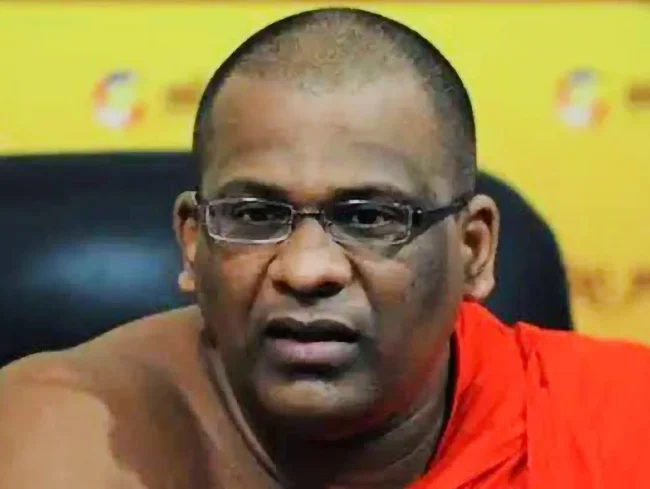
Bodu Bala Sena (BBS) General Secretary Ven. Galagoda Aththe Gnanasara Thera’s whereabouts have remained unknown since the Supreme Court, on Monday, annulled a presidential pardon granted to him in 2019.
Prison officers visited the Thera’s temple in Nawala, Rajagiriya, to take steps to return him to prison to serve the unexpired portion of his six-year sentence. However, monks at the temple had reportedly informed the officials that they were unaware of his whereabouts.
Police spokesman ASP F.U. Wootler said a separate court order was required for the police to trace the Thera, or assist in taking him into prison custody. No such order had been issued so far, he claimed.
Meanwhile, sources close to Gnanasara Thera said he was expected to attend a book launch in Colombo tomorrow (17),
The development follows the Supreme Court declaring the 2019 presidential pardon granted to Gnanasara Thera, by then President Maithripala Sirisena, null and void.
A three-member Supreme Court bench held that the pardon had been granted arbitrarily and violated public trust and principles of natural justice.
Gnanasara Thera had been serving a six-year prison sentence for contempt of court when the then President Sirisena granted him the pardon, in May, 2019. He had served only about nine months of the sentence at the time.
With the pardon annulled, the original sentence remains in force and the Thera is now required to serve the balance of his six-year term.
The Supreme Court ruling has raised questions over the procedure to be followed to return him to prison, with police and prison authorities yet to take custody of him.

Construction of Accident and Emergency unit at Mannar District General Hospital begins under President’s patronage

Special Cabinet Subcommittee and Officials’ Committee appointed to address El Niño Climate Impact meet

Showers about 75 mm are likely at some places in the Western, Sabaragamuwa, Central and Southern provinces

Brook, Buttler, Baker star as Sri Lanka slump to 119-run rout

Where is Gnanasara Thera?Police pass buck to court

Russian citizens in Lanka to vote in State Duma elections

‘Dates have the highest sugar content to fight Coronavirus’

Sunday Island 27 December – Headlines

#SundayIsland 17th December – Headlines

Sunday Island – 28th March

Sunday Island Headlines – 21 March

Sunday Island – 21st February – Headlines
-

 Sports6 days ago
DDS set to lose Test captaincy
-

 News6 days ago
Sri Lanka faces new grid challenge as rooftop solar surges: former CEB GM
-

 Latest News6 days ago
Shafali, Deepti power India into sixth T20 Asia Cup final
-

 Latest News5 days ago
Sri Lanka thwart Fatima Sana challenge to secure Asia Cup final spot
-

 News4 days ago
Gnanasara Thero absconding after SC ruling
-
 Features7 days ago
Lost for 90 years: Rare Goby resurfaces in Jaffna
-

 News5 days ago
Ammunition cache found in old Kandy bungalow
-
 Latest News7 days ago
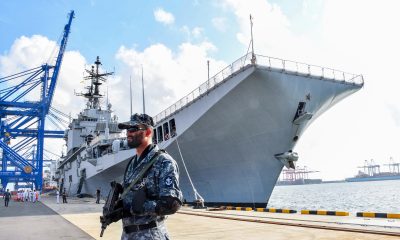
Italian Naval Vessel ‘ITS Giuseppe Garibaldi’ arrives in Colombo